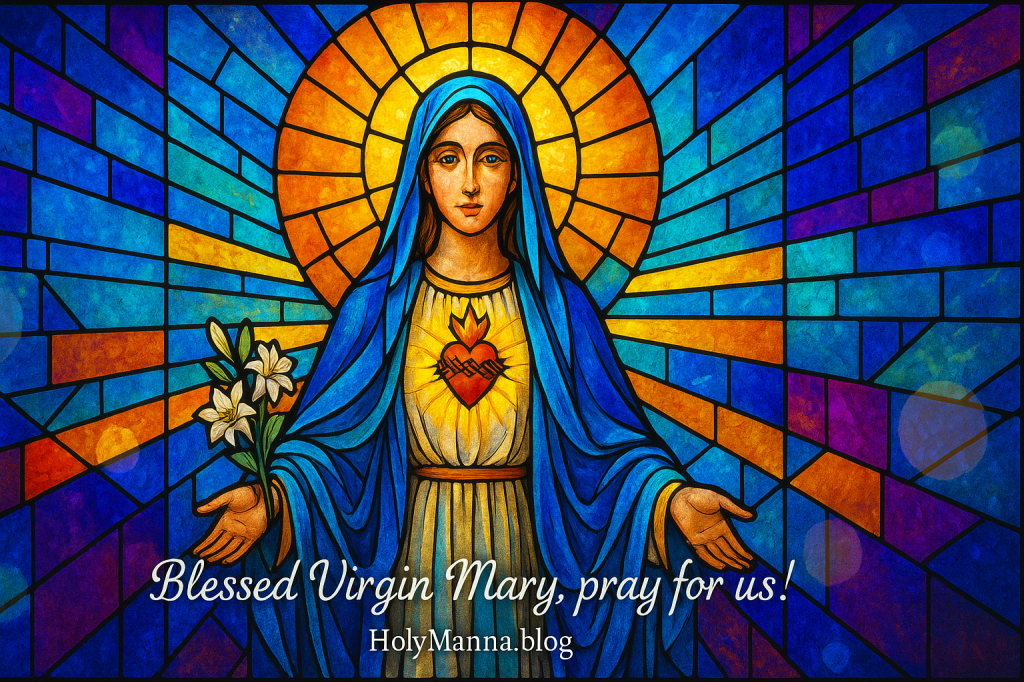
A Birthday That Signals the Dawn
Among the birthdays kept by the Church in the liturgy, only three are celebrated with solemn joy: Jesus at Christmas, John the Baptist on June 24, and Mary on September 8. The Church rejoices at Mary’s birth because it marks the near arrival of the Redeemer. Her coming is like the first light before sunrise, a sign that God’s plan of salvation is unfolding in history. Placed nine months after the Solemnity of the Immaculate Conception, this feast quietly proclaims that God prepared a mother who could freely and fully say yes to the Incarnate Word. The Byzantine troparion captures the heart of the day with the exclamation, “Your Nativity, O Virgin, has proclaimed joy to the whole universe.” In celebrating her birth, we celebrate the nearness of Jesus, the Light of the World, and we honor the woman who is called in The Gospel of Luke “full of grace.” The Catechism situates this day within the larger mystery of Mary’s vocation as Mother of the Redeemer and Mother of the Church, emphasizing that grace precedes and accompanies every moment of her life (see CCC 490 to 493 and CCC 963 to 975).
From Jerusalem’s Springs to Rome’s Heart
The roots of this feast run deep in the Christian East. Early Christians honored a site near the Pools of Bethesda in Jerusalem, long associated by tradition with the home of Saints Joachim and Anne. Over time a church rose there, and devotion to Mary’s birth blossomed into a liturgical celebration. The feast spread throughout the Byzantine world, and by the late seventh century it was welcomed in Rome, where Pope Sergius I encouraged processions for the major Marian feasts. The Roman Church gradually fixed the date as September 8, allowing the faithful to contemplate Mary’s hidden beginnings just as Advent later contemplates Christ. While the canonical Gospels do not narrate the details of her birth, ancient Christian memory preserved names and a setting for her parents in the Protoevangelium of James, reflecting the early Church’s desire to honor the humble origins of the Mother of the Lord. In this way the calendar invites us to receive Mary within the continuum of Israel’s story, since The Gospel of Matthew traces the Messiah’s lineage through David and Abraham, and Mary stands at the culminating moment where promise becomes fulfillment.
Motherly Intercession Through the Ages
September 8 is not linked to a single apparition, yet Mary’s birthday has become a date of grace across centuries. Many shrines dedicated to her Nativity bear witness to answered prayers, conversions, and healings that believers attribute to her maternal intercession. Pilgrims at the Church of Saint Anne in Jerusalem give thanks for reconciled families and renewed faith. In Central Europe, Mariazell honors the Birth of Mary and has welcomed generations who testify to protection in trials and guidance for vocations. In Lithuania, Šiluva’s great revival of Eucharistic faith in the seventeenth century is remembered in sanctuaries that point back to Mary and forward to Christ. Even history’s turning points have converged with this date. The lifting of the Great Siege of Malta on September 8, 1565 became a national day of thanksgiving that the faithful associate with Our Lady’s care. These stories do not shift our focus away from Jesus. Rather, they show how Mary’s motherly presence leads to deeper faith in her Son, since she always repeats the counsel found in The Gospel of John: “Do whatever he tells you.”
What This Feast Teaches
Theologically, Mary’s Nativity highlights the primacy of grace. God’s initiative prepares Mary from the first instant of her existence, so that her freedom can be fully alive to the mission of divine motherhood. The Church teaches her Immaculate Conception, her perpetual virginity, and her role as Mother of God, truths that illuminate why her birth is uniquely significant for our salvation (see CCC 490 to 507). Within the single plan of God, Mary is the New Eve, and the Fathers of the Church loved to say that the knot of Eve’s disobedience was untied by Mary’s obedience. Her birth therefore signals the renewal of humanity. The liturgy also contemplates Mary as the living Ark of the Covenant, the Daughter of Zion in whom the promises to Israel find their flowering. The Second Vatican Council presents her maternal role in the order of grace, which continues to this day, as she intercedes and cares for the pilgrim Church (see Lumen Gentium 53 to 69). Papal teaching encourages authentic Marian devotion that always leads to Christ, especially through the liturgy, the Rosary, and imitation of her virtues of faith, hope, and charity (see Marialis Cultus and Redemptoris Mater). In short, this feast teaches that when God prepares a heart, the whole world is blessed.
Prayer, Places, and Pilgrims
Devotion surrounding this feast is simple and beautiful. Many parishes celebrate a novena from September 1 through 8, culminating in Mass on Mary’s birthday. Families bring flowers to an image of Our Lady, pray the Joyful Mysteries together, and read the infancy narratives in The Gospel of Luke. Pilgrims flock to Saint Anne’s in Jerusalem to mark the day at the site long connected with Mary’s early life. In Austria the Basilica at Mariazell, known as the Basilica of the Birth of the Virgin Mary, remains a vibrant destination where confession, Eucharistic adoration, and Marian prayer renew hearts. In India the great pilgrimage to the Shrine of Our Lady of Good Health at Vailankanni reaches its peak on September 8 with processions and the celebration of the sacraments. Each of these practices draws believers into the Church’s living memory. By venerating Mary on her birthday, we enter the rhythm of salvation history, and we learn to welcome grace as she did. The Catechism reminds us that Mary’s motherhood extends to all the members of Christ’s Body, which is why Christians instinctively run to her with confidence (see CCC 968 to 970 and CCC 2673 to 2679).
How the World Celebrates Mary’s Birthday
Cultures have braided local customs into the universal joy of this day. In parts of France and Central Europe, the blessing of grapes on September 8 expresses gratitude for the first fruits of the harvest and honors the first fruit of redemption who is Mary. In Malta the conclusion of the Great Siege is commemorated with solemn Masses, maritime salutes, and processions of Marian images that carry the spirit of Victory Day. In coastal and river cities processions often move from church to waterfront, blessing fleets and entrusting sailors and workers to Mary’s care. In India many Catholic communities observe preparatory fasting that leads into festive parish gatherings and shared meals on the birthday itself. In Latin America and the Philippines, parishes host Rosary rallies, catechesis for children, and music dedicated to the Mother of God. In homes across the world, families bake a small cake for Our Lady, teach children to pray the Hail Mary from the heart, and dedicate works of mercy in her honor. These celebrations reveal how Mary’s presence, always pointing to Jesus, shapes the spiritual imagination of entire peoples.
Say Your Yes With Mary
Mary’s Nativity invites us to begin again with God. He moves first with grace, then he awaits our free response. Ask for the grace to echo Mary’s yes in the concrete details of your day. Read The Gospel of Luke chapters 1 and 2 slowly, and listen for the virtues that the Spirit highlights for you. Consider visiting a Marian shrine or a parish statue to place a difficult situation beneath her maternal gaze. Pray the Joyful Mysteries and ask for the humility, courage, and constancy to follow Christ without hesitation. Practice a birthday work of mercy by calling someone who is isolated, reconciling with a family member, or giving alms to a local charity. End the day by repeating Mary’s counsel, “Do whatever he tells you.” What promise from God do you need to trust today? How can you create silence so that the Word can take shape within you? Where is the Lord asking you to welcome grace before you see results?
Engage with Us!
We’d love to hear your prayer intentions and family traditions for Our Lady’s birthday, share them below so we can pray and rejoice with you.
- Which line from today’s troparion speaks to your heart?
- Where do you need Mary’s motherly help right now, as Advocate, Helper, or Mediatrix?
- What concrete “yes” to Jesus can you offer this week in Mary’s honor?
Go in peace, and let Mary’s birth rekindle hope. Let’s keep growing together under her mantle, loving and serving with the mercy Jesus taught us.
Blessed Virgin Mary, pray for us!
Follow us on Instagram and Facebook for more insights and reflections on living a faith-filled life.

 Holy Manna!
Leave a comment