A Cloak of Humble Fire
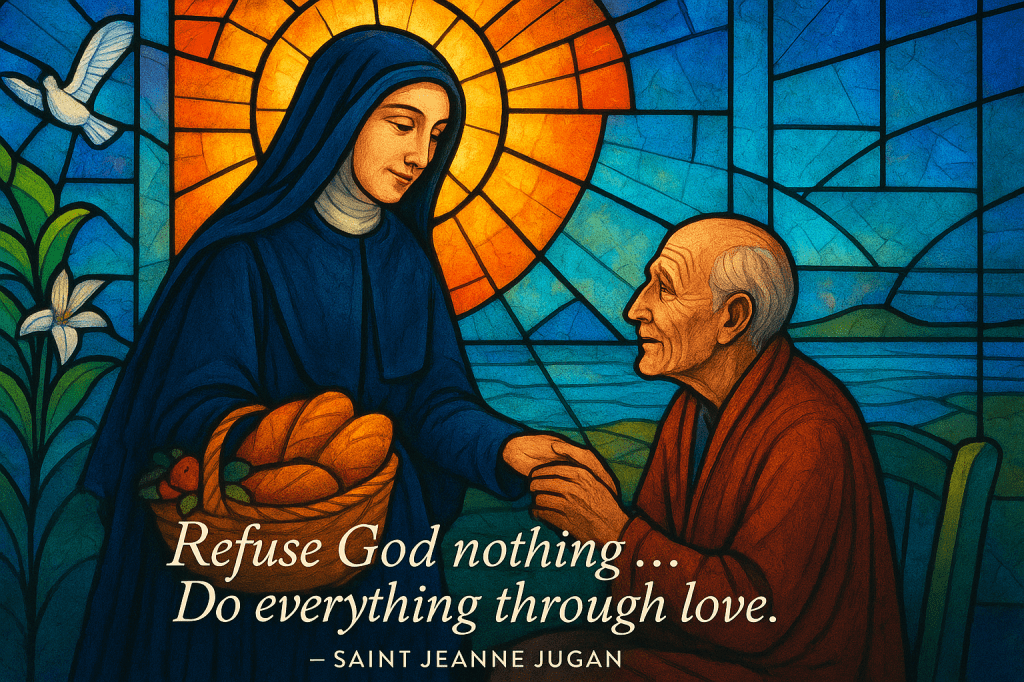
Jeanne Jugan (1792–1879), later known in religion as Sister Mary of the Cross, is the humble Breton foundress of the Little Sisters of the Poor. In an age shaken by revolution and indifference, she reawakened the Gospel’s tender reverence for the elderly poor, welcoming them into homes that felt like family rather than institutions. Her entire spirituality can be summed up in two movements of the heart: adoration of Jesus in the Eucharist and service to Jesus in the least. Recognized by the Church for heroic charity, she was beatified in 1982 and canonized in 2009. Today her daughters continue her charism across the world, receiving the aged poor with dignity, joy, and complete trust in Divine Providence. “Do everything through love.”
Hidden in God, Seen by the Poor
Born in Cancale on the coast of Brittany, France, Jeanne grew up amid the hardships left by the French Revolution. When her father, a fisherman, was lost at sea in her early childhood, she learned resilience and faith from her widowed mother, who quietly kept the light of Catholic devotion alive at home. As a young woman, Jeanne worked in service and health care, where she encountered the sick and elderly who had no one to care for them. These encounters deepened her sense that Jesus was calling her to belong entirely to Him in the poor. She discerned religious life but, prevented by circumstances and health from entering an established community, she consecrated herself privately to God and to the works of mercy. This interior “conversion” to littleness and hiddenness matured over years of silent fidelity until grace and need dramatically met. In the winter of 1839, Jeanne brought home an elderly, blind, and partially paralyzed woman, gave the woman her own bed, and slept in the attic. Word spread; other elderly poor came; young women joined her. What began as one act of shelter became a new way of seeing the world: each aged person was Christ Himself. “The poor are Our Lord.”
Bread, Baskets, and Providence
Jeanne did not draft grand plans; she kept house for Jesus. She cooked, made beds, washed faces, bandaged wounds, and prayed. She took up a wicker basket and went door to door—collecting bread, coal, and coins—so that the elderly entrusted to her care might eat, keep warm, and die surrounded by love. A simple rule of life took shape: prayer before the Blessed Sacrament; family-style meals; work done with gentleness; and a spirit of joyous poverty under the special patronage of Saint Joseph. From the beginning, Jeanne insisted on reverence: the Residents would not be “cases” but guests of honor; their rooms would be clean and bright; their final days would be accompanied with tenderness, the sacraments, and songs of hope.
While the Church did not record spectacular, scientifically verified miracles during her lifetime, Jeanne’s story is threaded with the quiet marvels of Providence—unexpected gifts arriving at the last minute, benefactors moved to generosity after a simple visit, and needs somehow met when the pantry stood empty. These daily “multiplications” schooled her Sisters in unwavering confidence in God. In the language of the Catechism of the Catholic Church, the corporal works of mercy are concrete acts by which we meet Christ in His members; “The works of mercy are charitable actions by which we come to the aid of our neighbor in his spiritual and bodily necessities.” (CCC 2447). Jeanne’s life is this paragraph, lived and luminous.
White Martyrdom
As the little family grew into a congregation, governance trials came. A clerical superior removed Jeanne from leadership and assigned her to the novitiate, where she lived in obscurity for decades. Many Little Sisters did not even know she was their foundress. Jeanne’s response was not bitterness but surrender. She taught the novices the spirit of the house—humility, simplicity, hospitality—offering them brief counsels and the example of a joyful, hidden life. She performed small tasks, prayed long hours, and entrusted her name and work to Jesus. After her death, an ecclesial investigation corrected the record, and Jeanne was publicly recognized as the foundress of the Little Sisters of the Poor. This long obedience in anonymity—often called a “white martyrdom”—is one of the most compelling chapters of her sanctity. It shows the Cross at work not in dramatic persecutions, but in the daily crucifixion of pride carried with serenity. “By his passion and death on the cross Christ has given a new meaning to suffering.” (CCC 1505)
Signs from Heaven
Jeanne’s intercession after death has been a wellspring of consolation. The Church approved miracles through her prayers for beatification and canonization, including the 1989 complete and unexpected healing of Dr. Edward Gatz from terminal esophageal cancer—an event examined meticulously and recognized as beyond medical explanation. These favors echo the heart of Christian healing: “My grace is sufficient for you, for power is made perfect in weakness.” (2 Corinthians 12:9) Pilgrims today visit her tomb at La Tour Saint-Joseph in Saint-Pern, France, where the congregation’s motherhouse keeps her memory alive through prayer, service, and the same warm welcome she cherished. Her birthplace of Cancale and the many homes of the Little Sisters throughout the world have likewise become humble shrines of living remembrance: chapels where Jesus is adored, dining rooms where the poor are honored, and front doors where Providence still knocks.
Why Jeanne Matters Now
Modern societies are aging, and many elders fear being forgotten. Jeanne insists that reverence for the elderly is a Gospel imperative. The Catechism of the Catholic Church teaches adult children to support parents in sickness and old age and urges all the faithful to the corporal works of mercy (CCC 2218; CCC 2447). Her witness unmasks the lie that a person’s value depends on productivity or youth. In her homes, the elderly are cherished as living icons who reveal Christ’s vulnerability and wisdom. To emulate Jeanne is to cultivate a Eucharistic gaze: to see, honor, and serve Jesus in those who cannot repay us. It is also to trust Providence practically—budgeting with faith, giving generously, and letting love be inventive in finding ways to care. “Whatever you did for one of the least of these… you did for me.” (Matthew 25:40)
Becoming Small Enough to Love Greatly
Jeanne’s school of holiness is accessible to every Christian. Begin with adoration: let the Eucharistic Christ teach you how He wishes to be loved in the most vulnerable. Then welcome Him at your own doorstep—an elderly relative, a neighbor living alone, a parishioner who needs a ride to Mass or help with groceries. Offer your time without counting the cost; simplify your lifestyle so you can give more. When humiliations or misunderstandings come, unite them to the Cross and keep serving. How will you choose littleness for love today? The Church reminds us that Christ’s healings anticipate the deeper healing of sin and death (CCC 1505–1508), so even when no visible miracle appears, love never fails to bear fruit.
Engage with Us!
We’d love to hear how Saint Jeanne Jugan inspires you—share your thoughts and prayer intentions in the comments.
- Where in your daily routine could you practice a concrete work of mercy for someone elderly or isolated this week?
- What steps can your family take to honor aging parents or grandparents—materially, emotionally, and spiritually—in light of CCC 2218?
- How might you support or visit a home run by the Little Sisters of the Poor in your region?
Go in peace today, choosing littleness that burns bright. Receive every person—especially the elderly poor—as Jesus, and do everything with the love and mercy He taught us. “Do everything through love.”
Saint Jeanne Jugan, pray for us!
Follow us on Instagram and Facebook for more insights and reflections on living a faith-filled life.

 Holy Manna!
Leave a comment