Twenty-first Sunday in Ordinary Time – Lectionary: 123
Called from Every Nation, Trained for the Narrow Door
There is a deep longing within every human heart—a desire to be gathered, to belong, to be welcomed into a place of peace and joy. Today’s readings remind us that this desire is not an accident; it is placed there by God Himself, who “is coming to gather all nations and tongues” (Isaiah 66:18). In the time of the prophet Isaiah, this was a revolutionary vision. Ancient Israel understood itself as God’s chosen people, yet here God promises a future where His glory will be revealed to the ends of the earth, even among those who had never heard His name. The Responsorial Psalm echoes this universality: “Praise the Lord, all you nations! Extol him, all you peoples!” (Psalm 117:1).
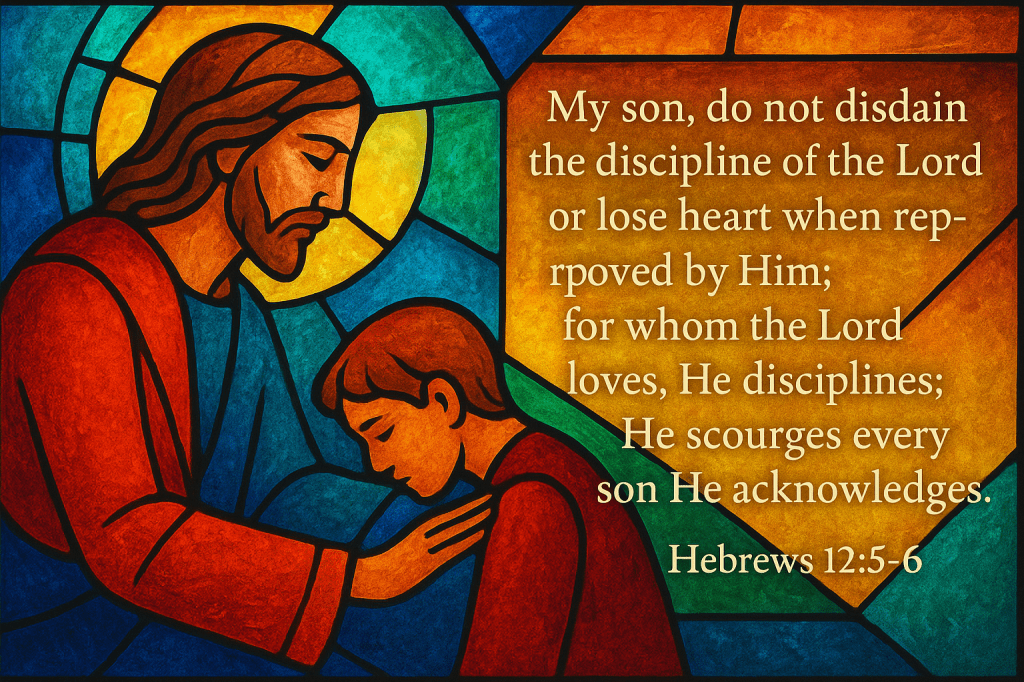
But the path to this promised gathering is not one of comfort. The Letter to the Hebrews reminds us that God’s love is shown in His discipline—like a father who trains his child to grow in strength and virtue. In the ancient Jewish mindset, discipline was not seen as punishment for its own sake but as an essential formation for holiness, making one ready to stand in God’s presence. This is why the Gospel presents a sobering reality: not everyone will enter the Kingdom, and those who wish to must “strive to enter through the narrow door” (Luke 13:24).
Across these passages, we see the harmony of God’s universal invitation and the personal responsibility it demands. The Kingdom is open to people from east and west… north and south (Luke 13:29), but entry requires more than cultural heritage or proximity to religious things—it demands a lived, disciplined, persevering faith. Are we allowing God’s loving discipline to prepare us for that narrow door?
First Reading – Isaiah 66:18-21
From the Ends of the Earth to the Heart of God
The closing verses of Isaiah offer a breathtaking vision of God’s final plan for His people and for all creation. Written during the post-exilic period—when the people of Israel were returning from Babylonian captivity—this prophecy was a source of profound hope. It reminded the Jews that God’s covenant was not a narrow, ethnic possession but a divine gift meant for every nation. In the ancient world, nations were often divided by language, culture, and religious identity, yet here God declares that His glory will be revealed to those who had never heard His name. This passage resonates with today’s theme because it foreshadows the universal mission of the Church—an invitation that will one day reach the distant coastlands, calling all peoples to offer themselves to the Lord. The reading not only anticipates the inclusion of the Gentiles but also hints at the priesthood of all believers, a reality fulfilled in Christ and His Church.
Isaiah 66:18-21
New American Bible (Revised Edition)
God Gathers the Nations. 18 I am coming to gather all nations and tongues; they shall come and see my glory. 19 I will place a sign among them; from them I will send survivors to the nations: to Tarshish, Put and Lud, Mosoch, Tubal and Javan, to the distant coastlands which have never heard of my fame, or seen my glory; and they shall proclaim my glory among the nations. 20 They shall bring all your kin from all the nations as an offering to the Lord, on horses and in chariots, in carts, upon mules and dromedaries, to Jerusalem, my holy mountain, says the Lord, just as the Israelites bring their grain offering in a clean vessel to the house of the Lord. 21 Some of these I will take as priests and Levites, says the Lord.
Detailed Exegesis
Verse 18 – “I am coming to gather all nations and tongues; they shall come and see my glory.”
God reveals His intention to unite humanity under His divine reign. The phrase “all nations and tongues” emphasizes that salvation is not limited to Israel but is open to the entire human race. In light of the New Covenant, this verse points to the Church’s mission to preach the Gospel to all nations (Matthew 28:19).
Verse 19 – “I will place a sign among them; from them I will send survivors to the nations: to Tarshish, Put and Lud, Mosoch, Tubal and Javan, to the distant coastlands which have never heard of my fame, or seen my glory; and they shall proclaim my glory among the nations.”
The “sign” likely refers to a miraculous work of God—ultimately fulfilled in the life, death, and resurrection of Christ, and visibly manifested at Pentecost when the Apostles spoke in many tongues. The “survivors” are the remnant—those faithful to God—who become His messengers to the world. The mention of distant lands underscores the scope of the mission.
Verse 20 – “They shall bring all your kin from all the nations as an offering to the Lord, on horses and in chariots, in carts, upon mules and dromedaries, to Jerusalem, my holy mountain, says the Lord, just as the Israelites bring their grain offering in a clean vessel to the house of the Lord.”
Here, the imagery of pilgrimage reflects the ingathering of the faithful. In the New Covenant, “Jerusalem” becomes a symbol of the heavenly city, the Church itself. The variety of transportation methods shows that no obstacle will stop God’s plan—His people will come from every background and circumstance.
Verse 21 – “Some of these I will take as priests and Levites, says the Lord.”
This statement would have shocked ancient Israel, where the priesthood was reserved for the descendants of Aaron and the tribe of Levi. God now promises to choose priests from among the Gentiles—a prophecy fulfilled in the Church, where people from all nations serve as spiritual leaders and offer the Eucharistic sacrifice.
Teachings
The Catechism of the Catholic Church affirms this universal mission: “The Church is missionary by her very nature, for Christ’s mandate to ‘make disciples of all nations’ applies to the whole Church and to every member of the Church” (CCC 849). The Church Fathers often linked Isaiah 66 to Pentecost, when the Holy Spirit empowered the Apostles to proclaim the Gospel to people of every language. Saint John Chrysostom noted, “God’s calling is without limit. The ends of the earth are invited to His table, and no tongue is left without His word.” This prophecy is also echoed in the Second Vatican Council’s Ad Gentes: “The pilgrim Church is missionary by her very nature, for it is from the mission of the Son and the mission of the Holy Spirit that she draws her origin” (AG 2).
Reflection
This reading challenges us to see the Church not as a closed community for the like-minded, but as a living mission field where every culture and person is invited to encounter Christ. God’s desire to “gather all nations and tongues” should stir us to become active participants in that mission. In our daily lives, this can mean sharing our faith with those who have never heard the Gospel, supporting missionary efforts, or simply embodying the love of Christ in our interactions. Are we willing to be among the “survivors” God sends into the world? Do we see every person—regardless of background—as someone called to God’s holy mountain? And will we allow ourselves to be “clean vessels” through which God can draw others to Himself?
Responsorial Psalm – Psalm 117
The Universal Song of Praise
Psalm 117 is the shortest psalm in the entire Psalter, yet it carries a profoundly expansive message. Composed within Israel’s worship tradition, it is a hymn of invitation addressed not just to the people of Israel, but to all nations. This is remarkable considering the Old Testament’s frequent emphasis on Israel as God’s chosen people. Here, the psalmist breaks the boundaries of national identity, calling everyone—regardless of language, culture, or heritage—to glorify the Lord. Its placement in today’s readings is intentional: it echoes Isaiah’s prophecy that God will gather all peoples into His presence and anticipates the Gospel’s vision of many coming from east and west to recline at the table in the Kingdom of God (Luke 13:29). In the context of Jewish worship, this psalm would have been sung during great feasts, possibly the pilgrimage festivals, when foreign converts or visitors might have been present in Jerusalem. Its universality perfectly fits today’s theme of God’s open invitation to salvation paired with our call to respond faithfully.
Psalm 117
New American Bible (Revised Edition)
The Nations Called to Praise
1 Praise the Lord, all you nations!
Extol him, all you peoples!
2 His mercy for us is strong;
the faithfulness of the Lord is forever.
Hallelujah!
Detailed Exegesis
Verse 1 – “Praise the Lord, all you nations! Extol him, all you peoples!”
This opening is not merely a suggestion but a command. The psalmist addresses the entire world, using “nations” and “peoples” to cover every human group. In the Old Testament, the word “nations” often referred to Gentiles, yet here they are explicitly included in the worship of the Lord. This anticipates the Great Commission of Matthew 28:19 and reflects the Church’s mission to proclaim the Gospel to the ends of the earth.
Verse 2 – “His mercy for us is strong; the faithfulness of the Lord is forever. Hallelujah!”
The reason for this universal call to praise is God’s enduring mercy and faithfulness. “Mercy” translates the Hebrew hesed, meaning steadfast covenant love, while “faithfulness” reflects God’s unchanging reliability. The psalmist speaks in the plural—“for us”—reminding us that the blessings of God are meant to be shared, not hoarded. The “Hallelujah” at the end is both a conclusion and a timeless invitation for all to join in the worship of God.
Teachings
The Catechism of the Catholic Church emphasizes the universality of God’s plan: “The Church is catholic because she has been sent out by Christ on a mission to the whole of the human race” (CCC 831). Saint Augustine, in his commentary on the psalms, wrote, “In two verses, the Spirit has gathered the world. The few words contain the depth of salvation: praise, mercy, faithfulness.” Psalm 117 is also significant in the liturgy, as it is often used in missionary contexts to highlight that the Gospel is meant for every culture and person.
Reflection
Psalm 117 is a reminder that praising God is not limited to our private devotions or our parish community—it is a universal call that unites all believers and invites every non-believer into the joy of God’s love. Our worship should never be inward-looking or exclusive, but radiant and outward-facing. In practical terms, this can mean including others in our acts of praise, being bold in our witness, and cultivating a heart that rejoices in the diversity of God’s family. Do we celebrate the ways God is worshiped across different cultures and languages? Does our life invite others to join in the song of praise? And are we willing to be instruments through which the nations can hear the “Hallelujah” of the Lord’s mercy and faithfulness?
Second Reading – Hebrews 12:5-7, 11-13
The Loving Discipline of the Father
The Letter to the Hebrews was written to a Christian community experiencing hardship, persecution, and the temptation to abandon the faith. These believers were mostly Jewish converts who understood the Old Testament’s emphasis on covenant and obedience but were now struggling to persevere under the weight of suffering. The author presents their trials as a sign not of God’s absence, but of His loving presence, drawing from the wisdom tradition of Proverbs 3:11-12. In ancient Jewish culture, a father’s discipline was seen as a sign of deep love, aimed at forming the character of the child. The passage assures the faithful that endurance through trials is part of God’s fatherly training, preparing them to walk the straight and narrow path that leads to life. This reading ties perfectly to today’s theme: God invites all nations into His Kingdom, but entry requires perseverance, purification, and the shaping of our hearts to reflect His holiness.
Hebrews 12:5-7, 11-13
New American Bible (Revised Edition)
5 You have also forgotten the exhortation addressed to you as sons:
“My son, do not disdain the discipline of the Lord
or lose heart when reproved by him;
6 for whom the Lord loves, he disciplines;
he scourges every son he acknowledges.”
7 Endure your trials as “discipline”; God treats you as sons. For what “son” is there whom his father does not discipline?
11 At the time, all discipline seems a cause not for joy but for pain, yet later it brings the peaceful fruit of righteousness to those who are trained by it.
12 So strengthen your drooping hands and your weak knees. 13 Make straight paths for your feet, that what is lame may not be dislocated but healed.
Detailed Exegesis
Verse 5 – “You have also forgotten the exhortation addressed to you as sons: ‘My son, do not disdain the discipline of the Lord or lose heart when reproved by him.’”
Here the author quotes Proverbs 3:11, reminding the community of God’s parental care. To “disdain” or “lose heart” in discipline is to misunderstand its purpose. God’s correction is not meant to crush us but to strengthen us.
Verse 6 – “For whom the Lord loves, he disciplines; he scourges every son he acknowledges.”
This continuation of the proverb teaches that discipline is a mark of belonging to God’s family. “Scourging” here is metaphorical for trials and hardships, which God permits as a means of purifying and strengthening our faith.
Verse 7 – “Endure your trials as ‘discipline’; God treats you as sons. For what ‘son’ is there whom his father does not discipline?”
The author reframes suffering as an essential aspect of sonship. Just as loving parents guide and correct their children, God trains His children to grow in holiness. This would have resonated deeply with the original audience, for whom family discipline was an expected and respected part of upbringing.
Verse 11 – “At the time, all discipline seems a cause not for joy but for pain, yet later it brings the peaceful fruit of righteousness to those who are trained by it.”
The author acknowledges the reality—discipline is uncomfortable. Yet its purpose is long-term transformation. “Peaceful fruit of righteousness” refers to the inner stability and holiness that come from a life shaped by God’s correction.
Verse 12 – “So strengthen your drooping hands and your weak knees.”
This is a call to renewed courage, echoing Isaiah 35:3. The image suggests someone exhausted from the spiritual race, urged to stand firm and press on.
Verse 13 – “Make straight paths for your feet, that what is lame may not be dislocated but healed.”
Quoting Proverbs 4:26, the author exhorts believers to choose the right way, not only for their own salvation but also for the healing and strengthening of the entire community. The “lame” could symbolize those struggling in faith, who may be strengthened by the example of steadfast believers.
Teachings
The Catechism of the Catholic Church affirms that trials have a sanctifying purpose: “The way of perfection passes by way of the Cross. There is no holiness without renunciation and spiritual battle” (CCC 2015). Saint John Paul II wrote in Salvifici Doloris: “Suffering, more than anything else, makes present in the history of humanity the force of the Redemption” (SD 27). Saint Augustine also reflected on divine discipline, saying, “If you are without discipline, you are no son; for what father does not chastise the son whom he loves?” These teachings root suffering not in punishment, but in God’s desire to form His children into the image of Christ, who Himself “learned obedience through what He suffered” (Hebrews 5:8).
Reflection
This reading invites us to reframe our understanding of life’s difficulties. Rather than seeing them as signs of God’s displeasure, we are called to view them as opportunities for growth, intimacy with God, and preparation for eternal life. Discipline might come in the form of trials, temptations resisted, or the painful work of letting go of sin. Our task is to remain steadfast, trusting that God’s hand is shaping us. When challenges come, do we resist them with bitterness, or embrace them as part of God’s loving formation? Are we strengthening the “weak knees” of those around us by our example? And are we willing to walk the straight path, even when it costs us comfort, so that both we and others may be healed?
Holy Gospel – Luke 13:22-30
Striving for the Narrow Door
In this passage from The Gospel of Luke, Jesus is on His journey to Jerusalem, where His mission will be fulfilled in His Passion, Death, and Resurrection. Along the way, He teaches in towns and villages, drawing crowds who are eager for His wisdom yet often misunderstanding the radical demands of discipleship. When asked whether only a few will be saved, Jesus does not give a numerical answer but shifts the focus to personal responsibility—calling His listeners to “strive to enter through the narrow door”. In the first-century Jewish context, many believed that being part of the covenant community guaranteed salvation. Jesus challenges this presumption, warning that familiarity with Him is not enough; true discipleship demands perseverance, repentance, and active obedience. This Gospel aligns perfectly with today’s theme: God’s Kingdom is open to all nations, but entering it requires an intentional and disciplined life of faith.
Luke 13:22-30
New American Bible (Revised Edition)
22 He passed through towns and villages, teaching as he went and making his way to Jerusalem. 23 Someone asked him, “Lord, will only a few people be saved?” He answered them, 24 “Strive to enter through the narrow door, for many, I tell you, will attempt to enter but will not be strong enough. 25 After the master of the house has arisen and locked the door, then will you stand outside knocking and saying, ‘Lord, open the door for us.’ He will say to you in reply, ‘I do not know where you are from.’ 26 And you will say, ‘We ate and drank in your company and you taught in our streets.’ 27 Then he will say to you, ‘I do not know where [you] are from. Depart from me, all you evildoers!’ 28 And there will be wailing and grinding of teeth when you see Abraham, Isaac, and Jacob and all the prophets in the kingdom of God and you yourselves cast out. 29 And people will come from the east and the west and from the north and the south and will recline at table in the kingdom of God. 30 For behold, some are last who will be first, and some are first who will be last.”
Verse-by-Verse Breakdown
Verse 22 – “He passed through towns and villages, teaching as he went and making his way to Jerusalem.”
Luke situates Jesus in motion toward Jerusalem, the city of destiny where He will accomplish salvation. This journey is not geographical only—it is theological, pointing to the fulfillment of God’s redemptive plan.
Verse 23 – “Someone asked him, ‘Lord, will only a few people be saved?’ He answered them,”
The question reflects a common Jewish debate of the time, with some rabbis teaching that only a small remnant of Israel would be saved. Rather than fueling speculation, Jesus redirects the conversation toward personal conversion.
Verse 24 – “Strive to enter through the narrow door, for many, I tell you, will attempt to enter but will not be strong enough.”
The Greek word for “strive” (agonizomai) implies strenuous effort, like that of an athlete in competition. The “narrow door” symbolizes the challenging path of authentic discipleship—one that requires repentance, humility, and perseverance in faith.
Verse 25 – “After the master of the house has arisen and locked the door, then will you stand outside knocking and saying, ‘Lord, open the door for us.’ He will say to you in reply, ‘I do not know where you are from.’”
This is a warning about the finality of judgment. Once the door is shut, the opportunity to enter is gone. The phrase “I do not know where you are from” indicates a lack of true relationship with Christ, regardless of outward association.
Verse 26 – “And you will say, ‘We ate and drank in your company and you taught in our streets.’”
Mere physical proximity to Jesus or exposure to His teachings does not guarantee salvation. It is possible to be near the truth and yet fail to live by it.
Verse 27 – “Then he will say to you, ‘I do not know where you are from. Depart from me, all you evildoers!’”
Jesus repeats the judgment, citing Psalm 6:9 to emphasize that evildoers have no place in God’s Kingdom. This shows that the decisive factor is not what we claim to know but how we live.
Verse 28 – “And there will be wailing and grinding of teeth when you see Abraham, Isaac, and Jacob and all the prophets in the kingdom of God and you yourselves cast out.”
The image of “wailing and grinding of teeth” is a standard Jewish expression of anguish and regret. Being excluded from the patriarchs’ company would be a shock to those who assumed their ancestry guaranteed salvation.
Verse 29 – “And people will come from the east and the west and from the north and the south and will recline at table in the kingdom of God.”
This fulfills Isaiah’s prophecy (Isaiah 66:18-20) that God would gather people from every nation. It is a radical inclusion that would have challenged the ethnic and religious exclusivism of Jesus’ audience.
Verse 30 – “For behold, some are last who will be first, and some are first who will be last.”
This reversal is a hallmark of Luke’s Gospel. Those who appear insignificant in the world’s eyes may be great in God’s Kingdom, and those who assume they are secure may find themselves excluded if they lack true faithfulness.
Teachings
The Catechism of the Catholic Church warns against presumption: “There is no salvation apart from Christ and His Church; yet, while God can work outside the visible bounds of the Church, no one is saved without faith, grace, and conversion” (CCC 846-848). Pope Benedict XVI reflected on this passage, saying, “The door is narrow, but it is always open—open to all, yet entered only by those willing to let go of sin and self-sufficiency”. Saint Cyril of Alexandria emphasized the need for readiness: “The time will come when the Master will close the door. Let us not delay our conversion, for delay is the enemy of salvation.”
Reflection
This Gospel urges us to take our salvation seriously. It is not enough to be “near” Jesus—we must truly belong to Him through a life of faith and obedience. The “narrow door” challenges us to reject complacency, to resist sin, and to live each day as if we are on our way to meet the Lord face-to-face. God’s invitation is open to all, but the response must be wholehearted. Are we striving daily to walk through the narrow door, or are we content to linger outside? Do our lives reflect a genuine relationship with Christ, or do we rely on the false security of religious habit without true conversion? And are we willing to embrace the discipline and sacrifice needed to enter the feast of the Kingdom?
Gathered, Trained, and Ready for the Kingdom
Today’s readings weave together a powerful truth: God’s invitation is for all nations, but entry into His Kingdom requires a willing heart shaped by His discipline and committed to walking through the “narrow door”. From Isaiah, we see the breathtaking vision of a God who will gather people from every corner of the earth, even appointing priests from among the Gentiles. Psalm 117 gives voice to this global call, urging every people to praise the Lord for His enduring mercy and faithfulness. Hebrews reminds us that our journey is not without trials, but these very hardships are the loving discipline of a Father forming His children for eternal life. Finally, in Luke, Jesus warns that the door to the Kingdom is narrow and time-limited—an urgent reminder that salvation is not about mere proximity to Him, but true, persevering discipleship.
We are called not just to admire this vision, but to participate in it—to be among the “survivors” God sends out, to bear witness to His glory, to persevere through His loving correction, and to live each day in readiness for the banquet of the Kingdom. This means cultivating a faith that is active, humble, and missionary—a faith that reaches beyond comfort zones to invite others in.
Will we allow God’s discipline to make us strong enough for the narrow door? Will we be among those who come from east and west, north and south, to recline at His table? And will we, by our lives, extend the Lord’s invitation to every soul we meet? Let us take up this mission with joy, knowing that the One who calls us is faithful and His mercy endures forever.
Engage with Us!
We would love to hear how today’s readings speak to your heart. Share your thoughts, prayers, and personal insights in the comments so we can grow together as a community of faith, encouraging one another on the journey toward God’s Kingdom.
Reflection Questions
First Reading – Isaiah 66:18-21
How does the vision of God gathering all nations challenge the way you view the mission of the Church? In what ways can you be a “clean vessel” that brings others to the Lord?
Responsorial Psalm – Psalm 117
Do you see your life as a witness that invites others to praise the Lord? How can you help people from different backgrounds join in the “Hallelujah” of God’s mercy and faithfulness?
Second Reading – Hebrews 12:5-7, 11-13
When you face trials, do you recognize them as God’s loving discipline? How might rethinking suffering as training for holiness change your daily walk with Christ?
Holy Gospel – Luke 13:22-30
What does “striving to enter through the narrow door” look like in your life right now? Are there areas where you are relying more on religious habit than on true conversion?
Let us live each day with the joy, love, and mercy that Jesus taught us, striving always to draw closer to Him and to lead others into the fullness of His Kingdom.
Follow us on Instagram and Facebook for more insights and reflections on living a faith-filled life.

 Holy Manna!
Leave a comment