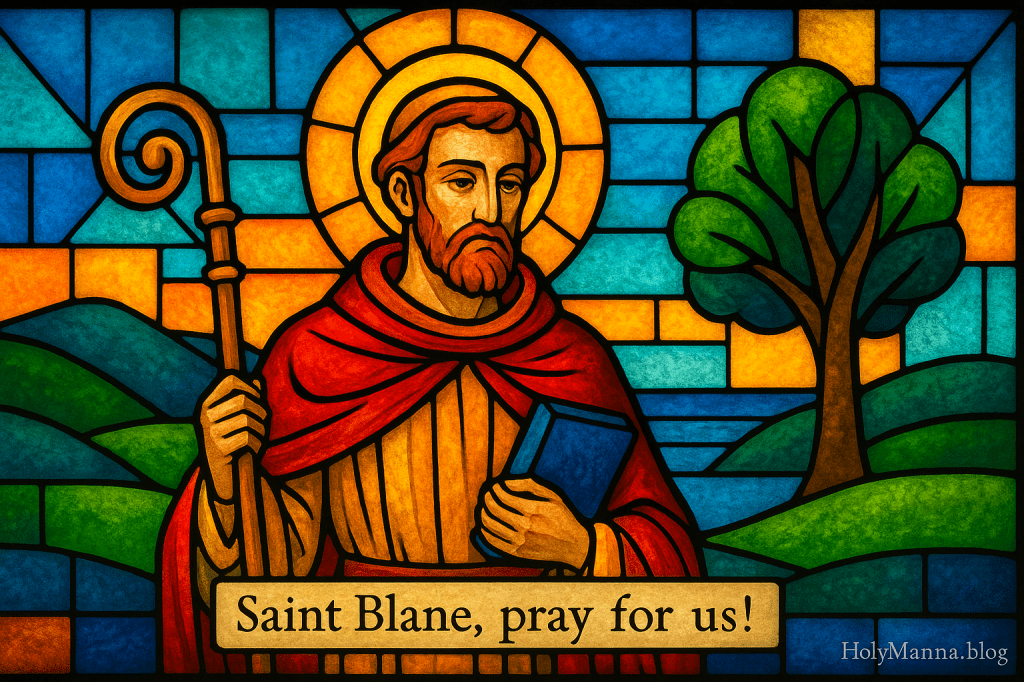
The Apostle of the Isles
In the annals of the early Scottish Church, few names carry the quiet weight of holiness like Saint Blane. Born in the 6th century and remembered as a missionary bishop, teacher, and miracle worker, Blane left a legacy of gentleness and perseverance in spreading the Gospel to the western fringes of Christendom. Revered as one of the Celtic saints of Scotland, he is venerated not only for his evangelizing zeal, but also for the holiness of his life and the miracles attributed to him both before and after death. His feast day is celebrated on August 11, and he remains a shining figure among the saints who helped root Christianity in Scotland.
Cradled in Faith
Saint Blane was born around the middle of the 6th century in Bute, an island off the western coast of Scotland. According to tradition, his mother was Ereina, a sister of Saint Cathan, making Blane a spiritual heir to a lineage of holy figures. His early life was marked by tragedy and providence: his birth was said to have occurred under scandalous circumstances, and he was cast adrift in a boat as an infant. Yet, by divine protection, he survived and was raised by pious hands, later returning to Bute where his calling to serve Christ deepened.
As a youth, Blane studied under his uncle, Saint Cathan, and later went to Ireland, where he became a disciple of Saint Comgall at Bangor Abbey and then studied under Saint Kenneth (Cainnech). His formation in Irish monasticism deeply shaped his sense of discipline, learning, and missionary zeal. Eventually ordained a priest, and later consecrated as a bishop, Blane returned to his native Scotland to carry out a mission of teaching, preaching, and healing among the people.
The Light of Christ in the Darkness
Upon returning to Kingarth on the Isle of Bute, Saint Blane founded a monastery and school, serving as a center of learning and holiness. His work helped shape a new generation of Christian leaders and monks. He tirelessly traveled among the people, bringing the Gospel to remote and pagan communities, healing the sick, comforting the afflicted, and embodying Christ’s presence to those in need.
One particularly touching miracle from his life tells of how Saint Blane, seeing a poor man grieving the death of his ox—his only means of working the land—prayed fervently, and the ox was miraculously restored to life. In another account, his prayers brought rain during a time of drought, saving crops and lives. These miracles weren’t grandiose public spectacles but rather quiet manifestations of God’s mercy through His humble servant.
Saint Blane also reportedly possessed the gift of discernment. He could read the hearts of those who came to him and guide them to repentance, healing broken spirits as well as bodies. His reputation for sanctity spread across the western isles, drawing people to seek his intercession and spiritual wisdom.
Trials in the Vineyards of the Lord
Though there is no record of Saint Blane dying a martyr’s death, his life was not without hardship. The missionary work in Scotland was dangerous, both physically and spiritually. Harsh weather, resistance from local tribes, and spiritual warfare were daily realities. Yet, Blane pressed on. His fortitude and patience served as a quiet martyrdom of sorts—a giving of his whole life to Christ in a land still hostile to the Gospel.
One ancient story recounts how, during a fierce storm, Blane prayed and made the Sign of the Cross, and the wind immediately ceased. Even nature itself seemed to submit to his faith and purity of heart. He taught not with anger or argument, but with the consistent light of Christ—through works of mercy, faithful prayer, and unfailing charity.
A Legacy That Blossomed Beyond Death
After his death around the year 590, Saint Blane was buried at Kingarth, where his monastery had once flourished. The site became a place of pilgrimage, with many miracles reported at his tomb. His name was so venerated that churches were later dedicated to him in both Scotland and northern England, especially in Dunblane, a town believed to be named after him (“dun” meaning fort, and “Blane” being his name). The cathedral of Dunblane still stands today as a silent witness to the deep roots he planted.
Pilgrims visited his grave seeking healing, and many left behind tokens of thanksgiving for cures and blessings received. His relics were cherished, and his feast continued to be celebrated across centuries, a testament to the enduring power of his holiness.
Walking in Blane’s Footsteps
Saint Blane lived in an age of transition, where Christianity was slowly replacing paganism, and light was struggling against darkness. He didn’t seek fame or theological debate—he sought souls. He reminds us that “faith working through love” (Galatians 5:6) is the surest way to evangelize.
Are we willing to be missionaries of peace, humility, and kindness, even when we’re not recognized or praised? Saint Blane’s hidden life calls us to deeper faithfulness in the ordinary. Whether in the workplace, at home, or among strangers, we can bring Christ’s light simply by living in truth, love, and humility.
Today, as we recall the legacy of Saint Blane, let us ask for his intercession that we too might respond to God’s call—gently, persistently, and joyfully.
Engage with Us!
We’d love to hear how Saint Blane’s quiet strength and holiness inspires you. What spoke to your heart from his life? Have you ever experienced or witnessed a quiet miracle?
Reflection Questions:
- How can I bring the light of Christ into dark or forgotten corners of my community, as Saint Blane did in the Scottish isles?
- Am I open to small acts of healing and kindness, trusting that God will work through them?
- What obstacles in my life can I offer to God as silent sacrifices, in imitation of Saint Blane’s perseverance?
Let’s support one another in this journey of faith and strive to do everything with love, just as our Lord Jesus Christ did.
Saint Blane, pray for us! 🌊
Follow us on Instagram and Facebook for more insights and reflections on living a faith-filled life.

 Holy Manna!
Leave a comment