Tuesday of the Eighteenth Week in Ordinary Time – Lectionary: 408
When We Fall, Mercy Reaches First
Have you ever felt the sting of failure—whether by sin, pride, or fear—and wondered if God would still draw near? Today’s readings invite us into the heart of that question. Through the jealous whispers of siblings, the trembling steps of a disciple on water, and the broken cries of repentance in Psalm 51, we’re reminded that human weakness is not the end of the story. The God we serve is not distant or indifferent—He is the One who hears, who comes near, who reaches down when we cry, “Lord, save me!” (Matthew 14:30). These passages, woven together, offer a powerful meditation on God’s unwavering mercy when we are at our weakest.
In Numbers 12, Miriam and Aaron question Moses’ authority, and with it, they reveal their pride and jealousy. Yet, the Lord doesn’t simply punish—He defends His servant and ultimately responds to Moses’ heartfelt intercession with healing. This encounter reminds us of a profound truth: God’s mercy is often stirred by humility and prayer. Likewise, Psalm 51—traditionally attributed to David after his fall with Bathsheba—echoes a similar cry for cleansing, “Have mercy on me, God, in accord with your merciful love” (Psalm 51:3). It is one of the most raw and beautiful confessions in all of Scripture, showing us the path to restoration lies not in perfection, but in contrition and trust.
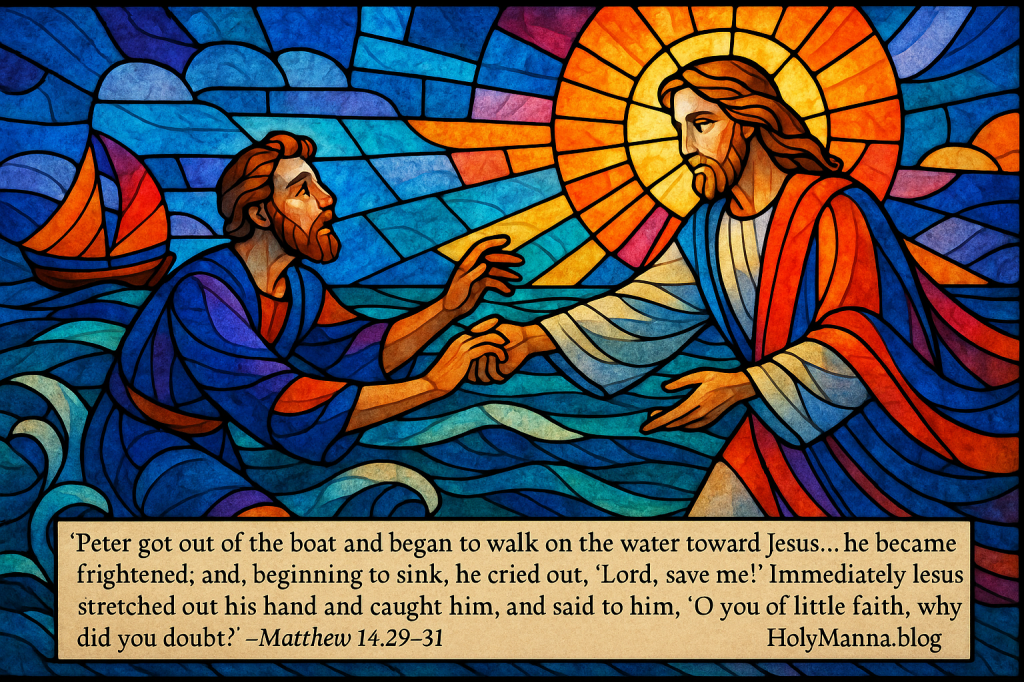
Then comes Peter in The Gospel of Matthew, stepping out in courage but sinking in doubt. His failure isn’t final, though. Jesus doesn’t scold him first—He saves him first. “O you of little faith, why did you doubt?” (Matthew 14:31) comes only after the hand that caught him. This divine instinct to rescue before rebuke reveals the heart of Christ. Across today’s readings, we see different faces of human frailty—envy, sin, fear—but we also see the constant: a merciful God who answers humility with healing, repentance with forgiveness, and fear with His saving presence. Will you let Him meet you there today, in your need, in your failure, in your longing to begin again?
First Reading – Numbers 12:1–13
Jealousy, Judgment, and the Healing Cry of Intercession
The Book of Numbers chronicles Israel’s journey through the wilderness—physically and spiritually. By chapter 12, the Israelites have already experienced both deliverance and disobedience, and tensions are rising. In this moment, the very siblings of Moses—Miriam and Aaron—speak out against him. On the surface, it seems like a family dispute rooted in marriage, but at its core lies the spiritual sin of jealousy. Miriam and Aaron, themselves prophets and leaders, question Moses’ unique status before the Lord. This reading speaks directly to today’s theme: how God responds to human weakness—not by abandoning, but by calling us into humility and mercy. It also foreshadows the power of intercessory prayer, as Moses, though attacked, pleads for his sister’s healing. Within the historical context of covenantal hierarchy and divine authority, this episode highlights how rebellion, pride, and rivalry distort community—and how mercy restores it.
Numbers 12:1-13
New American Bible (Revised Edition)
Jealousy of Aaron and Miriam. 1 Miriam and Aaron spoke against Moses on the pretext of the Cushite woman he had married; for he had in fact married a Cushite woman. 2 They complained, “Is it through Moses alone that the Lord has spoken? Has he not spoken through us also?” And the Lord heard this. 3 Now the man Moses was very humble, more than anyone else on earth. 4 So at once the Lord said to Moses and Aaron and Miriam: Come out, you three, to the tent of meeting. And the three of them went. 5 Then the Lord came down in a column of cloud, and standing at the entrance of the tent, called, “Aaron and Miriam.” When both came forward, 6 the Lord said: Now listen to my words:
If there are prophets among you,
in visions I reveal myself to them,
in dreams I speak to them;
7 Not so with my servant Moses!
Throughout my house he is worthy of trust:
8 face to face I speak to him,
plainly and not in riddles.
The likeness of the Lord he beholds.
Why, then, do you not fear to speak against my servant Moses? 9 And so the Lord’s wrath flared against them, and he departed.
Miriam’s Punishment. 10 Now the cloud withdrew from the tent, and there was Miriam, stricken with a scaly infection, white as snow! When Aaron turned toward Miriam and saw her stricken with snow-white scales, 11 he said to Moses, “Ah, my lord! Please do not charge us with the sin that we have foolishly committed! 12 Do not let her be like the stillborn baby that comes forth from its mother’s womb with its flesh half consumed.” 13 Then Moses cried to the Lord, “Please, not this! Please, heal her!”
Detailed Exegesis
Verse 1 – “Miriam and Aaron spoke against Moses on the pretext of the Cushite woman he had married; for he had in fact married a Cushite woman.”
This verse introduces the conflict. While the stated issue is Moses’ foreign wife, the real motive is jealousy. The “Cushite woman” may have drawn ethnic or tribal criticism, but this critique is a smokescreen. Miriam is listed first, suggesting she led the opposition, and in Hebrew narrative, this often signals moral responsibility.
Verse 2 – “They complained, ‘Is it through Moses alone that the Lord has spoken? Has he not spoken through us also?’ And the Lord heard this.”
Here the true issue surfaces—envy over divine favor and prophetic authority. This is not mere sibling rivalry; it’s spiritual pride. Miriam and Aaron are undermining God’s chosen order. That “the Lord heard this” signals that God takes slander—especially against His anointed—with grave seriousness.
Verse 3 – “Now the man Moses was very humble, more than anyone else on earth.”
This powerful verse underscores Moses’ unique virtue. His humility becomes the foil to his siblings’ pride. The Hebrew word here translated as “humble” (anav) implies deep submission to God’s will. His humility becomes the very reason God defends him.
Verse 4 – “So at once the Lord said to Moses and Aaron and Miriam: Come out, you three, to the tent of meeting. And the three of them went.”
God responds swiftly. The “tent of meeting” is the sacred space where divine revelations occur. Calling all three signals a divine confrontation, not a private rebuke. The Lord Himself will judge the matter.
Verse 5 – “Then the Lord came down in a column of cloud, and standing at the entrance of the tent, called, ‘Aaron and Miriam.’ When both came forward…”
The descent of the Lord in a cloud recalls earlier theophanies, moments when God makes His presence visible. This cloud is not just for awe—it is for justice. Aaron and Miriam are summoned like defendants before a divine tribunal.
Verse 6 – “Now listen to my words: If there are prophets among you, in visions I reveal myself to them, in dreams I speak to them;”
God begins by affirming that yes, He does speak to prophets—but with limits. Visions and dreams are indirect. This is the ordinary prophetic experience, and both Aaron and Miriam may have had such encounters.
Verse 7 – “Not so with my servant Moses! Throughout my house he is worthy of trust;”
Here God reveals a stunning truth—Moses has a unique, intimate relationship with Him. He is not just a prophet; he is a steward of God’s house. Trustworthiness is the defining mark of Moses’ leadership.
Verse 8 – “Face to face I speak to him, plainly and not in riddles. The likeness of the Lord he beholds. Why, then, do you not fear to speak against my servant Moses?”
This is the climax of God’s defense. Moses sees God “face to face”—a rare privilege unmatched by any prophet until Christ. The rebuke ends with a searing question: “Why, then, do you not fear?” The implied answer is clear: to speak against Moses is to challenge God’s authority.
Verse 9 – “And so the Lord’s wrath flared against them, and he departed.”
God’s anger reveals the seriousness of the offense. That He “departed” symbolizes a withdrawal of divine presence—a terrifying judgment for those who rely on Him.
Verse 10 – “Now the cloud withdrew from the tent, and there was Miriam, stricken with a scaly infection, white as snow!”
Miriam alone is afflicted, reinforcing her leading role in the rebellion. The disease, likely leprosy, isolates her physically and ritually, echoing the interior corruption of pride. The phrase “white as snow” also intensifies the punishment, contrasting her once-glorious role as a prophetess with her present shame.
Verse 11 – “When Aaron turned toward Miriam and saw her stricken with snow-white scales, he said to Moses, ‘Ah, my lord! Please do not charge us with the sin that we have foolishly committed!’”
Aaron repents immediately and turns to Moses, now calling him “my lord.” This reversal in language reflects true contrition. The sin is acknowledged without excuses.
Verse 12 – “Do not let her be like the stillborn baby that comes forth from its mother’s womb with its flesh half consumed.”
Aaron uses vivid, even grotesque, imagery to plead for mercy. The reference to a stillborn child communicates the horror of her condition and the urgency of healing.
Verse 13 – “Then Moses cried to the Lord, ‘Please, not this! Please, heal her!’”
This is the turning point. Moses, the one wronged, becomes the intercessor. His prayer is simple, urgent, and full of compassion. Like Christ, he stands in the gap between judgment and healing.
Teachings
This reading powerfully echoes teachings from The Catechism of the Catholic Church on sin, mercy, and intercession. CCC 1866 warns against “capital sins,” including envy: “Envy refers to the sadness at the sight of another’s goods and the immoderate desire to acquire them for oneself, even unjustly.” Miriam and Aaron’s envy distorts their perception and divides the covenant community. Yet the healing comes through humility and intercession. CCC 2635 teaches: “Intercession is a prayer of petition which leads us to pray as Jesus did.” Moses’ prayer for Miriam prefigures Christ’s intercession for sinners, and calls each of us to do the same—especially for those who hurt us.
Saint John Chrysostom, reflecting on this passage, wrote: “To slander is to wound the soul more deeply than any bodily affliction.” Miriam’s leprosy became a visible sign of the invisible wound of pride and rash judgment. The Church Fathers often used this account to illustrate the consequences of gossip and the healing power of merciful prayer.
Reflection
This reading is a mirror to our own hearts. How often do we mask our envy in criticism, or resist the unique callings of others because we feel overlooked? In a world steeped in comparison and competition, God reminds us: His callings are not about status—they are about trust. Do we speak against others in frustration, or intercede for them in love? Moses shows us what true leadership looks like: mercy even when wronged, prayer even when hurt.
Today, examine your heart. Is there someone you envy? Someone you’ve criticized unfairly? Take a moment to pray for them by name. Ask for the grace to be more like Moses—humble, prayerful, and forgiving. And above all, trust in the mercy of the God who hears, heals, and always reaches first.
Responsorial Psalm – Psalm 51:3–7, 12–13
The Cry of a Contrite Heart
Psalm 51 is perhaps the most well-known penitential psalm in all of Scripture. Attributed to King David after the prophet Nathan confronted him about his sin with Bathsheba (2 Samuel 12), this psalm is a raw, tear-soaked confession of guilt and a desperate plea for God’s mercy. In ancient Israelite worship, psalms like this were used during personal and communal repentance, often accompanying sacrificial offerings. Yet what David reveals here transcends ritual—what God truly desires is a broken and contrite heart. This deeply personal lament fits perfectly within today’s theme of divine mercy in the midst of human failure. Where Numbers 12 revealed how God listens to the cry of intercession, Psalm 51 shows us what it means to be the one crying out for ourselves: not with entitlement, but with total humility and hope in God’s steadfast love.
Psalm 51:3-7, 12-13
New American Bible (Revised Edition)
3 Have mercy on me, God, in accord with your merciful love;
in your abundant compassion blot out my transgressions.
4 Thoroughly wash away my guilt;
and from my sin cleanse me.
5 For I know my transgressions;
my sin is always before me.
6 Against you, you alone have I sinned;
I have done what is evil in your eyes
So that you are just in your word,
and without reproach in your judgment.
7 Behold, I was born in guilt,
in sin my mother conceived me.
12 A clean heart create for me, God;
renew within me a steadfast spirit.
13 Do not drive me from before your face,
nor take from me your holy spirit.
Detailed Exegesis
Verse 3 – “Have mercy on me, God, in accord with your merciful love; in your abundant compassion blot out my transgressions.”
David appeals not to his own merit, but to God’s nature—His hesed, often translated “merciful love” or “steadfast love.” The plea to “blot out” is judicial language, asking that the divine record be wiped clean. The acknowledgment of “transgressions” shows full awareness of sin’s gravity.
Verse 4 – “Thoroughly wash away my guilt; and from my sin cleanse me.”
The repetition underscores the need for a complete cleansing—inside and out. The Hebrew verbs imply an intensive scrubbing, much like laundering stained garments. David knows he cannot purify himself; he needs God’s sanctifying work.
Verse 5 – “For I know my transgressions; my sin is always before me.”
This is the hallmark of genuine contrition—no blame-shifting, no minimizing. David confesses that his sin haunts him. It’s ever-present in his mind, not just something he did, but something that continues to affect him.
Verse 6 – “Against you, you alone have I sinned; I have done what is evil in your eyes so that you are just in your word, and without reproach in your judgment.”
Though David sinned grievously against others—Uriah, Bathsheba—he recognizes that all sin is ultimately an offense against God. This verse shows that true repentance includes surrendering to God’s justice. It is not only about sorrow, but about affirming God’s right to judge.
Verse 7 – “Behold, I was born in guilt, in sin my mother conceived me.”
David speaks not to excuse his sin, but to reveal the depth of fallen human nature. This verse has been foundational in the Church’s understanding of original sin. While not implying that sex or childbirth are sinful, it affirms that from the beginning, human beings are in need of divine grace.
Verse 12 – “A clean heart create for me, God; renew within me a steadfast spirit.”
This is the heart of the psalm. David is not asking for a mere pardon, but for transformation. The verb “create” (bara) is the same used in Genesis 1—only God can create something from nothing. David knows his heart is so corrupt that it must be made anew.
Verse 13 – “Do not drive me from before your face, nor take from me your holy spirit.”
This reveals David’s greatest fear: separation from God. He has known the intimacy of God’s Spirit, and now pleads not to lose it. The language echoes that of Saul, whose rejection by God was marked by the removal of the Spirit (1 Samuel 16:14). David, broken and humbled, begs for continued presence.
Teachings
The Church holds Psalm 51 in special regard, particularly in the Liturgy of the Hours and during penitential seasons like Lent. CCC 1431 explains: “Interior repentance is a radical reorientation of our whole life, a return, a conversion to God with all our heart, an end of sin, a turning away from evil, with repugnance toward the evil actions we have committed.” This psalm models that very repentance. It is more than confession—it is transformation.
Saint Augustine, reflecting on this psalm, wrote: “David wept more for his sin than others have wept for the death of their children. He knew that in sinning, he had turned from the source of life.” The psalm also shaped the Church’s understanding of the Sacrament of Penance. As CCC 1468 says: “The whole power of the sacrament of Penance consists in restoring us to God’s grace and joining us with him in an intimate friendship.” This is precisely what David longed for in his cry: not just forgiveness, but restored relationship.
Reflection
Have you ever prayed like this—not just to be excused, but to be renewed? David doesn’t approach God with pretense or bargaining. He lays his guilt bare and clings to the only thing he has left: God’s mercy. When was the last time you wept for your sins—not out of shame, but out of longing to be near God again? This psalm teaches us that true repentance isn’t about groveling—it’s about returning. Like the prodigal son rehearsing his apology, like Peter weeping after the rooster crowed, our journey back to the Father begins with a broken heart.
Today, take time to pray Psalm 51 slowly. Let each line stir something deep in you. Make an honest examination of conscience. Go to Confession if needed. And above all, trust that the same God who heard David’s plea hears yours. “A clean heart create for me, God; renew within me a steadfast spirit.” (Psalm 51:12) Let that be your prayer, too.
Holy Gospel – Matthew 14:22–36
When We Sink, He Reaches
This passage from The Gospel of Matthew takes place immediately after the miraculous feeding of the five thousand. The disciples have just witnessed Jesus multiplying loaves and fish—yet now they find themselves alone, in a storm, and afraid. In the first-century Jewish world, the sea represented chaos and danger, a place beyond human control. For the disciples, being caught in a storm was not just a natural hazard; it carried spiritual weight. Into this darkness and fear comes Jesus—walking on water, revealing His divinity, and calling Peter to a bold act of trust. When Peter falters, Jesus reaches out. This reading is central to today’s theme: God’s mercy amid human weakness and doubt. Whether we are drowning in sin, fear, or pride, Jesus doesn’t hesitate to save. His hand is always extended first.
Matthew 14:22-36
New American Bible (Revised Edition)
22 Then he made the disciples get into the boat and precede him to the other side, while he dismissed the crowds. 23 After doing so, he went up on the mountain by himself to pray. When it was evening he was there alone. 24 Meanwhile the boat, already a few miles offshore, was being tossed about by the waves, for the wind was against it. 25 During the fourth watch of the night, he came toward them, walking on the sea. 26 When the disciples saw him walking on the sea they were terrified. “It is a ghost,” they said, and they cried out in fear. 27 At once [Jesus] spoke to them, “Take courage, it is I; do not be afraid.” 28 Peter said to him in reply, “Lord, if it is you, command me to come to you on the water.” 29 He said, “Come.” Peter got out of the boat and began to walk on the water toward Jesus. 30 But when he saw how [strong] the wind was he became frightened; and, beginning to sink, he cried out, “Lord, save me!” 31 Immediately Jesus stretched out his hand and caught him, and said to him, “O you of little faith, why did you doubt?” 32 After they got into the boat, the wind died down. 33 Those who were in the boat did him homage, saying, “Truly, you are the Son of God.”
The Healings at Gennesaret. 34 After making the crossing, they came to land at Gennesaret. 35 When the men of that place recognized him, they sent word to all the surrounding country. People brought to him all those who were sick 36 and begged him that they might touch only the tassel on his cloak, and as many as touched it were healed.
Detailed Exegesis
Verse 22 – “Then he made the disciples get into the boat and precede him to the other side, while he dismissed the crowds.”
Jesus intentionally separates Himself from the disciples. The language here—“he made”—suggests urgency. He sends them ahead while He remains behind to pray, preparing the stage for a divine encounter in the storm.
Verse 23 – “After doing so, he went up on the mountain by himself to pray. When it was evening he was there alone.”
Jesus’ retreat to the mountain reveals the rhythm of His life: ministry followed by deep communion with the Father. The mountain is traditionally a place of divine encounter in Scripture—Moses received the Law there, Elijah heard the still small voice. Jesus enters into solitude while His disciples drift into distress.
Verse 24 – “Meanwhile the boat, already a few miles offshore, was being tossed about by the waves, for the wind was against it.”
The disciples are now struggling. The sea is chaotic, and they are far from shore—symbolically distant from safety, control, and Jesus’ physical presence. It is a metaphor for every moment in life when we feel alone in the storm.
Verse 25 – “During the fourth watch of the night, he came toward them, walking on the sea.”
The fourth watch was between 3:00 and 6:00 AM—when darkness is deepest. Jesus appears walking on the sea, demonstrating divine authority over chaos. This act is more than miraculous; it is a theophany—a revelation of His divinity.
Verse 26 – “When the disciples saw him walking on the sea they were terrified. ‘It is a ghost,’ they said, and they cried out in fear.”
The disciples misinterpret the moment of grace as something frightening. Fear distorts their perception. How often do we do the same—seeing God’s approach as a threat instead of a rescue?
Verse 27 – “At once Jesus spoke to them, ‘Take courage, it is I; do not be afraid.’”
Jesus responds immediately with comfort and clarity. His words echo God’s self-identification in Exodus 3:14: “It is I”, or in Greek, ego eimi—“I AM.” He reveals His divine identity and assures them of His presence.
Verse 28 – “Peter said to him in reply, ‘Lord, if it is you, command me to come to you on the water.’”
Peter’s response is bold and full of faith. He doesn’t just ask for proof; he asks to participate in the miracle. It’s a moment of spiritual courage, though it will be followed by human frailty.
Verse 29 – “He said, ‘Come.’ Peter got out of the boat and began to walk on the water toward Jesus.”
One word—“Come”—is all Peter needs. Jesus invites him to step into the impossible. And for a moment, Peter does. He walks by faith, not sight.
Verse 30 – “But when he saw how [strong] the wind was he became frightened; and, beginning to sink, he cried out, ‘Lord, save me!’”
Peter’s focus shifts from Jesus to the storm. Fear overtakes faith, and he begins to sink. But notice—he doesn’t try to save himself. He cries out: “Lord, save me!” It’s the shortest and most perfect prayer of the desperate soul.
Verse 31 – “Immediately Jesus stretched out his hand and caught him, and said to him, ‘O you of little faith, why did you doubt?’”
Jesus responds without hesitation. The rebuke—“Why did you doubt?”—is not harsh, but parental. It reveals the cause of Peter’s sinking: fear, not failure. And still, Jesus saves first, questions second.
Verse 32 – “After they got into the boat, the wind died down.”
Once Jesus is in the boat, peace returns. His presence calms the storm—not just around them, but within them. What we fear most often fades when we let Christ in.
Verse 33 – “Those who were in the boat did him homage, saying, ‘Truly, you are the Son of God.’”
This is the climax. The disciples now recognize who He is. Not just a teacher, not just a prophet—“Truly, you are the Son of God.” Worship follows revelation. This is the first time in The Gospel of Matthew they say this aloud.
Verse 34 – “After making the crossing, they came to land at Gennesaret.”
The storm is over, and they arrive safely. Gennesaret was a fertile and populated area—a place of healing and restoration after trial.
Verse 35 – “When the men of that place recognized him, they sent word to all the surrounding country. People brought to him all those who were sick.”
Word spreads quickly. The crowds are hungry for healing. Their response is immediate and collective—faith in action, not just emotion.
Verse 36 – “And begged him that they might touch only the tassel on his cloak, and as many as touched it were healed.”
Even the fringe of Jesus’ garment carries power. The tassel (tzitzit) symbolized God’s commandments (Numbers 15:38), and touching it was a gesture of faith in God’s mercy. And once again, His mercy flows freely—“as many as touched it were healed.”
Teachings
This Gospel account touches on numerous teachings in the life of the Church. CCC 2616 says: “Prayer to Jesus is answered by him already during his ministry, through signs that anticipate the power of his death and Resurrection: Jesus hears the prayer of faith.” Peter’s prayer—“Lord, save me!”—becomes the model of faith-filled petition.
The storm and sea imagery also echo baptismal theology. CCC 1219 teaches: “The Church has seen in Noah’s ark a prefiguring of salvation by Baptism, for by it a few… were saved through water.” Peter must go through water to meet the Lord, just as we must go through water—of Baptism, of suffering, of surrender—to be made new.
Saint John Chrysostom reflects on this scene, writing: “The moment we forget Christ and turn to our fears, we sink. But the moment we cry out, He saves. He always saves.” The passage reveals not only Jesus’ divinity, but His mercy and nearness.
Reflection
Where do you find yourself in this story? Are you rowing alone in the storm, seeing ghosts where Christ is approaching? Are you stepping out in faith, only to feel the winds of fear? Or are you crying out, “Lord, save me!”? Wherever you are, remember this: Jesus comes toward you—not away from you. He doesn’t wait until you have perfect faith. He reaches while you are sinking.
Today, take time to name your fears before Him. Step out of the boat—maybe it’s a comfort zone, an addiction, a false identity—and walk toward Him. Keep your eyes on His face. And if you start to fall, don’t hide. Cry out. He is already stretching out His hand. The one who calms the storm still walks toward you today. Will you let Him in the boat?
Grace That Reaches First
Today’s readings carry us through the stormy seas of human failure—jealousy, pride, sin, and fear—but they do not leave us there. From Miriam’s leprosy to David’s guilt to Peter’s sinking, we witness the fragile condition of the human heart. And yet, in every moment of weakness, we also witness something greater: the mercy of God who hears, who forgives, who saves. “Lord, save me!” (Matthew 14:30) becomes the cry that echoes across all three readings. And in each case, God answers—not with wrath, but with healing, with renewal, with outstretched hands.
Moses teaches us that true humility intercedes for those who wrong us. David reminds us that confession is not about shame, but about restoration. Peter shows us that even when faith wavers, Jesus does not. The Lord does not wait for perfect prayers—He responds to broken ones. “A clean heart create for me, God; renew within me a steadfast spirit” (Psalm 51:12) could have easily been the prayer of Miriam, of Peter, of any of us today. God is not surprised by our failures; He is moved by our return.
So where is God inviting you to cry out today? What part of your heart needs cleansing, healing, or courage? Take this to prayer. Let this be the day you step out of the boat, even if your knees tremble. Let it be the day you confess with David, intercede like Moses, and stretch out your hand like Peter. For our God is the One who hears our sin, sees our fear, and responds with love. And when we fall, it is always His grace that reaches first.
Engage with Us!
We’d love to hear how today’s Scriptures spoke to your heart. What word, phrase, or verse stirred something in you? Share your thoughts in the comments below—your story might be the encouragement someone else needs today. Let’s grow in faith together, supporting one another on this journey toward Christ.
Reflection Questions
First Reading – Numbers 12:1–13
Have you ever found yourself jealous of someone else’s gifts or calling? How did you respond? What can you learn from Moses’ example of humility and intercession for others, even when they hurt you?
Responsorial Psalm – Psalm 51:3–7, 12–13
Is there a sin or wound you’ve been avoiding bringing to God? What keeps you from confessing it? How does praying for a “clean heart” and “steadfast spirit” challenge or inspire your spiritual life right now?
Holy Gospel – Matthew 14:22–36
What “storm” in your life is Jesus calling you to trust Him in? Where are you being invited to step out of the boat? Can you recall a time when you cried out, “Lord, save me”? How did Jesus respond to your cry?
Remember, no matter how far you’ve wandered or how weak your faith feels, Jesus is already walking toward you. Live today with the boldness of Peter, the contrition of David, and the humility of Moses. And in everything you do, let it be done with the love and mercy that Jesus taught us—trusting that His hand will always reach out first.
Follow us on Instagram and Facebook for more insights and reflections on living a faith-filled life.

 Holy Manna!
Leave a comment