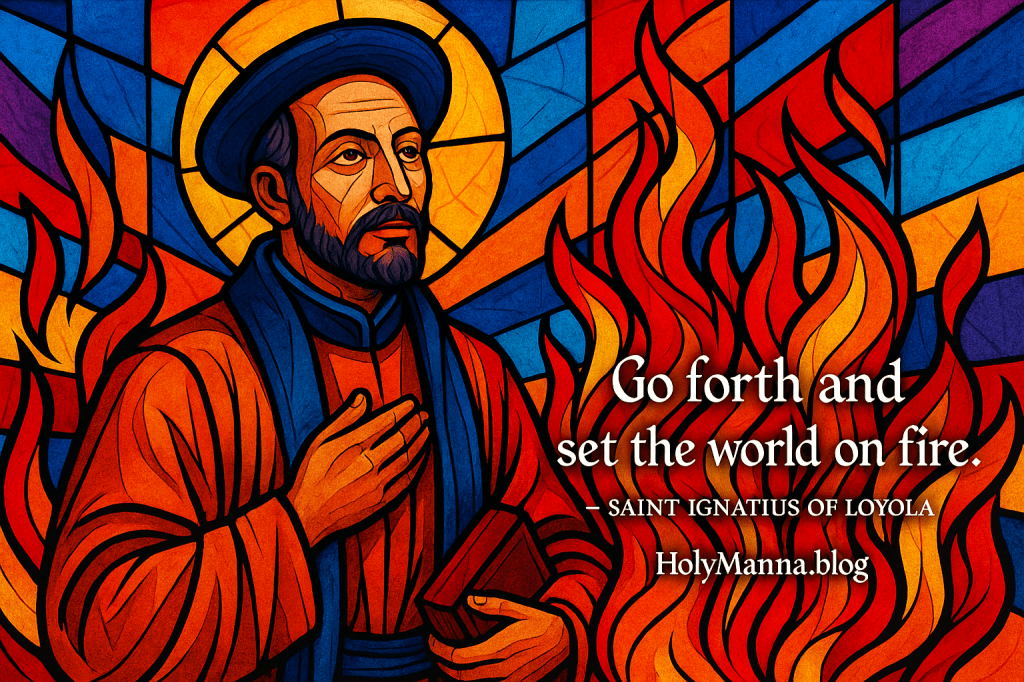
The Soldier of Christ
Saint Ignatius of Loyola, the beloved founder of the Society of Jesus (Jesuits), is one of the most influential saints in the history of the Catholic Church. Known for his deep spiritual insights and unwavering devotion to Christ, Ignatius gave the Church the Spiritual Exercises, a masterpiece of Christian discernment and interior renewal. He is remembered not only as a soldier for Spain, but far more enduringly, as a soldier for Christ, training generations of saints, missionaries, and scholars. His feast day is celebrated on July 31st, and his legacy continues to form the hearts and minds of Catholics across the globe.
From the Court of Nobles to the Court of Christ
Ignatius was born Íñigo López de Oñaz y Loyola in 1491, in the Basque region of northern Spain, to a noble and wealthy family. As a young man, he was enamored with the ideals of chivalry, military valor, and courtly romance. He served as a page to a nobleman and later became a soldier in the Spanish army. His life was steeped in vanity and dreams of worldly glory—until everything changed in 1521.
During the Battle of Pamplona, a cannonball shattered his leg, ending his military career. As he recovered, Ignatius asked for romance novels to pass the time, but all that was available were books on the lives of Christ and the saints. As he read these, a transformation began: he noticed that worldly fantasies left him empty, while the thoughts of living like the saints brought him lasting joy. He later wrote: “When he thought of worldly things he felt pleasure, but afterward he was dry and sad. When he thought of imitating the saints, he remained happy and joyful.”
This realization marked the beginning of his deep conversion. After recovering, Ignatius laid down his sword before the statue of Our Lady at Montserrat, gave away his fine clothes, and committed himself to a life of radical devotion to God. He lived as a beggar for nearly a year in the cave at Manresa, where he underwent intense spiritual experiences that would eventually form the foundation for his Spiritual Exercises.
Living for the Greater Glory of God
Ignatius dedicated the rest of his life to discerning God’s will and helping others do the same. His motto, “Ad Majorem Dei Gloriam” (For the Greater Glory of God), became the heartbeat of the Jesuit order. He returned to school—starting from basic Latin lessons with schoolboys—and went on to earn a degree in theology from the University of Paris.
In 1534, along with six companions including Saint Francis Xavier, he made vows of poverty and chastity and committed themselves to evangelization. This group would become the nucleus of the Society of Jesus, officially approved by Pope Paul III in 1540.
Ignatius’ Spiritual Exercises became a revolutionary guide for discernment, prayer, and union with God’s will. These exercises helped individuals detach from disordered affections and choose what would best serve God. He wrote, “Man is created to praise, reverence, and serve God our Lord, and by this means to save his soul.” He also said, “He who goes about to reform the world must begin with himself, or he loses his labor.”
Although Ignatius is not known for performing physical miracles during his life, the transformation he brought to souls was itself miraculous. He empowered others to live heroic virtue. Under his leadership, the Jesuits became missionaries, teachers, and defenders of the faith across the globe. In less than a century, the Jesuits established hundreds of schools, universities, and missions.
The Crosses He Carried
Saint Ignatius did not have an easy path. He was imprisoned multiple times by the Inquisition in his early years because of his teachings and growing influence, though he was always cleared. He endured severe health problems later in life, including painful stomach ailments. Despite this, he remained faithful in prayer and leadership until his death in 1556.
He also bore the burden of misunderstanding. Some clergy and theologians saw his passionate emphasis on spiritual experience and lay formation as dangerous or too radical. Yet he never fought back in pride; instead, he relied on obedience and humility, often saying, “In all things, love and serve the Lord.”
Though he did not die a martyr’s death, his life was marked by self-sacrificial love and spiritual warfare. He was canonized in 1622 by Pope Gregory XV alongside his friend and fellow missionary, Saint Francis Xavier.
A Saint Who Continues to Convert
Since his death, many miracles have been attributed to Saint Ignatius’ intercession. Numerous reports of healing and conversions have occurred among those who have undertaken the Spiritual Exercises. The Jesuits he founded became the largest religious order in the Church, known for rigorous intellectual formation and passionate missionary zeal. Through schools, missions, and retreats, his spirit continues to set hearts on fire for Christ.
His body is venerated in the Church of the Gesù in Rome, a magnificent baroque church dedicated to the glory of God and the legacy of Ignatius. Pilgrims from around the world come to pray at his tomb, asking for clarity, courage, and a discerning heart.
Reflecting the Light of Ignatius in Our Own Lives
Saint Ignatius of Loyola teaches us that conversion is possible no matter how far we’ve strayed or how attached we are to worldly ambitions. His life reminds us that God often uses suffering as the doorway to grace. Like Ignatius, we are called to ask daily: “Lord, what do You want me to do?”
We can begin incorporating Ignatius’ wisdom by practicing daily examen—a spiritual reflection on how God has been present throughout our day. We can also grow in discernment by silencing distractions and asking, What leads me closer to God, and what pulls me away?
His example of surrender, humility, and disciplined prayer offers a model for every Catholic—especially those seeking to align their desires with God’s greater glory.
Engage with Us!
We’d love to hear how Saint Ignatius of Loyola’s story speaks to you today. Share your reflections in the comments below! Let’s inspire each other to deeper faith and intentional living.
Reflection Questions:
- Have you ever experienced a “cannonball moment” that shifted your spiritual life?
- In what areas of your life do you need to ask God for greater clarity and discernment?
- How can you adopt Saint Ignatius’ motto, “For the Greater Glory of God,” in your daily decisions?
Let’s pray for one another and strive to live each day for the greater glory of God. May we always do everything with love, just as our Lord Jesus did.
Saint Ignatius of Loyola, pray for us! 🔥
Follow us on Instagram and Facebook for more insights and reflections on living a faith-filled life.

 Holy Manna!
Leave a comment