Seventeenth Sunday in Ordinary Time – Lectionary: 111
Knocking on Heaven’s Door
Have you ever found yourself begging God for something with trembling hope in your heart—unsure if He’s listening, but too desperate to stop knocking? Today’s readings invite us into the mystery of intercessory prayer, showing us not just that God hears, but that He responds—with mercy, justice, and divine generosity. From Abraham’s daring dialogue with the Lord over the fate of Sodom, to Jesus teaching His disciples how to pray and insistently trust in the Father’s goodness, the readings challenge us to deepen our faith in a God who listens with love.
In Genesis 18, we witness something almost unthinkable in the ancient world: a mortal man engaging in a kind of holy negotiation with the Creator of the universe. Abraham intercedes repeatedly for a wicked city, revealing both his love for others and his trust that the Judge of all the earth will act justly. In Abraham’s day, many ancient religions believed their gods to be arbitrary or distant—but the God of Israel reveals Himself as relational, patient, and moved by intercession. This is echoed in Psalm 138, where David proclaims: “On the day I cried out, you answered; you strengthened my spirit” (Psalm 138:3). The psalmist gives thanks to a God who lifts the lowly and guards the faithful even in the midst of danger. Our God is not aloof—He is attentive and responsive.
This same God, fully revealed in Jesus Christ, invites us into intimate communion through prayer. In Luke 11, Jesus not only gives us the words of the Lord’s Prayer but also underscores the need for persistence: “Ask and you will receive; seek and you will find; knock and the door will be opened to you” (Luke 11:9). This is not mere poetry—it’s a divine promise. And in Colossians 2, St. Paul reminds us that through baptism, we have already been brought to life with Christ and freed from the debt of sin: “He brought you to life along with him, having forgiven us all our transgressions” (Colossians 2:13). This resurrection life is the foundation of our boldness in prayer. Today’s readings assure us that when we pray with faith, humility, and perseverance, heaven answers—not because we are worthy, but because God is good.
First Reading – Genesis 18:20–32
Abraham’s Audacious Prayer
Today’s first reading transports us to a striking moment in the Book of Genesis, where Abraham engages in intimate conversation with God regarding the fate of Sodom and Gomorrah. These two cities had become infamous in the ancient Near East for their moral corruption, and their sins were considered so grave that their cries had reached the ears of the Lord. Genesis is foundational not only for Judaism but also for Christianity, for it reveals the covenantal beginnings of salvation history. In this passage, we see Abraham not as a distant patriarch, but as a humble and passionate intercessor—an image of what every believer is called to be. Theologically, this scene prepares our hearts to grasp the nature of divine justice and mercy: God does not punish blindly, and the prayers of the righteous have power to stay His hand. Abraham’s prayer is not just about pleading—it is a model of trust, humility, and persistence that directly parallels Jesus’ teachings in Luke 11.
Genesis 18:20-32
New American Bible (Revised Edition)
20 So the Lord said: The outcry against Sodom and Gomorrah is so great, and their sin so grave, 21 that I must go down to see whether or not their actions are as bad as the cry against them that comes to me. I mean to find out.
22 As the men turned and walked on toward Sodom, Abraham remained standing before the Lord. 23 Then Abraham drew near and said: “Will you really sweep away the righteous with the wicked? 24 Suppose there were fifty righteous people in the city; would you really sweep away and not spare the place for the sake of the fifty righteous people within it? 25 Far be it from you to do such a thing, to kill the righteous with the wicked, so that the righteous and the wicked are treated alike! Far be it from you! Should not the judge of all the world do what is just?” 26 The Lord replied: If I find fifty righteous people in the city of Sodom, I will spare the whole place for their sake. 27 Abraham spoke up again: “See how I am presuming to speak to my Lord, though I am only dust and ashes! 28 What if there are five less than fifty righteous people? Will you destroy the whole city because of those five?” I will not destroy it, he answered, if I find forty-five there. 29 But Abraham persisted, saying, “What if only forty are found there?” He replied: I will refrain from doing it for the sake of the forty. 30 Then he said, “Do not let my Lord be angry if I go on. What if only thirty are found there?” He replied: I will refrain from doing it if I can find thirty there. 31 Abraham went on, “Since I have thus presumed to speak to my Lord, what if there are no more than twenty?” I will not destroy it, he answered, for the sake of the twenty. 32 But he persisted: “Please, do not let my Lord be angry if I speak up this last time. What if ten are found there?” For the sake of the ten, he replied, I will not destroy it.
Detailed Exegesis
Verse 20 – “So the Lord said: The outcry against Sodom and Gomorrah is so great, and their sin so grave”
This verse sets the tone: God hears the “outcry” against these cities—language that reflects the cries of the oppressed or those suffering from the cities’ depravity. The Lord is not indifferent to evil. Ancient Jewish tradition understood this outcry as that of the victims of injustice, abuse, and neglect. God’s justice is never arbitrary; it responds to real suffering.
Verse 21 – “that I must go down to see whether or not their actions are as bad as the cry against them that comes to me. I mean to find out.”
Here we encounter divine condescension—God “goes down” to investigate. Of course, God already knows all things, but this anthropomorphic expression reveals His commitment to justice and truth. God does not punish based on hearsay; He engages personally. This mirrors the Incarnation—God entering into human experience fully in Christ.
Verse 22 – “As the men turned and walked on toward Sodom, Abraham remained standing before the Lord.”
Abraham stands before the Lord—not as an equal, but as one willing to intercede. His physical posture reflects spiritual readiness and moral courage. In Jewish tradition, to “stand before the Lord” signified a priestly or prophetic role.
Verse 23 – “Then Abraham drew near and said: ‘Will you really sweep away the righteous with the wicked?’”
Abraham’s question challenges the idea of collective punishment. He appeals to God’s justice: surely the innocent should not suffer the fate of the guilty. This is a bold, theological question and marks one of the earliest recorded instances of intercessory prayer in the Bible.
Verse 24 – “Suppose there were fifty righteous people in the city; would you really sweep away and not spare the place for the sake of the fifty righteous people within it?”
Abraham begins his plea with fifty—demonstrating the belief that the righteous have salvific influence over the wicked. His appeal assumes that a small core of goodness can sanctify and protect a larger group, a foreshadowing of Christ’s role in redeeming humanity.
Verse 25 – “Far be it from you to do such a thing, to kill the righteous with the wicked, so that the righteous and the wicked are treated alike! Far be it from you! Should not the judge of all the world do what is just?”
This is a courageous theological assertion. Abraham knows God is just and calls upon that justice. His phrasing—“Far be it from you!”—expresses horror at the idea of injustice and appeals to God’s own nature. It shows deep familiarity and reverence, not irreverence.
Verse 26 – “The Lord replied: If I find fifty righteous people in the city of Sodom, I will spare the whole place for their sake.”
This shows God’s mercy outweighs wrath. The presence of a faithful few can intercede for many. This verse previews the New Testament’s theology of atonement—where one righteous man, Christ, redeems the world.
Verse 27 – “Abraham spoke up again: ‘See how I am presuming to speak to my Lord, though I am only dust and ashes!’”
Abraham acknowledges his lowliness—“dust and ashes”—a common biblical phrase denoting humility and mortality. And yet, even from this place of littleness, he dares to speak, showing how prayer is grounded in humility, not entitlement.
Verse 28 – “What if there are five less than fifty righteous people? Will you destroy the whole city because of those five?” “I will not destroy it,” he answered, “if I find forty-five there.”
Abraham is persistent, gradually lowering the number. His tenacity reflects trust in God’s mercy. Each step reveals more about God’s patient willingness to listen.
Verse 29 – “But Abraham persisted, saying, ‘What if only forty are found there?’ He replied: ‘I will refrain from doing it for the sake of the forty.’”
The repetition and patience on both sides emphasize that prayer is dialogue, not monologue. God is not annoyed by persistence; He welcomes it.
Verse 30 – “Then he said, ‘Do not let my Lord be angry if I go on. What if only thirty are found there?’ He replied: ‘I will refrain from doing it if I can find thirty there.’”
Abraham continues, but always with reverence—“Do not let my Lord be angry.” This teaches us the importance of respectful persistence in prayer.
Verse 31 – “Abraham went on, ‘Since I have thus presumed to speak to my Lord, what if there are no more than twenty?’ ‘I will not destroy it,’ he answered, ‘for the sake of the twenty.’”
Again, God responds with mercy. The progression implies that God is not looking for an excuse to destroy, but an opportunity to save.
Verse 32 – “But he persisted: ‘Please, do not let my Lord be angry if I speak up this last time. What if ten are found there?’ ‘For the sake of the ten,’ he replied, ‘I will not destroy it.’”
This final number, ten, becomes significant in Jewish tradition, where ten righteous men (a minyan) are needed for communal prayer. The dialogue ends not because Abraham gives up, but because God’s mercy has been fully displayed.
The Church Teaches: God’s Justice and the Power of Intercession
The Catechism of the Catholic Church affirms the mystery of intercessory prayer in the life of the faithful: “Intercession is a prayer of petition which leads us to pray as Jesus did. He is the one intercessor with the Father on behalf of all men, especially sinners” (CCC 2634). Abraham prefigures Christ, the perfect intercessor, who pleads not only for ten or fifty, but for the entire sinful world—offering not just prayer, but His very life. This reading also illuminates CCC 2571, which describes Abraham’s intercession: “Because he believed in God and walked in his presence and in covenant with him, the patriarch is ready to welcome a mysterious Guest into his tent… Abraham’s heart is attuned to his Lord’s compassion for men and he dares to intercede for them with bold confidence.”
St. John Chrysostom reflected on this passage by saying, “Prayer is the place of refuge for every worry, a foundation for cheerfulness, a source of constant happiness, a protection against sadness.” Abraham’s example teaches us that prayer is not passive—it is bold, responsive, and anchored in divine trust. We are invited to imitate him, not only in word but in heart, cultivating a relationship with God that emboldens us to plead for others with faith.
Historically, this passage was critical for Jewish and Christian thought regarding communal responsibility and divine justice. It challenges any simplistic view of wrath and punishment. Even in the face of grave sin, God seeks every reason to save rather than condemn. The reading anticipates later teachings in the prophets—especially Ezekiel and Jeremiah—where personal responsibility, repentance, and the possibility of redemption remain constant themes.
Reflection: Becoming Intercessors of Mercy
Abraham’s prayer is not just a story from long ago—it is a blueprint for our lives today. How often do we see injustice in the world and feel powerless? And yet, God shows us that a single heart—humble, persistent, and bold—can hold back destruction. Who are the people in your life who need your intercession right now? Are you willing to stand in the gap like Abraham did, even for those who seem lost? Whether it’s a family member who has wandered from the faith, a society plagued by sin, or your own community struggling with spiritual decline, God is still listening for voices like Abraham’s.
Let us rediscover the power of prayer—not as a last resort, but as our first and most potent response to the brokenness around us. Abraham’s example calls us to trust that God’s justice is always wrapped in mercy. Are you bold enough to plead for the undeserving, to cry out for the salvation of those who may never know you prayed for them? This is what it means to participate in the priesthood of believers: to pray as Jesus did, to love as Jesus does, and to trust that God’s mercy is never exhausted.
Responsorial Psalm – Psalm 138
The Grateful Heart That Dares to Cry Out
Psalm 138 is a song of thanksgiving attributed to King David, filled with confident praise for a God who responds to human need with steadfast love. It belongs to the genre of individual thanksgiving psalms and reflects a deeply personal relationship between the psalmist and the Lord. Written in a time when Israel was surrounded by pagan nations and often afflicted by political instability, this psalm boldly declares that the God of Israel is not only transcendent but also intimately involved in the lives of His people. The cultural backdrop here is significant: gods of the surrounding nations were thought to dwell far off, accessible only to elites or kings. But David proclaims something radically different—the God who “dwells on high” also “cares for the lowly.” This ties perfectly into today’s theme of bold, persistent prayer. Just as Abraham interceded for Sodom and Jesus urged His disciples to knock without ceasing, Psalm 138 reminds us that when we cry out, God strengthens, guards, and saves.
Psalm 138
New American Bible (Revised Edition)
Hymn of a Grateful Heart
1 Of David.
I thank you, Lord, with all my heart;
in the presence of the angels to you I sing.
2 I bow low toward your holy temple;
I praise your name for your mercy and faithfulness.
For you have exalted over all
your name and your promise.
3 On the day I cried out, you answered;
you strengthened my spirit.
4 All the kings of earth will praise you, Lord,
when they hear the words of your mouth.
5 They will sing of the ways of the Lord:
“How great is the glory of the Lord!”
6 The Lord is on high, but cares for the lowly
and knows the proud from afar.
7 Though I walk in the midst of dangers,
you guard my life when my enemies rage.
You stretch out your hand;
your right hand saves me.
8 The Lord is with me to the end.
Lord, your mercy endures forever.
Never forsake the work of your hands!
Detailed Exegesis
Verse 1 – “I thank you, Lord, with all my heart; in the presence of the angels to you I sing.”
This opening line is an act of total, undivided praise. “With all my heart” reflects the Hebrew understanding of the heart as the seat of will and intellect—David’s thanksgiving is complete and conscious. Singing “in the presence of the angels” may be interpreted as worship that joins the heavenly liturgy, aligning with Catholic theology that earthly liturgy is a participation in the eternal praise of heaven (CCC 1139).
Verse 2 – “I bow low toward your holy temple; I praise your name for your mercy and faithfulness. For you have exalted over all your name and your promise.”
Bowing toward the temple signifies humility and reverence. In Jewish tradition, the temple was the locus of God’s presence. Praising God for “mercy and faithfulness” reflects the covenantal nature of God’s relationship with His people. The phrase “you have exalted over all your name and your promise” highlights how God’s word—His faithfulness to promises—is even more glorious than His name alone, emphasizing trustworthiness.
Verse 3 – “On the day I cried out, you answered; you strengthened my spirit.”
Here, we encounter direct evidence of God’s response to prayer. The psalmist doesn’t merely thank God for theoretical truths but recounts a personal encounter. The Hebrew phrase for “you strengthened my spirit” suggests an infusion of inner courage and resolve—God not only hears but empowers.
Verse 4 – “All the kings of earth will praise you, Lord, when they hear the words of your mouth.”
This verse envisions a future where all nations recognize the greatness of God. It’s eschatological—a look forward to a time when even earthly rulers acknowledge the Lord. This anticipates the universal mission of the Church to proclaim the Gospel to all nations, as echoed in Philippians 2:10, where “every knee shall bend” before Jesus.
Verse 5 – “They will sing of the ways of the Lord: ‘How great is the glory of the Lord!’”
This is a continuation of the universal praise theme. The “ways of the Lord” refer to His justice, mercy, and steadfast love. Declaring “How great is the glory of the Lord!” affirms God’s greatness not only in power but in the majesty of His saving acts.
Verse 6 – “The Lord is on high, but cares for the lowly and knows the proud from afar.”
This verse holds a profound theological truth: divine transcendence and immanence are not opposed. God is “on high”, yet He stoops low to care for the humble. Meanwhile, the proud are “known from afar”—not in intimacy, but in distance. It reminds us that humility is the gateway to communion with God.
Verse 7 – “Though I walk in the midst of dangers, you guard my life when my enemies rage. You stretch out your hand; your right hand saves me.”
This is a vivid image of divine protection. The psalmist is not exempt from danger, but he is not alone in it. “You stretch out your hand” and “your right hand saves me” are expressions of God’s power and personal intervention. The “right hand” in biblical symbolism often signifies strength and favor.
Verse 8 – “The Lord is with me to the end. Lord, your mercy endures forever. Never forsake the work of your hands!”
The psalm concludes with confidence and a plea. “To the end” shows that God’s presence is constant, and “your mercy endures forever” echoes a refrain found throughout the psalms. The final line—“Never forsake the work of your hands”—is both humble and bold. It acknowledges human dependence on God and urges Him to complete what He has begun in us.
The Church Teaches: Worship, Providence, and Persistent Faith
The Church teaches that our praise joins that of heaven, and Psalm 138 reminds us of this divine union. The Catechism explains: “In the earthly liturgy we share in a foretaste of that heavenly liturgy which is celebrated in the holy city of Jerusalem toward which we journey as pilgrims” (CCC 1090). When David sings “in the presence of the angels”, he’s participating in a mystery we now encounter fully in the Mass, where heaven and earth unite at the altar. This deepens the meaning of our thanksgiving—every act of gratitude is cosmic, not just personal.
Furthermore, the psalm’s constant refrain of God’s nearness to the lowly echoes CCC 2616, which teaches: “Prayer to Jesus is heard by Him during His ministry… He always hears the prayer of faith expressed in words or in silence.” David’s testimony—“On the day I cried out, you answered”—becomes a universal encouragement for the Christian soul. Even in danger, discouragement, or opposition, we are never abandoned. God’s mercy endures—not just once, but forever. This endurance forms the basis for our persistence in prayer.
Finally, the humility praised in Psalm 138 resonates with the teachings of the saints. St. Teresa of Ávila wrote, “Humility is truth, and the soul that walks in truth has no reason to be disquieted.” When David says, “you care for the lowly”, he invites us to walk in truth before God—recognizing our nothingness while rejoicing in our dignity as His handiwork. This psalm becomes a powerful call to trust, to pray with confidence, and to live with gratitude no matter the circumstances.
Reflection: Singing from the Heart of Affliction
What song are you singing in your soul today? Is it a cry for help, a whisper of thanks, or a silence waiting to be filled? Psalm 138 teaches us that wherever we are—amid angels, dangers, or despair—God listens and acts. It challenges us to thank Him wholeheartedly, even before we see the outcome. Like Abraham and the friend in Jesus’ parable in Luke 11, we are invited to approach the Lord boldly—not demanding like beggars, but confidently like children.
Let this psalm become a daily anchor for your prayer life. Do you believe that God still answers when you cry out? Do you offer Him thanks even in uncertainty? Begin each day by thanking Him for His mercy and asking Him to complete the work He has begun in you. In doing so, you join the eternal chorus of praise that echoes through heaven and earth. The more we learn to trust like David, the more our own hearts will be strengthened to persist in prayer and rejoice in God’s faithful love.
Second Reading – Colossians 2:12–14
Buried in Baptism, Raised in Power
The Epistle to the Colossians was written by St. Paul during his imprisonment, likely in Rome, to address the early Christian community in Colossae—a small city in Asia Minor facing threats from false teachings that diminished the sufficiency of Christ. The Colossians were tempted by a blend of Jewish legalism and pagan spiritual practices that sought to add human rituals to what Christ had already accomplished. In response, Paul powerfully reasserts the supremacy of Jesus and the completeness of our redemption through Him. Today’s short passage is packed with theological richness. It reminds us that the grace we receive through baptism is not symbolic—it is a real death to sin and a resurrection into divine life. Paul’s words here are not mere encouragement; they are a proclamation of reality. Tied to the theme of today’s readings, we find that it is because we have already been raised with Christ that we can pray with boldness, trusting in God’s mercy and in the victory of the Cross.
Colossians 2:12-14
New American Bible (Revised Edition)
12 You were buried with him in baptism, in which you were also raised with him through faith in the power of God, who raised him from the dead. 13 And even when you were dead [in] transgressions and the uncircumcision of your flesh, he brought you to life along with him, having forgiven us all our transgressions; 14 obliterating the bond against us, with its legal claims, which was opposed to us, he also removed it from our midst, nailing it to the cross;
Detailed Exegesis
Verse 12 – “You were buried with him in baptism, in which you were also raised with him through faith in the power of God, who raised him from the dead.”
St. Paul draws a direct connection between Christ’s death and resurrection and our own baptismal experience. To be “buried with him” is to share in His death—dying to sin, self, and the old ways of life. But it doesn’t end there: we are “also raised with him”—made participants in His resurrection life through “faith in the power of God.” Baptism, then, is not a mere initiation ritual but a sacramental entrance into divine life. This passage echoes Romans 6:4, where Paul also says: “We were indeed buried with him through baptism into death, so that, just as Christ was raised from the dead… we too might live in newness of life.”
Verse 13 – “And even when you were dead [in] transgressions and the uncircumcision of your flesh, he brought you to life along with him, having forgiven us all our transgressions.”
Before baptism, Paul says, we were “dead”—spiritually lifeless and alienated from God. The “uncircumcision of your flesh” refers to their Gentile status and the fallen human condition. But God did not wait for us to earn His favor; rather, “he brought you to life along with him”, highlighting once again our union with Christ. The forgiveness of sins is not partial or delayed—it is total and immediate. This mirrors Jesus’ promise in John 5:24: “Whoever hears my word and believes in the one who sent me has eternal life and will not come to condemnation, but has passed from death to life.”
Verse 14 – “Obliterating the bond against us, with its legal claims, which was opposed to us, he also removed it from our midst, nailing it to the cross.”
This is a profound image of spiritual liberation. The “bond against us” refers to the written record of our sins—the moral debt incurred by failing to keep the law. Paul says that God “obliterated” it—not by ignoring justice, but by fulfilling it in Christ, who bore our debt on the Cross. The phrase “nailing it to the cross” evokes the Roman practice of posting criminal charges above the condemned. On Calvary, it was our charges that Christ took upon Himself. This is the core of Christian hope: our sins are not merely set aside—they are destroyed by the Cross.
The Church Teaches: Baptismal Grace, Divine Mercy, and the Victory of the Cross
The Catechism of the Catholic Church teaches that baptism is nothing less than participation in Christ’s Paschal Mystery: “Through Baptism we are freed from sin and reborn as sons of God; we become members of Christ, are incorporated into the Church and made sharers in her mission” (CCC 1213). This passage from Colossians underscores that this rebirth is both a death to sin and a rising to life. We are not merely washed clean—we are spiritually resurrected. The sacrament unites us to Christ so intimately that what happened to Him becomes spiritually real in us.
Further, CCC 977 echoes Paul’s words on forgiveness: “Baptism is the first and chief sacrament of forgiveness of sins because it unites us with Christ, who died for our sins and rose for our justification.” The Church does not treat sin lightly, nor does she offer forgiveness as a generic message. Through the power of the Cross, our guilt is literally “nailed away.” St. Ambrose once wrote, “See where your sins were nailed. Christ took them upon himself in order to forgive them. He endured punishment that was not His, so that you might receive grace that was not yours.”
Historically, the early Church clung tightly to this theology of liberation in the face of persecution and heresy. The Colossians were being told that they needed more—rituals, philosophies, legal observances—but Paul insists Christ is enough. His victory is total. This teaching remains critical today in a culture that often seeks salvation through performance or self-help. The Cross is not a backup plan—it is the plan. Our sins were not overlooked—they were judged and obliterated by divine love poured out at Calvary.
Reflection: Living the Life of the Resurrected
Have you forgotten that you are already raised with Christ? Do you live each day as someone brought from death to life? This reading invites us to live from a place of confidence and gratitude. If your sins have been nailed to the Cross, why keep carrying them? If you’ve been raised through faith, why live as though you’re still in the grave? God’s mercy is not abstract—it is personal and powerful, and it changes everything.
Today, consider renewing your baptismal promises in your heart. Are you still clinging to the old life—resentments, guilt, or fear? Or are you allowing the grace of your baptism to animate your choices, your relationships, your prayers? Like Abraham, who dared to plead, and David, who dared to sing, we too must dare to believe: we are forgiven, we are raised, and we are loved. Let that truth define every prayer you offer today. Let it give you the courage to ask, seek, and knock—knowing that the One who raised Jesus from the dead lives in you.
Holy Gospel – Luke 11:1–13
The Door Will Be Opened
In today’s Gospel from Luke, Jesus responds to a simple yet profound request: “Lord, teach us to pray.” This moment occurs as Jesus is journeying toward Jerusalem, teaching His disciples what it means to live in the Kingdom of God. The Gospel of Luke is deeply concerned with prayer, showing Jesus at prayer more often than any other evangelist. Luke’s audience—primarily Gentile Christians—would have been navigating life in a pagan culture, and they needed to understand how to enter into the intimate relationship with God that Jesus exemplified. In this passage, Jesus not only gives them (and us) the words of the Lord’s Prayer, but He also offers a rich teaching on the character of God and the nature of prayer. This reading ties directly into today’s theme: persistent, bold, faith-filled intercession. Just as Abraham bargained for mercy and David cried out with thanksgiving, Jesus teaches us that the Father is ready and eager to respond to His children. But we must ask. We must knock. We must trust.
Luke 11:1-13
New American Bible (Revised Edition)
The Lord’s Prayer. 1 He was praying in a certain place, and when he had finished, one of his disciples said to him, “Lord, teach us to pray just as John taught his disciples.” 2 He said to them, “When you pray, say:
Father, hallowed be your name,
your kingdom come.
3 Give us each day our daily bread
4 and forgive us our sins
for we ourselves forgive everyone in debt to us,
and do not subject us to the final test.”
Further Teachings on Prayer. 5 And he said to them, “Suppose one of you has a friend to whom he goes at midnight and says, ‘Friend, lend me three loaves of bread, 6 for a friend of mine has arrived at my house from a journey and I have nothing to offer him,’ 7 and he says in reply from within, ‘Do not bother me; the door has already been locked and my children and I are already in bed. I cannot get up to give you anything.’ 8 I tell you, if he does not get up to give him the loaves because of their friendship, he will get up to give him whatever he needs because of his persistence.
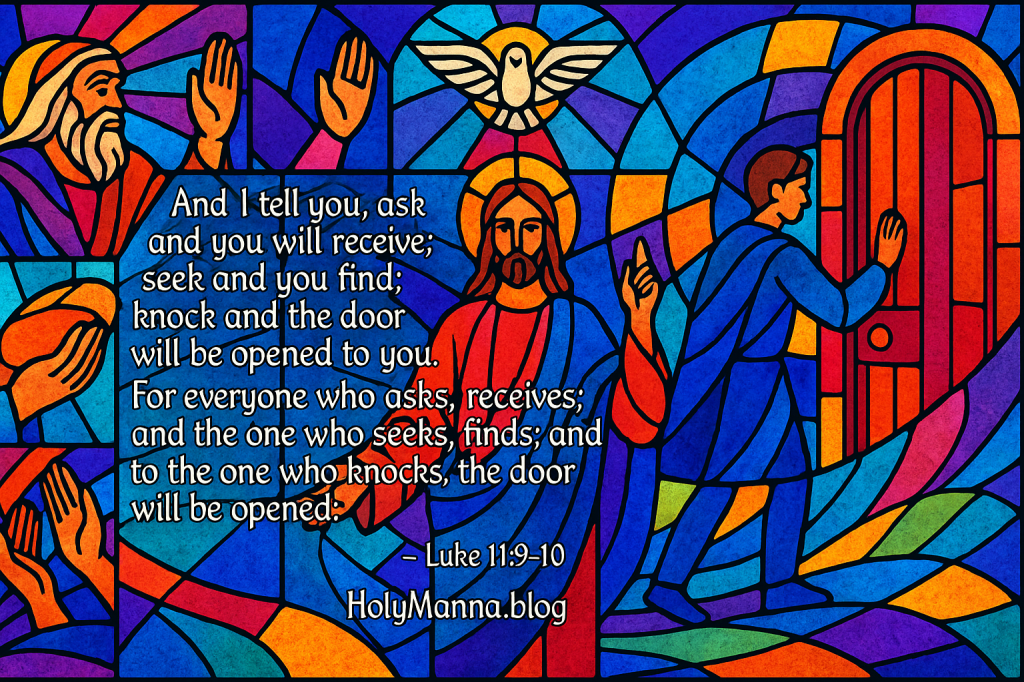
The Answer to Prayer. 9 “And I tell you, ask and you will receive; seek and you will find; knock and the door will be opened to you. 10 For everyone who asks, receives; and the one who seeks, finds; and to the one who knocks, the door will be opened. 11 What father among you would hand his son a snake when he asks for a fish? 12 Or hand him a scorpion when he asks for an egg? 13 If you then, who are wicked, know how to give good gifts to your children, how much more will the Father in heaven give the holy Spirit to those who ask him?”
Detailed Exegesis
Verse 1 – “He was praying in a certain place, and when he had finished, one of his disciples said to him, ‘Lord, teach us to pray just as John taught his disciples.’”
Jesus is seen praying often in Luke, and here, the disciples are moved not just by His words but by His example. They want what He has—communion with the Father. It was common for Jewish teachers to give their disciples specific prayers, so this request shows both respect and spiritual hunger.
Verse 2 – “He said to them, ‘When you pray, say: Father, hallowed be your name, your kingdom come.’”
Jesus begins by addressing God as “Father”, which is radical. In Hebrew tradition, God’s name was too holy to even pronounce, yet Jesus invites intimacy. “Hallowed be your name” combines reverence with relationship. “Your kingdom come” expresses both hope and surrender—it asks for God’s rule to be made real in our lives and in the world.
Verse 3 – “Give us each day our daily bread”
This is a prayer of trust and dependence. The Greek word for “daily” (epiousios) is rare and carries layers of meaning—material sustenance, spiritual nourishment, and even Eucharistic overtones. Like the manna in the desert, it reminds us that we must rely on God one day at a time.
Verse 4 – “and forgive us our sins for we ourselves forgive everyone in debt to us, and do not subject us to the final test.”
Here, Jesus ties forgiveness from God to our forgiveness of others—a theme He returns to often. The “final test” refers not to temptation in the general sense, but to trials so severe they could lead us to fall away. This prayer is a plea for grace to remain faithful.
Verse 5 – “And he said to them, ‘Suppose one of you has a friend to whom he goes at midnight and says, “Friend, lend me three loaves of bread,”
This begins a parable about persistence. In Middle Eastern culture, hospitality was sacred, and to be caught unprepared was shameful. The man’s request is urgent and inconvenient, emphasizing the need to ask boldly even when the timing feels awkward.
Verse 6 – “for a friend of mine has arrived at my house from a journey and I have nothing to offer him.”
The host is desperate—not for himself, but for another. This captures the heart of intercession: pleading for the good of others, even when we have nothing of our own to offer.
Verse 7 – “and he says in reply from within, ‘Do not bother me; the door has already been locked and my children and I are already in bed. I cannot get up to give you anything.’”
The response is initially negative. In this culture, disturbing a family at night was socially taboo. Jesus uses this image not to portray God as reluctant, but to set up a contrast: if even a grumpy friend will eventually respond, how much more will a loving Father?
Verse 8 – “I tell you, if he does not get up to give him the loaves because of their friendship, he will get up to give him whatever he needs because of his persistence.”
The key word is “persistence”—from the Greek anaideia, which can mean shameless boldness. God is not annoyed by our repeated prayers. He welcomes them. Jesus teaches that holy boldness is not only acceptable—it is essential.
Verse 9 – “And I tell you, ask and you will receive; seek and you will find; knock and the door will be opened to you.”
This is one of the most encouraging verses in all of Scripture. It assures us that prayer is never in vain. The progression—ask, seek, knock—suggests increasing intensity. The one who keeps asking will be answered.
Verse 10 – “For everyone who asks, receives; and the one who seeks, finds; and to the one who knocks, the door will be opened.”
This verse reinforces the certainty of God’s response. The repetition is meant to deepen our trust. Jesus is not promising that we’ll receive exactly what we ask for, but that we will never be ignored.
Verse 11 – “What father among you would hand his son a snake when he asks for a fish?”
Jesus appeals to common sense. Even flawed human parents know how to give good things. The contrast sets the stage for a deeper truth: God’s generosity far exceeds human goodness.
Verse 12 – “Or hand him a scorpion when he asks for an egg?”
The absurdity here is meant to provoke a smile—and a realization. God never gives us something harmful when we ask for something good. His answers may be unexpected, but they are never evil.
Verse 13 – “If you then, who are wicked, know how to give good gifts to your children, how much more will the Father in heaven give the holy Spirit to those who ask him?”
Jesus concludes by revealing the ultimate gift: the Holy Spirit. The greatest answer to our prayers is not stuff, but God Himself. The Spirit is the gift that surpasses all others, empowering us to live in grace and intimacy with the Father.
The Church Teaches: Prayer as Covenant, Boldness, and Grace
The Catechism of the Catholic Church calls prayer a “vital and personal relationship with the living and true God” (CCC 2558). Jesus’ teaching in Luke 11 embodies this truth. He does not offer a method but a relationship—a way of entering into communion with the Father. CCC 2761 emphasizes: “The Lord’s Prayer is truly the summary of the whole gospel.” Every line of this prayer draws us deeper into trust, surrender, and holy desire. When we pray it, we are not just speaking—we are aligning our hearts with God’s will.
The parable of the friend at midnight is a striking example of CCC 2613, which states: “Three principal parables on prayer are transmitted to us by St. Luke: the importunate friend, the persistent widow, and the Pharisee and the tax collector. These parables insist on the need for persistent prayer and teach us how prayer transforms the heart.” Jesus uses everyday examples to shatter our misconceptions about God. He is not a distant judge, nor a sleepy friend behind a locked door. He is a Father who listens.
St. Augustine taught that persistence in prayer doesn’t change God, it changes us: “God does not delay to hear our prayers because He has no mind to give; but that, by enlarging our desires, He may give us the more largely.” This is the mystery of intercession. By asking, seeking, and knocking, our hearts expand to receive the fullness of what God actually wants to give. And above all, He desires to give us Himself—the Holy Spirit—who is the answer to every true prayer.
Reflection: Ask Boldly, Trust Deeply
Do you believe that God is listening? Have you grown weary of knocking on a door that feels closed? Jesus tells you today: keep going. Pray not as a beggar uncertain of welcome, but as a child confident in the love of the Father. Let this Gospel rekindle your persistence. What prayers have you given up on? What if the delay is not denial, but preparation for something greater?
When you pray the Lord’s Prayer today, slow down. Let each phrase awaken your trust. Ask boldly, like Abraham. Cry out, like David. And above all, knock without fear—knowing that the One who answers is your Father, and that the gift He longs to give is nothing less than His own Spirit. In every dry spell, in every delay, in every moment of silence, He is still near. He is forming your heart into a vessel that can receive what is truly good. Will you let Him?
Hearts That Knock, Souls That Rise
From Abraham’s fearless intercession in Genesis, to David’s heartfelt thanksgiving in Psalm 138, to Paul’s proclamation of resurrection power in Colossians, and finally to Jesus’ teaching on persistent prayer in Luke, today’s readings give us a masterclass in the spiritual life: boldness before God is not arrogance—it is faith. We are not beggars on the outside of grace looking in. We are beloved children invited to knock on heaven’s door, knowing it will be opened to us. Every reading today highlights a God who is not only just, but tender; not only holy, but near.
Abraham teaches us to stand in the gap for others, unafraid to speak to the Lord of mercy. David shows us how to sing with gratitude even in the midst of danger. Paul reminds us that we have already been raised with Christ and forgiven—our past nailed to the Cross. And Jesus, our divine Teacher, reveals that the Father longs to give us not only daily bread, but the Holy Spirit Himself. This is not just a theology of prayer—it is a call to live in relationship with the living God, every moment of our lives.
What doors in your heart are you afraid to knock on? What prayers have you left behind because the wait was too long? Today, let the Word of God rekindle your hope. Cry out. Intercede. Give thanks. And above all, trust that your Father hears you. Be persistent, not because He needs convincing, but because your heart needs to grow. Be bold, not because you are strong, but because He is merciful. And be grateful, because the door is already opening. Keep knocking. Grace is on the other side.
Engage with Us!
We’d love to hear how today’s readings spoke to your heart. Share your thoughts, prayers, and insights in the comments below—your voice may be the encouragement someone else needs today. Here are some questions to help you reflect more deeply and join the conversation with faith and openness.
First Reading – Genesis 18:20–32
How is God calling you to intercede for others today? Do you pray with the same persistence and humility as Abraham? What holds you back from praying boldly?
Responsorial Psalm – Psalm 138
What danger or difficulty are you facing that calls for a prayer of thanksgiving rather than fear? How can you begin each day by praising God “with all your heart” regardless of your circumstances?
Second Reading – Colossians 2:12–14
Do you live each day as someone raised with Christ? What old sins or guilt still cling to you, even though they’ve been nailed to the Cross?
Holy Gospel – Luke 11:1–13
What prayer have you stopped praying because you thought God wasn’t listening? How can you grow in trust that God wants to give you not just answers—but Himself, through the Holy Spirit?
Let us go forward today living not out of fear or weariness, but from the joyful confidence of being God’s beloved sons and daughters. May every word we speak, every prayer we offer, and every action we take be rooted in the love and mercy Jesus taught us—persistent, humble, and always filled with hope.
Follow us on Instagram and Facebook for more insights and reflections on living a faith-filled life.

 Holy Manna!
Leave a comment