Saturday of the Fourteenth Week in Ordinary Time – Lectionary: 388
Held in His Hands
Have you ever looked back on a painful moment in your life and suddenly seen God’s fingerprints all over it? Today’s readings invite us to consider how divine providence, mercy, and courage interweave in the fabric of our lives—especially when things seem uncertain, unjust, or frightening. From ancient Egypt to the lips of Christ, the message resounds: God is in control, and He is near—so do not be afraid.
We begin with Genesis 49:29–32; 50:15–26, where Joseph’s story reaches its final, redemptive arc. Having been betrayed by his own brothers, Joseph could have chosen vengeance—but instead, he forgives them, saying: “Even though you meant harm to me, God meant it for good, to achieve this present end, the survival of many people”. His words echo through time, proclaiming that even the gravest injustices can become channels of God’s saving work. Psalm 105 then picks up this thread with a joyful remembrance of God’s faithfulness to Abraham’s descendants, reminding us that the Lord never forgets His promises. We are urged to “give thanks to the Lord, invoke his name; make known among the peoples his deeds!”
In The Gospel of Matthew 10:24–33, Jesus strengthens His disciples—and us—for the inevitable trials of Christian witness. He warns of persecution, but calls us to radical courage: “Do not be afraid of those who kill the body but cannot kill the soul”. These words don’t just encourage bravery; they call us to an unshakable trust in our Heavenly Father, who counts even the hairs on our heads. Like Joseph, and like the psalmist, we are reminded that God sees, God knows, and God acts—not only in mighty deeds of old, but in our daily decisions to forgive, to trust, and to proclaim the Gospel without fear.
First Reading – Genesis 49:29–32; 50:15–26
From Betrayal to Blessing
The Book of Genesis concludes not just with the death of the patriarch Jacob, but with the final chapter in the extraordinary story of his son Joseph—a tale steeped in betrayal, providence, and forgiveness. Today’s passage is part of a deeply moving moment in salvation history: Joseph, once sold into slavery by his jealous brothers, now stands before them as a ruler in Egypt. The brothers fear vengeance after their father Jacob dies, but instead, Joseph offers them peace, reassurance, and a divine perspective on their past sins. Culturally, this was a moment of transition. In ancient Semitic societies, the death of a patriarch often meant instability, as family structures could fall apart without a central figure. Yet Joseph resists this pattern. Instead of exploiting his power, he echoes the humility of a servant-leader and foreshadows the mercy of Christ Himself. His words become a theological lens through which we see how God uses evil for good—a message that resonates perfectly with today’s Gospel call to courageous, faithful witness.
Genesis 49:29-32; 50:15-26
New American Bible (Revised Edition)
49:29 Then he gave them this charge: “Since I am about to be gathered to my people, bury me with my ancestors in the cave that lies in the field of Ephron the Hittite, 30 the cave in the field of Machpelah, facing on Mamre, in the land of Canaan, the field that Abraham bought from Ephron the Hittite for a burial ground. 31 There Abraham and his wife Sarah are buried, and so are Isaac and his wife Rebekah, and there, too, I buried Leah— 32 the field and the cave in it that had been purchased from the Hittites.”
Plea for Forgiveness. 50:15 Now that their father was dead, Joseph’s brothers became fearful and thought, “Suppose Joseph has been nursing a grudge against us and now most certainly will pay us back in full for all the wrong we did him!” 16 So they sent to Joseph and said: “Before your father died, he gave us these instructions: 17 ‘Thus you shall say to Joseph: Please forgive the criminal wrongdoing of your brothers, who treated you harmfully.’ So now please forgive the crime that we, the servants of the God of your father, committed.” When they said this to him, Joseph broke into tears. 18 Then his brothers also proceeded to fling themselves down before him and said, “We are your slaves!” 19 But Joseph replied to them: “Do not fear. Can I take the place of God? 20 Even though you meant harm to me, God meant it for good, to achieve this present end, the survival of many people. 21 So now, do not fear. I will provide for you and for your children.” By thus speaking kindly to them, he reassured them.
22 Joseph remained in Egypt, together with his father’s household. He lived a hundred and ten years. 23 He saw Ephraim’s children to the third generation, and the children of Manasseh’s son Machir were also born on Joseph’s knees.
Death of Joseph. 24 Joseph said to his brothers: “I am about to die. God will surely take care of you and lead you up from this land to the land that he promised on oath to Abraham, Isaac and Jacob.” 25 Then, putting the sons of Israel under oath, he continued, “When God thus takes care of you, you must bring my bones up from this place.” 26 Joseph died at the age of a hundred and ten. He was embalmed and laid to rest in a coffin in Egypt.
Detailed Exegesis
Verse 29 – “Then he gave them this charge: ‘Since I am about to be gathered to my people, bury me with my ancestors in the cave that lies in the field of Ephron the Hittite’”
Jacob’s desire to be buried in the land of Canaan reflects his faith in God’s covenant. “Gathered to my people” was a common Near Eastern expression meaning death, but here it also signifies Jacob’s hope in the promise that his lineage will inherit the land. His burial wish is not sentimental but theological: he belongs with Abraham, Isaac, and the patriarchal promises.
Verse 30 – “The cave in the field of Machpelah, facing on Mamre, in the land of Canaan, the field that Abraham bought from Ephron the Hittite for a burial ground.”
This verse reaffirms the historicity of the burial site, the Cave of Machpelah in Hebron (modern-day West Bank), where Abraham secured a permanent stake in the Promised Land. This field and cave were sacred, anchoring Israel’s hope in God’s faithfulness to His covenant.
Verse 31 – “There Abraham and his wife Sarah are buried, and so are Isaac and his wife Rebekah, and there, too, I buried Leah—”
Jacob connects himself to the patriarchal line not just biologically but spiritually. He insists on being buried with Leah, not Rachel, emphasizing his place in the covenant rather than personal preference. This detail reveals how God’s plan often unfolds through surprising people and circumstances.
Verse 32 – “The field and the cave in it that had been purchased from the Hittites.”
The reiteration of this fact emphasizes legitimacy. The Israelites do not possess Canaan yet, but the ancestral burial grounds are theirs by legal right. It’s a seed of hope that God’s promise will be fulfilled.
Verse 15 – “Now that their father was dead, Joseph’s brothers became fearful and thought, ‘Suppose Joseph has been nursing a grudge against us and now most certainly will pay us back in full for all the wrong we did him!’”
Their guilt resurfaces. Without Jacob as a buffer, the brothers project their fear onto Joseph. Sin often reawakens fear, especially when forgiveness has not been fully received in the heart. Their concern reveals an incomplete understanding of Joseph’s mercy.
Verse 16 – “So they sent to Joseph and said: ‘Before your father died, he gave us these instructions:’”
Whether true or fabricated, this plea appeals to Jacob’s authority. It shows how fear manipulates situations and how sin distorts trust. They still do not believe Joseph’s forgiveness is genuine.
Verse 17 – “‘Thus you shall say to Joseph: Please forgive the criminal wrongdoing of your brothers, who treated you harmfully.’ So now please forgive the crime that we, the servants of the God of your father, committed.” When they said this to him, Joseph broke into tears.
Joseph’s weeping shows the depth of his love and the sorrow he feels that his brothers still don’t understand his heart. He has truly forgiven them, yet they doubt. His tears mirror Christ’s compassion for those who struggle to accept divine mercy.
Verse 18 – “Then his brothers also proceeded to fling themselves down before him and said, ‘We are your slaves!’”
This is the fulfillment of Joseph’s dreams from Genesis 37. But unlike worldly leaders who revel in dominance, Joseph’s response reveals a heart transformed by grace. Their submission is not met with punishment, but with compassion.
Verse 19 – “But Joseph replied to them: ‘Do not fear. Can I take the place of God?’”
Here Joseph shows a remarkable theological clarity. Only God can judge the heart. This humility reflects Romans 12:19: “Vengeance is mine, I will repay, says the Lord.” Joseph refuses to usurp God’s role.
Verse 20 – “Even though you meant harm to me, God meant it for good, to achieve this present end, the survival of many people.”
This is the theological heart of the passage. Joseph’s ability to see God’s hand even in betrayal anticipates Romans 8:28: “We know that all things work for good for those who love God.” His perspective is not naive optimism but deep spiritual insight.
Verse 21 – “So now, do not fear. I will provide for you and for your children.” By thus speaking kindly to them, he reassured them.
Joseph not only forgives but extends generosity, echoing the mercy of God. His actions model divine fatherhood—providing, protecting, and healing wounds. This verse completes the cycle of redemption.
Verse 22 – “Joseph remained in Egypt, together with his father’s household. He lived a hundred and ten years.”
This age was considered ideal in Egyptian culture—symbolizing a full, blessed life. Despite his suffering, Joseph’s days were rich with grace and family.
Verse 23 – “He saw Ephraim’s children to the third generation, and the children of Manasseh’s son Machir were also born on Joseph’s knees.”
This tender image of blessing and generational continuity shows how the trauma of Joseph’s past has given way to fruitfulness. God’s providence has turned suffering into legacy.
Verse 24 – “Joseph said to his brothers: ‘I am about to die. God will surely take care of you and lead you up from this land to the land that he promised on oath to Abraham, Isaac and Jacob.’”
Joseph’s final words point ahead to the Exodus. He expresses faith that God will fulfill His promises, even if Joseph does not live to see it.
Verse 25 – “Then, putting the sons of Israel under oath, he continued, ‘When God thus takes care of you, you must bring my bones up from this place.’”
This echoes his father’s request and anchors Joseph in the land of promise. Centuries later, Exodus 13:19 confirms that Moses fulfilled this oath. Joseph’s hope transcends death.
Verse 26 – “Joseph died at the age of a hundred and ten. He was embalmed and laid to rest in a coffin in Egypt.”
Though honored in Egypt, Joseph’s heart remained with God’s covenant. His burial in Egypt is temporary; his true home lies ahead in Canaan, reminding Israel of their destiny beyond bondage.
Teachings
The Catechism teaches that divine providence “refers to the dispositions by which God guides his creation toward this perfection” (CCC 302). Joseph’s life is a dramatic illustration of this doctrine. His suffering, betrayal, and rise to power are not accidents, but instruments in God’s greater plan to preserve the chosen people. As CCC 313 affirms: “We know that in everything God works for good for those who love him… Only faith can embrace the mysterious ways of God’s providence.” Joseph embodies this kind of faith—a trust that does not require understanding but rests on the surety of God’s promise.
Saint John Chrysostom once wrote, “If there were no tribulation, there would be no rest; if there were no winter, there would be no summer.” Joseph’s story teaches us that even the coldest betrayals can yield the warm harvest of reconciliation. The Church Fathers often viewed Joseph as a type of Christ—betrayed by his brothers, sold for silver, and yet becoming the very one who saves them. Just as Jesus says on the Cross, “Father, forgive them, for they know not what they do”, Joseph forgives with the heart of God.
Historically, this passage became a key inspiration for the Israelites in exile. The memory of Joseph’s bones being taken up to Canaan (fulfilled in Joshua 24:32) served as a symbol of God’s unbreakable promise. In times of suffering, remembering Joseph reminded Israel—and now reminds us—that God always keeps His word, even across generations.
Reflection
Joseph’s response to his brothers challenges us deeply. When wronged, do we seek revenge or reconciliation? Do we trust that God can use even betrayal for good in our lives? His words—“Can I take the place of God?”—remind us that judgment belongs to the Lord, not to us. In a world quick to cancel, criticize, and condemn, Joseph teaches us the Gospel virtue of mercy rooted in trust.
What would it look like for you to forgive someone today, not because they deserve it, but because God can bring good even from their failure? What might you be holding onto—resentment, control, fear—that God is asking you to release? Joseph invites us to a faith that transcends our circumstances and looks ahead to God’s promises. We are not defined by what has been done to us, but by the God who calls us into a future of redemption.
Let us ask for the grace to see our own lives through the lens of divine providence. Like Joseph, may we speak kindly, provide generously, and forgive wholeheartedly—trusting that our Father is writing a story far greater than we can yet understand.
Responsorial Psalm – Psalm 105:1–4, 6–7
Recalling God’s Faithfulness
The Psalms were the prayerbook and hymnbook of ancient Israel—songs that gave voice to every human emotion, from lament to jubilation. Psalm 105 is a historical psalm, praising God’s fidelity throughout Israel’s journey, from Abraham to the Exodus and beyond. In the context of today’s liturgy, this responsorial selection calls us to actively remember the mighty works of God, much like Joseph did in Genesis. While the first reading shows providence unfolding in personal suffering, this psalm offers a communal response: to give thanks, to sing, to proclaim. Culturally, it mirrors a Jewish tradition of zikkaron—sacred remembrance—which is foundational to both Jewish and Christian worship. In today’s theme of divine providence and bold witness, Psalm 105 becomes our model for responding in gratitude and testimony.
Psalm 105:1-4, 6-7
New American Bible (Revised Edition)
God’s Fidelity to the Promise
1 Give thanks to the Lord, invoke his name;
make known among the peoples his deeds!
2 Sing praise to him, play music;
proclaim all his wondrous deeds!
3 Glory in his holy name;
let hearts that seek the Lord rejoice!
4 Seek out the Lord and his might;
constantly seek his face.
6 You descendants of Abraham his servant,
offspring of Jacob the chosen one!
7 He the Lord, is our God
whose judgments reach through all the earth.
Detailed Exegesis
Verse 1 – “Give thanks to the Lord, invoke his name; make known among the peoples his deeds!”
This opening verse is both an invitation and a command. Thanksgiving and proclamation are the twin responses of a people who recognize God’s hand in history. “Invoke his name” implies not just calling out to God in prayer, but proclaiming His authority and glory among all nations—a foretaste of the Church’s mission.
Verse 2 – “Sing praise to him, play music; proclaim all his wondrous deeds!”
This verse expresses worship through beauty and art. Music becomes a vessel of remembrance. The faithful are not merely to recall God’s works privately, but to declare them aloud. The word “wondrous” reflects God’s supernatural interventions, which demand not silence, but song.
Verse 3 – “Glory in his holy name; let hearts that seek the Lord rejoice!”
To “glory in his holy name” means to take pride, joy, and identity in who God is. The name of God, especially in the Hebrew context, signifies His presence and covenant. This verse calls seekers to joy, linking the act of pursuit with the promise of divine encounter.
Verse 4 – “Seek out the Lord and his might; constantly seek his face.”
The repetition underscores persistence in prayer and trust. Seeking God’s “face” is a biblical expression for intimacy and favor (see Psalm 27:8). The “might” of God does not frighten; it draws us deeper into relationship, much like Joseph’s story invites his brothers into peace rather than punishment.
Verse 6 – “You descendants of Abraham his servant, offspring of Jacob the chosen one!”
This verse roots worship in identity. The psalmist reminds Israel of their heritage: a chosen people bound to God by covenant. In today’s theme, this lineage ties directly to Joseph’s family, whom God preserved for the sake of His promises to Abraham.
Verse 7 – “He, the Lord, is our God whose judgments reach through all the earth.”
Here we shift from national remembrance to universal reign. God’s justice and authority are not limited to Israel—they extend to all peoples. This echoes Matthew 10:27: “What I say to you in the darkness, speak in the light”, reinforcing our call to proclaim the truth boldly, far and wide.
Teachings
The Catechism affirms the vital role of praise and thanksgiving in the Christian life: “Prayer of praise is entirely disinterested; it praises God simply because he is” (CCC 2639). Psalm 105 models this beautifully. The psalmist does not praise God only for personal blessings but for His mighty deeds throughout salvation history. This helps form our hearts to trust, especially when we cannot yet see the full picture of God’s plan—just as Joseph did in Egypt.
Saint Augustine teaches that memory plays a key role in our relationship with God. In Confessions, he writes, “Great is the power of memory… I cannot fathom all that I am. But what I do know is that I must praise You, O Lord!” When we recall what God has done, we are reminded of who He is—and that compels us to worship. This form of sacred memory is not nostalgic; it is prophetic. It tells us that because God has acted before, He will act again.
Historically, the early Church Fathers saw in these historical psalms a blueprint for the Christian life: we are to be a people of memory and mission. The Jewish remembrance of Exodus became for the early Christians a spiritual key to understanding Christ’s paschal mystery. As Psalm 105 encourages Israel to proclaim God’s deeds among the nations, so too the Church takes up the same call: to remember and to evangelize. In today’s culture, where forgetfulness often leads to despair, the psalm reorients us to truth, identity, and hope.
Reflection
Psalm 105 teaches us to praise first, even before we understand, even while we wait. Like Joseph, we may not see the full fruit of God’s providence in the present moment. But we can still give thanks, sing, and tell others of His goodness. Gratitude and testimony are not optional—they are essential to the Christian life.
How often do you reflect on God’s deeds in your life? Have you shared them with others? Perhaps today is the day to sit in silence and remember—not just the blessings, but the moments God carried you through suffering. Then, proclaim them. Write a note. Share a testimony. Post a verse. Invite someone to Mass. Like the psalmist says: “Proclaim all his wondrous deeds!”
Let our lives be psalms of praise—songs that rise from memory, pour forth in trust, and proclaim God’s love to a world aching to hear it.
Holy Gospel – Matthew 10:24–33
Fearless Witness
In today’s Gospel passage from The Gospel of Matthew, Jesus addresses His disciples as He prepares to send them out into a world that will not always welcome them. These words are part of the “Mission Discourse” (chapters 10–11), where Christ warns His followers of coming persecution but also reassures them of the Father’s intimate care. In a Greco-Roman culture that prized honor and feared shame, being associated with a crucified teacher could bring ridicule, loss of status, and even death. Yet Jesus turns that logic upside down, inviting the disciples to embrace suffering with courage and clarity. This fits beautifully into the theme of divine providence and bold proclamation we’ve seen throughout today’s readings. Just as Joseph trusted God’s plan through hardship, and the psalmist remembered God’s faithfulness in every generation, Jesus now calls us to proclaim the truth without fear, trusting in the Father who sees, knows, and never forgets.
Matthew 10:24-33
New American Bible (Revised Edition)
24 No disciple is above his teacher, no slave above his master. 25 It is enough for the disciple that he become like his teacher, for the slave that he become like his master. If they have called the master of the house Beelzebul, how much more those of his household!
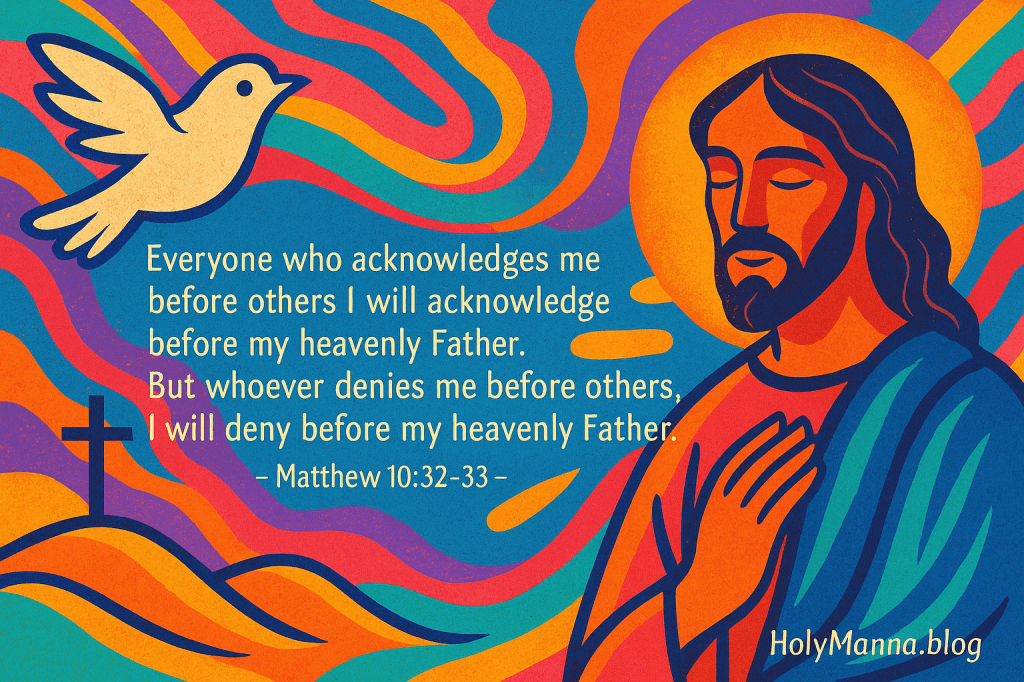
Courage Under Persecution. 26 “Therefore do not be afraid of them. Nothing is concealed that will not be revealed, nor secret that will not be known. 27 What I say to you in the darkness, speak in the light; what you hear whispered, proclaim on the housetops. 28 And do not be afraid of those who kill the body but cannot kill the soul; rather, be afraid of the one who can destroy both soul and body in Gehenna. 29 Are not two sparrows sold for a small coin? Yet not one of them falls to the ground without your Father’s knowledge. 30 Even all the hairs of your head are counted. 31 So do not be afraid; you are worth more than many sparrows. 32 Everyone who acknowledges me before others I will acknowledge before my heavenly Father. 33 But whoever denies me before others, I will deny before my heavenly Father.
Detailed Exegesis
Verse 24 – “No disciple is above his teacher, no slave above his master.”
Jesus sets the tone by reminding His followers that to imitate Him includes embracing His rejection. Culturally, the disciple’s goal was to become like his rabbi—but never surpass him. Spiritually, this verse affirms that suffering for Christ is not an exception but the norm for those who follow Him.
Verse 25 – “It is enough for the disciple that he become like his teacher, for the slave that he become like his master. If they have called the master of the house Beelzebul, how much more those of his household!”
Jesus warns that slander and spiritual opposition are inevitable. “Beelzebul” was a term for a demonic figure, and the Pharisees had accused Jesus of casting out demons by Satan’s power (Matthew 9:34). If the sinless Christ was maligned, His disciples must expect the same. But this identification with Christ is not a burden—it is a blessing.
Verse 26 – “Therefore do not be afraid of them. Nothing is concealed that will not be revealed, nor secret that will not be known.”
Jesus counters fear with eschatological hope. The truth will come to light. Every injustice, every hidden lie, will be exposed. This is not merely about earthly vindication—it’s a promise that God’s justice will prevail in the end. Fear loses its grip when we live in the light of eternity.
Verse 27 – “What I say to you in the darkness, speak in the light; what you hear whispered, proclaim on the housetops.”
The message of Christ is meant to be public, not private. “In the darkness” likely refers to personal revelation in prayer or hidden preparation. But disciples are not meant to stay silent—they are to preach boldly and clearly, like heralds on rooftops.
Verse 28 – “And do not be afraid of those who kill the body but cannot kill the soul; rather, be afraid of the one who can destroy both soul and body in Gehenna.”
This verse draws a sharp contrast between temporal and eternal consequences. Human threats, even death, are limited. Only God holds the power of final judgment. “Gehenna” was a valley outside Jerusalem associated with judgment and fire—a symbol of eternal separation from God. Jesus calls us to fear offending God more than we fear earthly opposition.
Verse 29 – “Are not two sparrows sold for a small coin? Yet not one of them falls to the ground without your Father’s knowledge.”
Sparrows were the cheapest of animals sold for sacrifice or food, yet God notices each one. This verse magnifies divine providence in the smallest details. If God sees the fall of a sparrow, how much more does He see and care for us?
Verse 30 – “Even all the hairs of your head are counted.”
This hyperbolic image emphasizes God’s intimate knowledge of us. No part of our being is overlooked. This is not abstract care—it’s personal, tender, and comprehensive. It echoes Psalm 139, where God is said to knit us together in the womb.
Verse 31 – “So do not be afraid; you are worth more than many sparrows.”
Here Jesus draws the conclusion: If God cares for the least, how much more does He treasure those made in His image? This is not self-help encouragement—it’s theological assurance. Our dignity comes from being known and loved by the Father.
Verse 32 – “Everyone who acknowledges me before others I will acknowledge before my heavenly Father.”
To acknowledge Jesus is to declare Him as Lord, even at personal cost. Public confession of Christ aligns us with Him and assures us of His intercession. This promise speaks directly to the persecuted Church, both ancient and modern.
Verse 33 – “But whoever denies me before others I will deny before my heavenly Father.”
This sobering statement emphasizes the stakes. Faith is not merely a private sentiment; it is a lived allegiance. To deny Christ is not just to reject a doctrine—it is to sever a relationship. Jesus respects our freedom, but also warns of the eternal consequences.
Teachings
The Catechism emphasizes the necessity of confessing Christ: “Everyone must be prepared to confess Christ before men and to follow Him along the way of the Cross” (CCC 1816). Faith is not passive. It must be lived, proclaimed, and defended. Jesus’ words in Matthew 10 are a call to what the Church calls “the obedience of faith”—a bold, public, and persevering witness rooted in love and trust.
Saint Thomas More, who was martyred for refusing to deny Christ’s authority over the Church, exemplified this teaching. His final words, “I die the King’s good servant, but God’s first,” echo the truth of today’s Gospel. To acknowledge Christ is to embrace eternal identity over earthly approval. Similarly, Saint Polycarp, when asked to renounce Jesus under threat of death, responded: “Eighty-six years have I served Him, and He has done me no wrong. How can I blaspheme my King who saved me?”
Historically, these verses have strengthened the hearts of countless persecuted Christians—from the early martyrs to the confessors of modern regimes. In our time, when ridicule or rejection for our beliefs is common, this Gospel reminds us that fear must never mute our mission. Jesus doesn’t promise ease—but He promises Himself. And that is enough.
Reflection
Jesus tells us again and again: “Do not be afraid.” But what does it mean to live without fear in a world that threatens, mocks, and misunderstands us? It means remembering that we are held in the hand of a Father who counts every hair on our heads. It means knowing that proclaiming Jesus with our lives, words, and decisions is worth more than comfort or approval.
Where in your life are you tempted to hide your faith? Have you ever silenced your convictions to avoid judgment or conflict? What would it look like to proclaim Christ from the rooftops—not just with words, but with integrity, charity, and courage? This Gospel invites us to live in holy boldness, not bravado. It calls us to speak truth with love, forgive those who hurt us, and trust the God who sees every sparrow fall.
Let us pray today for the grace to acknowledge Christ in every corner of our lives. May our hearts be undivided, our lips ready to praise, and our lives a living witness to the love of the One who first acknowledged us.
Living the Providence of God
Today’s readings draw us into a divine rhythm—a movement from fear to trust, from guilt to forgiveness, from silence to proclamation. In Genesis, we witness Joseph’s extraordinary ability to forgive those who betrayed him because he sees with the eyes of providence: “Even though you meant harm to me, God meant it for good”. In Psalm 105, the people of God are urged to remember and rejoice, to “proclaim all his wondrous deeds” as a testimony to the Lord’s enduring faithfulness. And in The Gospel of Matthew, Jesus calls each of us to be fearless witnesses, trusting in the Father who knows every sparrow and counts every hair on our heads.
Together, these Scriptures remind us that we are not abandoned, not unseen, and never outside the reach of God’s mercy. His providence doesn’t erase suffering—it transforms it. His mercy doesn’t deny sin—it redeems it. And His love doesn’t promise comfort—it calls us to courage. Like Joseph, we are called to forgive. Like the psalmist, we are called to praise. Like the disciples, we are called to stand firm, even in the face of rejection, trusting that Jesus will acknowledge us before the Father.
What is God asking you to trust Him with today? Who do you need to forgive? Where is He calling you to speak His name more boldly? Step forward in faith. Tell your story. Sing your praise. Embrace your cross. God is writing a greater story through your life—one of healing, purpose, and eternal glory. Let us walk that story today, with open hearts, fearless love, and unwavering trust in the One who holds us in His hands.
Engage with Us!
We’d love to hear how today’s readings spoke to your heart. Share your reflections, insights, or questions in the comments below! Let’s grow together as a community rooted in God’s Word and strengthened by His grace.
Reflection Questions:
First Reading – Genesis 49:29–32; 50:15–26
How has God used a painful moment in your life for good?
Is there someone in your life you need to forgive, as Joseph forgave his brothers?
Responsorial Psalm – Psalm 105:1–4, 6–7
What “wondrous deeds” of God do you need to remember and give thanks for today?
How can you proclaim God’s faithfulness to others this week?
Holy Gospel – Matthew 10:24–33
Where are you being called to speak Christ’s name more boldly?
What fears are holding you back from living fully for Jesus?
As you go into your day, remember that you are deeply known, completely loved, and courageously called. Live with the trust of Joseph, the praise of the psalmist, and the boldness of a disciple—doing everything with the love and mercy that Jesus taught us.
Follow us on Instagram and Facebook for more insights and reflections on living a faith-filled life.

 Holy Manna!
Leave a comment