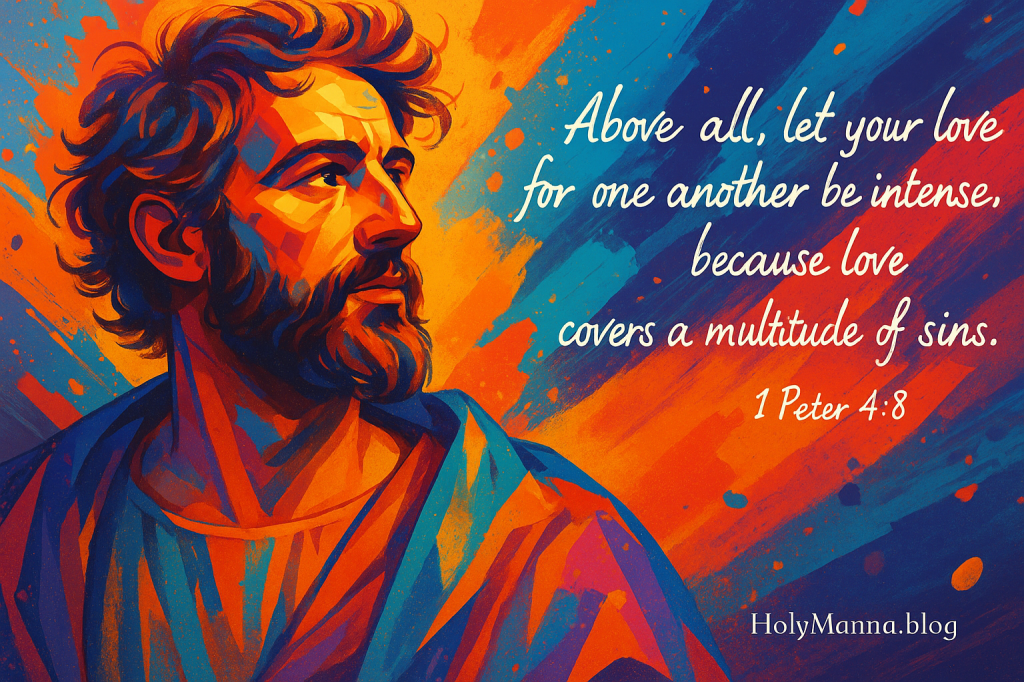
Jesus’ Chosen Rock for the Foundation of His Church
No other saint has shaped the visible structure and spiritual authority of the Catholic Church like Pope Saint Peter, the Apostle. He was not just one of the Twelve—he was the one whom Jesus named “Rock”, the cornerstone upon which He would build His Church. Chosen in love, formed through fire, and redeemed by mercy, Peter embodies the journey of the everyman saint: deeply flawed, immensely loved, and radically transformed by Jesus Christ. The fisherman from Galilee became the first pope, the leader of the early Church, and the keeper of the keys to the Kingdom. As The Catechism affirms in CCC 552, “Simon Peter holds the first place in the college of the Twelve; Jesus entrusted a unique mission to him… Peter is the rock upon which He built His Church.” Through miracles, preaching, pastoral care, and martyrdom, Peter’s witness echoes to every Christian heart: no failure is final if we love Jesus deeply and follow Him faithfully.
From Galilee’s Nets to Heaven’s Keys
Simon was born in the humble fishing village of Bethsaida, located along the shores of the Sea of Galilee. He was the son of Jonah, and his brother Andrew was also a fisherman—one of those tireless men whose hands were shaped by saltwater, nets, and labor. This ordinary man, with no formal education or priestly training, was chosen by God for an extraordinary mission. The story of his transformation begins when Andrew introduces him to Jesus, saying in The Gospel of John 1:41, “We have found the Messiah.” Upon seeing Simon, Jesus renames him Cephas—Peter—meaning “rock,” a name that prophetically defined his destiny.
Peter’s path with Jesus was one of deep love, bold action, and painful learning. He was the first to confess Christ’s divinity in The Gospel of Matthew 16:16, exclaiming, “You are the Christ, the Son of the living God.” Yet moments later, when Peter resisted Jesus’ foretelling of the Passion, the Lord rebuked him sharply: “Get behind Me, Satan!” (Matthew 16:23). He walked on water at Christ’s invitation but sank when fear overtook faith (Matthew 14). Most heartbreakingly, Peter denied even knowing Jesus three times on the night of His arrest (The Gospel of Luke 22:61). But grace was never far. After the Resurrection, Jesus restored Peter by asking three times, “Do you love Me?”, each question healing a wound, each answer inviting Peter into deeper communion and responsibility: “Feed my sheep” (John 21:15–17).
From that moment, Peter was never the same. He became the visible head of the Church, guiding the Apostles, preaching with power at Pentecost, and shepherding the early Christian communities. He traveled from Jerusalem to Antioch, and ultimately to Rome, where he would lay down his life for the Gospel he once trembled to proclaim.
When Shadows Heal and the Dead Rise
Peter’s transformation was so complete that he became a vessel for miracles that startled the ancient world. After Pentecost, when the Holy Spirit descended upon the Apostles, Peter emerged as a preacher and miracle-worker, radiating the healing power of Christ. One of his first acts was healing a beggar who had been crippled from birth. Standing at the gate called Beautiful, Peter declared in Acts 3:6, “Silver and gold I do not have, but what I do have I give you: In the name of Jesus Christ of Nazareth, rise up and walk.” The man, who had known nothing but immobility, immediately stood and leapt for joy, praising God.
Peter’s presence alone became a conduit for divine healing. In Acts 5:15, we are told that the people would carry their sick into the streets, hoping even his shadow might fall upon them and heal them. This remarkable sign was not of Peter’s own power, but of the authority of Christ alive in His servant.
Perhaps the most awe-inspiring miracle was when Peter raised Tabitha (also known as Dorcas), a beloved disciple known for her charity, from the dead. In Acts 9:40, Peter knelt and prayed before saying to the lifeless woman, “Tabitha, arise.” She opened her eyes, sat up, and was restored to her community—her life and legacy a testimony to the new power flowing through Peter’s hands.
From Prison Chains to the Cross of Love
Peter’s life was not one of ease or glory. As the leader of the early Church, he faced opposition from religious authorities, imprisonment, and constant threats. In Acts 12, we read of his miraculous escape from prison when an angel of the Lord appeared in his cell, causing his chains to fall off and leading him past sleeping guards and iron gates that opened by themselves. This divine intervention allowed Peter to continue his mission, strengthening the faith of the Church in times of persecution.
But Peter knew his earthly journey would end in martyrdom. Jesus had foretold his death in John 21:18–19, saying, “When you were younger, you used to dress yourself and go where you wanted; but when you grow old, you will stretch out your hands, and someone else will dress you and lead you where you do not want to go.” These words, The Gospel tells us, indicated the kind of death by which Peter would glorify God.
According to ancient Christian tradition, Peter was arrested during the reign of Emperor Nero, a tyrant infamous for his cruelty. Condemned to crucifixion, Peter made a final, humble request: that he be crucified upside down, feeling unworthy to die in the same way as his Master. This act of love, surrender, and humility marks the culmination of Peter’s transformation—from denier to martyr, from fisherman to father of the Church.
The Tomb That Speaks and the Keys That Still Turn
Though Peter died in the flesh, his intercession, memory, and legacy live on with miraculous vitality. The site of his martyrdom became the most sacred place in Western Christianity: St. Peter’s Basilica in Vatican City. Beneath its majestic altar lies his tomb, a place of pilgrimage and prayer for millions each year.
Miracles have been reported through his intercession—healings, conversions, and answers to desperate prayers. The successors of Peter, the popes, continue to uphold the unity and teachings of the Church, a living testimony to the authority Christ gave him in Matthew 16:19: “I will give you the keys of the kingdom of heaven; whatever you bind on earth shall be bound in heaven.” That divine commission, first spoken to a trembling fisherman, still echoes through the apostolic mission of the Church today.
In the communion of saints, Peter remains a guiding light. His letters in 1 and 2 Peter are part of Sacred Scripture, and his relics are venerated with love. Through them, the Church remembers not only a man but a miracle of mercy—a life radically changed and eternally fruitful.
Reflection: When the Rock Was Forged in Mercy and Love
Peter’s story is a deep well for all of us who feel unworthy, who have denied Christ in our actions or fallen short of our vocations. He reminds us that the path of holiness is not about being flawless, but about being faithful. Peter did not become a saint by his strength, but by God’s grace and his humble cooperation with it.
Have you ever felt like you failed Christ beyond repair? Have you denied Him by your choices, your silence, or your fear? Peter did. And yet, Jesus still called him, restored him, and built His Church upon him.
In your moments of weakness, hear the same voice that Peter heard: “Do you love Me?” If the answer is yes, then know this—God still has a mission for you.
Let us pray to be more like Peter: courageous in proclaiming the Gospel, humble in failure, and unwavering in love. Let us allow Christ to transform our wounds into witnesses and our fears into faith.
Engage with Us!
Have you ever related to Peter’s story of failure and redemption? Do you find hope in the mercy Jesus showed him?
Share your reflections in the comments below—we’d love to hear your journey.
Reflection Questions:
- In what ways have I denied Christ, and how can I return to Him like Peter did?
- What does Jesus’ question—“Do you love Me?”—stir in my heart today?
- Am I allowing Christ to use my weakness as a foundation for something greater?
Let’s support one another in this walk of faith, always remembering: do everything with love, as our Lord Jesus did.
Saint Peter, pray for us! 🔑
Follow us on Instagram and Facebook for more insights and reflections on living a faith-filled life.

 Holy Manna!
Leave a comment