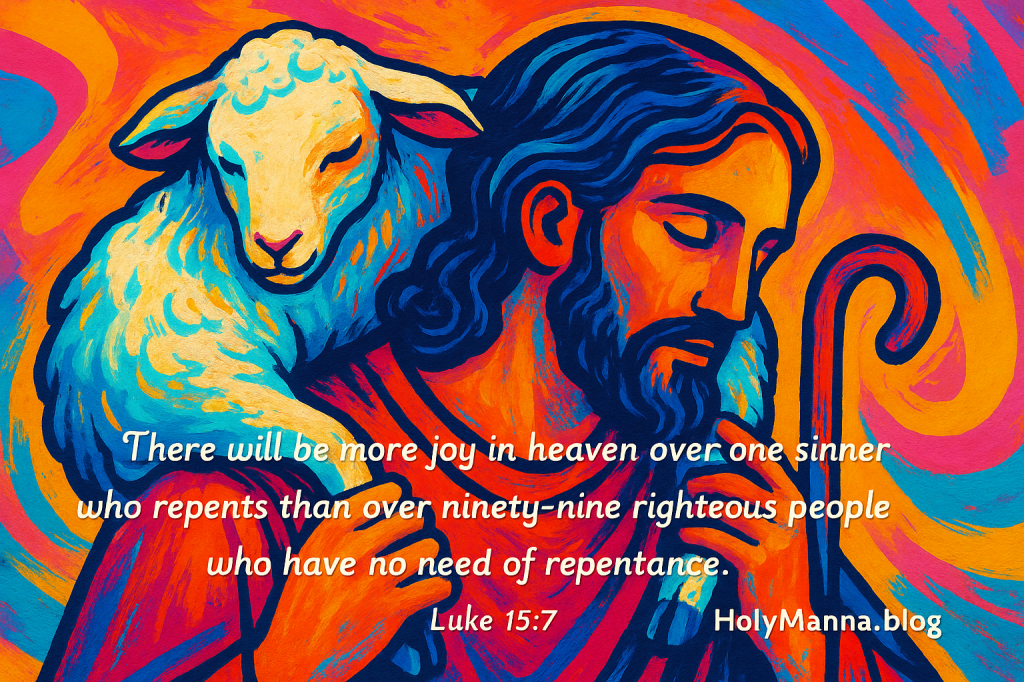
Hearts That Hunt for the Wounded
Have you ever felt like you were the one who wandered too far, the one no one would come looking for? Today, as we celebrate the Solemnity of the Most Sacred Heart of Jesus, the Church proclaims a powerful truth: God Himself searches for you. Not just figuratively—but with the relentless tenderness of a Shepherd, the piercing mercy of a pierced Heart, and the boundless joy of One who finds what was lost. These readings are not just comforting; they are a divine declaration that no matter how far we’ve strayed, we are still wanted, pursued, and rejoiced over.
Throughout salvation history, the image of the shepherd has been central to Israel’s understanding of God’s care. In Ezekiel 34, written during the Babylonian exile, the prophet speaks to a scattered, disillusioned people—exiled not only from their land but from the spiritual intimacy they once had with God. Into this darkness, God speaks with astonishing personal urgency: “I myself will pasture my sheep”. This promise echoes through Psalm 23, where the psalmist speaks of green pastures, still waters, and overflowing cups—not as abstractions, but as lived experiences of being held in the heart of the Divine. This same God, now fully revealed in Jesus Christ, doesn’t just shepherd from a distance; He takes on flesh, carries the cross, and dies while we were still sinners (Romans 5:8), pouring out His Heart for the healing of ours.
And so we come to the Gospel, Luke 15, where Christ unveils the Sacred Heart not as doctrine but as drama: the Shepherd leaves the ninety-nine, finds the lost, and rejoices with heaven’s own delight. It’s no coincidence that this feast falls in Ordinary Time, because the Sacred Heart speaks directly to the ordinary wounds, weariness, and wanderings of our daily lives. If today’s liturgy teaches us anything, it is this: the Sacred Heart of Jesus is not a distant symbol but a living reality—a Heart that breaks for us, bleeds for us, and burns to bring us home. Will you let yourself be found?
First Reading – Ezekiel 34:11-16
The Shepherd Who Comes Himself
The prophet Ezekiel was a priest exiled to Babylon, writing to a scattered and traumatized people who had lost not just their homeland but their sense of God’s nearness. Ezekiel 34 is one of the most powerful Old Testament condemnations of Israel’s corrupt leaders—“shepherds” who exploited rather than protected their flock. In response, God declares that He will no longer entrust His people to others. “I myself will pasture my sheep” becomes not only a divine promise of restoration, but a prophetic anticipation of Jesus, the Good Shepherd, whose Sacred Heart we celebrate today. This reading fits beautifully into the feast’s central theme: the pursuing love of God who seeks, heals, and carries His wounded ones home. What was spoken to Israel in exile now finds fulfillment in Christ, whose pierced Heart becomes the very pasture of our rest.
Ezekiel 34:11-16
New American Bible (Revised Edition)
11 For thus says the Lord God: Look! I myself will search for my sheep and examine them. 12 As a shepherd examines his flock while he himself is among his scattered sheep, so will I examine my sheep. I will deliver them from every place where they were scattered on the day of dark clouds. 13 I will lead them out from among the peoples and gather them from the lands; I will bring them back to their own country and pasture them upon the mountains of Israel, in the ravines and every inhabited place in the land. 14 In good pastures I will pasture them; on the mountain heights of Israel will be their grazing land. There they will lie down on good grazing ground; in rich pastures they will be pastured on the mountains of Israel. 15 I myself will pasture my sheep; I myself will give them rest—oracle of the Lord God. 16 The lost I will search out, the strays I will bring back, the injured I will bind up, and the sick I will heal; but the sleek and the strong I will destroy. I will shepherd them in judgment.
Detailed Exegesis
Verse 11 – “For thus says the Lord God: Look! I myself will search for my sheep and examine them.”
This opening verse is striking in its immediacy and intimacy. God does not send a servant; He comes Himself. The double emphasis—“I myself will search”—highlights the personal initiative of divine love. In Hebrew culture, shepherding was a lowly task, yet God humbles Himself to do it. This anticipates Jesus’ words in John 10:11: “I am the good shepherd. A good shepherd lays down his life for the sheep.”
Verse 12 – “As a shepherd examines his flock while he himself is among his scattered sheep, so will I examine my sheep. I will deliver them from every place where they were scattered on the day of dark clouds.”
The “day of dark clouds” evokes the Babylonian invasion, a moment of national and spiritual collapse. But the Lord promises not only to examine but to deliver. This foreshadows Christ’s descent into our own darkness—our sin, despair, and exile—and His mission to liberate us. The Sacred Heart is not merely sentimental; it’s the Heart that enters our storms.
Verse 13 – “I will lead them out from among the peoples and gather them from the lands; I will bring them back to their own country and pasture them upon the mountains of Israel, in the ravines and every inhabited place in the land.”
This is not just geographic return; it’s a spiritual homecoming. The imagery of pasturing on mountains reflects abundance and security. For the early Church Fathers, this verse pointed forward to the Church as the new Israel—the gathered community of those called back from the exile of sin into communion with Christ.
Verse 14 – “In good pastures I will pasture them; on the mountain heights of Israel will be their grazing land. There they will lie down on good grazing ground; in rich pastures they will be pastured on the mountains of Israel.”
Repeated emphasis on “good” and “rich” pastures reveals God’s deep desire to nourish His people. This aligns with Psalm 23 and the Eucharistic image of being fed with divine sustenance. The Sacred Heart becomes the source of this rich spiritual nourishment, where souls find true rest.
Verse 15 – “I myself will pasture my sheep; I myself will give them rest—oracle of the Lord God.”
This divine promise resounds with Sabbath imagery. Rest here is more than sleep—it’s peace, belonging, healing. The repetition of “I myself” underscores the personal love of God, made flesh in Jesus who says in Matthew 11:28, “Come to me, all you who labor and are burdened, and I will give you rest.”
Verse 16 – “The lost I will search out, the strays I will bring back, the injured I will bind up, and the sick I will heal; but the sleek and the strong I will destroy. I will shepherd them in judgment.”
God’s mercy is not blind; it is just. The “sleek and strong” refers to the arrogant leaders who fattened themselves while others suffered. The Heart of Jesus reaches for the broken, but also calls the proud to accountability. This verse reveals that love and justice are not opposites in God—they are perfectly united.
Teachings
The Catechism of the Catholic Church draws on this very passage to illustrate divine care: “God carries out his plan: he calls man to seek him, to know him, to love him with all his strength… He never ceases to call every man to seek him, so as to find life and happiness” (CCC 1). The Sacred Heart of Jesus, pierced on the Cross, is the ultimate fulfillment of this shepherding love. St. John Paul II once wrote, “The Heart of Christ is a heart that sees. This heart sees us always and knows us thoroughly.” And in this seeing, He does not recoil—He draws near.
St. Augustine powerfully reflects on this shepherding role of Christ, saying: “He loved us when we did not exist. He loved us when we resisted Him. And even now, when we sin, He does not abandon us.” That is precisely the kind of shepherd described in Ezekiel 34. The history of Israel reveals the rhythm of human failure and divine fidelity—a rhythm that culminates in Christ. Historically, this passage was read during the Feast of Tabernacles as a hope for future redemption. How much more is that hope realized in the Sacred Heart!
The imagery of binding, healing, gathering, and resting calls to mind the corporal and spiritual works of mercy—concrete expressions of the Shepherd’s love lived out by the Church. As the Body of Christ, we too are called to seek out the lost, to bind wounds, to shepherd in judgment. The Sacred Heart is not merely to be adored—it is to be imitated.
Reflection
How often do we consider that God Himself desires to come find us—not as an abstract group, but individually, personally, with tenderness and urgency? This reading reminds us that no sin, wound, or wandering disqualifies us from being loved. Christ comes not for the perfect, but the scattered, the sick, and the sorrowful. Are there places in your life where you feel exiled—cut off from spiritual pasture? Take courage. The Shepherd is near. He wants to lift you onto His shoulders, bring you to rest, and feed you with Himself. The invitation today is not to perform, but to be found. Will you let yourself be carried?
Responsorial Psalm – Psalm 23
The Heart That Shepherds Through the Valleys
Psalm 23 is perhaps the most beloved and recognized psalm in all of Scripture. Written by King David, a former shepherd himself, this psalm is a deeply personal reflection on God’s care, guidance, and protection. It is both a confession of faith and a declaration of trust, even in the midst of suffering. In the context of ancient Israel, shepherding was an everyday reality—intimate, risky, and sacrificial. David portrays God not as a distant deity, but as one who intimately tends to the needs of His flock. On this Solemnity of the Most Sacred Heart of Jesus, the psalm’s imagery speaks directly into the theme of divine love that searches, guides, feeds, and defends. The Sacred Heart is not a poetic symbol—it is the beating reality behind these words: a Heart that walks with us in green pastures and in shadowed valleys alike.
Psalm 23
New American Bible (Revised Edition)
The Lord, Shepherd and Host
1 A psalm of David.
The Lord is my shepherd;
there is nothing I lack.
2 In green pastures he makes me lie down;
to still waters he leads me;
3 he restores my soul.
He guides me along right paths
for the sake of his name.
4 Even though I walk through the valley of the shadow of death,
I will fear no evil, for you are with me;
your rod and your staff comfort me.
5 You set a table before me
in front of my enemies;
You anoint my head with oil;
my cup overflows.
6 Indeed, goodness and mercy will pursue me
all the days of my life;
I will dwell in the house of the Lord
for endless days.
Detailed Exegesis
Verse 1 – “The Lord is my shepherd; there is nothing I lack.”
David opens with a profession of absolute trust. The Hebrew word for “shepherd” connotes not just care, but also vigilant protection and deep knowledge of the sheep. To say “there is nothing I lack” is not to claim life is free of difficulty, but that the soul, when guided by the Lord, is not deprived of what truly matters. The Sacred Heart, full of divine charity, offers this same sustenance to those who entrust their lives to Him.
Verse 2 – “In green pastures he makes me lie down; to still waters he leads me;”
“Green pastures” and “still waters” represent places of rest and renewal—essentials for sheep in a dry and dangerous land. Spiritually, this verse reflects the inner rest that Christ offers to the weary soul. It aligns beautifully with Matthew 11:29: “Take my yoke upon you and learn from me, for I am meek and humble of heart, and you will find rest for yourselves.”
Verse 3 – “He restores my soul. He guides me along right paths for the sake of his name.”
The word “restores” can also be rendered “brings back” or “revives”—a theme central to today’s readings. The Sacred Heart of Jesus restores us not only emotionally, but spiritually and morally. His guidance on “right paths” is not just about ethics but about a return to communion with God, all done for “the sake of his name”, which means for the revelation of His glory.
Verse 4 – “Even though I walk through the valley of the shadow of death, I will fear no evil, for you are with me; your rod and your staff comfort me.”
This is the heart of the psalm. The “valley of the shadow of death” represents the darkest trials—illness, persecution, sin, loss. Yet the psalmist fears no evil because of the Shepherd’s presence. The “rod” symbolizes defense; the “staff,” guidance. The Sacred Heart does not promise to remove suffering, but to transform it by walking with us and defending us with divine authority and love.
Verse 5 – “You set a table before me in front of my enemies; You anoint my head with oil; my cup overflows.”
This verse shifts from the field to a banquet—a symbol of honor and abundance. God’s provision is not secret or hidden, but public, even “in front of my enemies.” Anointing the head with oil was a sign of joy, healing, and consecration. The overflowing cup reflects Eucharistic overtones—Christ offering His very Blood, in overflowing mercy from His pierced side.
Verse 6 – “Indeed, goodness and mercy will pursue me all the days of my life; I will dwell in the house of the Lord for endless days.”
The Hebrew verb for “pursue” is the same used for being hunted—flipping the narrative: now, it is God’s goodness and mercy that hunt us down. The psalm ends with a vision of communion with God that is not temporary but eternal. In the Sacred Heart, we find not only temporary shelter but everlasting belonging.
Teachings
The Catechism of the Catholic Church speaks of divine providence in terms that echo this psalm: “God cares for all, from the least things to the great events of the world and its history. The sacred books powerfully affirm God’s absolute sovereignty over the course of events” (CCC 302). This care is not abstract but concrete, personal, and tender—revealed fully in the Sacred Heart of Jesus, who leads us, feeds us, and carries us in love.
St. Thomas Aquinas teaches that mercy is the greatest of God’s attributes in relation to His creatures, because it “brings relief to the afflicted” (Summa Theologiae, II-II, q. 30, a. 4). Psalm 23 is a mercy psalm. It reminds us that divine love does not merely accept us; it chases after us with goodness until we let ourselves be caught. The Sacred Heart, burning with this mercy, constantly reaches out to lift us up from our valleys.
Historically, this psalm has been a liturgical mainstay in Christian funerals, monasteries, and daily devotions for centuries. Saints like Teresa of Ávila and Francis de Sales meditated frequently on its promises. It was often memorized by heart by children, the sick, and those preparing for death, because it speaks to the deepest human need: not to be alone in suffering. And the Sacred Heart answers that need by saying, “You are with me”.
Reflection
How often do we rush through life, trying to fill our cup with achievements, praise, or comfort, only to find ourselves still thirsty? This psalm invites us to let the Lord be our Shepherd—not in theory, but in every anxious and tired corner of our heart. Are we letting Him lead us to still waters? Are we letting Him restore us when we stray? The Sacred Heart does not want mere admiration—it desires trust. In moments of fear, are we choosing to rest in His presence? In times of joy, do we remember the Source of our overflowing cup? What would your life look like if you truly believed that goodness and mercy are pursuing you right now? Let us walk through this day under the gaze of the Shepherd who never abandons His sheep.
Second Reading – Romans 5:5-11
Love Proven by Blood
Written to the early Christian community in the heart of the Roman Empire, Romans 5 stands as one of the most profound articulations of divine love in all of Scripture. St. Paul writes to a diverse and often conflicted group of believers—both Jewish and Gentile converts—proclaiming the radical truth that God’s love has been fully revealed in Jesus Christ. This passage comes in the context of Paul’s argument that justification is not earned by works but is a gift received through faith. On this Solemnity of the Most Sacred Heart of Jesus, the reading draws us directly into the pierced and beating center of our salvation: “While we were still sinners Christ died for us.” If Ezekiel 34 and Psalm 23 show us the Shepherd’s pursuit, here we see the Shepherd’s self-offering—a love that sacrifices, saves, and transforms.
Romans 5:5-11
New American Bible (Revised Edition)
5 and hope does not disappoint, because the love of God has been poured out into our hearts through the holy Spirit that has been given to us. 6 For Christ, while we were still helpless, yet died at the appointed time for the ungodly. 7 Indeed, only with difficulty does one die for a just person, though perhaps for a good person one might even find courage to die. 8 But God proves his love for us in that while we were still sinners Christ died for us. 9 How much more then, since we are now justified by his blood, will we be saved through him from the wrath. 10 Indeed, if, while we were enemies, we were reconciled to God through the death of his Son, how much more, once reconciled, will we be saved by his life. 11 Not only that, but we also boast of God through our Lord Jesus Christ, through whom we have now received reconciliation.
Detailed Exegesis
Verse 5 – “And hope does not disappoint, because the love of God has been poured out into our hearts through the holy Spirit that has been given to us.”
Paul begins with a bold claim: Christian hope is not wishful thinking. It is anchored in a real and present reality—the indwelling of the Holy Spirit. The phrase “poured out” evokes abundance, as in the outpouring of Christ’s blood from His Sacred Heart. This is not a trickle of affection; it is a flood of divine charity that fills us from within.
Verse 6 – “For Christ, while we were still helpless, yet died at the appointed time for the ungodly.”
The word “helpless” speaks to our spiritual incapacity. We did not earn salvation; we were unable to save ourselves. The “appointed time” refers to the kairos—the divinely chosen moment in history. Christ’s death is not accidental but sovereignly timed. And who did He die for? Not the righteous, but the “ungodly.” This is love freely given, not deserved.
Verse 7 – “Indeed, only with difficulty does one die for a just person, though perhaps for a good person one might even find courage to die.”
Paul here acknowledges the rare human example of self-sacrifice, yet even this is conditional and rare. By contrast, divine love transcends all human expectations. Christ dies not for the just, but for the unjust. This verse sets up the magnitude of the next.
Verse 8 – “But God proves his love for us in that while we were still sinners Christ died for us.”
This is the heart of the Gospel. Love is not just declared—it is proven. The verb “proves” (Greek sunistēmi) means to demonstrate conclusively. The Sacred Heart is the proof: Christ does not wait for us to clean up our act. He offers Himself fully while we are still in rebellion. This is not sentimentalism but sacrificial mercy.
Verse 9 – “How much more then, since we are now justified by his blood, will we be saved through him from the wrath.”
Paul moves from the past (Christ’s death) to the future (our salvation). Justification by blood echoes the covenantal sacrifices of the Old Testament, now fulfilled in the New Covenant sealed on the Cross. Being “saved from wrath” refers not to emotional anger but to the righteous judgment due to sin. The Sacred Heart absorbs that wrath to shield us.
Verse 10 – “Indeed, if, while we were enemies, we were reconciled to God through the death of his Son, how much more, once reconciled, will we be saved by his life.”
The transformation is total: from enemies to reconciled, from death to life. Paul’s “how much more” argument is deeply hopeful—if Christ’s death reconciled us, His resurrected life now sustains and sanctifies us. The Sacred Heart continues to beat for us, not just once in Calvary, but eternally in heaven, interceding on our behalf.
Verse 11 – “Not only that, but we also boast of God through our Lord Jesus Christ, through whom we have now received reconciliation.”
“Boasting” here is not pride, but joy-filled exultation. Reconciliation is not just a status—it’s a relationship. Through Jesus, we now live in restored friendship with God. And it is a cause for rejoicing, because the wound between heaven and earth has been healed—by the wounds of Christ.
Teachings
The Catechism of the Catholic Church echoes this passage powerfully: “But the gift of God is eternal life in Christ Jesus our Lord. For if while we were enemies, we were reconciled to God by the death of his Son, much more, now that we are reconciled, shall we be saved by his life” (CCC 1996, citing Romans 6:23 and 5:10). Grace is not merely forgiveness; it is participation in the very life of God. This outpouring of love is what animates the Sacred Heart.
St. Catherine of Siena wrote: “The blood of Christ cries out for mercy, while the blood of Abel cried out for vengeance.” She saw the pierced Heart of Jesus as a fountain of life, the antidote to sin’s venom. The saints repeatedly testify that true devotion to the Sacred Heart is not just emotional—it is transformative, leading to interior renewal and union with God’s will.
Historically, the devotion to the Sacred Heart intensified during times of moral and social decay—times much like our own. When Christ appeared to St. Margaret Mary Alacoque in the 17th century, He revealed His Heart as wounded by indifference and ingratitude. He said, “Behold this Heart which has so loved men that it has spared nothing… and in return, I receive only ingratitude.” The Sacred Heart continues to plead: not for vengeance, but for our return.
Reflection
Do you believe that Christ loved you while you were still helpless, sinful, and far from Him? Many of us still live as though we must earn His mercy. But today’s reading calls us to accept the radical truth: God has already proven His love—with blood, not just words. Where in your life do you need to stop striving and start receiving? Where are you still withholding your brokenness from the One who already died to heal it? The Sacred Heart is not a symbol of guilt—it is a sanctuary of mercy. Will you let it be your refuge? Let this reading draw you into joyful surrender, into reconciliation not just as a doctrine, but as a daily dwelling in the love that never gives up on you.
Holy Gospel – Luke 15:3-7
The Joy of the Seeking Heart
The Gospel of Luke is often called the “Gospel of Mercy,” and with good reason. Throughout its pages, Luke emphasizes Jesus’ compassion for the outcast, the sinner, the forgotten. Chapter 15 is one of the most emotionally rich in the entire Gospel—it contains the parables of the lost sheep, the lost coin, and the prodigal son. Jesus tells these stories in response to Pharisees and scribes who grumble at His association with sinners. He isn’t just defending His actions; He’s revealing the very nature of God. On this Solemnity of the Most Sacred Heart of Jesus, the parable of the lost sheep offers a tender yet profound window into the divine Heart—a Heart that doesn’t just tolerate the sinner, but rejoices to find them. It is not simply a message about rescue; it is about the joy of reconciliation.
Luke 15:3-7
New American Bible (Revised Edition)
3 So to them he addressed this parable. 4 “What man among you having a hundred sheep and losing one of them would not leave the ninety-nine in the desert and go after the lost one until he finds it? 5 And when he does find it, he sets it on his shoulders with great joy 6 and, upon his arrival home, he calls together his friends and neighbors and says to them, ‘Rejoice with me because I have found my lost sheep.’ 7 I tell you, in just the same way there will be more joy in heaven over one sinner who repents than over ninety-nine righteous people who have no need of repentance.
Detailed Exegesis
Verse 3 – “So to them he addressed this parable.”
Jesus begins by directing His words to the religious leaders. They had taken offense at His eating with tax collectors and sinners (see Luke 15:1-2). In response, Jesus uses a parable—a tool rich in meaning and designed to both reveal and challenge. He aims to unveil the Heart of the Father and to shatter the narrow expectations of the self-righteous.
Verse 4 – “What man among you having a hundred sheep and losing one of them would not leave the ninety-nine in the desert and go after the lost one until he finds it?”
In a human sense, this might seem irrational—abandoning ninety-nine for one. Yet this is the divine logic of mercy. Jesus speaks in hyperbole to emphasize the Shepherd’s radical love. The Sacred Heart is not utilitarian; it is personal. God does not love in bulk—He loves individually. The question “What man among you…?” also places the listeners in the scene, forcing them to examine their own hearts.
Verse 5 – “And when he does find it, he sets it on his shoulders with great joy.”
This verse is saturated with affection. The Shepherd doesn’t berate the sheep or demand that it walk back on its own. Instead, He lifts it, bears its weight, and rejoices. The image of being carried echoes Isaiah 40:11: “He gathers the lambs in his arms, carrying them in his bosom.” This is the Sacred Heart—gentle and joyful in the work of rescue.
Verse 6 – “And, upon his arrival home, he calls together his friends and neighbors and says to them, ‘Rejoice with me because I have found my lost sheep.’”
Salvation is never a private affair. Heaven rejoices publicly over one soul returned. The call to “rejoice with me” reflects the communal dimension of redemption. The Sacred Heart not only seeks and saves—it celebrates. This joy mirrors the heavenly feast and reminds us that repentance is a cause for liturgical exultation, not shame.
Verse 7 – “I tell you, in just the same way there will be more joy in heaven over one sinner who repents than over ninety-nine righteous people who have no need of repentance.”
Here Jesus makes the spiritual point explicit. Heaven’s joy is not in perfect performance, but in repentance. This verse overturns any pharisaical pride: those who think they don’t need mercy are missing out on the joy of receiving it. The Sacred Heart rejoices more in one returned sinner than in a multitude of self-sufficient saints. Divine joy is not based on statistics—it is based on love.
Teachings
The Catechism of the Catholic Church draws directly from this parable when teaching on repentance and mercy: “Jesus calls to conversion. This call is an essential part of the proclamation of the kingdom… it is not just a human work. It is the movement of a ‘contrite heart,’ drawn and moved by grace to respond to the merciful love of God who loved us first” (CCC 1423). Conversion is not initiated by guilt—it is drawn forth by love, a love revealed in full through the Sacred Heart.
St. Ambrose reflects on this parable with deep spiritual insight: “The sheep is carried back by the shepherd, symbolizing the human nature which Christ took upon himself to save it.” For the Fathers of the Church, this was not just a story—it was a summary of the Incarnation. The Sacred Heart, made flesh in Jesus, searches the wilds of our brokenness and lifts us upon His shoulders—the Cross itself.
Devotion to the Sacred Heart emphasizes reparation for sin, but it also highlights the overwhelming joy that flows from reconciliation. As Pope Pius XII taught in Haurietis Aquas, “The Heart of our Savior reflects in a certain way the image of the Divine Person of the Word and of His twofold nature, the human and the divine; it is, therefore, the symbol of that burning love which… led Him to sacrifice Himself on the Cross.” The Shepherd’s joy is born of sacrifice, and His shoulders are scarred from carrying us home.
Reflection
Do you believe that God rejoices over you—not when you’ve succeeded, but when you’ve come back? Many of us live with an image of God as disappointed, distant, or demanding. But today’s Gospel reveals something utterly different: a God who searches, lifts, and throws a feast. Where in your life have you wandered? What “wilderness” do you find yourself in? The Sacred Heart is not waiting for you to find the way back—it’s already on the move, coming to find you. Are you willing to be carried? To surrender to joy instead of shame? Let this Gospel be your invitation to repent not out of fear, but in response to divine delight. Heaven waits—not with condemnation, but with celebration. Will you let yourself be found and rejoiced over?
Found, Carried, Loved
Today’s readings unveil a breathtaking portrait of God’s Heart—a Heart that searches, saves, and rejoices. From Ezekiel 34, we hear the divine promise: “I myself will pasture my sheep”—a God who will not delegate love, but takes on the labor of it Himself. In Psalm 23, that same God leads us through valleys and into overflowing peace, never abandoning, always providing. Romans 5 takes us to the foot of the Cross, where “while we were still sinners Christ died for us”, not because we were worthy, but because His love is relentless. And finally, in Luke 15, Jesus lifts the veil on the joy of heaven, revealing a Shepherd who bears the lost upon His shoulders and throws a celebration of mercy that echoes into eternity.
Together, these readings invite us not just to admire the Sacred Heart of Jesus, but to enter into it. To realize that we are the sheep He searches for, the soul He restores, the sinner He dies for, the beloved He carries. The message is consistent and clear: you are not forgotten, not too far gone, not disqualified. You are sought after. You are deeply loved.
What would change in your life if you truly believed that God delights in saving you? Today, let us respond to that pursuit with trust. Return to the Shepherd. Rest in the Heart that beats for you. And then, become that heart to others—seek the lost, carry the broken, rejoice in mercy. The Sacred Heart is not just a devotion; it is a way of life. Will you live from that Heart today?
Engage with Us!
We’d love to hear how the Sacred Heart of Jesus is speaking to you through today’s readings. Share your reflections in the comments—whether it’s a verse that touched your heart, a struggle you’re surrendering, or a step you’re inspired to take in your walk with Christ. Your words could be the encouragement someone else needs today.
Reflection Questions
First Reading – Ezekiel 34:11-16
Where in your life have you felt scattered, injured, or lost? How does it feel to hear that God Himself is coming to find and heal you? What part of God’s promise in this reading speaks most personally to you right now?
Responsorial Psalm – Psalm 23
What “valley of shadow” are you walking through? How can you invite the Lord’s comfort into that place? What would it look like for you to trust that goodness and mercy are actively pursuing you?
Second Reading – Romans 5:5-11
Do you struggle to believe that Christ died for you “while you were still a sinner”? Why or why not? How can you let God’s love, poured out into your heart, transform your view of yourself and others today?
Holy Gospel – Luke 15:3-7
Have you ever experienced the joy of being found by God? What did it feel like?
Who in your life might need to be “carried on your shoulders” with the same love Jesus shows?
Let us go forth today with hearts open, walking in the certainty that we are loved by a God who never stops searching, healing, and rejoicing over us. May everything we do be rooted in the mercy and love of Jesus, and may His Sacred Heart shape the way we love, serve, and live each moment.
Follow us on Instagram and Facebook for more insights and reflections on living a faith-filled life.

 Holy Manna!
Leave a comment