A Spirit Stronger Than the World
Have you ever felt like the world is just too much—too heavy, too loud, too broken? Today’s readings are a gentle yet powerful reminder that, while the world may bring tribulation, the Holy Spirit brings transformation. We’re invited into a journey of divine empowerment: a passage from incomplete understanding to bold proclamation, from isolation to communion, from fear to unshakeable peace. It is a Spirit-driven journey that doesn’t remove suffering, but infuses it with courage, unity, and purpose.
In Acts 19, we witness St. Paul encountering disciples who had received only the baptism of John. Their faith was genuine, but incomplete—they had not yet received the Holy Spirit. In first-century Judaism, John’s baptism signified repentance, but Paul makes clear that baptism in Jesus’ name brings the indwelling of the Spirit and a radically new life. Historically, this moment in Ephesus is a turning point: the Church begins to move deeper into Gentile territory, empowered by the Spirit not just to survive, but to thrive. Psalm 68 echoes this movement of divine initiative: “God makes a home for the lonely; He leads out the prisoners into prosperity” (Psalm 68:6). The psalm anchors us in the truth that God acts on behalf of the vulnerable, filling their lives with joy and justice.
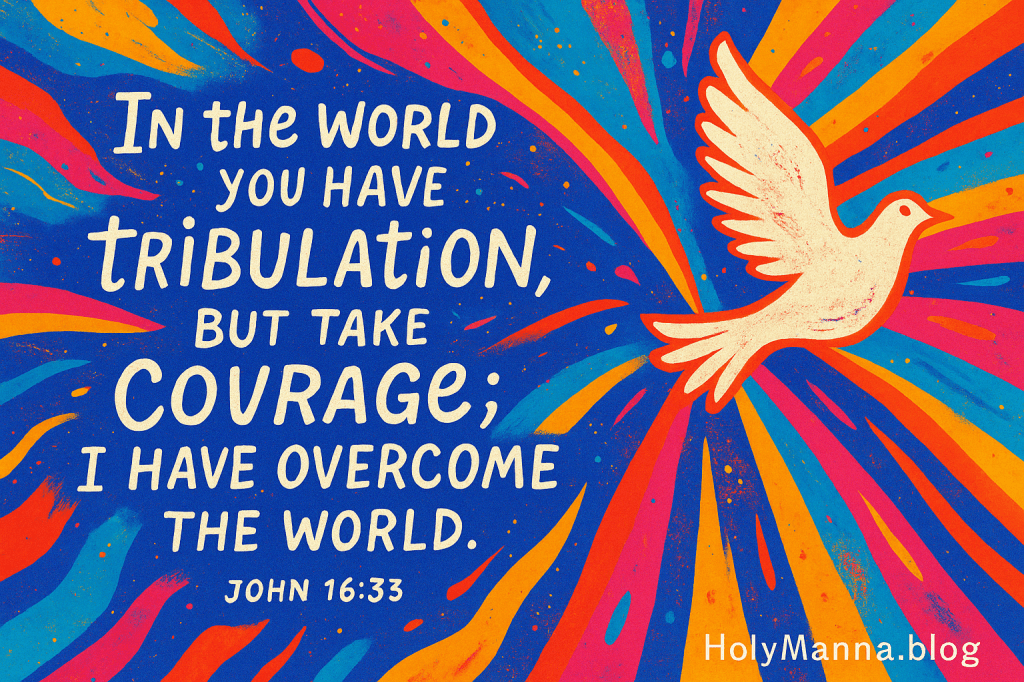
Then, in The Gospel of John, Jesus speaks openly to His disciples about the coming storm: their scattering, their fear, their abandonment of Him. Yet He also declares, “In the world you have tribulation, but take courage; I have overcome the world” (John 16:33). These words weren’t meant only for them—they are for us too. They prepare us to receive the Holy Spirit not just as a doctrine, but as a living Person who gives us the same peace and power Jesus had. From first-century Ephesus to our own homes and hearts, the Spirit continues to come upon us, casting out fear, drawing us into communion, and setting our hearts ablaze. Are you ready to receive Him more fully today?
First Reading – Acts 19:1–8
The Baptism of the Spirit
The Acts of the Apostles, often called the “Gospel of the Holy Spirit,” documents the early Church’s explosive growth through the power of God at work in His people. Today’s passage finds us in Ephesus, a major city in Asia Minor, rich with pagan influences and intellectual curiosity. Paul, now deep into his third missionary journey, arrives to find a group of sincere believers who had only received John the Baptist’s baptism—a baptism of repentance but not of regeneration. This moment highlights a critical distinction in the early Church: true Christian baptism not only washes sins but confers the Holy Spirit. This reading fits beautifully into today’s central theme—receiving the Holy Spirit brings courage, unity, and joy amid tribulation—because it shows how the fullness of Christian life comes only when the Holy Spirit is welcomed, not merely believed in as an idea but encountered as a living reality.
Acts 19:1-8
New American Standard Bible
Paul in Ephesus
19 Now it happened that while Apollos was in Corinth, Paul passed through the upper country and came to Ephesus, and found some disciples. 2 He said to them, “Did you receive the Holy Spirit when you believed?” And they said to him, “On the contrary, we have not even heard if there is a Holy Spirit.” 3 And he said, “Into what then were you baptized?” And they said, “Into John’s baptism.” 4 Paul said, “John baptized with a baptism of repentance, telling the people to believe in Him who was coming after him, that is, in Jesus.” 5 When they heard this, they were baptized in the name of the Lord Jesus. 6 And when Paul had laid hands upon them, the Holy Spirit came on them and they began speaking with tongues and prophesying. 7 There were about twelve men in all.
8 And he entered the synagogue and continued speaking out boldly for three months, having discussions and persuading them about the kingdom of God.
Detailed Exegesis
Verse 1 – “Now it happened that while Apollos was in Corinth, Paul passed through the upper country and came to Ephesus, and found some disciples.”
Paul, always following the Spirit’s lead, enters Ephesus—one of the most important cities of the Roman province of Asia. These “disciples” were likely Jewish followers of John the Baptist or early Christians who had not yet received full catechesis. Their faith was real, but they lacked fullness.
Verse 2 – “He said to them, ‘Did you receive the Holy Spirit when you believed?’ And they said to him, ‘On the contrary, we have not even heard if there is a Holy Spirit.’”
Paul immediately tests their spiritual depth. This question reveals the central concern of his missionary work: not just belief in Jesus, but the indwelling of the Holy Spirit. Their response shows a crucial theological gap, possibly reflective of other incomplete evangelization efforts in the early Church.
Verse 3 – “And he said, ‘Into what then were you baptized?’ And they said, ‘Into John’s baptism.’”
This clarifies their situation. They had received only a baptism of repentance, which, while preparing hearts for Christ, did not confer the Spirit. John’s baptism was a necessary but transitional step in salvation history (cf. Luke 3:3).
Verse 4 – “Paul said, ‘John baptized with a baptism of repentance, telling the people to believe in Him who was coming after him, that is, in Jesus.’”
Paul sets the record straight, affirming John’s role as a forerunner and directing them to Jesus. This affirms John’s own words: “He must increase, but I must decrease” (John 3:30).
Verse 5 – “When they heard this, they were baptized in the name of the Lord Jesus.”
This is the moment of sacramental completeness. Their baptism “in the name of the Lord Jesus” symbolizes not just a change of allegiance, but the entry into the mystical Body of Christ.
Verse 6 – “And when Paul had laid hands upon them, the Holy Spirit came on them and they began speaking with tongues and prophesying.”
Here we see a mini-Pentecost. The laying on of hands—one of the most ancient sacramental signs—confirms them. The visible signs of tongues and prophecy reveal the Spirit’s unmistakable presence, echoing Acts 2 and Acts 10.
Verse 7 – “There were about twelve men in all.”
This detail is rich with symbolism. Just as the twelve apostles represented the new Israel, so these twelve disciples may symbolize a new foundation for the Church in Ephesus, rooted in the Spirit.
Verse 8 – “And he entered the synagogue and continued speaking out boldly for three months, having discussions and persuading them about the kingdom of God.”
Empowered by the Spirit, Paul speaks boldly—a recurring motif in Acts. This boldness isn’t natural courage, but the supernatural fruit of the Spirit, fulfilling Christ’s promise in John 16:33: “Take courage; I have overcome the world.”
Teachings of the Church
The Catechism of the Catholic Church teaches that the sacraments of Christian initiation—Baptism, Confirmation, and Eucharist—are the foundation of every Christian life. “The reception of the sacrament of Confirmation is necessary for the completion of baptismal grace” (CCC 1285). Without the Holy Spirit, our Christian life remains incomplete, lacking the divine power to live as true witnesses. St. Cyril of Jerusalem wrote, “Just as the baptized person is illuminated by the light of the Holy Spirit, so too are we confirmed in grace and truth” (Catechetical Lectures, 17.6). Today’s reading reflects this same theology—the disciples’ transformation comes not just from hearing the message of Jesus, but from receiving the life of Jesus through the Spirit.
Moreover, this passage reflects a living history of the early Church: the moment when Christianity began to expand beyond Jewish roots into the Gentile world, guided not by human effort but by the Spirit’s timing and empowerment. Historically, Ephesus would become a critical center of Christianity, home to St. John the Evangelist and later the site of the Third Ecumenical Council in 431. The Spirit planted seeds through Paul that would flourish for generations. The early Church Fathers, including St. Irenaeus, emphasized that without the Holy Spirit, the Church could not truly be the Body of Christ.
St. John Chrysostom observed that the Spirit’s arrival in believers “brings about a soul on fire, a mouth that speaks wisdom, and a life that reflects heaven”. The passage today invites us to ask not just whether we believe in Jesus, but whether we have allowed the Holy Spirit to ignite us—to speak boldly, to live joyfully, and to walk courageously in the world’s trials. The early disciples in Ephesus were not content with partial truth once they discovered the fullness. Neither should we be.
Reflection
Are you living with the fullness of the Spirit—or settling for less? This reading reminds us that Christianity is not merely a matter of ideas or morality but a living relationship with God through the Holy Spirit. Each of us, baptized and confirmed, is invited to rekindle that fire. Consider inviting the Holy Spirit to renew your heart today—perhaps by praying “Come, Holy Spirit” daily, attending Eucharistic Adoration, or receiving the Sacrament of Reconciliation. In what areas of your life is the Spirit asking to break in and set you free?
Let today’s reading stir a holy longing within you for the same boldness, joy, and prophetic power that filled those twelve Ephesians. The Spirit still moves, still speaks, and still sets hearts ablaze. Will you let Him move in you today?
Responsorial Psalm – Psalm 68:2–7
God Who Marches with the Broken
Psalm 68 is a majestic, triumphant hymn attributed to David, celebrating God’s power to save His people and vindicate the just. It may have originally been composed for a liturgical procession, possibly when the Ark of the Covenant was brought to Jerusalem, and it carries an atmosphere of royal celebration and cosmic upheaval. This psalm speaks of God as a divine warrior who scatters His enemies, but also as a tender Father who lifts up the oppressed and lonely. In the cultural world of ancient Israel, kings were often portrayed as defenders of justice, but Psalm 68 reveals that it is God—YHWH—who truly reigns over creation and history. In today’s context, it beautifully complements the first reading’s emphasis on the gift of the Holy Spirit by showing us who God is: a deliverer, a protector, and a loving presence that leads His people through the wilderness. It assures us that even in tribulation, God marches with us, transforming pain into praise and desolation into joy.
Psalm 68:2-7
New American Standard Bible
2 As smoke is driven away, so drive them away;
As wax melts before a fire,
So the wicked will perish before God.
3 But the righteous will be joyful; they will rejoice before God;
Yes, they will rejoice with gladness.
4 Sing to God, sing praises to His name;
Exalt Him who rides through the deserts,
Whose name is the Lord, and be jubilant before Him.
5 A father of the fatherless and a judge for the widows,
Is God in His holy dwelling.
6 God makes a home for the lonely;
He leads out the prisoners into prosperity,
Only the rebellious live in parched lands.
7 God, when You went forth before Your people,
When You marched through the desert, Selah
Detailed Exegesis
Verse 2 – “As smoke is driven away, so drive them away; As wax melts before a fire, So the wicked will perish before God.”
This verse uses vivid imagery to depict the fate of the wicked in the presence of God. Just as smoke and wax cannot stand before fire, evil cannot stand before holiness. It’s a poetic declaration that God’s justice is active and purifying, not passive or indifferent. The imagery reinforces the truth that sin is self-destructive in the face of divine righteousness.
Verse 3 – “But the righteous will be joyful; they will rejoice before God; Yes, they will rejoice with gladness.”
Here we see a stark contrast. While the wicked melt away, the righteous overflow with joy. This verse echoes the joy of the disciples in Acts 19 who, upon receiving the Holy Spirit, began prophesying and speaking in tongues. Joy is the fruit of divine encounter—a sign that God is present and working.
Verse 4 – “Sing to God, sing praises to His name; Exalt Him who rides through the deserts, Whose name is the Lord, and be jubilant before Him.”
This is a call to worship that invites all people into a song of praise. The reference to “riding through the deserts” recalls God’s presence with Israel during the Exodus. It is also a spiritual image—God journeys with us even through the dry, desolate places of our lives. The name “Lord” (YHWH) is the sacred covenant name of God, reminding us that He is not distant, but intimately involved with His people.
Verse 5 – “A father of the fatherless and a judge for the widows, Is God in His holy dwelling.”
This verse reveals the tenderness of God’s justice. In a patriarchal society where orphans and widows were especially vulnerable, this declaration sets God apart from all human rulers. He is not just powerful—He is compassionate, dwelling in holiness yet profoundly concerned with human suffering. This parallels Jesus’ words in John 16 where He reassures His disciples that they are not alone: “The Father is with Me.”
Verse 6 – “God makes a home for the lonely; He leads out the prisoners into prosperity, Only the rebellious live in parched lands.”
God’s saving work is not abstract; it is deeply personal. He provides home, healing, and restoration. The phrase “leads out the prisoners” evokes both the Exodus and spiritual liberation. This connects directly with the Holy Spirit’s liberating power in Acts 19. The “rebellious” choose to live apart from God and thus experience spiritual dryness—a warning against closing our hearts to grace.
Verse 7 – “God, when You went forth before Your people, When You marched through the desert, Selah”
This final verse invokes divine memory—God marching with Israel through the wilderness. It is a poetic and liturgical affirmation that God is not static; He is a God who journeys with us. The use of “Selah” indicates a pause for reflection, a moment to internalize the truth that we do not walk alone.
Teachings of the Church
The Catechism of the Catholic Church teaches that divine providence is not only God’s foresight but His loving guidance of all creation: “God cares for all, from the least things to the great events of the world and its history” (CCC 302). This psalm, then, is not just poetry—it’s a profession of trust in divine providence. God’s actions are not limited to grand miracles but are deeply present in the lives of the fatherless, widows, prisoners, and the lonely.
St. Basil the Great wrote, “Wherever the Spirit is, there is freedom, joy, and unity”, echoing the psalm’s emphasis on joy and divine protection. The Spirit is the very breath of the Church, the One who moves us to sing, to rejoice, and to stand strong in God’s justice. Psalm 68 is not a passive meditation—it is a call to live as people of the Spirit, moved by the memory of what God has done and the hope of what He continues to do.
In times of desolation, this psalm becomes a lifeline. St. Teresa of Ávila teaches that “God walks among the pots and pans”, meaning He is present in the ordinary and the mundane. Psalm 68 shows us that He also walks through our deserts, our griefs, and our unanswered prayers. The joy of the righteous is not rooted in circumstance but in communion with God—who never abandons His people.
Reflection
Where are you experiencing dryness, loneliness, or captivity today? This psalm reminds us to turn our gaze toward the One who marches with us. Perhaps it’s time to intentionally praise God—even before your situation changes. Begin each morning this week by praying: “Sing to God, sing praises to His name” (Psalm 68:4). Will you choose joy as an act of trust in the God who delivers?
Holy Gospel – John 16:29–33
Peace in the Midst of the Storm
The Gospel of John is profoundly theological, written not merely to recount the life of Jesus, but to reveal His divine identity and the mystery of our communion with Him. Today’s Gospel passage comes near the end of the Last Supper discourse (chapters 13–17), where Jesus is preparing His disciples for His imminent Passion. These are intimate, final words—filled with urgency, compassion, and divine insight. He is revealing that true peace is not found in the absence of suffering but in communion with Him, even in tribulation. Historically, these words would have struck a powerful chord with the early Church, who faced persecution and scattering. Today, this reading forms the capstone of our theme: receiving the Holy Spirit brings courage, unity, and joy amid tribulation. Christ speaks of the peace that comes from knowing He has overcome the world—a peace poured into our hearts through the Holy Spirit.
John 16:29-33
New American Standard Bible
29 His disciples *said, “See, now You are speaking plainly and are not [a]using any figure of speech. 30 Now we know that You know all things, and that You have no need for anyone to question You; this is why we believe that You came forth from God.” 31 Jesus replied to them, “Do you now believe? 32 Behold, an hour is coming, and has already come, for you to be scattered, each to his own home, and to leave Me alone; and yet I am not alone, because the Father is with Me. 33 These things I have spoken to you so that in Me you may have peace. In the world you have tribulation, but take courage; I have overcome the world.”
Detailed Exegesis
Verse 29 – “His disciples said, ‘See, now You are speaking plainly and are not using any figure of speech.’”
After many metaphors and parables, Jesus has begun to speak clearly about His mission and the Father. The disciples express relief and a sense of clarity. However, as the verses will show, their understanding is still immature. This mirrors our own spiritual journey—we often mistake familiarity for depth, and clarity for readiness.
Verse 30 – “Now we know that You know all things, and that You have no need for anyone to question You; this is why we believe that You came forth from God.”
They make a bold profession of faith, recognizing Jesus’ divine origin. This is a significant moment—yet Jesus knows their belief will soon be tested. The words “You came forth from God” reflect a profound theological truth later echoed in the Nicene Creed: “God from God, Light from Light, true God from true God”.
Verse 31 – “Jesus replied to them, ‘Do you now believe?’”
His question is gently probing. He is not dismissing their belief but challenging its depth. Belief is not merely a mental assent; it must be lived and proven, especially in trial. Jesus knows their faith will soon be shaken.
Verse 32 – “Behold, an hour is coming, and has already come, for you to be scattered, each to his own home, and to leave Me alone; and yet I am not alone, because the Father is with Me.”
This prophecy will be fulfilled in the Garden of Gethsemane, when the disciples flee in fear. Jesus does not condemn them—He foretells it with sorrow, not anger. And yet, He affirms His unbreakable communion with the Father. Even in abandonment, He is not alone. This is a profound mystery: divine intimacy in human desolation.
Verse 33 – “These things I have spoken to you so that in Me you may have peace. In the world you have tribulation, but take courage; I have overcome the world.”
Here is the heart of the Gospel. Jesus doesn’t promise comfort but peace—a peace that comes in Him, not from the world. The Greek word for “overcome” (νενίκηκα) implies total and lasting victory. This is not a hopeful guess; it is a definitive statement of triumph. In Him, we have courage, because we share in that victory.
Teachings of the Church
The Catechism of the Catholic Church teaches that “peace is the tranquility of order” (CCC 2304), and that true peace is found in reconciliation with God and harmony among people. Jesus, the Prince of Peace, offers this not by removing suffering but by entering into it with us. “In the world you have tribulation”, He says—not might have, but have. The Christian path is not free from suffering, but it is never walked alone.
St. Augustine writes, “Our hearts are restless until they rest in You” (Confessions, I.1). Jesus’ words today reflect that deep rest: “In Me you may have peace.” This peace flows from union with Christ through the Holy Spirit, who is called the Consoler, the Paraclete, the One who walks beside us. CCC 736 beautifully states: “The mission of Christ and the Holy Spirit becomes the mission of the Church… The Spirit prepares men and goes out to them with His grace, in order to draw them to Christ.” This passage in John 16 prepares us for the gift of Pentecost—the very breath of peace that would fill the trembling apostles and send them forth in boldness.
The early Church Fathers understood tribulation as the proving ground of discipleship. St. Ignatius of Antioch, on his way to martyrdom, wrote, “Let me be food for the wild beasts, through whom I can reach God. I am the wheat of God and am ground by the teeth of the wild beasts, that I may be found the pure bread of Christ” (Letter to the Romans). Christ’s words—“Take courage; I have overcome the world”—were not abstract to Ignatius; they were his daily bread. These words continue to fortify believers today who face internal struggles, cultural pressure, and spiritual warfare.
Reflection
Where do you seek peace—in comfort or in Christ? The peace Jesus offers is not circumstantial. It’s not the absence of problems but the presence of God. This Gospel challenges us to root our identity in Him, not in how well life is going. If you’re overwhelmed, anxious, or scattered, hear His words: “Take courage; I have overcome the world.” This week, consider spending five minutes in silence each day, simply repeating those words as a prayer. Let them soak into your heart like healing rain. What would it look like for you to walk through your tribulations with His courage instead of your own? The world is loud and stormy—but in Christ, you already share in His victory.
Living the Victory of Christ
Today’s readings weave together a powerful tapestry of divine invitation: to move from partial belief into the fullness of faith, from loneliness into communion, and from fear into courageous peace. In Acts 19, we saw a group of sincere disciples transformed by the Holy Spirit—baptized not just in water, but in power and prophecy. Psalm 68 echoed that divine movement, praising the God who defends the weak, frees captives, and leads His people through the wilderness. And in John 16, Jesus, knowing His Passion is near, speaks words meant to last for every generation: “Take courage; I have overcome the world.”
The Holy Spirit is not a concept to understand but a Person to receive. He is the fire that burns away fear, the wind that carries our prayers, the whisper that tells us we are not alone. If you feel like one of those early disciples—believing but still waiting—know that the Lord longs to give you more. The Spirit who spoke through Paul, who danced through David’s psalms, and who comforted the apostles in their scattering, is the same Spirit who desires to dwell in you fully.
Will you open your heart today to receive Him anew? Ask for the Holy Spirit. Invite Him into the corners of your life that feel dry, confused, or afraid. Spend time in prayer. Go to the sacraments. Praise God out loud. Let your faith be more than belief—let it become life in the Spirit. Because in Christ, and through His Spirit, you are not merely surviving the world. You are overcoming it.
Engage with Us!
We’d love to hear how today’s readings spoke to your heart. Share your thoughts, prayers, or personal experiences in the comments—your testimony could be the encouragement someone else needs today. Let’s build a community rooted in faith, reflection, and the Holy Spirit’s fire!
Reflection Questions:
First Reading – Acts 19:1–8
Have you invited the Holy Spirit to be active in your daily life?
Are there areas in your faith journey where you’ve settled for partial truth instead of seeking deeper communion with Christ?
Responsorial Psalm – Psalm 68:2–7
Where do you see yourself in this psalm—as joyful, lonely, imprisoned, or rebellious?
How has God walked with you through your own “desert”?
Holy Gospel – John 16:29–33
What tribulation are you facing right now, and how can you invite Christ’s peace into it?
What does it mean for you to “take courage” knowing that Jesus has overcome the world?
May today’s Word draw you deeper into the heart of the Father, embolden you through the Spirit, and anchor you in the victory of Jesus Christ. Live your life with faith, move forward in courage, and let everything you do be marked by the love and mercy Jesus taught us.
Follow us on Instagram and Facebook for more insights and reflections on living a faith-filled life.

 Holy Manna!
Leave a comment