To the Ends of the Earth
Have you ever felt left out of something beautiful—only to discover that you were always meant to be part of it? Today’s readings are a radiant reminder that the Gospel is not exclusive; it is expansive, unstoppable, and meant for everyone. From the crowded streets of Antioch to the intimate conversation between Jesus and Philip, the Word of God moves outward and inward—inviting all who believe to join in the divine mission.
In the Acts of the Apostles, Paul and Barnabas face fierce opposition from their fellow Jews, yet they boldly proclaim the message of salvation to the Gentiles. This was a revolutionary moment in the early Church—a fulfillment of the prophecy from Isaiah that God’s servant would be “a light to the Gentiles”. The rejection by some becomes the open door for many, and the result is not defeat, but “joy and the Holy Spirit” (Acts 13:52). The Psalm echoes this joy, with its triumphant cry that “all the ends of the earth have seen the victory of our God” (Psalm 98:3). It’s a chorus of global praise, grounded in God’s faithfulness to Israel and blossoming into a gift for all nations.
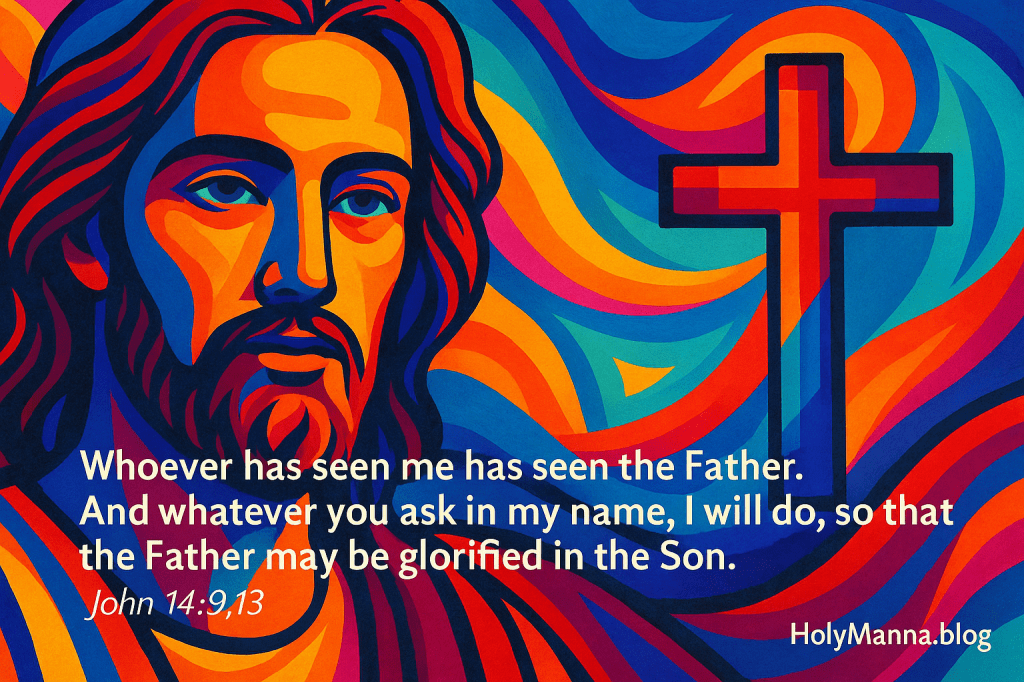
Then, in the Gospel of John, we are drawn deeper into the mystery that makes this universal mission possible: Jesus reveals His unity with the Father. “Whoever has seen me has seen the Father” (John 14:9). It’s not just about seeing miracles—it’s about believing in the One sent from heaven, and joining in His works. Christ promises that those who believe in Him will do even greater works, because He is returning to the Father and sending His Spirit. The early Church lived this promise with courage; so must we. Are we ready to believe boldly, love expansively, and continue Christ’s mission wherever we are today?
First Reading – Acts 13:44–52
When Rejection Becomes Mission
The Acts of the Apostles offers us a thrilling narrative of the Church’s earliest missionary journeys, fueled by the fire of Pentecost and the mandate of the Risen Christ. In today’s reading, we step into Antioch in Pisidia, a key location in Paul’s first missionary journey with Barnabas. The city was a hub of Roman administration and cultural diversity, populated by Jews, proselytes, and Gentiles intrigued by the teachings of Judaism. Synagogues served not only as places of worship but also as intellectual and social centers, making them natural platforms for Paul’s evangelization. The passage reflects a crucial turning point in salvation history: the shift of the Gospel’s proclamation from the Jewish communities to the Gentile world. This moment does not represent a rupture but a divine expansion of the covenant, rooted in prophecy and realized in Christ. It perfectly mirrors today’s theme—the invitation of faith to all people, and the call to continue Christ’s mission even when we face resistance.
Acts 13:44-52
New American Bible (Revised Edition)
Address to the Gentiles. 44 On the following sabbath almost the whole city gathered to hear the word of the Lord. 45 When the Jews saw the crowds, they were filled with jealousy and with violent abuse contradicted what Paul said. 46 Both Paul and Barnabas spoke out boldly and said, “It was necessary that the word of God be spoken to you first, but since you reject it and condemn yourselves as unworthy of eternal life, we now turn to the Gentiles. 47 For so the Lord has commanded us, ‘I have made you a light to the Gentiles, that you may be an instrument of salvation to the ends of the earth.’”
48 The Gentiles were delighted when they heard this and glorified the word of the Lord. All who were destined for eternal life came to believe, 49 and the word of the Lord continued to spread through the whole region. 50 The Jews, however, incited the women of prominence who were worshipers and the leading men of the city, stirred up a persecution against Paul and Barnabas, and expelled them from their territory. 51 So they shook the dust from their feet in protest against them and went to Iconium. 52 The disciples were filled with joy and the holy Spirit.
Detailed Exegesis
Verse 44 – “On the following sabbath almost the whole city gathered to hear the word of the Lord.”
The incredible draw of Paul’s message reveals the spiritual hunger of the people. This wasn’t just curiosity—it was a movement of the Holy Spirit stirring hearts. “The word of the Lord” is a phrase rich with Old Testament weight, pointing to divine truth, authority, and life-giving power.
Verse 45 – “When the Jews saw the crowds, they were filled with jealousy and with violent abuse contradicted what Paul said.”
The opposition from some of the Jewish leaders stems from envy, a recurring obstacle in the Gospels as well. Their reaction echoes the hostility Jesus Himself faced. This verse shows that the Gospel, while liberating, often provokes resistance when it challenges established power or exclusivity.
Verse 46 – “Both Paul and Barnabas spoke out boldly and said, ‘It was necessary that the word of God be spoken to you first, but since you reject it and condemn yourselves as unworthy of eternal life, we now turn to the Gentiles.’”
This bold declaration echoes Jesus’ own parables about rejected invitations to the banquet. The offer of eternal life is not revoked—it is redirected. Paul’s statement fulfills the divine plan: the Gospel is for the Jew first, then for the Gentile (cf. Romans 1:16).
Verse 47 – “For so the Lord has commanded us, ‘I have made you a light to the Gentiles, that you may be an instrument of salvation to the ends of the earth.’”
This quote from Isaiah 49:6 shows that Paul sees his mission not as a personal decision but a fulfillment of prophecy. Christ, the true “Light to the Gentiles”, now works through His Body, the Church. Salvation is outward-bound by design.
Verse 48 – “The Gentiles were delighted when they heard this and glorified the word of the Lord. All who were destined for eternal life came to believe.”
Here we see faith as both a gift and a response. The Gentiles rejoice not because they’ve replaced the Jews, but because the promise of God includes them too. Their glorification of “the word of the Lord” shows a heart posture of reverence and thanksgiving.
Verse 49 – “And the word of the Lord continued to spread through the whole region.”
Despite opposition, the Gospel flourishes. This is the paradox of Christian mission: persecution often amplifies proclamation. The word is not bound (cf. 2 Timothy 2:9), and God’s Spirit is unstoppable.
Verse 50 – “The Jews, however, incited the women of prominence who were worshipers and the leading men of the city, stirred up a persecution against Paul and Barnabas, and expelled them from their territory.”
This verse highlights how social and political influence can be used against the Gospel. The Gospel threatens worldly alliances built on status and comfort. Yet, rather than silencing the message, such resistance sets the stage for its expansion.
Verse 51 – “So they shook the dust from their feet in protest against them and went to Iconium.”
This symbolic act echoes Jesus’ instruction to the disciples in Matthew 10:14. It is not done in anger, but as a witness to those who reject the message. The apostles are not deterred; their mission continues.
Verse 52 – “The disciples were filled with joy and the holy Spirit.”
Despite expulsion and conflict, they are not defeated. Joy and the Holy Spirit go hand in hand in Acts. Their joy is not circumstantial—it is rooted in the triumph of Christ and the spread of His Word.
Teachings
The Catechism of the Catholic Church teaches that “The Church is missionary by her very nature” (CCC 849), and this reading is a vivid illustration of that reality. The boldness of Paul and Barnabas flows from the Great Commission and the guidance of the Holy Spirit. Their preaching to the Gentiles fulfills Christ’s command in Acts 1:8: “You will be my witnesses… to the ends of the earth.” This is not a detour from God’s plan, but the very heart of it. As Lumen Gentium affirms, “All men are called to this catholic unity of the People of God… and to it, in different ways, belong or are ordered: the Catholic faithful, others who believe in Christ, and finally all mankind” (LG 13).
St. John Chrysostom comments on this passage, noting that “the disciples rejoiced not because they had escaped persecution, but because they had suffered for the name of Christ, and that others were converted in their place.” This early Father emphasizes the joy that springs from fidelity to mission, not from comfort or acceptance. Similarly, St. Thérèse of Lisieux, though cloistered, prayed ardently for missionaries and taught that “to love is to give everything and to give oneself.” The missionary impulse is universal—whether lived outwardly in preaching or inwardly in prayerful sacrifice.
Historically, this passage speaks to the rapid growth of the Church beyond the borders of Judaism and Rome. Within a few centuries, the faith that began with fishermen in Galilee had reached distant corners of the empire. Persecution did not halt the Church—it fueled her. The early martyrs, evangelists, and converts carried the light with courage, echoing Paul’s mission across time and space.
Reflection
How do we respond when our witness is rejected or misunderstood? This reading challenges us to be undeterred. Like Paul and Barnabas, we are called to preach in word and deed—even when it’s inconvenient or resisted. Is our joy rooted in comfort, or in Christ? When we encounter closed hearts or cold indifference, we can shake the dust off our feet—not out of spite, but in faithful trust that God will open new doors. Are we ready to carry the Gospel to the “next city,” the next person, the next opportunity? The Spirit is not finished with us—and joy is the sign that we’re still on the right road.
Responsorial Psalm – Psalm 98:1–4
Celebrating the Victory of God
Psalm 98 is a royal hymn of praise, echoing the joyful cries of a people who have witnessed God’s deliverance. Rooted in the liturgical life of ancient Israel, this psalm would have been sung during Temple worship, particularly in celebrations of God’s kingship, covenant fidelity, and saving acts in history. It belongs to a group of enthronement psalms (Psalms 93–100) that exalt the Lord as sovereign over all the earth. What sets this psalm apart is its global orientation: it invites all the nations to rejoice, foreshadowing the universal mission fulfilled in Christ. In the context of today’s readings, Psalm 98 becomes a response of praise to the unfolding mystery in Acts 13—that salvation is now reaching the Gentiles. This is not a moment of mere tolerance; it’s a moment of joyful inclusion. The victory of our God is not local, tribal, or temporal—it is cosmic, covenantal, and eternal.
Psalm 98:1-4
New American Bible (Revised Edition)
The Coming of God
1 A psalm.
Sing a new song to the Lord,
for he has done marvelous deeds.
His right hand and holy arm
have won the victory.
2 The Lord has made his victory known;
has revealed his triumph in the sight of the nations,
3 He has remembered his mercy and faithfulness
toward the house of Israel.
All the ends of the earth have seen
the victory of our God.
4 Shout with joy to the Lord, all the earth;
break into song; sing praise.
Detailed Exegesis
Verse 1 – “Sing a new song to the Lord, for he has done marvelous deeds. His right hand and holy arm have won the victory.”
The call to sing a new song signals a fresh act of divine intervention. In biblical language, God’s “right hand” and “holy arm” symbolize His power and holiness. The marvelous deeds point to salvific actions such as the Exodus, victories in battle, and, in the Christian lens, the Resurrection of Christ. This victory is not merely national—it is redemptive.
Verse 2 – “The Lord has made his victory known; has revealed his triumph in the sight of the nations.”
Here, the psalm breaks from an Israel-centric view to declare that God’s salvation is visible to all peoples. This revelation prefigures the apostolic mission and echoes Isaiah’s vision of a global covenant. The word revealed in Hebrew implies an unveiling, a disclosure of something previously hidden.
Verse 3 – “He has remembered his mercy and faithfulness toward the house of Israel. All the ends of the earth have seen the victory of our God.”
God’s mercy (hesed) and faithfulness (emet) are covenantal terms that reflect His unwavering love for Israel. Yet this remembrance does not stay confined; it radiates outward. The phrase all the ends of the earth resonates with the mission of Paul and Barnabas in today’s First Reading, affirming that God’s fidelity to Israel has universal implications.
Verse 4 – “Shout with joy to the Lord, all the earth; break into song; sing praise.”
This final verse is an unrestrained explosion of praise. The joy of salvation cannot be contained. Music—shouting, singing, breaking into song—is the natural response to God’s glory. It’s a call for a liturgy that includes every nation, tribe, and tongue, as envisioned in Revelation 7:9.
Teachings
The Catechism of the Catholic Church teaches that “The Psalms both nourish and express the prayer of the People of God gathered in the great feasts of the liturgy and in the individual prayer of the faithful” (CCC 2587). Psalm 98, in particular, functions as a liturgical bridge between Israel’s covenantal history and the Church’s universal mission. It teaches us how to pray with joy, proclaim God’s works, and anticipate His final victory.
St. Augustine writes extensively on the Psalms, interpreting this one in light of Christ’s resurrection and the inclusion of the Gentiles: “This new song is the song of grace; it is sung not in the oldness of the letter but in the newness of the Spirit. It is sung in the wide space of love, not in the narrowness of the Law.” He sees in the command to sing a new song a direct call to Christians to worship in spirit and truth, celebrating not only what God has done for Israel but what He is doing for all.
Historically, Psalm 98 was often linked to Advent and Christmas in Christian liturgy because it rejoices in the coming of the Lord as King and Savior. It was also used in missionary contexts, especially during the age of exploration, as a proclamation that Christ’s salvation extends to all corners of the globe. The psalm invites every generation to take up the song anew and make God’s victory known in their time.
Reflection
How often do we pause to praise God simply because He is victorious? In a world that tends to emphasize struggle, competition, and anxiety, Psalm 98 reminds us to root our joy in what God has already done. When we sing of His marvelous deeds, we are not ignoring our problems—we are proclaiming that He is greater than them. Do we live as people who have seen the victory of our God? The psalm calls us to evangelize not just with our words, but with the song of our lives. Can others hear the music of hope, joy, and mercy in the way we live? Let your heart break into song today. The victory has been won—now go and share it with the world.
Holy Gospel – John 14:7–14
Seeing the Father
Today’s Gospel comes from the Farewell Discourse in the Gospel of John, a deeply intimate moment shared between Jesus and His disciples on the eve of His Passion. This passage is charged with theological weight and emotional tenderness. Jesus is preparing His disciples for His departure by revealing the depth of His identity: He is not merely a teacher or prophet, but the perfect image and presence of the Father. In the Greco-Roman world—and even more so in Jewish tradition—the desire to see God was understood as the pinnacle of human longing. Yet here, in a quiet Upper Room, Jesus tells them that this desire is already fulfilled: to know Him is to know the Father. In the context of today’s readings, this Gospel reveals the source and authority of the apostolic mission we saw in Acts: it is not just about speaking the word—it is about revealing the Father. Those who believe in Jesus are invited into His intimate union with the Father and commissioned to carry out His works. This is the ultimate extension of today’s theme: faith in Christ not only brings salvation, it sends us forth to make the Father visible in the world.
John 14:7-14
New American Bible (Revised Edition)
7 If you know me, then you will also know my Father. From now on you do know him and have seen him.” 8 Philip said to him, “Master, show us the Father, and that will be enough for us.” 9 Jesus said to him, “Have I been with you for so long a time and you still do not know me, Philip? Whoever has seen me has seen the Father. How can you say, ‘Show us the Father’? 10 Do you not believe that I am in the Father and the Father is in me? The words that I speak to you I do not speak on my own. The Father who dwells in me is doing his works. 11 Believe me that I am in the Father and the Father is in me, or else, believe because of the works themselves. 12 Amen, amen, I say to you, whoever believes in me will do the works that I do, and will do greater ones than these, because I am going to the Father. 13 And whatever you ask in my name, I will do, so that the Father may be glorified in the Son. 14 If you ask anything of me in my name, I will do it.
Detailed Exegesis
Verse 7 – “If you know me, then you will also know my Father. From now on you do know him and have seen him.”
Jesus draws a line of unity between Himself and the Father. This is more than similarity—it is shared being. The Greek word for “know” (ginōskō) implies deep, experiential knowledge. Jesus is declaring that to encounter Him is to enter into communion with God Himself.
Verse 8 – “Philip said to him, ‘Master, show us the Father, and that will be enough for us.’”
Philip’s request reflects the age-old longing of Israel (cf. Exodus 33:18) to see the glory of God. His words are sincere, yet they reveal a misunderstanding: he is looking for something external, while the Father has already been revealed in the face of Jesus. This sets the stage for one of the most profound declarations in all of Scripture.
Verse 9 – “Jesus said to him, ‘Have I been with you for so long a time and you still do not know me, Philip? Whoever has seen me has seen the Father. How can you say, “Show us the Father”?’”
This verse is a theological cornerstone. Jesus is not merely saying that He reflects the Father—He is saying that He is the visible manifestation of the invisible God. This is the heart of the Incarnation. St. Paul will echo this truth in Colossians 1:15: “He is the image of the invisible God.”
Verse 10 – “Do you not believe that I am in the Father and the Father is in me? The words that I speak to you I do not speak on my own. The Father who dwells in me is doing his works.”
Here we enter into the Trinitarian mystery. Jesus is not independent from the Father; they mutually indwell one another. His words are not self-originated, but are the direct revelation of God. His miracles and teachings are not merely human acts—they are divine actions.
Verse 11 – “Believe me that I am in the Father and the Father is in me, or else, believe because of the works themselves.”
Jesus invites faith grounded either in spiritual perception or in observable miracles. The “works” point to His signs and wonders, but more deeply, to His consistent love, truth, and obedience. They testify to the Father at work in the Son.
Verse 12 – “Amen, amen, I say to you, whoever believes in me will do the works that I do, and will do greater ones than these, because I am going to the Father.”
This is a staggering promise. Not only are believers invited into Jesus’ relationship with the Father—they are empowered to continue His mission. The “greater works” are not necessarily more spectacular miracles, but the worldwide mission of the Church, empowered by the Holy Spirit, reaching souls in every age.
Verse 13 – “And whatever you ask in my name, I will do, so that the Father may be glorified in the Son.”
To pray in Jesus’ name is not to use a formula—it is to align oneself with His will, His mission, and His glory. The purpose of such prayer is not personal gain, but the glorification of the Father through the Son.
Verse 14 – “If you ask anything of me in my name, I will do it.”
This final reassurance is given to strengthen the disciples for what is to come. Jesus is not abandoning them; He is inviting them into a deeper intimacy. Their requests, united with His purpose, will bear fruit. This verse becomes the foundation of Christian intercessory prayer.
Teachings
The Catechism of the Catholic Church affirms the unity of the Father and the Son in paragraph 259: “Jesus reveals the Father by his words and his works… Christ is the visible image of the invisible God, the perfect man who has come to make known the mystery of the Father and his love.” In today’s Gospel, this reality is not only declared—it is entrusted to us. We are called to live in such a way that others may come to see the Father in us through our unity with the Son.
St. Athanasius, defender of the divinity of Christ, wrote: “The Son of God became man so that we might become God.” This daring statement, grounded in Scripture and affirmed by the Church, reflects the divine exchange that takes place when we believe in Christ. We are not only saved—we are drawn into the very life of the Trinity. This means our daily actions, our words, and our prayers are no longer ours alone; they are rooted in the presence of Christ who dwells in us.
Historically, these verses were central to the early Church’s understanding of Christ’s divine nature, especially during the Arian controversies of the fourth century. Councils like Nicaea (325 AD) defended the truth that Jesus is homoousios—of the same substance as the Father. These truths were not abstract theology but vital affirmations of the identity of the One who sends us forth. The missionary courage of the apostles in Acts—and our own courage today—rests on this unshakable foundation.
Reflection
Do we really believe that we have seen the Father in Jesus? If so, then every moment with Christ in prayer, in Scripture, in the Eucharist is a moment of divine encounter. Are we living as people who have seen God? This Gospel invites us to not only know Jesus, but to allow His presence to overflow into our lives. Are our words and actions revealing the Father to those around us? We are not left alone—Christ promises that whatever we ask in His name, He will do. So let us ask for courage, for clarity, and for compassion. Let us ask to be His instruments. The world is waiting to see the face of the Father—and He wants to show it through us.
Let the World See the Father Through You
Today’s readings resound with a clear and powerful message: God’s saving love is for all, and those who believe in Jesus are called not only to receive it—but to radiate it. In Acts, we witness the boldness of Paul and Barnabas as they declare the Gospel to the Gentiles, enduring rejection yet filled with joy and the Holy Spirit. Psalm 98 invites every nation to lift up a new song to the Lord, rejoicing in the marvelous deeds and victory of our God. And in the Gospel of John, Jesus opens our eyes to the profound truth that “Whoever has seen me has seen the Father”, calling us into a faith so intimate and transformative that we become vessels of His divine work.
This is the journey of every believer: to encounter Christ, to be united with the Father through Him, and then to live as witnesses—lights to the nations in our own time. Faith in Jesus is not passive; it is alive, dynamic, and missionary. We are meant to speak boldly, love joyfully, and act powerfully in His name. The promise He gives us is not just presence—it is empowerment: “Whoever believes in me will do the works that I do, and will do greater ones than these.”
Are you ready to let your life become a reflection of the Father’s love? Today is the day to sing a new song, to step forward with joy, and to ask boldly in Jesus’ name. The world is hungry for truth, for beauty, for God—and He has chosen you to be a light. So go, filled with joy and the Holy Spirit, and let the world see the Father through you.
Engage with Us!
We’d love to hear how God is speaking to your heart through today’s readings. Share your thoughts, experiences, or personal reflections in the comments below—we’re a community journeying together in faith. Whether a word stirred something deep or a question challenged you, your voice matters and might inspire someone else.
Reflection Questions
First Reading – Acts 13:44–52:
Have you ever experienced rejection when sharing your faith? How did you respond? What does it look like in your life to “shake the dust” and keep moving forward with joy and the Holy Spirit?
Responsorial Psalm – Psalm 98:1–4:
What “marvelous deeds” has God done in your life that you can praise Him for today? How can you help others hear the new song of salvation through your words, actions, or witness?
Holy Gospel – John 14:7–14:
Do you truly believe that Jesus reveals the face of the Father? How does that shape your prayer life and your relationships? What “greater works” might Jesus be calling you to do in His name today?
May you go forth today inspired to live boldly in faith, to speak the truth with love, and to be a visible sign of God’s mercy wherever you are. Let everything you do be done with the same compassion and power that Jesus poured into the world—because the world still longs to see the Father, and you were made to reflect Him.
Follow us on Instagram and Facebook for more insights and reflections on living a faith-filled life.

 Holy Manna!
Leave a comment