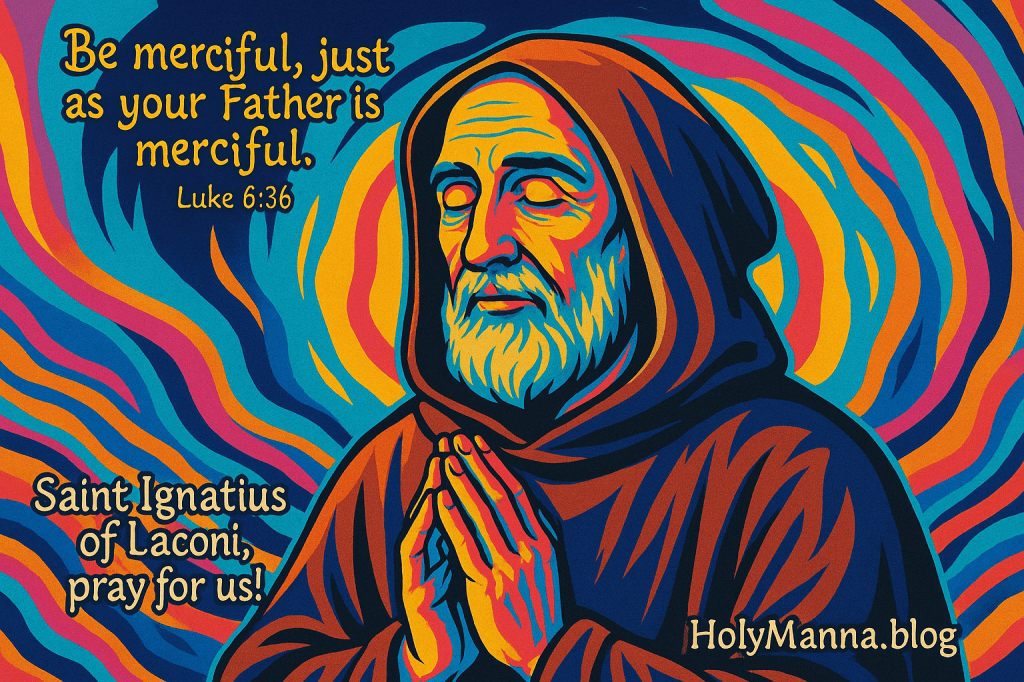
A Saint in the Shadows
In the grand tapestry of Catholic saints, some stand out for their heroic martyrdom, others for their dazzling intellect or influential writings. But Saint Ignatius of Laconi reminds us that holiness often hides in plain sight. This Capuchin friar from the island of Sardinia didn’t write theological tomes or travel far and wide as a missionary. Instead, he sanctified the streets of Cagliari simply by walking them. His life was a constant act of surrender to the will of God—marked by obedience, silence, and an unwavering devotion to the poor. Canonized in 1951 by Pope Pius XII, Ignatius is venerated not for grandeur but for the depth of his charity. He is a saint for the unnoticed, a model for anyone who has ever wondered if a quiet life can still resound in Heaven. His miracles, both during life and after death, and his unshakable humility reveal a man totally conformed to Christ—proof that divine light shines brightest through the purest vessels.
A Vow Made and Kept
Born Francesco Ignazio Vincenzo Peis on December 17, 1701, in the rural village of Laconi in Sardinia, he was the second child in a large, devout Catholic family. From a young age, he was plagued by illness. In fact, his survival into adulthood was considered nothing short of miraculous. His fragile body, however, housed a spirit destined for greatness. At seventeen, he fell gravely ill and, in desperation, made a vow to God: If he recovered, he would become a Capuchin friar. True to God’s grace, he recovered—and true to his word, he sought to join the Capuchins.
His father initially resisted, needing him to help the family financially. But a dramatic accident involving a runaway horse once again spared his life. This second brush with death convinced everyone that Francesco was meant for something more. In 1721, he entered the Capuchin monastery in Cagliari, taking the name Ignatius in honor of Saint Ignatius of Loyola.
Though he was never ordained a priest, he lived nearly 60 years as a lay brother in the order, most of them as the community’s official questor—a friar sent out daily to beg for food and alms. But this wasn’t merely a functional role. For Ignatius, it was his pulpit, his mission field, his cross, and his crown. With eyes lowered in humility, he wandered the streets, praying ceaselessly, offering kind words, blessings, and spiritual counsel to all he met. He became so beloved that people would wait along his route just to receive his silent blessing. He was “a lamp set on a stand”, as Christ commanded His disciples to be, yet he hid his light under the veil of meekness.
Heaven in His Hands
Though he never called attention to himself, God glorified Brother Ignatius through many miracles during his lifetime. Time and again, his gentle hands and quiet prayers became instruments of healing and divine intervention. People from all walks of life—nobles, peasants, and the poor—sought his intercession.
He healed a man born blind simply by praying over him. In another instance, a child near death recovered after Ignatius blessed him. Many of these miraculous healings happened in ordinary moments—while handing bread to a beggar or offering a prayer in passing. His presence alone brought comfort, and many testified to feeling an overwhelming peace in his company.
He was also known for his gift of reading hearts. Though he rarely spoke, Ignatius had the uncanny ability to know what troubled a person’s soul. He would respond to unspoken questions, gently urge repentance, or offer encouragement at just the right time. Many hardened sinners were converted through a simple encounter with him. On one occasion, a wealthy man who intended to mock the friar fell to his knees weeping after Ignatius spoke directly to the guilt hidden in his heart.
When provoked or insulted, Ignatius never responded in anger. A man once attempted to strike him, but his arm was paralyzed mid-air until he repented. Upon forgiving him, Ignatius prayed, and the man’s arm was instantly healed. It was never about vengeance—always about mercy. “Be merciful, just as your Father is merciful”, and Ignatius lived that command with every fiber of his being.
A Martyr of Obedience
Though Ignatius was not a martyr in the traditional sense, his life was marked by daily self-denial and spiritual endurance. He faced countless hardships, both from the outside world and within his own community. Some mocked him as unintelligent due to his silence and simple manner. Others resented his popularity and accused him of seeking attention, though he never sought recognition.
His greatest suffering came through obedience. His superiors once forbade him from visiting a household that had treated him unjustly. Later, when someone in that very home was dying and called out for Ignatius, he initially refused to go—not out of spite, but out of obedience to his vow. Only when ordered by his superior did he go and pray with the dying person, showing that true holiness means sacrificing even our own good intentions in obedience to the Church.
In his final years, Ignatius went blind, yet he continued to fulfill his duties with the help of a companion. He became even more revered during this time, as many were awestruck by his perseverance and peace amid suffering. His final years were a slow martyrdom of the senses, offering his weakening body to God as a living sacrifice.
Glory Beyond the Grave
When Brother Ignatius died on May 11, 1781, the city of Cagliari mourned deeply. His funeral was attended by thousands, and immediately stories began to spread of miracles through his intercession. People who visited his grave reported healings, conversions, and even mystical experiences.
His tomb became a pilgrimage site, and devotion to him spread across Sardinia and into the wider Church. One of the most famous miracles involved the sudden healing of a child with a life-threatening illness after the parents prayed at Ignatius’s tomb. Many others left notes and letters of thanks, crediting him with restoring their health or bringing them back to the sacraments after years away.
Even today, pilgrims visit the Church of Our Lady of Angels in Cagliari, where his body rests, to seek the help of this humble Capuchin friar. Relics of Saint Ignatius have been distributed to churches around the world, and many Catholics have experienced spiritual healing through his intercession. His posthumous miracles formed the basis for his beatification in 1940 and canonization eleven years later.
Lessons from the Quiet Saint
In a world that craves recognition, applause, and status, the life of Saint Ignatius of Laconi offers a radical alternative: be nothing, so Christ may be everything. His story challenges us to consider the hidden ways we can become saints—not by doing grand things, but by doing small things with great love, humility, and obedience.
How can we imitate this silent servant? First, we can practice charity in the ordinary moments of our day—offering a kind word, making time to listen, giving without expecting anything in return. We can seek humility in our workplaces and homes, choosing silence over self-promotion. And perhaps most powerfully, we can embrace obedience to God’s will, even when it’s uncomfortable or invisible to others.
Are you willing to serve in obscurity if it means becoming a saint?
Can you find holiness in the simple duties of your day—changing a diaper, answering emails, or visiting an elderly neighbor?
Will you surrender even your good desires to the authority of Christ and His Church, trusting that obedience is the path to glory?
As Saint Ignatius showed us, the quiet life can thunder in Heaven. All we must do is walk with our eyes lowered and our hearts lifted—ready to love.
Engage with Us!
What part of Saint Ignatius of Laconi’s life speaks to your heart? How can his humility shape the way you serve others?
💬 Share your thoughts in the comments below!
Here are some reflection questions to guide you:
- When have you experienced the power of humble service—either by giving or receiving it?
- What is one area of your life where God is asking for more silent obedience or trust?
- How can you practice “being small” today, offering it as a path to holiness?
Let us pray for each other—that like Saint Ignatius, we may walk through life with eyes lowered, hearts lifted, and hands ready to serve, doing everything with love, just as our Lord Jesus Christ did.
Saint Ignatius, pray for us! 🙏
Follow us on Instagram and Facebook for more insights and reflections on living a faith-filled life.

 Holy Manna!
Leave a comment