Drawn by the Spirit, Fed by the Word
Have you ever felt mysteriously drawn to something deeper, something holy—without fully understanding why? Today’s readings invite us into that divine mystery: the way God, in His mercy, initiates our journey of faith. He pursues us not because we have it all figured out, but precisely because we don’t. Through Scripture, Sacrament, and the whisper of the Spirit, the Father beckons us to come closer—to listen, to learn, and ultimately, to live.
In Acts of the Apostles, we witness a profound encounter between Philip and an Ethiopian eunuch—a foreigner seeking God, reading the prophet Isaiah, but unable to grasp its fullness until someone, sent by the Spirit, helps him interpret it. This moment is deeply rooted in the early Church’s evangelistic mission and shows how the Old Testament finds its fulfillment in Christ. The eunuch, a marginalized figure in Jewish religious life due to his physical condition and ethnicity, becomes one of the first non-Jews to receive baptism. His conversion is not only personal but symbolic of the Church’s call to the nations. In Psalm 66, we hear the echo of this joy as the psalmist blesses God who answers prayers and shows mercy, preparing our hearts to receive with praise and thanksgiving.
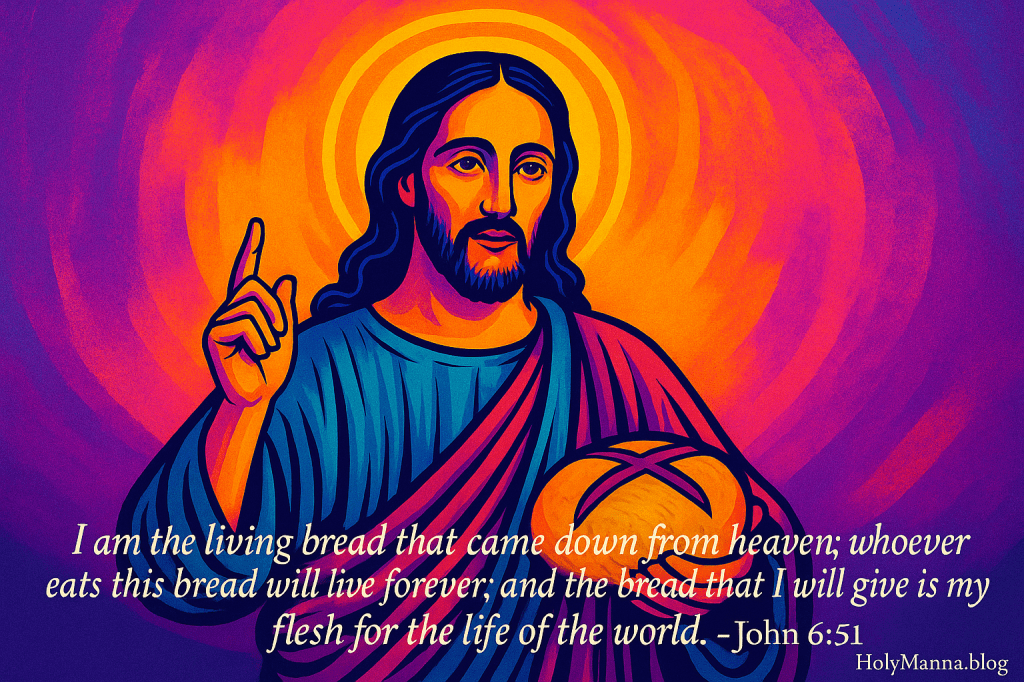
Jesus deepens this mystery in The Gospel of John by revealing Himself as the Bread of Life. Quoting the prophets, He declares, “They shall all be taught by God”—a truth embodied in the eunuch’s story. But this divine teaching leads somewhere even greater: to eternal life through the Eucharist. Jesus contrasts the manna of the desert with the true bread from heaven: “I am the living bread that came down from heaven; whoever eats this bread will live forever”. The same Spirit who led Philip and opened the eunuch’s eyes is at work in us today, drawing us to Christ through Scripture, sacrament, and the unseen movement of grace. Are you listening for His voice today? Are you open to being taught by God?
First Reading – Acts 8:26–40
The Desert Road to Grace
The Acts of the Apostles is a book of divine adventure—the story of how the Holy Spirit breathes life into the newborn Church and sends its members to the ends of the earth. Today’s passage brings us to a pivotal moment: the conversion of an Ethiopian eunuch. In the Jewish world, a eunuch would have been considered ritually impure and excluded from full participation in temple worship (see Deuteronomy 23:1). Yet here he is, seeking God in the Scriptures and journeying back from worship in Jerusalem. Ethiopia was known as a distant land at the edge of the known world, so this encounter already suggests the Church’s mission to the Gentiles. Guided by an angel and prompted by the Holy Spirit, Philip—the deacon and evangelist—meets this searching soul on the desert road. The theme of divine initiative echoes through this story, as God orchestrates a life-changing meeting centered on the Word and fulfilled in baptism.
Acts 8:26-40
New American Bible (Revised Edition)
26 Then the angel of the Lord spoke to Philip, “Get up and head south on the road that goes down from Jerusalem to Gaza, the desert route.” 27 So he got up and set out. Now there was an Ethiopian eunuch, a court official of the Candace, that is, the queen of the Ethiopians, in charge of her entire treasury, who had come to Jerusalem to worship, 28 and was returning home. Seated in his chariot, he was reading the prophet Isaiah. 29 The Spirit said to Philip, “Go and join up with that chariot.” 30 Philip ran up and heard him reading Isaiah the prophet and said, “Do you understand what you are reading?” 31 He replied, “How can I, unless someone instructs me?” So he invited Philip to get in and sit with him. 32 This was the scripture passage he was reading:
“Like a sheep he was led to the slaughter,
and as a lamb before its shearer is silent,
so he opened not his mouth.
33 In (his) humiliation justice was denied him.
Who will tell of his posterity?
For his life is taken from the earth.”
34 Then the eunuch said to Philip in reply, “I beg you, about whom is the prophet saying this? About himself, or about someone else?” 35 Then Philip opened his mouth and, beginning with this scripture passage, he proclaimed Jesus to him. 36 As they traveled along the road they came to some water, and the eunuch said, “Look, there is water. What is to prevent my being baptized?” [37 ]38 Then he ordered the chariot to stop, and Philip and the eunuch both went down into the water, and he baptized him. 39 When they came out of the water, the Spirit of the Lord snatched Philip away, and the eunuch saw him no more, but continued on his way rejoicing. 40 Philip came to Azotus, and went about proclaiming the good news to all the towns until he reached Caesarea.
Detailed Exegesis
Verse 26 – “Then the angel of the Lord spoke to Philip, ‘Get up and head south on the road that goes down from Jerusalem to Gaza, the desert route.’”
This command reveals God’s direct intervention. The desert road symbolizes both literal barrenness and spiritual readiness—a place of encounter, much like the desert of Israel’s past, where God often reveals Himself. Philip’s prompt obedience mirrors Mary’s fiat, a willingness to move when the Spirit speaks.
Verse 27 – “So he got up and set out. Now there was an Ethiopian eunuch, a court official of the Candace, that is, the queen of the Ethiopians, in charge of her entire treasury, who had come to Jerusalem to worship”
The eunuch is a high-ranking official—wealthy, powerful, and spiritually curious. His journey to Jerusalem shows a heart drawn to the God of Israel. His status as a eunuch, however, would have limited his inclusion in Jewish temple life. His longing for truth highlights the universal call of salvation.
Verse 28 – “And was returning home. Seated in his chariot, he was reading the prophet Isaiah.”
Reading aloud was customary in ancient times. Isaiah was a key prophetic book that early Christians frequently used to point to Jesus as the Messiah. The eunuch’s reading suggests deep engagement and a desire to understand.
Verse 29 – “The Spirit said to Philip, ‘Go and join up with that chariot.’”
The Holy Spirit plays the role of divine matchmaker, directing Philip’s steps with precision. This verse emphasizes that evangelization is Spirit-led, not self-driven.
Verse 30 – “Philip ran up and heard him reading Isaiah the prophet and said, ‘Do you understand what you are reading?’”
Philip’s question is not a challenge but an invitation. His zeal (“ran up”) and gentle curiosity model how we should engage others in their spiritual journeys.
Verse 31 – “He replied, ‘How can I, unless someone instructs me?’ So he invited Philip to get in and sit with him.”
This profound humility opens the door for catechesis. The eunuch’s honesty reminds us that Scripture is meant to be read in community and under the guidance of the Church (see CCC 113).
Verse 32 – “This was the scripture passage he was reading: ‘Like a sheep he was led to the slaughter, and as a lamb before its shearer is silent, so he opened not his mouth.’”
This comes from Isaiah 53, the Suffering Servant passage. Early Christians saw this as a direct prophecy of Christ’s Passion. The image of silent suffering links to Jesus’ trial before Pilate.
Verse 33 – “In his humiliation justice was denied him. Who will tell of his posterity? For his life is taken from the earth.”
This verse expresses both tragedy and mystery. Jesus, though innocent, was denied justice and killed—yet through His death comes spiritual posterity: the Church. The eunuch is about to become part of that spiritual family.
Verse 34 – “Then the eunuch said to Philip in reply, ‘I beg you, about whom is the prophet saying this? About himself, or about someone else?’”
This question reveals the depth of the eunuch’s desire to understand. It is the cry of every heart reading Scripture without the light of Christ: Who is this about?
Verse 35 – “Then Philip opened his mouth and, beginning with this scripture passage, he proclaimed Jesus to him.”
Philip demonstrates the role of apostolic teaching—beginning with the Old Testament and unveiling Jesus as its fulfillment. This is the model of Christian evangelization: Christ at the center of every Scripture.
Verse 36 – “As they traveled along the road they came to some water, and the eunuch said, ‘Look, there is water. What is to prevent my being baptized?’”
The Word has borne fruit. His question shows readiness, joy, and a breaking of barriers. Despite his previous exclusion, nothing now prevents him from becoming part of God’s family through baptism.
Verse 38 – “Then he ordered the chariot to stop, and Philip and the eunuch both went down into the water, and he baptized him.”
This moment marks a radical transformation. The gospel reaches a new continent through this man’s faith. The chariot stops, time stands still, and heaven rejoices.
Verse 39 – “When they came out of the water, the Spirit of the Lord snatched Philip away, and the eunuch saw him no more, but continued on his way rejoicing.”
Philip’s sudden departure suggests divine mystery. The eunuch’s joy reflects the fruit of the Spirit (see Galatians 5:22). He has received Christ and now walks a new path, transformed.
Verse 40 – “Philip came to Azotus, and went about proclaiming the good news to all the towns until he reached Caesarea.”
The mission continues. Philip, like the apostles before him, carries the gospel wherever he goes. The seed has been planted and the Kingdom expands.
Teachings
The Church teaches that “in Sacred Scripture, God speaks to man in a human way” (Catechism of the Catholic Church, 109). This is vividly seen in the Ethiopian eunuch’s encounter. The Word is not distant or locked away in mystery—it becomes clear when read in the light of Christ, and when taught within the living tradition of the Church. As CCC 113 states, “Read the Scripture within ‘the living Tradition of the whole Church.’” This is what Philip embodies: the Church’s voice interpreting the Scriptures for the hungry soul.
Saint Irenaeus of Lyons wrote, “The Church, though dispersed throughout the whole world… has received this faith from the apostles and their disciples” (Against Heresies, I.10.1). Philip’s act is apostolic in nature. He doesn’t preach himself, but Christ crucified and risen, bringing the fullness of the faith to a man who had been excluded under the Old Covenant. The sacramental moment of baptism fulfills Jesus’ commission: “Go therefore and make disciples of all nations, baptizing them…” (Matthew 28:19).
This reading also reveals the power of prevenient grace—the grace that precedes our response. The Father had already begun drawing the eunuch’s heart, just as Jesus says in The Gospel of John: “No one can come to me unless the Father who sent me draw him”. God’s mercy transcends boundaries of geography, ethnicity, and ritual purity. The desert, a place of isolation, becomes holy ground where heaven touches earth.
Reflection
How often do we think we have to understand everything before we respond to God’s call? The eunuch didn’t wait until all his questions were answered—he received the Word, was taught by a faithful witness, and eagerly embraced baptism. Are we open to being taught by God through His Church? Are we willing to let the Spirit interrupt our plans and lead us into divine appointments?
This reading reminds us to remain available to the Spirit’s promptings. Whether we are Philip—called to share the gospel—or the eunuch—seeking answers—we are all invited into a journey of encounter. Scripture and Sacrament go hand in hand: the Word opens the heart, and the Sacrament seals it with grace. How can you create space in your life for someone else to encounter Jesus through you?
Let today’s reading stir in us the joy of evangelization, the hunger to understand God’s Word, and the humility to ask for help along the way. Like the eunuch, may we go forward rejoicing—changed forever by a God who meets us on the road.
Responsorial Psalm – Psalm 66:8–9, 16–17, 20
Praise from the Mouths of the Redeemed
Psalm 66 is a hymn of thanksgiving, bursting with joy and reverence for God’s saving power. Likely composed during or after a great act of deliverance—perhaps from national threat, exile, or personal peril—it invites all nations to recognize and bless the Lord. Unlike individual lament or personal praise, this psalm is corporate and communal, a call to the peoples of the earth to join Israel in celebrating the God who answers prayers and preserves life. In the context of today’s readings, it acts as the voice of the Ethiopian eunuch after his baptism: rejoicing in the mercy of God, who reached out to him through the Word and sacrament. It is also the psalm of the Church—the bride of Christ—praising the One who draws us in, teaches us, and fills us with His very life.
Psalm 66:8-9, 16-17, 20
New American Bible (Revised Edition)
8 Bless our God, you peoples;
loudly sound his praise,
9 Who has kept us alive
and not allowed our feet to slip.
16 Come and hear, all you who fear God,
while I recount what has been done for me.
17 I called to him with my mouth;
praise was upon my tongue.
20 Blessed be God, who did not reject my prayer
and refuse his mercy.
Detailed Exegesis
Verse 8 – “Bless our God, you peoples; loudly sound his praise”
The psalmist summons all peoples—not just Israel—to worship. This universal invitation echoes the missionary spirit of the Church, as seen in Acts 8. The loudness of praise implies enthusiasm, freedom, and unashamed joy—an expression of overflowing gratitude that cannot be contained.
Verse 9 – “Who has kept us alive and not allowed our feet to slip”
God is praised as protector and sustainer. To keep one’s feet from slipping is a metaphor for being upheld in righteousness and preserved from spiritual ruin. This verse affirms the Father’s providence and links to John 6, where Jesus promises eternal life: “I will raise him on the last day”.
Verse 16 – “Come and hear, all you who fear God, while I recount what has been done for me”
This verse shifts to personal testimony. The psalmist becomes a witness, like Philip, inviting others to listen to God’s deeds in his life. Faith is not just knowledge—it is experience. How often do we share what God has done for us?
Verse 17 – “I called to him with my mouth; praise was upon my tongue”
Prayer and praise go hand in hand. This line affirms that God listens to those who cry out to Him, and that gratitude is the natural response of the redeemed. In the eunuch’s case, baptism was both a response to grace and the beginning of his new life of praise.
Verse 20 – “Blessed be God, who did not reject my prayer and refuse his mercy”
This final verse concludes with confident assurance: God is merciful. He listens. He acts. His mercy is not abstract but deeply personal—He enters our stories and answers from heaven. This mercy is what moves the Church to proclaim and to sing.
Teachings
The Catechism of the Catholic Church affirms the transformative power of praise in the Christian life: “Praise is the form of prayer which recognizes most immediately that God is God… it shares in the blessed happiness of the pure of heart who love God in faith before seeing him in glory” (CCC 2639). Psalm 66 embodies this truth by lifting our hearts toward God with pure and joyful praise, regardless of the circumstances from which that praise arises. Just as the eunuch rejoices after his baptism, so we too are called to a life that proclaims the goodness of God through praise.
Saint Augustine beautifully reflects on praise as a response to mercy, saying: “The confession of evil works is the beginning of good works. You do the truth and come to the light” (Homilies on the First Epistle of John). Psalm 66 is not a self-centered celebration, but the fruit of a heart that has encountered the mercy of the Lord. Praise, then, is the overflow of a healed and humbled heart—one that acknowledges both dependence and deliverance.
Historically, psalms like this would be sung during liturgical festivals, such as Passover, when the people remembered their salvation from Egypt. For Christians, these moments prefigure the Paschal Mystery—Christ’s death and resurrection—and our participation in it through baptism. The Church continues this tradition of praise in the Liturgy of the Hours, the Mass, and Eucharistic adoration. In the words of CCC 2641: “The Church sings in her liturgy and lives the glory of the Blessed Trinity.” We, like the psalmist and the eunuch, are caught up in that same song.
Reflection
Today’s psalm is a call to remember and to testify. When was the last time you praised God out loud—not just in your heart, but with your lips? The joy of being saved, of being known, of being heard by God is not something to keep hidden. Just as the eunuch rejoiced after baptism, and just as Philip continued preaching, we are called to share the story of what God has done for us.
This psalm also challenges us to reflect on the posture of our hearts: Are we people of gratitude, or people of complaint? Do we recognize the small ways God has “not allowed our feet to slip”? Even in seasons of trial, our mouths can still be filled with praise if our hearts are anchored in His mercy.
Let this psalm stir us to become praise-bearers in a noisy world. Not with empty words, but with lives that sing. Lives that say, “Blessed be God, who did not reject my prayer and refuse his mercy”. May we live in such a way that others are invited to come and hear what God has done.
Holy Gospel – John 6:44–51
Drawn to the Living Bread
The Gospel of John is distinct among the four Gospels in its mystical tone and deep theological symbolism. Today’s passage is part of the “Bread of Life Discourse” in John 6, a chapter that begins with the multiplication of loaves and gradually unfolds into one of the most profound teachings on the Eucharist. Written to both Jews and early Christians, the Gospel confronts the listener with a choice: to receive Jesus as the divine Word made flesh or to walk away. This portion of the discourse emphasizes divine initiative—how no one comes to Jesus unless drawn by the Father. The setting is rich in Jewish expectation, especially the memory of manna in the wilderness, which Jesus now surpasses by offering His very flesh as the true bread from heaven. In the context of today’s theme, this Gospel reveals how God draws every soul to Himself not only through Scripture and baptism, as in the case of the Ethiopian eunuch, but ultimately through the Eucharist, which grants eternal life.
John 6:44-51
New American Bible (Revised Edition)
44 No one can come to me unless the Father who sent me draw him, and I will raise him on the last day. 45 It is written in the prophets:
‘They shall all be taught by God.’
Everyone who listens to my Father and learns from him comes to me. 46 Not that anyone has seen the Father except the one who is from God; he has seen the Father. 47 Amen, amen, I say to you, whoever believes has eternal life. 48 I am the bread of life. 49 Your ancestors ate the manna in the desert, but they died; 50 this is the bread that comes down from heaven so that one may eat it and not die. 51 I am the living bread that came down from heaven; whoever eats this bread will live forever; and the bread that I will give is my flesh for the life of the world.”
Detailed Exegesis
Verse 44 – “No one can come to me unless the Father who sent me draw him, and I will raise him on the last day.”
Jesus stresses the divine origin of faith. It is not earned or initiated by man’s intellect alone—it is a grace from the Father. The Greek verb for “draw” (helkō) implies a gentle but irresistible pull. The promise to “raise on the last day” points to the resurrection of the body, reinforcing belief in life after death and in Christ’s eschatological role.
Verse 45 – “It is written in the prophets: ‘They shall all be taught by God.’ Everyone who listens to my Father and learns from him comes to me.”
Jesus quotes from Isaiah 54:13, a prophetic vision of the new covenant, in which divine teaching replaces external instruction. This verse affirms that genuine faith comes from attentive, obedient listening. Jesus is not dismissing the need for human teachers (like Philip), but emphasizing that all true instruction originates with God.
Verse 46 – “Not that anyone has seen the Father except the one who is from God; he has seen the Father.”
Here Jesus establishes His unique authority. Unlike the prophets or patriarchs, He alone has seen the Father because He comes from Him. This verse affirms His divinity and pre-existence—doctrines that the early Church would defend vigorously against heresy.
Verse 47 – “Amen, amen, I say to you, whoever believes has eternal life.”
“Amen, amen” marks a solemn and definitive statement. Eternal life is not just a future reward; it begins now for those who believe. Faith opens the heart to divine life, a reality already seen in the eunuch who went on his way rejoicing after baptism.
Verse 48 – “I am the bread of life.”
This is the heart of the discourse. Jesus identifies Himself not with what He gives, but with what He is. The bread of life is a person. This declaration anticipates the Eucharist, where the faithful literally receive Jesus under the appearance of bread.
Verse 49 – “Your ancestors ate the manna in the desert, but they died”
Jesus points to the limits of the old covenant. The manna sustained Israel temporarily, but it did not grant eternal life. This contrast reveals the superiority of the new covenant, fulfilled in Christ, who offers not just nourishment but immortality.
Verse 50 – “This is the bread that comes down from heaven so that one may eat it and not die.”
The repetition of “comes down from heaven” reinforces Jesus’ divine origin. The promise is clear: those who eat this bread will escape the second death—spiritual separation from God—and live forever.
Verse 51 – “I am the living bread that came down from heaven; whoever eats this bread will live forever; and the bread that I will give is my flesh for the life of the world.”
This verse is a turning point. Jesus makes explicit what had been implied: the bread is His flesh. This Eucharistic declaration scandalized many of His listeners (as we will see in the verses that follow). Yet it stands at the core of Catholic sacramental theology: Christ gives His body, offered once for all on the Cross, now made present in every Mass.
Teachings
The Catechism of the Catholic Church teaches: “The mode of Christ’s presence under the Eucharistic species is unique. In the most blessed sacrament of the Eucharist ‘the body and blood, together with the soul and divinity, of our Lord Jesus Christ and, therefore, the whole Christ is truly, really, and substantially contained’” (CCC 1374). Jesus’ words in John 6:51 leave no room for metaphor alone. The bread He gives is His actual flesh, which we receive sacramentally. This truth, preserved and proclaimed by the Church for centuries, remains a non-negotiable pillar of our faith.
Saint Thomas Aquinas, in his masterpiece Summa Theologiae, wrote: “The Eucharist is the perfect sacrament of our Lord’s Passion, since it contains Christ Himself and the memory of all He did for us” (ST III, q. 73, a. 5). In today’s Gospel, Christ does not merely offer an idea or a teaching—He offers Himself. This total self-gift is what distinguishes Christianity from all other religions: a God who feeds us with His very being.
In the early Church, this teaching was guarded and revered. The Didache, one of the oldest Christian documents outside of Scripture, instructed the faithful to prepare for the Eucharist with confession and unity. Saint Ignatius of Antioch, writing around A.D. 110, said: “Take care, then, to use one Eucharist, so that whatever you do, you do according to God: For there is one flesh of our Lord Jesus Christ, and one cup in the unity of His blood” (Letter to the Philadelphians). The Eucharist is not only nourishment—it is unity, mission, and the presence of eternal life now.
Reflection
This Gospel leaves us with a profound challenge: Do we believe that Jesus is truly present in the Eucharist? Do we live as if eternal life begins at the altar? The Ethiopian eunuch embraced the Word and entered into the sacramental life through baptism. We, who have been baptized and now receive Christ in the Eucharist, are called to live even more radically for Him.
To believe in Jesus as the Bread of Life means to allow Him to nourish every part of our being—mind, body, and soul. It means approaching Mass with reverence, preparing our hearts with confession, and receiving Him not as a symbol, but as the Lord of life. When was the last time you allowed yourself to be drawn—not by obligation—but by love, to the altar of God?
Let us ask the Father today to draw us anew to His Son. May we echo the eunuch’s joy and Philip’s zeal as we live out the mystery of this Gospel. And may every Eucharist become for us not just a ritual, but a real and transformative encounter with the living God.
From Scripture to Sacrament, From Seeking to Rejoicing
Today’s readings reveal the tender, powerful way in which God draws us into His heart. From the desert road where the Ethiopian eunuch thirsts for understanding, to the psalmist’s joyful proclamation of answered prayer, to Jesus’ stunning promise in The Gospel of John—“I am the living bread that came down from heaven”—we are reminded that the Christian life is not our idea. It is God’s initiative. He seeks us, teaches us, feeds us, and transforms us.
The Ethiopian eunuch’s journey mirrors our own. We may come to Scripture with questions, confusion, or longing, but if we allow ourselves to be taught—through the Church, through grace, through the sacraments—our hearts can be set ablaze with understanding. The psalm gives us the natural response: praise, testimony, and thanksgiving. And in the Gospel, Jesus offers not only truth, but Himself—“the bread that I will give is my flesh for the life of the world”—inviting us to eternal communion with Him.
How is the Father drawing you today? Will you let yourself be taught? Will you come to the altar with hunger and faith? The same Spirit who led Philip and rejoiced with the eunuch is still moving, still speaking, still feeding. Let us listen. Let us believe. Let us rejoice—and go forth proclaiming what He has done for us.
Engage with Us!
We’d love to hear how today’s readings spoke to your heart. Have you ever felt the Spirit nudging you to go somewhere, say something, or simply listen more closely? Share your thoughts, insights, or personal experiences in the comments below—we’re walking this journey together as the Body of Christ!
Reflection Questions
First Reading – Acts 8:26–40:
Have you ever had a “Philip moment,” where you felt called to speak or act in someone’s life? In what ways do you see yourself in the Ethiopian eunuch—seeking, questioning, and ready to receive more from God?
Responsorial Psalm – Psalm 66:8–9, 16–17, 20:
What has God done in your life that fills you with praise? Are you in the habit of sharing your testimony with others? How can you make space in your day to praise God out loud?
Holy Gospel – John 6:44–51:
Do you believe—truly believe—that Jesus is present in the Eucharist? How can you prepare your heart more fully to receive the Bread of Life? What does being “drawn by the Father” look like in your daily experience?
Let today be more than just a reading—let it be a call to deeper discipleship. May we be eager to learn, bold to witness, and faithful to receive Jesus in Word and Sacrament. Go forth in joy, rooted in the love and mercy that Jesus taught us, and live every moment as one drawn by the Spirit and nourished by the Bread of Life.
Follow us on Instagram and Facebook for more insights and reflections on living a faith-filled life.

 Holy Manna!
Leave a comment