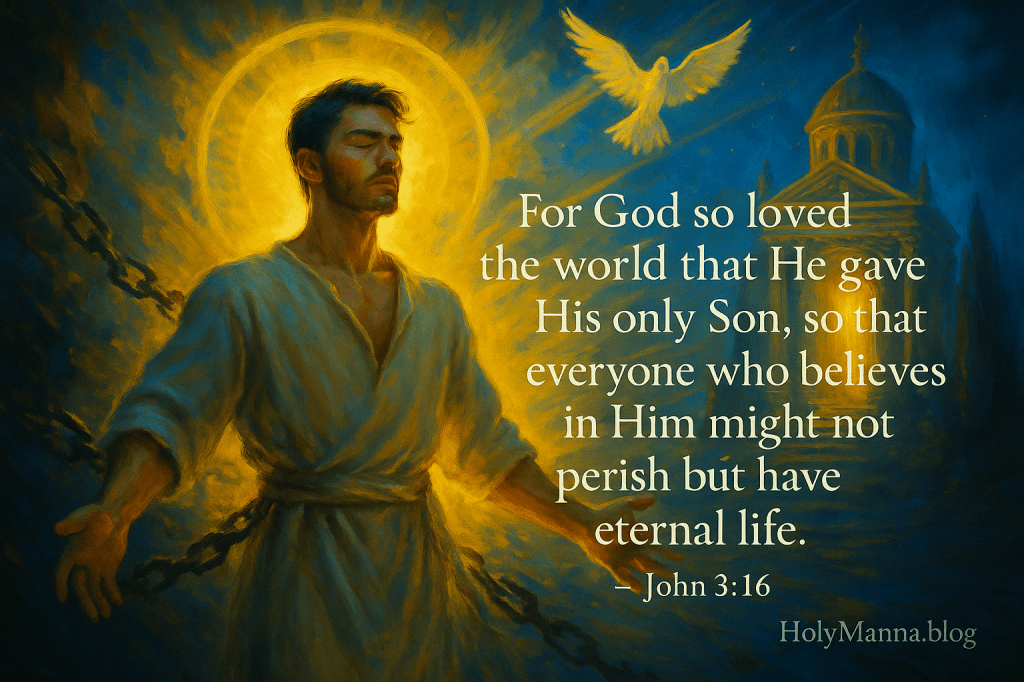
Living Boldly in the Power of the Resurrection
Have you ever found yourself torn between doing what’s right and staying safe in the shadows? Today’s readings invite us to step out of fear and into the radiant light of God’s truth—a light that frees, empowers, and sends us on mission. As we journey through this Easter season, the Church reminds us that the Resurrection is not just a past event—it is a present power that transforms ordinary believers into bold witnesses. Each passage today reveals the unstoppable nature of divine love, which overcomes prison bars, fear, and even death itself.
In the Acts of the Apostles, we see the early Church under pressure from religious authorities who feel threatened by the apostles’ fearless proclamation. The Sadducees, powerful elites who denied the resurrection of the dead, are “filled with jealousy” and try to silence the message by imprisoning the apostles. But God intervenes. An angel opens the prison doors and commands them to keep preaching “everything about this life”—a reference not just to morality or doctrine, but to the zoē, the divine life of the risen Christ. Their obedience to this heavenly calling reminds us that earthly resistance is no match for the power of God’s word when spoken with courage.
This theme is echoed in Psalm 34, a hymn of praise from one who has experienced deliverance, and ultimately brought to fulfillment in The Gospel of John, where Jesus declares, “God so loved the world that He gave His only Son”. Christ did not come to condemn, but to shine light into the darkness. And yet, many still resist the light because it exposes what they’d rather keep hidden. These readings call each of us to examine: Are we living in the light, or hiding in the shadows? To live in the light is to trust in God’s goodness, to take refuge in Him like the psalmist, and to speak truth boldly like the apostles—knowing that even when the world resists, heaven stands with us.
First Reading – Acts 5:17–26
Freed for the Mission: The Unstoppable Power of the Gospel
The Acts of the Apostles, traditionally attributed to Saint Luke, is a continuation of his Gospel and serves as the earliest history of the Church. Written around 80 A.D., it documents the explosive growth of the early Christian community and the courageous witness of the apostles following Pentecost. This passage brings us into a period of escalating tension between the early Church and the Jewish religious authorities, particularly the Sadducees. Known for their denial of the resurrection and a rigid adherence to the Torah, the Sadducees found the apostles’ message threatening not only to their beliefs but to their control over the people. The apostles had just healed many and proclaimed the resurrection of Jesus with power and clarity—an act that provoked both jealousy and fear in the religious elite. Today’s reading shows that when the world tries to lock up the truth, God Himself flings the doors wide open. In light of our theme, this moment reveals the divine mandate to proclaim the Gospel even in the face of opposition and imprisonment.
Acts 5:17-26
New American Bible (Revised Edition)
17 Then the high priest rose up and all his companions, that is, the party of the Sadducees, and, filled with jealousy, 18 laid hands upon the apostles and put them in the public jail. 19 But during the night, the angel of the Lord opened the doors of the prison, led them out, and said, 20 “Go and take your place in the temple area, and tell the people everything about this life.” 21 When they heard this, they went to the temple early in the morning and taught. When the high priest and his companions arrived, they convened the Sanhedrin, the full senate of the Israelites, and sent to the jail to have them brought in. 22 But the court officers who went did not find them in the prison, so they came back and reported, 23 “We found the jail securely locked and the guards stationed outside the doors, but when we opened them, we found no one inside.” 24 When they heard this report, the captain of the temple guard and the chief priests were at a loss about them, as to what this would come to. 25 Then someone came in and reported to them, “The men whom you put in prison are in the temple area and are teaching the people.” 26 Then the captain and the court officers went and brought them in, but without force, because they were afraid of being stoned by the people.
Detailed Exegesis
Verse 17 – “Then the high priest rose up and all his companions, that is, the party of the Sadducees, and, filled with jealousy,”
This verse identifies the source of conflict: not doctrinal disagreement alone, but jealousy. The apostles’ growing influence among the people—confirmed by miracles and bold preaching—threatened the Sadducees’ authority. This highlights the danger of pride in religious leadership and the temptation to control rather than to serve.
Verse 18 – “laid hands upon the apostles and put them in the public jail.”
Their response to the apostles’ success is coercion and confinement. The public jail was meant to humiliate, not just restrict. This echoes Christ’s own Passion—truth often suffers before it triumphs.
Verse 19 – “But during the night, the angel of the Lord opened the doors of the prison, led them out, and said,”
God intervenes. The angel of the Lord represents divine authority and heavenly mission. Night becomes a moment not of defeat, but of liberation, echoing the Resurrection itself.
Verse 20 – “Go and take your place in the temple area, and tell the people everything about this life.”
The command is clear: return to the very place of confrontation and tell the people everything about this life—the zoē, divine life. They are not to preach a partial Gospel but the fullness of the Christian life rooted in Jesus’ resurrection.
Verse 21 – “When they heard this, they went to the temple early in the morning and taught. When the high priest and his companions arrived, they convened the Sanhedrin, the full senate of the Israelites, and sent to the jail to have them brought in.”
The apostles’ obedience is immediate. Their teaching in the temple while their captors gather in ignorance creates a powerful juxtaposition: human plans versus God’s will. The apostles are free in truth, while the authorities remain bound in spiritual blindness.
Verse 22 – “But the court officers who went did not find them in the prison, so they came back and reported,”
The confusion begins to set in. The physical signs—locked doors and guards—don’t match the reality. God’s power has disrupted the status quo.
Verse 23 – “We found the jail securely locked and the guards stationed outside the doors, but when we opened them, we found no one inside.”
This description evokes a Resurrection motif: the tomb was sealed, yet Christ rose. Likewise, the apostles are gone though everything seems in order. God’s ways defy human limitations.
Verse 24 – “When they heard this report, the captain of the temple guard and the chief priests were at a loss about them, as to what this would come to.”
The authorities are bewildered. Their attempt to control the situation only deepens the mystery. God is at work, and they cannot comprehend it.
Verse 25 – “Then someone came in and reported to them, ‘The men whom you put in prison are in the temple area and are teaching the people.’”
The irony here is thick. The apostles are not hiding—they’re in the most public, sacred space of Jewish worship, proclaiming boldly. God’s messengers cannot be silenced.
Verse 26 – “Then the captain and the court officers went and brought them in, but without force, because they were afraid of being stoned by the people.”
Fear shifts. The religious leaders now fear the people, who have seen the truth. This subtly underscores the apostles’ growing credibility and the power of their witness.
Teachings of the Church
The Catechism of the Catholic Church reminds us that “Christ’s Resurrection is the fulfillment of the promises both of the Old Testament and of Jesus himself during his earthly life” (CCC 651). This passage in Acts demonstrates how the power of the Resurrection flows into the life of the Church—liberating, empowering, and sending forth the apostles to bear witness. The Resurrection isn’t simply an event to celebrate at Easter; it’s the very engine of the Church’s mission.
Saint John Chrysostom marveled at this passage and the apostles’ boldness, writing, “They did not say, ‘We have suffered injustice, let us be silent,’ but they rejoiced that they were counted worthy to suffer for His name.” The apostles’ courage, born of the Holy Spirit, sets a pattern for all Christians who face opposition for the truth. Suffering does not negate our mission—it confirms it.
The angel’s command in verse 20 echoes the universal call to evangelization affirmed in Vatican II’s Ad Gentes: “The pilgrim Church is missionary by her very nature” (AG 2). When the angel says, “Tell the people everything about this life,” he commissions the apostles to proclaim the fullness of life in Christ. This “life” is not just doctrine, but the transforming power of God’s love, which we are called to live and to share. The Church, through every age—including our own—is called to preach that life with boldness, regardless of the cost.
Reflection
What prisons has fear built around your witness? Where is God asking you to speak boldly, even if it means returning to uncomfortable places? This reading calls us to trust that when God sends us, He also empowers us. The apostles didn’t ask for comfort; they received courage. Perhaps you are being invited to a deeper courage today—to share your testimony with a friend, to speak up in defense of your faith, to begin a work of mercy that scares you. God’s message is unstoppable when carried by faithful hearts. Let this reading rekindle the truth that nothing can imprison the Gospel—not bars, not fear, not rejection—when the Spirit of God is your guide.
Responsorial Psalm – Psalm 34:2–9
Delivered from Fear: Trusting the Goodness of the Lord
Psalm 34 is a thanksgiving psalm attributed to David, composed “when he feigned madness before Abimelech, who drove him out and he departed” (cf. Psalm 34 title). This context highlights David’s escape from danger through a combination of cunning and trust in God. Written in acrostic form in Hebrew, the psalm is a poetic outpouring of praise and trust following divine rescue. Within the Jewish tradition, this psalm is cherished as a celebration of God’s intimate care for the lowly and afflicted. In the Christian liturgical cycle, it is often placed alongside readings that recount divine intervention and the call to fearless faith. Today, it beautifully echoes the angelic deliverance in Acts 5 and reinforces the Gospel’s invitation to step into the light. The psalm reminds us that trust in the Lord delivers not only from danger, but from fear itself—a fitting bridge between the boldness of the apostles and the confidence we are invited to live in Christ.
Psalm 34:2-9
New American Bible (Revised Edition)
2 I will bless the Lord at all times;
his praise shall be always in my mouth.
3 My soul will glory in the Lord;
let the poor hear and be glad.
4 Magnify the Lord with me;
and let us exalt his name together.
5 I sought the Lord, and he answered me,
delivered me from all my fears.
6 Look to him and be radiant,
and your faces may not blush for shame.
7 This poor one cried out and the Lord heard,
and from all his distress he saved him.
8 The angel of the Lord encamps
around those who fear him, and he saves them.
9 Taste and see that the Lord is good;
blessed is the stalwart one who takes refuge in him.
Detailed Exegesis
Verse 2 – “I will bless the Lord at all times; his praise shall be always in my mouth.”
David commits to constant praise, not just in good times but at all times. This is not escapism, but an act of trust. Praise becomes a spiritual discipline that shifts the soul’s focus from fear to faith.
Verse 3 – “My soul will glory in the Lord; let the poor hear and be glad.”
The psalmist boasts not in his own power or victory, but in the Lord. The “poor” refers to the humble and oppressed—those most attuned to the voice of God. His deliverance becomes a source of encouragement for all who suffer.
Verse 4 – “Magnify the Lord with me; and let us exalt his name together.”
This is a communal call to worship. Gratitude leads to evangelization—David’s personal testimony invites others to lift their gaze and magnify the Lord. Worship becomes a shared response to divine faithfulness.
Verse 5 – “I sought the Lord, and he answered me, delivered me from all my fears.”
Notice: not just from danger, but from fear itself. The power of God’s presence casts out fear (cf. 1 John 4:18). This is not a promise of comfort, but of interior transformation.
Verse 6 – “Look to him and be radiant, and your faces may not blush for shame.”
Those who turn to God shine with joy and confidence. The “radiance” here suggests not only emotional uplift but spiritual transformation—reflecting God’s light, just as Moses’ face shone after encountering Him (cf. Exodus 34:29–35).
Verse 7 – “This poor one cried out and the Lord heard, and from all his distress he saved him.”
David refers to himself as “this poor one,” again emphasizing humility. God hears the cry of the lowly and saves—not always by removing the trial, but by being present in it.
Verse 8 – “The angel of the Lord encamps around those who fear him, and he saves them.”
This verse powerfully connects to Acts 5, where the “angel of the Lord” literally delivers the apostles. The imagery of encampment suggests constant divine protection, especially for those who walk in holy fear.
Verse 9 – “Taste and see that the Lord is good; blessed is the stalwart one who takes refuge in him.”
“Taste and see” is an invitation to personal encounter—not mere intellectual belief, but experiential trust. To “take refuge” is to make God one’s ultimate safety. This verse is often associated with the Eucharist, where we truly taste the goodness of the Lord.
Teachings of the Church
The Catechism of the Catholic Church speaks deeply to the themes of this psalm: “In all of his life Jesus presents himself as our model. He is the perfect man… In his compassion toward the sick and his love for the poor and the humble, Jesus invites us to follow him in humility and trust in the Father” (CCC 520). Psalm 34, sung by one who experienced God’s saving help in distress, becomes a template for Christian discipleship—rooted in praise, humility, and divine refuge.
Saint Augustine, reflecting on verse 9, wrote: “Taste, and you shall see. Do not just hear. Taste. Experience the Lord in your life. Let your heart feel what your ear has heard, let your soul grasp what your mouth has spoken.” For Augustine, this psalm is not poetic metaphor but a call to intimacy with God. His words challenge us to go beyond reciting prayers—to experience their truth in the depths of our being.
The Church Fathers frequently interpreted the “angel of the Lord” as a figure of Christ Himself—the Logos who protects and redeems His people. In light of this, today’s psalm points not only to divine assistance in general, but to the personal presence of Jesus, our Deliverer. It is no accident that the same phrase—“Taste and see that the Lord is good”—is echoed in the invitation to communion: “Taste and see the goodness of the Lord.” This sacramental connection unites the psalmist’s cry with the Church’s highest act of worship.
Reflection
What fear is keeping you from praising God with your whole heart? What part of your life still hesitates to “taste and see” the goodness of the Lord? Today’s psalm is both consolation and challenge: it affirms that God draws near to the humble and rescues them, but it also invites us to step forward in faith. Like David, we are called to bless the Lord at all times—not only after deliverance, but even in the moment of distress. Try beginning your day with praise, especially when you don’t feel like it. Let your testimony become a light for others. The world needs radiant souls who know that God hears the poor and answers their cry. Will you be one of them?
Holy Gospel – John 3:16–21
Light of the World: Love That Calls Us Out of Darkness
The Gospel of John is distinct among the four Gospels for its deeply theological and reflective style. Written near the end of the first century, it addresses a Church facing internal struggles and external persecution, offering profound meditations on the mystery of Christ. Today’s passage comes from Jesus’ conversation with Nicodemus, a Pharisee drawn to Jesus yet fearful of openly following Him. This context—darkness and light, fear and belief—perfectly matches today’s readings from Acts and Psalms, emphasizing that salvation is a divine offer, not a human achievement. Christ is the Light that has come into the world, and belief is the way we step out of darkness into eternal life. In a world that often prefers to stay hidden rather than be healed, this Gospel invites each of us to a courageous, radiant faith.
John 3:16-21
New American Bible (Revised Edition)
16 For God so loved the world that he gave his only Son, so that everyone who believes in him might not perish but might have eternal life. 17 For God did not send his Son into the world to condemn the world, but that the world might be saved through him. 18 Whoever believes in him will not be condemned, but whoever does not believe has already been condemned, because he has not believed in the name of the only Son of God. 19 And this is the verdict, that the light came into the world, but people preferred darkness to light, because their works were evil. 20 For everyone who does wicked things hates the light and does not come toward the light, so that his works might not be exposed. 21 But whoever lives the truth comes to the light, so that his works may be clearly seen as done in God.
Detailed Exegesis
Verse 16 – “For God so loved the world that he gave his only Son, so that everyone who believes in him might not perish but might have eternal life.”
This is perhaps the most famous verse in all of Scripture. The word “so” emphasizes the intensity and magnitude of God’s love—so great that He would sacrifice His own Son. Eternal life is not just endless existence, but participation in God’s own divine life. Belief is the bridge between death and life.
Verse 17 – “For God did not send his Son into the world to condemn the world, but that the world might be saved through him.”
The mission of Christ is salvation, not condemnation. Judgment is not the starting point; mercy is. Christ’s coming is an act of divine rescue, reaching out to a world already drowning in sin.
Verse 18 – “Whoever believes in him will not be condemned, but whoever does not believe has already been condemned, because he has not believed in the name of the only Son of God.”
Belief is not neutral; it demands a response. To reject belief is to remain in self-imposed condemnation, separated from the life that God freely offers. The “name” of Jesus signifies His very identity as Savior and Lord.
Verse 19 – “And this is the verdict, that the light came into the world, but people preferred darkness to light, because their works were evil.”
The tragedy of human sin is revealed: people prefer darkness because it hides their evil deeds. Light exposes and heals, but it also demands change. Choosing darkness is a choice against love itself.
Verse 20 – “For everyone who does wicked things hates the light and does not come toward the light, so that his works might not be exposed.”
Sin fosters fear and hatred of exposure. Those who cling to sin avoid Christ because His very presence convicts the heart. This avoidance leads to deeper alienation.
Verse 21 – “But whoever lives the truth comes to the light, so that his works may be clearly seen as done in God.”
True faith is not passive but active—living the truth—and it is drawn naturally to the light of Christ. Good works rooted in God’s grace are not hidden but revealed, giving glory to God.
Teachings of the Church
The Catechism of the Catholic Church captures the heart of today’s Gospel in its teaching on the Incarnation: “The Word became flesh to be our model of holiness: ‘Take my yoke upon you, and learn from me.’… Jesus is the model for the Beatitudes and the norm of the new law: ‘Love one another as I have loved you.’ This love implies an effective offering of oneself, after His example” (CCC 459). God’s love in sending His Son calls each of us not merely to admiration, but to imitation—to love sacrificially and step boldly into the light.
Saint Thomas Aquinas reflects on this passage in his Commentary on the Gospel of John, noting: “He who believes is united with God; he who does not believe is separated. Thus, faith is the beginning of the union that will be perfected in eternal glory.” Faith is not just intellectual assent; it is the living bond between the soul and God, a bond that grows stronger as we live in the truth.
Throughout history, this Gospel message has emboldened saints and martyrs to live fearlessly. Saint Ignatius of Antioch, on his way to martyrdom, wrote: “It is better for me to die in Christ Jesus than to reign over the ends of the earth. Him I seek who died for us; Him I desire who rose for us.” The light that Christ offers dispels all fear of death, inviting us into a love so powerful that it transforms suffering into victory.
Reflection
Where in your life are you still hiding in the shadows? What would it look like to step fully into the light of Christ’s love today? Today’s Gospel reminds us that faith is a choice—an invitation to walk out of darkness and into the freedom of God’s mercy. Perhaps this means bringing a hidden sin to confession, or making an act of forgiveness that exposes old wounds to Christ’s healing touch. Faith is not only believing that Jesus is the Son of God—it is trusting Him enough to let Him illuminate every corner of our hearts. Are you willing to let His light expose and heal what needs redemption in you? This Easter season calls us to abandon fear and live boldly in the glorious light of the Resurrection.
Walking Boldly into the Light
Today’s readings weave together a powerful invitation to trust in the saving love of God, to live courageously in the light, and to proclaim the Gospel without fear. In the Acts of the Apostles, we saw how the angel of the Lord set the apostles free and commanded them to preach the full message of “this life.” In Psalm 34, David’s voice rose in a song of praise, teaching us that trust in God’s goodness delivers us not only from dangers but from fear itself. And in the Gospel of John, we heard the breathtaking truth that “God so loved the world that He gave His only Son”, not to condemn, but to save us, calling each of us to step into His marvelous light.
The consistent theme running through every passage is the liberating power of God’s love—a love that does not impose itself, but invites, heals, and transforms. Fear, pride, and sin can lock us in prisons of our own making, but Christ comes to shatter those chains. The apostles were freed to proclaim; David was freed to praise; we are freed to live in the truth. When we dare to trust God and walk openly in His light, our lives become radiant testimonies of His mercy and goodness.
Will you allow the light of Christ to lead you today? Will you step beyond fear and live with the boldness of one who has been rescued by love? God is calling each of us, right now, to trust more deeply, to live more openly, and to proclaim more joyfully. Let us rejoice and magnify His name together, stepping into the light and sharing the life that has been given to us—a life that not even the deepest prison can hold back when Christ has set us free.
Engage with Us!
We would love to hear how today’s readings touched your heart. Your reflections are a gift to this community and a way we can build each other up in faith. Please share your thoughts, prayers, or personal experiences in the comments! Here are a few reflection questions to help you dive deeper into today’s Word:
First Reading – Acts 5:17–26
Where is God asking you to proclaim the Gospel boldly, even if it feels uncomfortable? How can you trust more deeply in His power to set you free from fear or opposition?
Responsorial Psalm – Psalm 34:2–9
What does it mean for you to “bless the Lord at all times”? Is there an area of your life where you are being called to praise God even in difficulty?
Holy Gospel – John 3:16–21
What areas of your heart are still hidden in darkness, needing the healing light of Christ? How can you live more intentionally as a witness to the truth this week?
Thank you for journeying with us today. May you walk forward with a heart full of faith, a spirit bold with the light of Christ, and a life overflowing with the love and mercy that Jesus taught us. Everything you do—do it with the confidence of one who is loved beyond measure by the God who gave His only Son for you. Stay blessed and radiant in His light!
Follow us on Instagram and Facebook for more insights and reflections on living a faith-filled life.

 Holy Manna!
Leave a comment