The Bold Call to Witness
There’s a holy tension in today’s readings—between joy and fear, wonder and resistance, truth and deceit. Have you ever felt caught between awe and uncertainty when God moves powerfully in your life? That’s where the first disciples found themselves on this first Easter Monday. Something incredible has happened: Jesus is no longer in the tomb. But what does that mean? And what are we to do with that truth? These are not just questions for two millennia ago—they’re burning questions for every Christian heart today.
In the days immediately following the Resurrection, Jerusalem was buzzing with conflicting reports. The women ran from the tomb “fearful yet overjoyed” (Matthew 28:8), while the religious leaders schemed to suppress the truth with lies. Peter, newly emboldened by the Holy Spirit, stands before a crowd on Pentecost and proclaims the Resurrection with clarity and courage. He roots this proclamation in Scripture, quoting David from Psalm 16, a passage that prophetically points to the hope of life beyond death: “you will not abandon my soul to the netherworld, nor will you suffer your holy one to see corruption” (Acts 2:27, quoting Psalm 16:10). The Resurrection isn’t just a miraculous event—it’s the fulfillment of divine promises, meant to be declared and lived.
Together, these readings reveal a central theme: the victory of the Resurrection compels us to be bold witnesses to the truth, even in the face of fear or opposition. The joy of Easter isn’t meant to remain in a tomb or in private hearts—it’s meant to be announced, shared, and defended. Culturally, the early Church was emerging in a world of competing truths and power structures, and that hasn’t changed. Yet the Resurrection changed everything. Just as Peter stepped forward, and the women ran to tell the others, so we too are invited to rise with Christ and proclaim: He is not dead—He is alive, and we are witnesses of these things.
First Reading – Acts 2:14, 22–33
Proclaiming the Risen Christ in the Heart of the Storm
Today’s First Reading plunges us into the vibrant, Spirit-filled atmosphere of Pentecost—the birth of the Church. Fifty days after Passover, Jerusalem was packed with Jews from all over the world, gathered to celebrate the Feast of Weeks (Shavuot), which commemorated the giving of the Law at Sinai. Into this sacred chaos, Peter stands before the crowds and delivers what is considered the Church’s first public homily. This speech from Acts of the Apostles, authored by St. Luke as a continuation of The Gospel of Luke, is the first bold proclamation of the Resurrection, grounding it firmly in Jewish prophecy and lived experience. It is no longer hidden news shared behind locked doors; it is now a message to be proclaimed to the nations. Peter’s voice, once trembling with fear during the Passion, is now on fire with courage. How often are we hesitant to speak truth when it matters most? Through Peter, the Church teaches us how to move from fear to fearless proclamation.
Acts 2:14, 22-33
New American Bible (Revised Edition)
Peter’s Speech at Pentecost. 14 Then Peter stood up with the Eleven, raised his voice, and proclaimed to them, “You who are Jews, indeed all of you staying in Jerusalem. Let this be known to you, and listen to my words.
22 You who are Israelites, hear these words. Jesus the Nazorean was a man commended to you by God with mighty deeds, wonders, and signs, which God worked through him in your midst, as you yourselves know. 23 This man, delivered up by the set plan and foreknowledge of God, you killed, using lawless men to crucify him. 24 But God raised him up, releasing him from the throes of death, because it was impossible for him to be held by it. 25 For David says of him:
‘I saw the Lord ever before me,
with him at my right hand I shall not be disturbed.
26 Therefore my heart has been glad and my tongue has exulted;
my flesh, too, will dwell in hope,
27 because you will not abandon my soul to the netherworld,
nor will you suffer your holy one to see corruption.
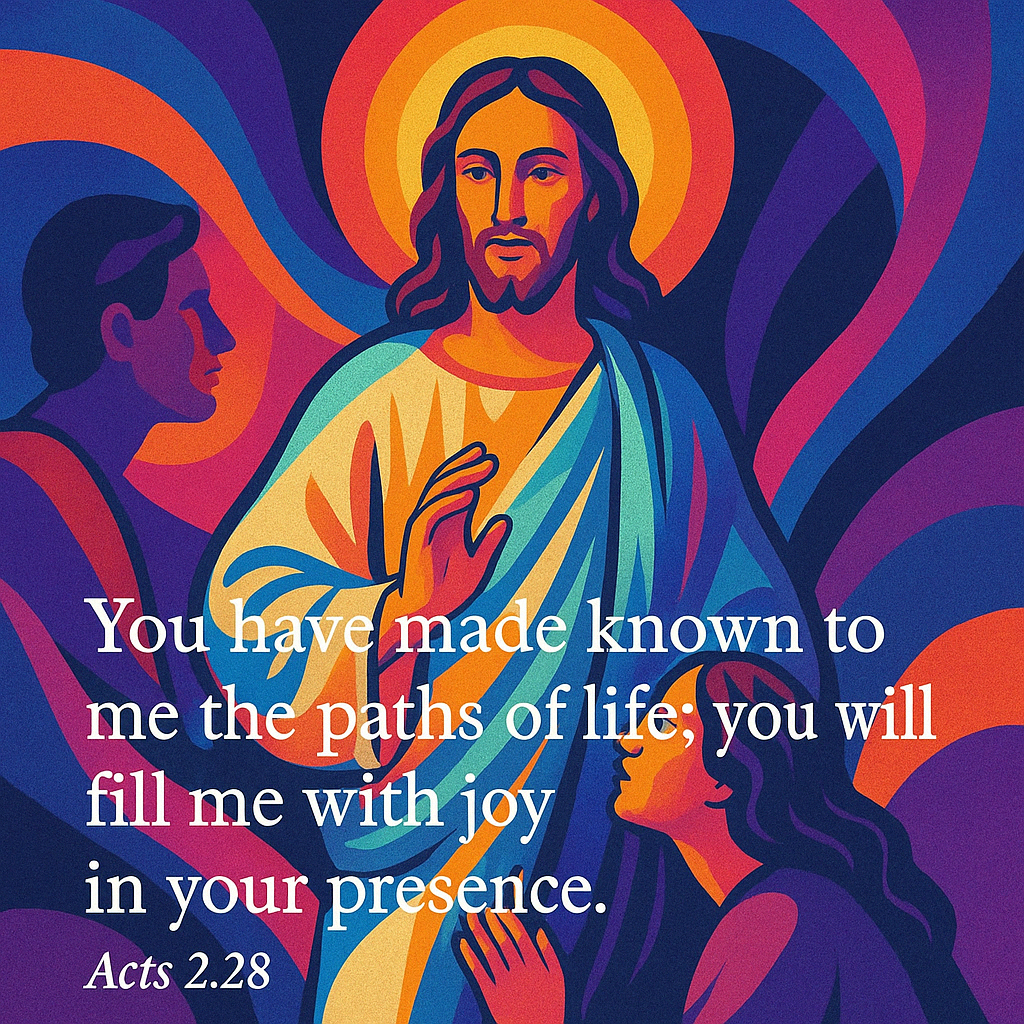
28 You have made known to me the paths of life;
you will fill me with joy in your presence.’
29 My brothers, one can confidently say to you about the patriarch David that he died and was buried, and his tomb is in our midst to this day. 30 But since he was a prophet and knew that God had sworn an oath to him that he would set one of his descendants upon his throne, 31 he foresaw and spoke of the resurrection of the Messiah, that neither was he abandoned to the netherworld nor did his flesh see corruption. 32 God raised this Jesus; of this we are all witnesses. 33 Exalted at the right hand of God, he received the promise of the holy Spirit from the Father and poured it forth, as you [both] see and hear.
Detailed Exegesis
Verse 14 – “Then Peter stood up with the Eleven, raised his voice, and proclaimed to them, ‘You who are Jews, indeed all of you staying in Jerusalem. Let this be known to you, and listen to my words.’”
Peter’s standing posture signals authority, and speaking “with the Eleven” reflects unity—this is the apostolic voice of the Church. The raising of his voice echoes the prophetic tradition of Israel. This verse is a powerful moment of transformation: the same Peter who denied Jesus is now the voice of truth. It also reminds us that witnessing the Resurrection is not a private devotion—it is a public mission.
Verse 22 – “You who are Israelites, hear these words. Jesus the Nazorean was a man commended to you by God with mighty deeds, wonders, and signs, which God worked through him in your midst, as you yourselves know.”
Peter begins by connecting Jesus’ ministry to God’s own works—his miracles were signs of divine presence. The phrase “as you yourselves know” is critical: Peter is appealing to collective memory. These weren’t secret miracles. The Resurrection is not just a matter of faith—it’s grounded in verifiable history.
Verse 23 – “This man, delivered up by the set plan and foreknowledge of God, you killed, using lawless men to crucify him.”
Here we see the paradox of divine providence and human freedom. Jesus’ death was not a tragic accident; it was part of God’s salvific plan. Yet, Peter doesn’t soften the blow—he confronts the crowd with their complicity. The crucifixion, then, is both God’s plan and humanity’s greatest sin.
Verse 24 – “But God raised him up, releasing him from the throes of death, because it was impossible for him to be held by it.”
This is the heartbeat of Peter’s message: Christ is risen. Death has no hold on Him. The Greek phrase for “throes of death” literally means “birth pangs”—suggesting that resurrection is a kind of new birth. God’s life-giving power is stronger than the grave.
Verse 25 – “For David says of him: ‘I saw the Lord ever before me, with him at my right hand I shall not be disturbed.’”
Peter quotes Psalm 16, traditionally attributed to King David. By invoking David, Israel’s greatest king, Peter is establishing continuity—Jesus is the true heir to the throne. The right hand symbolizes divine favor and stability. This verse expresses unwavering trust in God’s presence.
Verse 26 – “Therefore my heart has been glad and my tongue has exulted; my flesh, too, will dwell in hope.”
Joy and hope overflow here—not just spiritual, but bodily. The resurrection of Christ brings about a new hope, not only for the soul but for the entire human person. Christianity is a faith of the body, affirming that we too will rise.
Verse 27 – “Because you will not abandon my soul to the netherworld, nor will you suffer your holy one to see corruption.”
Peter emphasizes that David was not speaking about himself. His body saw decay. But Christ, the true Holy One, was not abandoned to death. The Resurrection vindicates Jesus as the Holy One of God.
Verse 28 – “You have made known to me the paths of life; you will fill me with joy in your presence.”
This verse radiates Eucharistic joy. The “paths of life” are not abstract—they are Jesus Himself. In the presence of the Risen Lord, fullness of joy is found. The early Christians would experience this joy most profoundly in the breaking of the bread.
Verse 29 – “My brothers, one can confidently say to you about the patriarch David that he died and was buried, and his tomb is in our midst to this day.”
Peter makes a logical appeal: if David’s body lies in a tomb, he could not have been referring to himself in the Psalm. This is an invitation to intellectual honesty and a reflection on how prophecy points forward.
Verse 30 – “But since he was a prophet and knew that God had sworn an oath to him that he would set one of his descendants upon his throne,”
David, the prophet-king, was promised that the Messiah would come from his line. Jesus, born in Bethlehem, fulfills that promise. Peter is reinterpreting the Jewish Scriptures in light of Christ, a hallmark of apostolic teaching.
Verse 31 – “He foresaw and spoke of the resurrection of the Messiah, that neither was he abandoned to the netherworld nor did his flesh see corruption.”
Peter confirms his Christological reading of Psalm 16. David was not only a poet but a prophet—his psalm was a vision of the Risen Christ.
Verse 32 – “God raised this Jesus; of this we are all witnesses.”
Here lies the apostolic foundation of our faith. Christianity is not based on myth but on witness. The Resurrection is not a private vision—it’s a public event testified to by many.
Verse 33 – “Exalted at the right hand of God, he received the promise of the holy Spirit from the Father and poured it forth, as you both see and hear.”
Peter concludes with Pentecost: the visible outpouring of the Holy Spirit is the proof that Jesus reigns in heaven. The Church’s birth is inseparable from the Resurrection and Ascension.
Teachings
The Catechism of the Catholic Church teaches, “The Resurrection above all constitutes the confirmation of all Christ’s works and teachings. All truths, even those most inaccessible to human reason, find their justification if Christ by his Resurrection has given the definitive proof of his divine authority” (CCC 651). This central truth—the bodily resurrection of Jesus—is the bedrock of all Christian belief. Without it, the Gospel collapses. The Church proclaims not only the teachings of Christ, but Christ crucified and risen, the firstborn from the dead, and the source of eternal life.
St. Cyril of Jerusalem emphasized this same power when he declared, “The root of all good works is the hope of the Resurrection; for the expectation of the reward strengthens the soul to good works” (Catechetical Lecture 18). The Resurrection is not a theological abstraction—it’s the living hope that animates the Christian life. It strengthens the weak, encourages the fearful, and emboldens the faithful to proclaim the truth with conviction.
Historically, Peter’s sermon marked the moment when the Gospel exploded into the public square. The very man who cowered before a servant girl now fearlessly speaks of Christ before thousands. Why? Because the Resurrection changes everything. As St. John Chrysostom put it: “The fisherman becomes greater than kings.” This is the fulfillment of Christ’s promise that the Holy Spirit would empower His witnesses to the ends of the earth. That same Spirit is alive and active in the Church today.
Reflection
How often do we hesitate to speak of Jesus in our daily lives? Peter’s transformation should challenge and inspire us. The Resurrection compels us to boldness, not timidity. Each of us is called to witness—to proclaim with our lives that Jesus is alive. Whether it’s in conversations with friends, on social media, or in how we live out our vocations, we have received the same Spirit. Where might God be calling you to rise and speak with courage today? Reflect on the power of Peter’s words—rooted in Scripture, anchored in truth, and aflame with the Spirit. What if your voice could help awaken faith in someone else?
Responsorial Psalm – Psalm 16:1–2, 5, 7–11
A Song of Hope from the Shadow of the Tomb
Nestled within the heart of the Psalms, Psalm 16 is a prophetic declaration of faith in God’s fidelity, even in the face of death. Traditionally attributed to King David, this psalm takes on new depth in light of the Resurrection. In fact, Peter quotes from it directly in today’s First Reading from Acts, using it to show that David foretold the Resurrection of Christ. In its original Jewish context, this psalm expressed trust in God’s protection and an unwavering confidence in divine providence. But through the lens of Christian faith, it is revealed as a powerful foreshadowing of Jesus’ victory over the grave. As we proclaim this psalm in the liturgy, we echo not only David’s prayer but Christ’s triumph, and we join Peter in witnessing to the joy that flows from an empty tomb. Can we make these ancient words our own song of trust today, even amid the uncertainties of our lives?
Psalm 16:1-2, 5, 7-11
New American Bible (Revised Edition)
God the Supreme Good
1 A miktam of David.
Keep me safe, O God;
in you I take refuge.
2 I say to the Lord,
you are my Lord,
you are my only good.
5 Lord, my allotted portion and my cup,
you have made my destiny secure.
7 I bless the Lord who counsels me;
even at night my heart exhorts me.
8 I keep the Lord always before me;
with him at my right hand, I shall never be shaken.
9 Therefore my heart is glad, my soul rejoices;
my body also dwells secure,
10 For you will not abandon my soul to Sheol,
nor let your devout one see the pit.
11 You will show me the path to life,
abounding joy in your presence,
the delights at your right hand forever.
Detailed Exegesis
Verse 1 – “Keep me safe, O God; in you I take refuge.”
This opening cry sets the tone for the whole psalm: dependence on God. David speaks not from a place of strength, but from trust. This is not fear-based pleading; it’s confident surrender. Jesus Himself would embody this perfect trust during His Passion. The early Church would have seen in these words the voice of Christ, resting securely in the Father even in death.
Verse 2 – “I say to the Lord, you are my Lord, you are my only good.”
Here we see a declaration of divine exclusivity: nothing else compares to God. David acknowledges that all true goodness comes from the Lord alone. In a world filled with competing goods and false idols, this verse calls the believer back to the source. Christ, in His full humanity, models this single-hearted devotion to the Father.
Verse 5 – “Lord, my allotted portion and my cup, you have made my destiny secure.”
In the ancient world, “portion and cup” signified both inheritance and sustenance. David is saying that God is his inheritance—his reward. For Christians, this verse finds its ultimate fulfillment in the Eucharist. Christ becomes our portion and cup, and in Him, our destiny is not only secure but sanctified.
Verse 7 – “I bless the Lord who counsels me; even at night my heart exhorts me.”
God is not only a protector but a guide. His counsel penetrates the stillness of night, that liminal time when our hearts are most honest. This verse affirms the intimate relationship between God and the soul. Christ, in His agony in Gethsemane, surely lived these words—seeking the Father’s will in the darkest night.
Verse 8 – “I keep the Lord always before me; with him at my right hand, I shall never be shaken.”
This steadfast gaze on God brings unshakable peace. “Right hand” again connotes power and favor. David, and ultimately Christ, knows that with the Father close, fear cannot prevail. Peter highlights this verse to emphasize Jesus’ serenity even in the face of death, rooted in divine intimacy.
Verse 9 – “Therefore my heart is glad, my soul rejoices; my body also dwells secure,”
This joyful confidence flows from God’s nearness. Importantly, the body is not left out—there is no split between soul and flesh. This verse directly connects to the Resurrection, showing that our bodies, like Christ’s, are destined for glory. It is a hymn to the wholeness of salvation.
Verse 10 – “For you will not abandon my soul to Sheol, nor let your devout one see the pit.”
This is the verse most explicitly tied to Jesus’ Resurrection. “Sheol” is the shadowy place of the dead, and “the pit” signifies decay. Peter uses this verse in Acts to declare that Christ, unlike David, did not remain in the tomb. It is a divine promise: God does not abandon His faithful to death.
Verse 11 – “You will show me the path to life, abounding joy in your presence, the delights at your right hand forever.”
The psalm concludes with a vision of eternal communion. The “path to life” is Christ Himself. “Joy in your presence” speaks of heaven, and for the believer, that path begins now. This verse radiates with Easter light, pointing to the Resurrection not just as a past event, but a present invitation.
Teachings
The Catechism of the Catholic Church beautifully affirms, “By His death and Resurrection, Jesus Christ has ‘opened’ heaven to us. The life of the blessed consists in the full and perfect possession of the fruits of the redemption accomplished by Christ. He makes partners in His heavenly glorification those who have believed in Him and remained faithful to His will” (CCC 1026). This vision of heaven—the joy of being in God’s presence—is exactly what Psalm 16 celebrates. It is a declaration that, through the Risen Christ, our destiny is not decay but divine delight.
St. Augustine, meditating on this psalm, wrote, “Christ spoke these words in the name of His body, which is the Church. He is the Head, and we are His members. Therefore, the joy, the gladness, the security spoken of here belongs also to us, who share in His resurrection” (Expositions of the Psalms, Ps 16). The early Church Fathers understood that this psalm is not only about Christ, but about us in Him. We are invited to share in His hope, His joy, and His victory.
Liturgically, this psalm has been prayed by the Church since her earliest days. It forms a vital part of the Easter Vigil and Easter Monday readings, and is a staple of the Liturgy of the Hours. Historically, it was a source of strength for Christian martyrs who faced death with this verse on their lips. It remains a sacred anthem for all who walk through suffering with eyes fixed on the Resurrection. When we pray this psalm, we’re not just reading poetry—we’re proclaiming the victory of Christ over death and claiming it for ourselves.
Reflection
What does it mean for you to say “You are my only good” in a world full of distractions and passing pleasures? This psalm challenges us to place our trust where it truly belongs—not in fleeting comforts, but in the eternal presence of God. We live in a world that often glorifies self-reliance, yet here, David and Jesus alike show us the power of radical dependence on the Father. Where in your life do you need to re-center on God as your portion and cup? If you’re anxious, overwhelmed, or uncertain, let this psalm become your prayer. Memorize a verse. Whisper it in the night. And above all, let it remind you that you are not abandoned—your destiny is secure, your joy is real, and your body too is meant for resurrection.
Holy Gospel – Matthew 28:8–15
Fear, Joy, and the Battle for Truth
This Gospel passage from The Gospel of Matthew captures a dramatic moment of divine encounter and human resistance. The women at the tomb—Mary Magdalene and “the other Mary”—have just been told by the angel that Jesus is risen. Now, as they run to deliver the news, they encounter the Risen Lord Himself. It is one of the most tender and triumphant moments in Scripture, where Christ greets the faithful with both presence and mission. But in parallel, we are also shown the reaction of those who oppose the truth: the guards and the chief priests, who conspire to suppress the resurrection through deception. This text, unique to Matthew’s Gospel, presents the Resurrection not only as a miracle to be celebrated, but as a truth that demands a response—faith or fear, witness or denial. Which side are we on when truth shakes the earth beneath us?
Matthew 28:8-15
New American Bible (Revised Edition)
8 Then they went away quickly from the tomb, fearful yet overjoyed, and ran to announce this to his disciples. 9 And behold, Jesus met them on their way and greeted them. They approached, embraced his feet, and did him homage. 10 Then Jesus said to them, “Do not be afraid. Go tell my brothers to go to Galilee, and there they will see me.”
The Report of the Guard. 11 While they were going, some of the guard went into the city and told the chief priests all that had happened. 12 They assembled with the elders and took counsel; then they gave a large sum of money to the soldiers, 13 telling them, “You are to say, ‘His disciples came by night and stole him while we were asleep.’ 14 And if this gets to the ears of the governor, we will satisfy [him] and keep you out of trouble.” 15 The soldiers took the money and did as they were instructed. And this story has circulated among the Jews to the present [day].
Detailed Exegesis
Verse 8 – “Then they went away quickly from the tomb, fearful yet overjoyed, and ran to announce this to his disciples.”
This verse beautifully captures the emotional tension of Easter morning. “Fearful yet overjoyed” speaks to the mystery of encountering the divine—God’s glory evokes reverence, but His victory brings joy. These women are the first evangelists, commissioned not by command but by love and awe. Their haste shows their obedience and urgency to share the good news.
Verse 9 – “And behold, Jesus met them on their way and greeted them. They approached, embraced his feet, and did him homage.”
This is the first recorded appearance of the Risen Christ in Matthew’s Gospel. “Behold” invites us to witness it with our hearts. Jesus doesn’t wait for the women to find Him—He meets them on the way, echoing the theme of divine initiative. Their response—embracing His feet and doing Him homage—shows both affection and reverence. In Jewish culture, touching the feet was an act of deep humility. This is not a vision or ghost: it is the real, risen Jesus.
Verse 10 – “Then Jesus said to them, ‘Do not be afraid. Go tell my brothers to go to Galilee, and there they will see me.’”
Christ’s first words after the Resurrection are tender: “Do not be afraid.” This command echoes throughout Scripture when God reveals Himself. Calling the disciples “my brothers” shows reconciliation and love—even after their abandonment. Galilee, the place of their calling, becomes the place of renewed mission. The Resurrection is not the end of the story, but the beginning of the Church’s journey.
Verse 11 – “While they were going, some of the guard went into the city and told the chief priests all that had happened.”
This verse reveals the ripple effect of the Resurrection—it could not be ignored. The guards, who had witnessed the angel and the empty tomb, go not to Pilate, but to the religious authorities. Their fear leads not to faith, but to worldly alliance. The contrast with the women is stark.
Verse 12 – “They assembled with the elders and took counsel; then they gave a large sum of money to the soldiers,”
The religious leaders, instead of repenting, plot to suppress the truth. Money, once again, is used to betray Jesus—first by Judas, now by the Sanhedrin. The Resurrection threatens their power structure, so they choose control over conversion.
Verse 13 – “Telling them, ‘You are to say, “His disciples came by night and stole him while we were asleep.”’”
This false narrative, though illogical, is a desperate attempt to discredit the truth. The idea that sleeping guards could reliably report a theft is contradictory. Yet lies often spread faster than truth, especially when fear drives the narrative. This verse invites us to examine what we’re willing to believe when truth is inconvenient.
Verse 14 – “And if this gets to the ears of the governor, we will satisfy him and keep you out of trouble.”
Here we see corruption at multiple levels. The religious leaders not only fabricate a lie but promise to cover up any consequences. It reveals a willingness to go to great lengths to avoid confronting the reality of the Resurrection. This alliance of religious and political power against Christ continues throughout Church history.
Verse 15 – “The soldiers took the money and did as they were instructed. And this story has circulated among the Jews to the present day.”
Matthew addresses this verse to a Christian audience familiar with this lie. Even decades later, the denial of the Resurrection persists. But the Church does not silence its witness—it continues to proclaim, despite opposition. What story are we choosing to believe and share with our lives?
Teachings
The Catechism of the Catholic Church teaches, “The Resurrection of Jesus is the crowning truth of our faith in Christ, a faith believed and lived as the central truth by the first Christian community” (CCC 638). This Gospel scene puts us face-to-face with the reality that the Resurrection is not a myth or symbol—it is a historical and transformative event. The Church stakes everything on it. The women’s encounter becomes our model: fear turned into faith, silence into proclamation.
St. John Paul II, reflecting on this Gospel, wrote: “Do not be afraid. These words are not only a consolation in times of fear, but a call to action. The Risen Christ sends His witnesses into the world with confidence, knowing that He walks with them” (Homily, Easter Vigil, 1987). The women at the tomb show us what courage looks like: not the absence of fear, but faith that runs faster than fear. They become apostles to the apostles, a reminder that the Gospel moves through those who are open-hearted and attentive.
This Gospel also confronts us with the resistance to truth. As the early Church grew, the fabricated story of the stolen body was one of the first anti-Christian apologetics. Even today, modern skepticism often echoes that lie. But the Church stands firm, not on myth, but on apostolic witness. As St. Paul says, “If Christ has not been raised, your faith is futile” (1 Corinthians 15:17). Our mission, like the women, is to run with joy, despite fear, and to announce: “He is risen.”
Reflection
Where do you see fear trying to drown out your joy? This Gospel invites you to meet the Risen Christ in the ordinary paths of your life. Like the women, you don’t have to have it all figured out—just be willing to respond, to run, to tell. Have you embraced the feet of Christ in adoration, or are you tempted to believe or repeat false narratives out of fear or pressure? This passage offers a beautiful challenge: be a witness, not a whisperer of the world’s doubts. Christ has met you, and He sends you—now go and proclaim what you have seen.
Hearts on Fire, Feet on Mission
Today’s readings lead us on a powerful journey—from the trembling courage of Peter, to the prophetic joy of David, to the tearful awe of the women at the tomb. Each passage draws us deeper into the central truth of our faith: Jesus Christ is risen from the dead. But more than that, we’re reminded that the Resurrection is not just an event to believe in—it’s a reality to live. The Church was born not in silence, but in witness. Peter stood up to proclaim the Resurrection with fearless clarity. The psalmist sang with confidence in God’s promise of eternal life. And the women ran—not away from the tomb, but toward the mission of announcing the Good News.
Throughout these readings, we see a striking contrast: between those who bear witness to the truth and those who suppress it out of fear, pride, or convenience. The soldiers were bribed into silence; the religious leaders conspired to hide the miracle. But the Gospel could not be buried again. The joy of the Resurrection burst forth from trembling hearts and went out to all the world. The same Spirit that filled Peter at Pentecost and spoke through the psalms now fills the Church—and calls each of us to take up the mission with courage and love.
What is God asking you to proclaim today? Maybe it’s speaking openly about your faith, forgiving someone you’ve kept at a distance, or simply choosing joy when despair feels easier. The Risen Lord is not only with you—He is going before you, meeting you on the road, and sending you forth. Do not be afraid. Like the women at the tomb and the apostles in the square, may your heart burn with Easter fire and your feet carry the Good News to the ends of the earth. He is risen. He is here. And He is sending you.
Engage with Us!
We’d love to hear how today’s Word touched your heart. What moved you, challenged you, or gave you hope? Share your thoughts, prayers, or insights in the comments below. Let’s grow together as a community rooted in the joy of the Resurrection and the call to witness. Here are some reflection questions to help you go deeper and spark meaningful discussion:
First Reading – Acts 2:14, 22–33
How is God calling you to be a witness to Christ’s Resurrection in your daily life? What fears or insecurities might be holding you back from proclaiming your faith with boldness, like Peter?
Responsorial Psalm – Psalm 16:1–2, 5, 7–11
What does it look like for you to make God your “only good” in the midst of everyday distractions? When have you experienced joy and security by trusting in God’s presence, even during difficult times?
Holy Gospel – Matthew 28:8–15
Are there moments in your life when, like the women at the tomb, you’ve felt “fearful yet overjoyed”? How did God meet you there? Have you ever been tempted to stay silent about the truth of your faith? What would it look like to run with joy and tell others that Jesus is alive?
As you continue your journey this Easter season, remember that the Risen Christ walks with you, speaks to you, and sends you. Live your faith with courage, speak the truth with love, and do everything with the mercy and tenderness Jesus showed us. He is risen—now go, and rise with Him.
Follow us on Instagram and Facebook for more insights and reflections on living a faith-filled life.

 Holy Manna!
Leave a comment