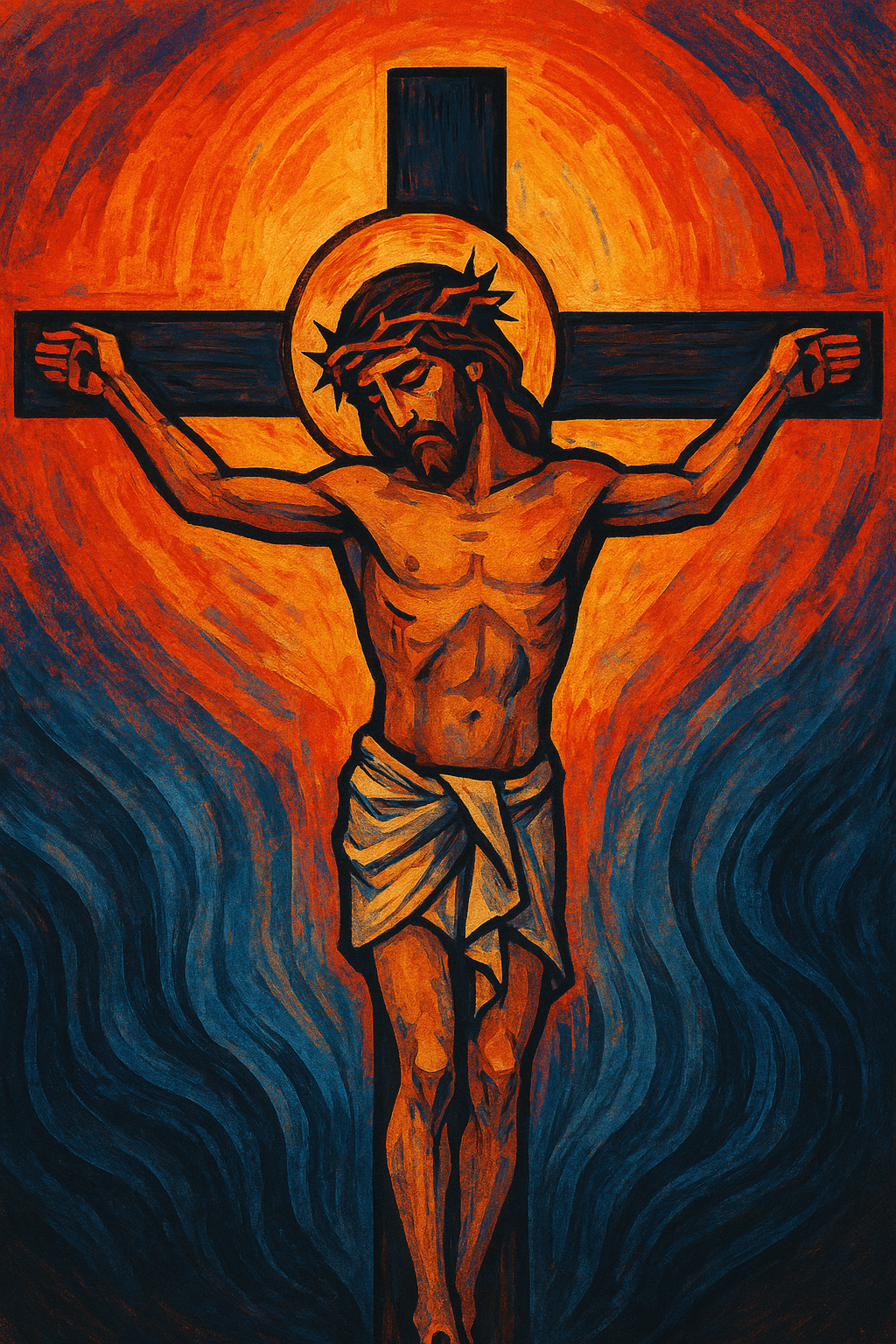
Love Poured Out in Suffering
The cross, an instrument of torture in ancient Rome, became the most powerful symbol of redemption because of one extraordinary event: the Passion and death of Jesus Christ. Today, as we reflect on the readings for Good Friday, the Church invites us into a deep contemplation of Christ’s sacrifice. In the profound poetry of Isaiah, we encounter the Servant of the Lord whose appearance was “marred beyond that of mortals”—a startling prophecy describing one who willingly bears the crushing weight of humanity’s sins. Similarly, in Psalm 31, the psalmist echoes the anguish and abandonment that Christ himself experienced, yet confidently proclaims, “Into your hands I commend my spirit”—words later fulfilled by Christ on the cross.
The reading from Hebrews beautifully unfolds the meaning of this suffering, presenting Jesus as our compassionate High Priest who understands every human weakness, having been “tested in every way, yet without sin”. Unlike distant or indifferent deities of antiquity, our Savior shares our sorrows and willingly enters our suffering. The Passion narrative in The Gospel of John vividly draws us into the profound drama of Christ’s final hours, where, bound and scourged, he courageously declares, “My kingdom does not belong to this world”. Here we witness divine love in action: a King who embraces humiliation to set his people free, revealing the paradoxical power of vulnerability and obedience.
Good Friday invites us to contemplate the astonishing depths of Christ’s love, a love poured out freely in suffering and self-offering. We are confronted with the mystery that true victory is found in surrender, and true power is perfected in weakness. As we journey through today’s Scriptures, let us enter prayerfully into the silence beneath the cross, mindful that this self-emptying love transforms our own pain into pathways toward redemption. How will the love revealed on the cross speak to your heart today?
First Reading – Isaiah 52:13–53:12
The Suffering Servant: Wounded for Our Healing
The Book of Isaiah holds a profound place within Sacred Scripture, especially during Holy Week. The reading from Isaiah 52:13–53:12, commonly known as the prophecy of the “Suffering Servant,” forms the heart of today’s liturgy. Written during Israel’s Babylonian exile (6th century B.C.), this prophetic text vividly portrays a mysterious figure who bears intense suffering and humiliation on behalf of others. Historically, this prophecy was deeply puzzling, as the identity of this servant remained obscure. However, Christians later came to see this passage as a powerful foreshadowing of Christ’s passion, death, and resurrection. Isaiah’s profound imagery and narrative connect intimately to today’s central theme: redemptive suffering, which brings forth healing and salvation to humanity through Christ’s sacrifice.
Isaiah 52:13-53:12
New American Bible (Revised Edition)
Suffering and Triumph of the Servant of the Lord
13 See, my servant shall prosper,
he shall be raised high and greatly exalted.
14 Even as many were amazed at him—
so marred were his features,
beyond that of mortals
his appearance, beyond that of human beings—
15 So shall he startle many nations,
kings shall stand speechless;
For those who have not been told shall see,
those who have not heard shall ponder it.
Chapter 53
1 Who would believe what we have heard?
To whom has the arm of the Lord been revealed?
2 He grew up like a sapling before him,
like a shoot from the parched earth;
He had no majestic bearing to catch our eye,
no beauty to draw us to him.
3 He was spurned and avoided by men,
a man of suffering, knowing pain,
Like one from whom you turn your face,
spurned, and we held him in no esteem.
4 Yet it was our pain that he bore,
our sufferings he endured.
We thought of him as stricken,
struck down by God and afflicted,
5 But he was pierced for our sins,
crushed for our iniquity.
He bore the punishment that makes us whole,
by his wounds we were healed.
6 We had all gone astray like sheep,
all following our own way;
But the Lord laid upon him
the guilt of us all.
7 Though harshly treated, he submitted
and did not open his mouth;
Like a lamb led to slaughter
or a sheep silent before shearers,
he did not open his mouth.
8 Seized and condemned, he was taken away.
Who would have thought any more of his destiny?
For he was cut off from the land of the living,
struck for the sins of his people.
9 He was given a grave among the wicked,
a burial place with evildoers,
Though he had done no wrong,
nor was deceit found in his mouth.
10 But it was the Lord’s will to crush him with pain.
By making his life as a reparation offering,
he shall see his offspring, shall lengthen his days,
and the Lord’s will shall be accomplished through him.
11 Because of his anguish he shall see the light;
because of his knowledge he shall be content;
My servant, the just one, shall justify the many,
their iniquity he shall bear.
12 Therefore I will give him his portion among the many,
and he shall divide the spoils with the mighty,
Because he surrendered himself to death,
was counted among the transgressors,
Bore the sins of many,
and interceded for the transgressors.
Detailed Exegesis
Verse 13 – “See, my servant shall prosper, he shall be raised high and greatly exalted.”
Isaiah introduces the Servant with triumph and glory. This initial verse paradoxically sets the stage by speaking of exaltation before describing suffering. In Christ, this glory is ultimately fulfilled through His resurrection and ascension, following His profound humiliation.
Verse 14 – “Even as many were amazed at him—so marred were his features, beyond that of mortals his appearance, beyond that of human beings.”
The Servant’s disfigurement speaks prophetically of Christ’s scourging and crucifixion, emphasizing the physical and spiritual weight He bore. His appearance was so changed that He was barely recognizable as human, underscoring the depth of His sacrifice for us.
Verse 15 – “So shall he startle many nations, kings shall stand speechless; For those who have not been told shall see, those who have not heard shall ponder it.”
Here, Isaiah points prophetically to the global impact of Christ’s Passion. Even Gentile rulers will be amazed, signaling that Christ’s redemptive work reaches beyond Israel to all humanity, calling every heart to ponder the mystery of divine love.
Verse 53:1 – “Who would believe what we have heard? To whom has the arm of the Lord been revealed?”
This verse reflects disbelief and astonishment, foreshadowing the disbelief many had towards Jesus during His earthly ministry. The “arm of the Lord” symbolizes God’s mighty power revealed paradoxically through suffering and weakness.
Verse 2 – “He grew up like a sapling before him, like a shoot from the parched earth; He had no majestic bearing to catch our eye, no beauty to draw us to him.”
Isaiah depicts Christ’s humility and simplicity. Unlike earthly kings, Christ did not come with outward grandeur but entered human history quietly, highlighting the humility that God chose as His path.
Verse 3 – “He was spurned and avoided by men, a man of suffering, knowing pain, Like one from whom you turn your face, spurned, and we held him in no esteem.”
This portrays vividly the rejection Jesus experienced, ultimately culminating at Calvary. Christ willingly identified Himself with human pain and rejection, becoming an outcast to redeem all who feel marginalized.
Verse 4 – “Yet it was our pain that he bore, our sufferings he endured. We thought of him as stricken, struck down by God and afflicted.”
Here Isaiah reveals the redemptive nature of the Servant’s suffering. Jesus took upon Himself the punishment humanity deserved, though people mistakenly considered His suffering a punishment from God.
Verse 5 – “But he was pierced for our sins, crushed for our iniquity. He bore the punishment that makes us whole, by his wounds we were healed.”
This central verse explicitly foretells the crucifixion. Christ endured physical and spiritual agony, not for His own sake, but for ours. His wounds become the means of healing humanity’s brokenness.
Verse 6 – “We had all gone astray like sheep, all following our own way; But the Lord laid upon him the guilt of us all.”
Isaiah highlights humanity’s universal sinfulness, symbolized by lost sheep, contrasted sharply with Christ’s sacrifice. God willingly allowed His Son to carry humanity’s sin to restore us to Himself.
Verse 7 – “Though harshly treated, he submitted and did not open his mouth; Like a lamb led to slaughter or a sheep silent before shearers, he did not open his mouth.”
Christ fulfills this verse explicitly during His passion, exhibiting profound obedience and humility. He silently accepted injustice and suffering, demonstrating total surrender to the Father’s will.
Verse 8 – “Seized and condemned, he was taken away. Who would have thought any more of his destiny? For he was cut off from the land of the living, struck for the sins of his people.”
The Servant’s unjust death astonishes observers, highlighting the tragedy and scandal of Christ’s crucifixion. His death, perceived as defeat, ironically accomplishes humanity’s salvation.
Verse 9 – “He was given a grave among the wicked, a burial place with evildoers, Though he had done no wrong, nor was deceit found in his mouth.”
Despite His innocence, Christ shared the fate of criminals, crucified alongside thieves and buried hastily. This verse underscores His total identification with human brokenness and sinfulness.
Verse 10 – “But it was the Lord’s will to crush him with pain. By making his life as a reparation offering, he shall see his offspring, shall lengthen his days, and the Lord’s will shall be accomplished through him.”
Isaiah emphasizes the mysterious divine purpose behind Christ’s suffering: a reparation offering. Christ’s sacrifice restores humanity’s relationship with God, fulfilling God’s ultimate plan of salvation.
Verse 11 – “Because of his anguish he shall see the light; because of his knowledge he shall be content; My servant, the just one, shall justify the many, their iniquity he shall bear.”
Isaiah anticipates the Resurrection and Christ’s victory over death. The Servant’s suffering and death lead to justification for humanity, offering hope and salvation through His righteous sacrifice.
Verse 12 – “Therefore I will give him his portion among the many, and he shall divide the spoils with the mighty, Because he surrendered himself to death, was counted among the transgressors, Bore the sins of many, and interceded for the transgressors.”
Finally, Isaiah concludes by emphasizing Christ’s triumph and reward due to His voluntary sacrifice. By willingly accepting death, Christ secures eternal life and salvation for all who turn to Him.
Teachings from Tradition
The Church echoes Isaiah’s prophecy powerfully in the Catechism of the Catholic Church (CCC 615), which states, “By his obedience unto death, Jesus accomplished the substitution of the suffering Servant, who ‘makes himself an offering for sin,’ when ‘he bore the sin of many,’ and who ‘shall make many to be accounted righteous,’ for ‘he shall bear their iniquities.’ Jesus atoned for our faults and made satisfaction for our sins to the Father.” The Servant’s suffering profoundly influenced saints like St. Augustine, who wrote, “The cross was a pulpit from which Christ preached his love to the world.” Historically, this passage has been foundational in understanding Christ’s sacrifice, especially during Holy Week.
Isaiah’s Servant foreshadows the passion of Christ, affirming the truth that suffering, when accepted in love and obedience, transforms pain into redemptive grace. St. Teresa of Avila beautifully articulated this truth: “The cross is the gift God gives to His friends.” Indeed, Christians throughout history have drawn strength from Isaiah’s prophecy to face persecution, injustice, and personal trials with confidence that their suffering is united to Christ’s salvific sacrifice.
Reflection for Daily Life
Reflecting deeply on Isaiah’s prophecy today encourages us to embrace suffering in our lives as pathways of grace and transformation. How might Christ be inviting you to unite your wounds to His suffering? How can your sufferings become opportunities for compassion, forgiveness, and deeper faith? Let this reading inspire you to enter more deeply into the mystery of redemptive love offered through Christ, who suffered to heal and restore each one of us.
Responsorial Psalm – Psalm 31:2, 6, 12-13, 15-17, 25
Entrusting Ourselves to the Lord in Times of Distress
Psalm 31 is a heartfelt prayer attributed traditionally to King David, composed during moments of profound suffering, persecution, and despair. Historically, this Psalm was used liturgically by the people of Israel in times of danger or oppression, providing spiritual consolation and reaffirming their trust in God’s steadfast protection. In the Christian tradition, Psalm 31 gains profound significance during Holy Week, particularly Good Friday, as it prophetically echoes the sentiments expressed by Jesus in His passion—most notably, “Into your hands I commend my spirit”. Today, as we reflect on this Psalm, it aligns powerfully with our central theme: trusting in God amidst suffering and recognizing His redeeming presence even in our deepest trials.
Psalm 31:2, 6, 12-13, 15-17, 25
New American Bible (Revised Edition)
2 In you, Lord, I take refuge;
let me never be put to shame.
In your righteousness deliver me;
6 Into your hands I commend my spirit;
you will redeem me, Lord, God of truth.
12 To all my foes I am a thing of scorn,
and especially to my neighbors
a horror to my friends.
When they see me in public,
they quickly shy away.
13 I am forgotten, out of mind like the dead;
I am like a worn-out tool.
15 But I trust in you, Lord;
I say, “You are my God.”
16 My destiny is in your hands;
rescue me from my enemies,
from the hands of my pursuers.
17 Let your face shine on your servant;
save me in your mercy.
25 Be strong and take heart,
all who hope in the Lord.
Detailed Exegesis
Verse 2 – “In you, Lord, I take refuge; let me never be put to shame. In your righteousness deliver me.”
This verse expresses complete confidence in God’s saving justice. The psalmist’s cry reflects the human desire for protection and vindication. This request embodies Christ’s ultimate trust in the Father during His passion.
Verse 6 – “Into your hands I commend my spirit; you will redeem me, Lord, God of truth.”
This profound declaration was literally fulfilled when Jesus quoted it from the cross (Luke 23:46). It signifies ultimate surrender to God, entrusting one’s entire being into His faithful hands, confident in His redeeming love.
Verse 12 – “To all my foes I am a thing of scorn, and especially to my neighbors a horror to my friends. When they see me in public, they quickly shy away.”
This vividly captures isolation and rejection, prophetically echoing Jesus’ abandonment by His disciples and the mocking of the crowds. It reminds us that Christ shared fully in human suffering and rejection.
Verse 13 – “I am forgotten, out of mind like the dead; I am like a worn-out tool.”
Expressing feelings of abandonment and insignificance, this verse prophetically reflects the total abandonment Christ experienced during His passion, when He was treated as one without dignity or worth.
Verse 15 – “But I trust in you, Lord; I say, ‘You are my God.’”
Despite suffering, the psalmist proclaims unwavering trust in God’s sovereignty. It highlights the unwavering faith of Jesus, who trusted the Father’s plan despite the suffering He endured.
Verse 16 – “My destiny is in your hands; rescue me from my enemies, from the hands of my pursuers.”
Acknowledging God’s ultimate authority, this verse appeals for rescue. In Jesus’ life, though earthly rescue from death did not come, eternal victory through the resurrection was assured by the Father’s faithfulness.
Verse 17 – “Let your face shine on your servant; save me in your mercy.”
A beautiful plea for God’s mercy and favor, it emphasizes hope in God’s compassionate gaze. This hope was perfectly realized in Christ’s resurrection and in the eternal mercy extended through Him.
Verse 25 – “Be strong and take heart, all who hope in the Lord.”
Concluding with encouragement, this verse calls believers to remain firm in hope, trusting God’s unwavering fidelity. It invites us to imitate Christ’s perseverance even in the face of profound suffering.
Teachings from Tradition
The Catechism (CCC 2605) references this Psalm explicitly, highlighting Christ’s prayerful surrender: “The prayer of Jesus during his agony and on the Cross is a filial prayer, a prayer of absolute confidence: ‘Father, into your hands I commit my spirit!’” This Psalm thus serves as a powerful example of how we too are called to entrust ourselves entirely to God, especially in times of suffering, imitating the Savior’s trust-filled surrender.
Saint Augustine offers rich insight into this Psalm, emphasizing the spiritual importance of surrender: “Trust the past to God’s mercy, the present to God’s love, and the future to God’s providence.” Augustine sees Psalm 31 as central to understanding the essence of Christian hope—placing one’s life completely into the divine hands, confident in God’s love and purpose, even amidst adversity.
Historically, this Psalm held a special place in the spirituality of many saints and martyrs. It was frequently recited in early Christian communities experiencing persecution, providing comfort and courage. Saint Teresa of Calcutta often taught the necessity of entrusting everything to God, reminding us, “Total surrender to God must come in small details as it comes in big details. It’s nothing but that single-hearted faith and trust in Him.” Thus, Psalm 31 continues to guide Christians toward profound trust in God’s providence.
Reflection for Daily Life
Psalm 31 calls each of us to a deeper, trust-filled relationship with God, especially during life’s darkest moments. Every hardship, challenge, or loss can become a spiritual opportunity when entrusted to the Father’s care. Reflect on moments in your life when you faced trials or felt abandoned: Did you allow God to enter those spaces, or did you attempt to handle it alone? How might fully surrendering these situations to God bring you greater peace and strength?
Consider practical steps to cultivate deeper trust—perhaps through daily prayer, spiritual journaling, or regularly meditating upon this Psalm. As you move forward today, let your prayer echo the psalmist’s powerful words: “Into your hands I commend my spirit”. Entrusting yourself entirely to God’s loving care transforms your trials into encounters with His profound grace.
Second Reading – Hebrews 4:14-16; 5:7-9
Mercy Through Shared Suffering
The Letter to the Hebrews uniquely bridges Old Testament imagery with New Testament revelation, highlighting Jesus as the fulfillment of the Old Covenant priesthood. Traditionally attributed to St. Paul, this letter was likely written to Jewish Christians experiencing persecution, discouragement, or temptation to revert to their former practices. In today’s passage, Hebrews presents Jesus as our compassionate High Priest, emphasizing His profound solidarity with human suffering and weakness. This reading beautifully aligns with the Good Friday theme of redemptive suffering, portraying Jesus not as a distant deity, but as one who deeply understands our struggles, having entered fully into our humanity to offer salvation and grace.
Hebrews 4:14-16; 5:7-9
New American Bible (Revised Edition)
Jesus, Compassionate High Priest. 14 Therefore, since we have a great high priest who has passed through the heavens, Jesus, the Son of God, let us hold fast to our confession. 15 For we do not have a high priest who is unable to sympathize with our weaknesses, but one who has similarly been tested in every way, yet without sin. 16 So let us confidently approach the throne of grace to receive mercy and to find grace for timely help.
5:7 In the days when he was in the flesh, he offered prayers and supplications with loud cries and tears to the one who was able to save him from death, and he was heard because of his reverence. 8 Son though he was, he learned obedience from what he suffered; 9 and when he was made perfect, he became the source of eternal salvation for all who obey him,
Detailed Exegesis
Verse 14 – “Therefore, since we have a great high priest who has passed through the heavens, Jesus, the Son of God, let us hold fast to our confession.”
Jesus is identified explicitly as the true and eternal High Priest, surpassing the priesthood of the Old Covenant. By referencing His ascension (“passed through the heavens”), Hebrews underscores His exalted status. Believers are urged to remain firm in their faith because Christ intercedes eternally for them in the heavenly sanctuary.
Verse 15 – “For we do not have a high priest who is unable to sympathize with our weaknesses, but one who has similarly been tested in every way, yet without sin.”
This verse profoundly conveys Jesus’ full solidarity with humanity. He experienced trials, temptations, and suffering just as we do, yet never succumbed to sin. This assures us that our High Priest intimately understands our struggles, offering authentic compassion and empathy.
Verse 16 – “So let us confidently approach the throne of grace to receive mercy and to find grace for timely help.”
Given Jesus’ compassionate understanding, we can confidently approach God in prayer. The phrase “throne of grace” beautifully expresses that God’s sovereignty is characterized not by severity, but by mercy and love, providing timely and personal assistance whenever we turn to Him.
Verse 5:7 – “In the days when he was in the flesh, he offered prayers and supplications with loud cries and tears to the one who was able to save him from death, and he was heard because of his reverence.”
This vividly recalls Christ’s agony in the Garden of Gethsemane, where He passionately prayed to the Father. It underscores Jesus’ true humanity, expressing real fear and anguish. His prayers were heard—not through deliverance from physical death, but through His resurrection and the eternal redemption accomplished.
Verse 8 – “Son though he was, he learned obedience from what he suffered.”
Although eternally divine, Christ fully embraced human suffering, willingly submitting Himself to the Father’s will. Through suffering, Jesus exemplifies perfect obedience, modeling for us the path of humility and trustful surrender.
Verse 9 – “and when he was made perfect, he became the source of eternal salvation for all who obey him.”
“Made perfect” here refers to Jesus’ completion of His redemptive mission through His suffering, death, and resurrection. Christ’s obedience through suffering became the source of eternal salvation, making it possible for humanity to participate in divine life through obedience to Him.
Teachings from Tradition
The Catechism emphasizes this intimate understanding of Christ’s priesthood in CCC 609: “By embracing in his human heart the Father’s love for men, Jesus ‘loved them to the end,’ for ‘greater love has no man than this, that a man lay down his life for his friends.’” Hebrews clearly expresses this sacrificial dimension of Christ’s priesthood—He identifies fully with humanity, sharing intimately in our pain and suffering, transforming it into a source of redemption.
Saint Thomas Aquinas provides further insight, highlighting the perfect obedience demonstrated by Christ’s humanity: “Christ wished to suffer and to be obedient even unto death, so that He might accomplish the highest degree of obedience.” Aquinas explains that Christ’s obedience is not passive but active, freely chosen out of love, thus providing the model for all Christians to willingly embrace obedience to God, even amidst difficulty or trial.
Historically, this understanding of Jesus as the compassionate High Priest provided strength to early Christians facing persecution, reminding them that their Savior shared their sufferings. St. Gregory of Nazianzus eloquently captures this truth, writing, “For that which He has not assumed He has not healed; but that which is united to His Godhead is also saved.” Christ’s full humanity, including His suffering, was necessary for humanity’s complete redemption, giving believers profound hope that their own suffering is transformed when united with His.
Reflection for Daily Life
Today’s passage from Hebrews invites each of us to approach God confidently, especially in our moments of weakness, struggle, and suffering. Jesus, who has experienced every human trial yet remained faithful, stands ready to offer us mercy and strength. Consider your own difficulties, temptations, or struggles today: Do you bring them openly and confidently to Christ, knowing He deeply understands your pain? Do you trust His compassion to carry you through life’s most difficult moments?
Practically, consider committing daily time to prayerful conversation with Jesus, openly sharing your burdens, fears, and anxieties, trusting in His tender understanding. Remember, there is nothing you endure that Christ has not intimately known Himself. Let this truth reassure and encourage you. As you reflect, ponder deeply: In what ways can your awareness of Jesus’ compassionate understanding transform your daily experience of suffering, anxiety, or struggle? How can embracing obedience, even amidst trials, help you experience Christ’s peace more fully today?
Holy Gospel – John 18:1–19:42
The Passion of Our Lord: Love’s Greatest Sacrifice
The Passion narrative from The Gospel of John immerses us deeply in the profound drama of Jesus’ final hours. Authored by John the Evangelist, traditionally identified as the beloved disciple, this Gospel uniquely emphasizes Jesus’ divine authority even amidst suffering and humiliation. Written towards the end of the first century, John’s account captures the theological depth of Christ’s Passion, highlighting Jesus as the divine Lamb whose sacrifice fulfills Old Testament prophecy, inaugurating a New Covenant. This narrative illustrates vividly the paradoxical triumph of God’s redeeming love through apparent defeat, perfectly aligning with Good Friday’s central theme of redemptive suffering.
John 18-19
New American Bible (Revised Edition)
Chapter 18
Jesus Arrested. 1 When he had said this, Jesus went out with his disciples across the Kidron valley to where there was a garden, into which he and his disciples entered. 2 Judas his betrayer also knew the place, because Jesus had often met there with his disciples. 3 So Judas got a band of soldiers and guards from the chief priests and the Pharisees and went there with lanterns, torches, and weapons. 4 Jesus, knowing everything that was going to happen to him, went out and said to them, “Whom are you looking for?” 5 They answered him, “Jesus the Nazorean.” He said to them, “I AM.” Judas his betrayer was also with them. 6 When he said to them, “I AM,” they turned away and fell to the ground. 7 So he again asked them, “Whom are you looking for?” They said, “Jesus the Nazorean.” 8 Jesus answered, “I told you that I AM. So if you are looking for me, let these men go.” 9 This was to fulfill what he had said, “I have not lost any of those you gave me.” 10 Then Simon Peter, who had a sword, drew it, struck the high priest’s slave, and cut off his right ear. The slave’s name was Malchus. 11 Jesus said to Peter, “Put your sword into its scabbard. Shall I not drink the cup that the Father gave me?”
12 So the band of soldiers, the tribune, and the Jewish guards seized Jesus, bound him, 13 and brought him to Annas first. He was the father-in-law of Caiaphas, who was high priest that year. 14 It was Caiaphas who had counseled the Jews that it was better that one man should die rather than the people.
Peter’s First Denial. 15 Simon Peter and another disciple followed Jesus. Now the other disciple was known to the high priest, and he entered the courtyard of the high priest with Jesus. 16 But Peter stood at the gate outside. So the other disciple, the acquaintance of the high priest, went out and spoke to the gatekeeper and brought Peter in. 17 Then the maid who was the gatekeeper said to Peter, “You are not one of this man’s disciples, are you?” He said, “I am not.” 18 Now the slaves and the guards were standing around a charcoal fire that they had made, because it was cold, and were warming themselves. Peter was also standing there keeping warm.
The Inquiry Before Annas. 19 The high priest questioned Jesus about his disciples and about his doctrine. 20 Jesus answered him, “I have spoken publicly to the world. I have always taught in a synagogue or in the temple area where all the Jews gather, and in secret I have said nothing. 21 Why ask me? Ask those who heard me what I said to them. They know what I said.” 22 When he had said this, one of the temple guards standing there struck Jesus and said, “Is this the way you answer the high priest?” 23 Jesus answered him, “If I have spoken wrongly, testify to the wrong; but if I have spoken rightly, why do you strike me?” 24 Then Annas sent him bound to Caiaphas the high priest.
Peter Denies Jesus Again. 25 Now Simon Peter was standing there keeping warm. And they said to him, “You are not one of his disciples, are you?” He denied it and said, “I am not.” 26 One of the slaves of the high priest, a relative of the one whose ear Peter had cut off, said, “Didn’t I see you in the garden with him?” 27 Again Peter denied it. And immediately the cock crowed.
The Trial Before Pilate. 28 Then they brought Jesus from Caiaphas to the praetorium. It was morning. And they themselves did not enter the praetorium, in order not to be defiled so that they could eat the Passover. 29 So Pilate came out to them and said, “What charge do you bring [against] this man?” 30 They answered and said to him, “If he were not a criminal, we would not have handed him over to you.” 31 At this, Pilate said to them, “Take him yourselves, and judge him according to your law.” The Jews answered him, “We do not have the right to execute anyone,” 32 in order that the word of Jesus might be fulfilled that he said indicating the kind of death he would die. 33 So Pilate went back into the praetorium and summoned Jesus and said to him, “Are you the King of the Jews?” 34 Jesus answered, “Do you say this on your own or have others told you about me?” 35 Pilate answered, “I am not a Jew, am I? Your own nation and the chief priests handed you over to me. What have you done?” 36 Jesus answered, “My kingdom does not belong to this world. If my kingdom did belong to this world, my attendants [would] be fighting to keep me from being handed over to the Jews. But as it is, my kingdom is not here.” 37 So Pilate said to him, “Then you are a king?” Jesus answered, “You say I am a king. For this I was born and for this I came into the world, to testify to the truth. Everyone who belongs to the truth listens to my voice.” 38 Pilate said to him, “What is truth?”
When he had said this, he again went out to the Jews and said to them, “I find no guilt in him. 39 But you have a custom that I release one prisoner to you at Passover. Do you want me to release to you the King of the Jews?” 40 They cried out again, “Not this one but Barabbas!” Now Barabbas was a revolutionary.
Chapter 19
1 Then Pilate took Jesus and had him scourged. 2 And the soldiers wove a crown out of thorns and placed it on his head, and clothed him in a purple cloak, 3 and they came to him and said, “Hail, King of the Jews!” And they struck him repeatedly. 4 Once more Pilate went out and said to them, “Look, I am bringing him out to you, so that you may know that I find no guilt in him.” 5 So Jesus came out, wearing the crown of thorns and the purple cloak. And he said to them, “Behold, the man!” 6 When the chief priests and the guards saw him they cried out, “Crucify him, crucify him!” Pilate said to them, “Take him yourselves and crucify him. I find no guilt in him.” 7 The Jews answered, “We have a law, and according to that law he ought to die, because he made himself the Son of God.” 8 Now when Pilate heard this statement, he became even more afraid, 9 and went back into the praetorium and said to Jesus, “Where are you from?” Jesus did not answer him. 10 So Pilate said to him, “Do you not speak to me? Do you not know that I have power to release you and I have power to crucify you?” 11 Jesus answered [him], “You would have no power over me if it had not been given to you from above. For this reason the one who handed me over to you has the greater sin.” 12 Consequently, Pilate tried to release him; but the Jews cried out, “If you release him, you are not a Friend of Caesar. Everyone who makes himself a king opposes Caesar.”
13 When Pilate heard these words he brought Jesus out and seated him on the judge’s bench in the place called Stone Pavement, in Hebrew, Gabbatha. 14 It was preparation day for Passover, and it was about noon. And he said to the Jews, “Behold, your king!” 15 They cried out, “Take him away, take him away! Crucify him!” Pilate said to them, “Shall I crucify your king?” The chief priests answered, “We have no king but Caesar.” 16 Then he handed him over to them to be crucified.
The Crucifixion of Jesus. So they took Jesus, 17 and carrying the cross himself he went out to what is called the Place of the Skull, in Hebrew, Golgotha. 18 There they crucified him, and with him two others, one on either side, with Jesus in the middle. 19 Pilate also had an inscription written and put on the cross. It read, “Jesus the Nazorean, the King of the Jews.” 20 Now many of the Jews read this inscription, because the place where Jesus was crucified was near the city; and it was written in Hebrew, Latin, and Greek. 21 So the chief priests of the Jews said to Pilate, “Do not write ‘The King of the Jews,’ but that he said, ‘I am the King of the Jews.’” 22 Pilate answered, “What I have written, I have written.”
23 When the soldiers had crucified Jesus, they took his clothes and divided them into four shares, a share for each soldier. They also took his tunic, but the tunic was seamless, woven in one piece from the top down. 24 So they said to one another, “Let’s not tear it, but cast lots for it to see whose it will be,” in order that the passage of scripture might be fulfilled [that says]:
“They divided my garments among them,
and for my vesture they cast lots.”
This is what the soldiers did. 25 Standing by the cross of Jesus were his mother and his mother’s sister, Mary the wife of Clopas, and Mary of Magdala. 26 When Jesus saw his mother and the disciple there whom he loved, he said to his mother, “Woman, behold, your son.” 27 Then he said to the disciple, “Behold, your mother.” And from that hour the disciple took her into his home.
28 After this, aware that everything was now finished, in order that the scripture might be fulfilled, Jesus said, “I thirst.” 29 There was a vessel filled with common wine. So they put a sponge soaked in wine on a sprig of hyssop and put it up to his mouth. 30 When Jesus had taken the wine, he said, “It is finished.” And bowing his head, he handed over the spirit.
The Blood and Water. 31 Now since it was preparation day, in order that the bodies might not remain on the cross on the sabbath, for the sabbath day of that week was a solemn one, the Jews asked Pilate that their legs be broken and they be taken down. 32 So the soldiers came and broke the legs of the first and then of the other one who was crucified with Jesus. 33 But when they came to Jesus and saw that he was already dead, they did not break his legs, 34 but one soldier thrust his lance into his side, and immediately blood and water flowed out. 35 An eyewitness has testified, and his testimony is true; he knows that he is speaking the truth, so that you also may [come to] believe. 36 For this happened so that the scripture passage might be fulfilled:
“Not a bone of it will be broken.”
37 And again another passage says:
“They will look upon him whom they have pierced.”
The Burial of Jesus. 38 After this, Joseph of Arimathea, secretly a disciple of Jesus for fear of the Jews, asked Pilate if he could remove the body of Jesus. And Pilate permitted it. So he came and took his body. 39 Nicodemus, the one who had first come to him at night, also came bringing a mixture of myrrh and aloes weighing about one hundred pounds. 40 They took the body of Jesus and bound it with burial cloths along with the spices, according to the Jewish burial custom. 41 Now in the place where he had been crucified there was a garden, and in the garden a new tomb, in which no one had yet been buried. 42 So they laid Jesus there because of the Jewish preparation day; for the tomb was close by.
Detailed Exegesis
John 18:1-11 – The Arrest in the Garden:
Verse 1 – “Jesus went out with his disciples across the Kidron valley…”
The Kidron valley symbolizes Jesus leaving security behind to face sacrifice and suffering. It echoes King David’s sorrowful flight during Absalom’s rebellion, prefiguring Jesus as the true King confronting betrayal and abandonment.
Verse 2 – “Judas his betrayer also knew the place…”
Judas’ intimate knowledge of Jesus’ habits underscores the depth of his betrayal, highlighting how personal relationships can become vehicles of profound hurt.
Verse 3 – “Judas got a band of soldiers and guards…”
The presence of soldiers emphasizes the violent intent against Jesus, heightening the tension between worldly power and Christ’s peaceful submission.
Verse 4 – “Jesus, knowing everything…”
This emphasizes Christ’s divine omniscience and His voluntary choice to embrace the impending suffering for humanity’s redemption.
Verse 5-6 – “I AM”
Jesus deliberately evokes God’s divine name (Exodus 3:14), causing soldiers to recoil, revealing His divine identity and authority even in apparent powerlessness.
Verse 7-9 – “I told you that I AM…”
Jesus protects His disciples, fulfilling His earlier promise (John 17:12), demonstrating His role as the Good Shepherd who safeguards His flock.
Verse 10-11 – “Peter’s sword and Malchus…”
Peter’s impulsive violence contrasts sharply with Jesus’ willing acceptance, emphasizing that God’s kingdom advances through humility and sacrifice, not force.
John 18:12-27 – Trials and Peter’s Denial:
Verse 13-14 – “Annas and Caiaphas…”
This illustrates religious authority misused, with Caiaphas unknowingly fulfilling prophetic declarations that one man would die for the people (John 11:50).
Verse 15-18 – “Peter’s first denial…”
Peter’s denial reflects human frailty and fear, underscoring our dependence on grace rather than personal strength.
Verse 19-24 – “Interrogation before Annas…”
Jesus stands firm in truth and dignity despite unjust interrogation, modeling integrity and courage in adversity.
Verse 25-27 – “Peter’s subsequent denials…”
Peter’s repeated failures highlight human weakness contrasted with Jesus’ steadfast faithfulness, emphasizing humanity’s profound need for Christ’s redemption.
John 18:28–19:16 – Trial Before Pilate:
Verse 28-32 – “Hypocrisy of religious leaders…”
Leaders’ concern with ritual purity contrasts their moral blindness in condemning innocence, showcasing spiritual hypocrisy and legalistic blindness.
Verse 33-38 – “Pilate’s dialogue with Jesus…”
Pilate’s questioning reveals Jesus’ kingship as spiritual rather than political, confronting human cynicism about absolute truth and authority.
Verse 39-40 – “Barabbas’ release…”
The crowd’s choice symbolizes humanity’s frequent preference for immediate worldly solutions over divine redemption through sacrifice.
John 19:1-16 – Scourging and Condemnation:
Verse 1-3 – “Scourging and mockery…”
Christ’s physical torment fulfills prophetic imagery of the suffering servant (Isaiah 53), fully identifying with human suffering and humiliation.
Verse 4-5 – “Behold, the man…”
Pilate’s ironic statement inadvertently reveals Christ’s full humanity, highlighting the profound mystery of God becoming man.
Verse 6-11 – “Pilate’s fear, Jesus’ authority…”
Jesus asserts divine sovereignty, indicating all earthly power is subordinate to God’s providential will.
Verse 12-16 – “Crowd demands crucifixion…”
This demonstrates humanity’s tragic rejection of God’s kingship, emphasizing human responsibility in Christ’s suffering.
John 19:17-30 – Crucifixion:
Verse 17-18 – “Carrying the cross to Golgotha…”
Christ’s bearing of the cross symbolizes the weight of human sin and suffering willingly carried to redeem humanity.
Verse 19-22 – “King of the Jews inscription…”
The multilingual proclamation ironically confirms Jesus’ universal kingship, accessible and relevant to all peoples.
Verse 23-24 – “Division of garments…”
The soldiers unwittingly fulfill prophecy (Psalm 22:18), showing meticulous divine orchestration amidst suffering.
Verse 25-27 – “Mary and John at the cross…”
The exchange symbolizes the Church’s spiritual birth, emphasizing unity and familial bonds forged through Christ’s sacrifice.
Verse 28-29 – “I thirst…”
Expresses Christ’s genuine human suffering, fulfilling prophecy (Psalm 69:21), underscoring His complete identification with human experience.
Verse 30 – “It is finished…”
Marks the consummation of Christ’s redemptive mission, completing all prophecies, signifying absolute obedience and victorious love.
John 19:31-42 – Death and Burial:
Verse 31-34 – “Blood and water from Christ’s side…”
Symbolizes sacramental life—Baptism and Eucharist—flowing from Christ’s sacrifice, foundational for Church life.
Verse 35-37 – “Prophetic fulfillment…”
Confirms the divine orchestration of every aspect of Christ’s passion, reinforcing the certainty of God’s salvific plan.
Verse 38-40 – “Joseph and Nicodemus prepare burial…”
Their courageous actions symbolize faithfulness emerging amidst despair, foreshadowing resurrection hope.
Verse 41-42 – “Garden tomb…”
Symbolically connects to Eden, signifying restoration, redemption, and the promise of new creation achieved through Christ’s sacrifice.
Teachings from Tradition
The Catechism (CCC 616) states: “It is love ‘to the end’ that confers on Christ’s sacrifice its value as redemption and reparation, as atonement and satisfaction. He knew and loved us all when he offered his life.” This teaching emphasizes that Christ’s sacrifice was an intentional act of profound love and divine justice, demonstrating the depth of God’s commitment to humanity.
Saint Augustine beautifully articulates the paradoxical nature of the Cross: “The cross was not merely an instrument of suffering but the throne of our King, the pulpit from which Christ preached His greatest sermon: unconditional love.” Augustine’s insights remind believers to recognize in the cross the highest revelation of divine love and victory.
Pope Saint John Paul II further deepens our understanding, stating: “In the cross lies Love’s victory. In it, Christ conquers sin and death and reveals to humanity the fullness of divine love.” His reflection calls Christians not merely to venerate the cross but to actively participate in the mystery of Christ’s suffering, embracing personal crosses as pathways to spiritual growth and deeper intimacy with God.
Reflection for Daily Life
The narrative of Christ’s Passion invites each believer not merely to reflect historically but to personally engage with the mystery of redemptive suffering. Consider your own trials, pains, and crosses: How can you unite them more intentionally to Christ’s sacrifice on the cross?
Practically speaking, embrace daily acts of sacrifice, mercy, forgiveness, and humility as tangible expressions of your unity with Christ. Reflect prayerfully today: What personal struggles or hardships can you consciously offer to God as acts of spiritual worship and solidarity with Christ? How can viewing your suffering as a participation in Christ’s Passion transform your perspective and deepen your faith? Let today’s reflection strengthen your resolve to embrace your crosses confidently, knowing that through them, Christ draws you closer into His redeeming love.
At the Foot of the Cross: A Love That Transforms
Today’s readings carry us into the very heart of the Christian mystery—Jesus Christ, the innocent Servant, the compassionate High Priest, the crucified King, who suffers and dies to redeem the world. In Isaiah, we see the prophecy of the Suffering Servant, one who is “pierced for our sins”, bearing our guilt in silence and obedience. The Psalm gives voice to the anguish of the soul, yet proclaims unwavering trust: “Into your hands I commend my spirit”. In Hebrews, we are assured that Jesus understands our every weakness, and from the cross, He becomes for us the source of eternal salvation. And in The Gospel of John, we walk alongside Christ through betrayal, trial, torture, and death—not as helpless observers, but as beloved ones invited to behold the mystery of a God who “loved them to the end.”
Each reading reveals a different facet of this sacred day: prophecy fulfilled, love embodied, obedience perfected, and redemption won. Together, they unveil a love so complete that it embraces suffering and death to bring us life. This is not a tragedy to mourn but a victory to adore. From the cross flows mercy, hope, and the invitation to be transformed.
As we remain at the foot of the cross today, how is Jesus asking you to respond to His sacrifice? Where in your life do you need to entrust your fears, your failures, your wounds to the mercy flowing from His pierced side? Let the silence of Good Friday draw you nearer to the One who gave everything to draw near to you. Open your heart to the grace of this day. Love has spoken its final word: “It is finished.” Now it is our turn to live in response to that love—with faith, with courage, and with hearts ready to rise with Him.
Engage with Us!
We’d love to hear how today’s Scriptures have spoken to your heart. How is God moving in your spirit as you walk with Christ through His Passion? Share your thoughts, prayers, or reflections in the comments below. Whether it’s a word, a verse, or a moment that stood out to you, your insights may inspire someone else on their journey of faith.
Reflection Questions:
First Reading – Isaiah 52:13–53:12
What part of the Suffering Servant’s description resonates most with your own experiences of pain or sacrifice? How does it help you see Christ’s love more clearly?
Responsorial Psalm – Psalm 31
When have you needed to say, “Into your hands I commend my spirit”? How has trusting God in hard times changed you?
Second Reading – Hebrews 4:14–16; 5:7–9
How does knowing that Jesus understands your struggles encourage you to approach Him more confidently in prayer?
Holy Gospel – John 18:1–19:42
Which moment of Jesus’ Passion moved you the most today? Why? How does it challenge or comfort you in your own spiritual walk?
As you carry these questions into prayer and daily life, remember that the journey of faith isn’t walked alone. Christ is with you in every trial and triumph. Live today with the humility, courage, and mercy He showed on the cross—and may everything you do be done with the love that makes all things new.
Follow us on Instagram and Facebook for more insights and reflections on living a faith-filled life.

 Holy Manna!
Leave a comment