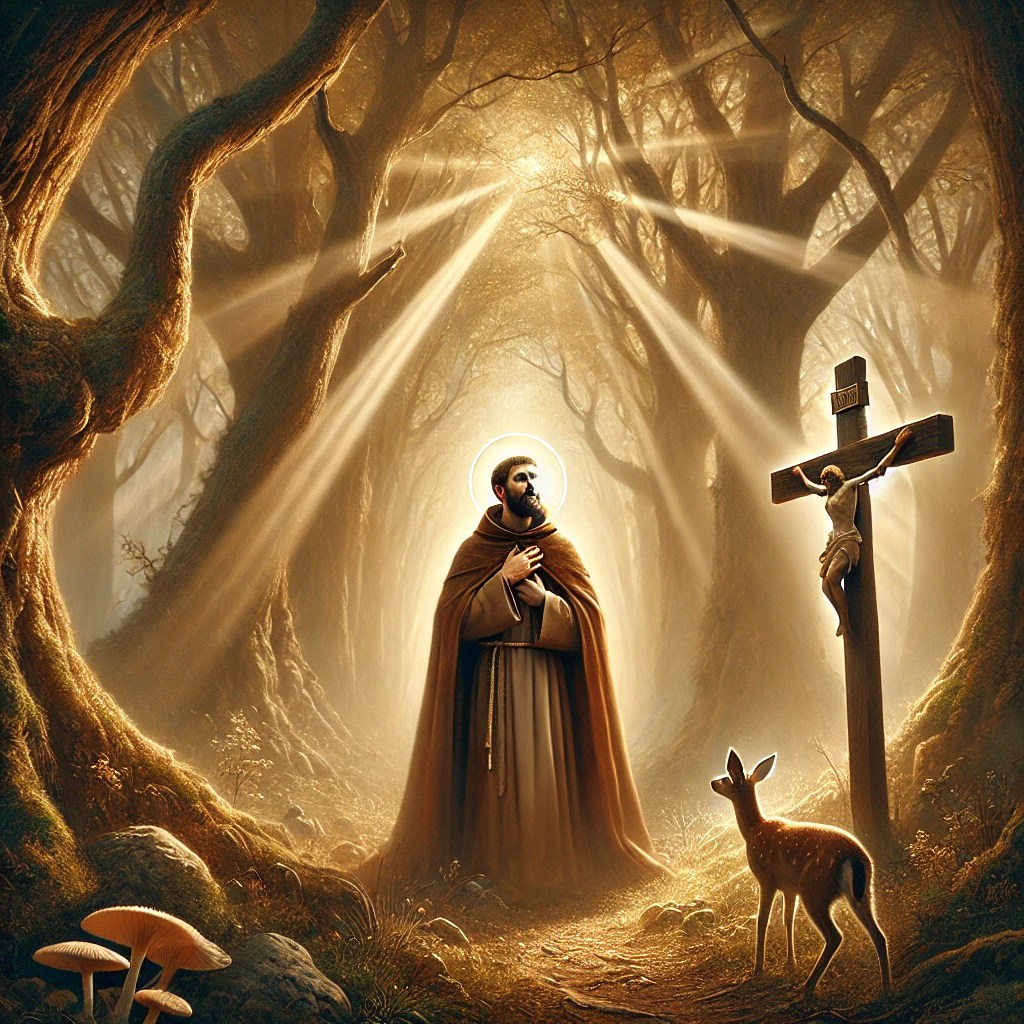
A Saint for the Seeking
“The flame of faith, when lit in the heart of one, can ignite the hearts of many.”
Saint Paternus of Avranches, also known as Paternus of Scissy, was one of those early Christian leaders who, though lesser known today, left a profound imprint on the Church in France and Wales. Born in the late 5th century, he lived during a time of great transition, when Christianity was still taking root in areas influenced by pagan traditions. Paternus stands out not only as a founder of monasteries and a bishop but also as a man of deep humility and contemplation who chose a path of solitude to grow closer to God. His legacy is one of gentle leadership, spiritual depth, and tireless evangelization. He is venerated as the patron saint of Avranches and remains a model for those seeking to live a life fully devoted to Christ.
A Journey from Poitiers to Holiness
Born around the year 482 in Poitiers, a city already shaped by Christian influence, Paternus was raised in a family that valued holiness. His father, Patranus, eventually left all worldly possessions to become a hermit in Ireland. That courageous act of surrender planted the seed of faith in the heart of young Paternus. Inspired by his father’s radical trust in divine providence, Paternus felt the stirrings of his own vocation early in life.
He entered religious life at the Abbey of Marnes in France, but his thirst for deeper spiritual formation led him across the English Channel to Wales. There, in Cardiganshire, he founded a monastery in Llanbadarn Fawr that would become a center of evangelization and monastic discipline. It was not merely a place of prayer but a school of holiness. After some time, he returned to Gaul and took up the eremitic life near Coutances with Saint Scubilion, where they lived in prayer, fasting, and manual labor. Their hidden holiness became known to many, and disciples gathered, seeking their guidance.
Eventually, his reputation for sanctity reached the ears of Church leaders. He was elected Bishop of Avranches, a role he accepted out of obedience and love for the Church. As bishop, he maintained his austere habits and worked tirelessly for the spiritual growth of his flock. Saint Paternus is remembered for his commitment to monastic reform, evangelization, and his unwavering focus on God in all things.
Heaven on Earth
Saint Paternus lived in an age when miracles were not merely seen as signs of power but as the fruit of deep intimacy with God. His prayers and presence brought forth many signs of divine intervention. Though details of each miracle have not survived the centuries in full color, the Christian communities of Normandy and Wales preserved the memory of his healing touch and prophetic insight.
One of the most well-known traditions holds that he healed many who came to him with infirmities of body and spirit. People traveled great distances to receive his blessing, and it was said that his very presence brought peace to troubled hearts. These miracles were never sought by him for fame but accepted as opportunities to glorify God. “Let your light shine before others, that they may see your good deeds and glorify your Father in heaven” (The Gospel of Matthew 5:16) was a verse that could easily be inscribed over his life.
Trials in the Wilderness
Saint Paternus’s path to holiness was marked not just by success but by suffering. The era in which he lived was tumultuous. Christianity, though spreading, often met resistance—both from the lingering paganism of rural Gaul and the inertia of Christian communities needing reform. As a bishop, he faced opposition from those who resisted his efforts to bring deeper discipline and authentic Christian living.
His time as a hermit was no romantic retreat. He endured hunger, loneliness, and spiritual desolation in the forests of Scissy. And yet, it was in those hidden places that he encountered the Lord most intimately. He once remarked to a disciple, “We must empty ourselves of all so that we may be filled with God”, echoing the teaching of Christ that those who lose their life for His sake will find it.
Though he was not martyred by the sword, his entire life was a martyrdom of the heart—dying to self, bearing the misunderstandings of others, and living in obedience to God’s call. His endurance teaches us that true sanctity is formed not in comfort, but in trial.
The Saint Who Still Walks With Us
After his death around the year 565, the memory of Saint Paternus lived on not just in stories, but in action. His relics became a source of healing and hope. Pilgrims flocked to Avranches and Scissy, praying at his tomb and reporting miraculous healings. Communities that bore his name continued to flourish in faith, even amid later invasions and upheavals.
It is said that during a time of great drought, prayers at his relics brought forth rain. In times of spiritual darkness, his intercession gave comfort to many. Today, Llanbadarn Fawr in Wales and Avranches in France remain places of historical and spiritual pilgrimage, testifying to the lasting legacy of this quiet yet powerful saint.
His posthumous miracles remind us that death does not sever the bonds of the Body of Christ. “I am the resurrection and the life. Whoever believes in me, though he die, yet shall he live” (The Gospel of John 11:25). Saint Paternus continues to live in the communion of saints, praying for us as we walk our own roads of faith.
Lessons from the Forest
In a fast-paced world filled with noise, the life of Saint Paternus calls us to reclaim silence, solitude, and sincerity. He teaches us that sanctity begins in the heart, watered by prayer and grown through obedience. His journey from monastic student to hermit to bishop reminds us that God’s call can evolve but always invites deeper surrender.
How can we find time for solitude in our busy lives? Where do we need to grow in obedience and detachment? What small communities can we build to support one another in holiness? These are questions we must ponder if we hope to follow his example.
Saint Paternus challenges us to lead others not with pride but with humility, to embrace suffering as a path to union with Christ, and to trust that even in the wilderness, God is shaping something holy in us.
Engage with Us!
We invite you to share your thoughts and reflections in the comments below. Consider these questions to spark discussion:
- How can we balance solitude and community engagement in our spiritual lives, following Saint Paternus’s example?
- In what ways can we demonstrate resilience in our faith when confronted with modern challenges?
- How can the establishment of faith-based communities, like Saint Paternus’s monasteries, inspire our involvement in local church activities today?
Let us support one another in our faith journeys, striving to embody the virtues exemplified by Saint Paternus and, above all, to act with love, as our Lord Jesus Christ did.
Saint Paternus, pray for us!
Follow us on Instagram and Facebook for more insights and reflections on living a faith-filled life.

 Holy Manna!
Leave a comment