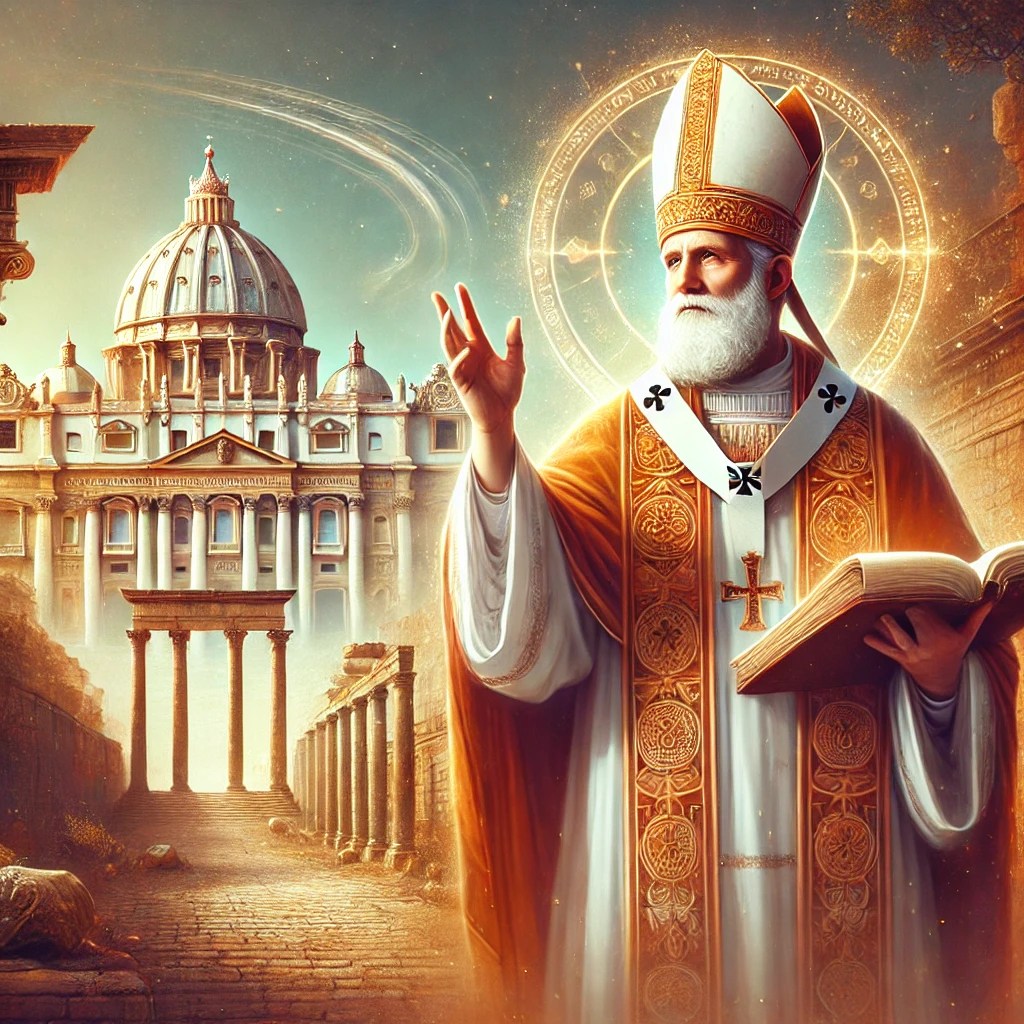
A Defender of Truth in an Age of Heresy
The Shepherd of Orthodoxy
Pope Saint Julius I stands as a steadfast guardian of truth during one of the most turbulent theological periods in the early Church. Elected the 35th pope in the year 337, he courageously led the Church through the deep divisions caused by the Arian controversy. His papacy, though often overshadowed by more dramatic martyrdoms, was a period of decisive action, fearless leadership, and unwavering support for the Nicene Creed—a foundational pillar of Christian orthodoxy. While Julius may not be as widely known as other early saints, his impact is deeply felt in the way the Church defended and preserved the truth of Christ’s divinity. He was not a martyr of blood, but a martyr of opposition and conflict, defending the faith with intellect, charity, and firm resolve.
A Roman Heart, A Universal Mission
Born into a Christian family in Rome, Julius entered into a Church that had only recently emerged from the shadows of persecution. The Edict of Milan had granted Christians legal freedom, but the internal struggles over doctrine were just beginning to heat up. He was elected Bishop of Rome during a time of uncertainty, following a four-month vacancy after the death of Pope Mark.
What truly set Pope Julius apart was not a dramatic conversion, but the clarity of his theological conviction and the pastoral care he extended to embattled bishops, particularly Saint Athanasius of Alexandria. Athanasius, exiled for refusing to compromise with Arian teachings—which falsely denied the full divinity of Christ—found refuge in Rome under Julius’s protection. This courageous act of hospitality and support marked the beginning of a papal legacy centered on upholding orthodoxy and protecting the persecuted within the Church.
Julius’s most significant act came in 341, when he called a synod of bishops in Rome that reviewed and rejected the charges against Athanasius. This was more than an administrative move—it was a bold declaration that the Bishop of Rome had the right to judge ecclesial disputes. In doing so, Pope Julius laid the groundwork for the papacy’s future authority in settling matters of doctrine. As he declared in his correspondence to the Eastern bishops: “It behooved you to write to us all so that what is just might be decreed by all”—a clear call for unity rooted in the authority of Peter’s successor.
The Miracle of Conviction
Though there are no recorded supernatural miracles attributed to Saint Julius during his lifetime, his bold defense of the truth was nothing short of miraculous in a spiritual sense. In an era when many were swayed by imperial pressures and heretical doctrines, Julius’s ability to stand firm was a grace-filled witness to the power of divine guidance.
His life demonstrated the miracle of conviction—a man guided not by visions or healings, but by the Holy Spirit’s counsel. It was through his wisdom and pastoral care that the Church continued to proclaim, “True God from true God, begotten, not made, consubstantial with the Father” (from The Nicene Creed), echoing the truth that Julius defended until his final breath.
Courage Amid Controversy
Although not a martyr in the traditional sense, Pope Julius endured immense pressure and personal attack during his papacy. The Arian heresy had political backing from powerful figures in the Eastern Roman Empire, and Julius’s support for Athanasius placed him in direct conflict with those forces.
The councils opposing Athanasius unjustly accused him of crimes and attempted to isolate Rome from the theological debates in the East. Julius, however, stood his ground. He wrote boldly to the Eastern bishops, defending not just Athanasius, but the rightful structure and unity of the Church, centered in communion with Rome. His letters, preserved through history, resound with ecclesial authority and pastoral compassion.
His fortitude in the face of ecclesiastical and imperial opposition models for us a different kind of martyrdom—a martyrdom of daily sacrifice, long meetings, and theological debates fought not with swords but with Scripture, tradition, and love of the Church.
Legacy of a Lionhearted Pastor
There are no well-documented physical miracles or healings attributed to Pope Julius after his death, but the spiritual fruits of his labors continue to nourish the Church today. The survival and flourishing of Nicene orthodoxy owe much to his unwavering support during its most critical challenges.
The enduring respect for his papacy led to the commemoration of his feast day on April 12, and churches and chapels around the world have honored him in art and architecture. His relics are venerated in Rome, and his name is often invoked when the Church reflects on its teaching authority and the role of the Pope in preserving unity and truth.
His witness reminds us that the miracles of the saints are not always found in signs and wonders, but often in the quiet courage to do what is right when it is hardest. “The light shines in the darkness, and the darkness has not overcome it” (The Gospel of John 1:5) captures the essence of Pope Julius’s enduring impact.
Living the Truth in Love: Reflection
Pope Saint Julius I invites us to reflect on what it means to stand for the truth—not just in grand gestures, but in everyday decisions, conversations, and actions. In a world filled with competing ideologies and moral confusion, his life reminds us that truth is not up for negotiation when it comes to the identity of Jesus Christ.
Are we willing to be a voice for truth even when it is unpopular? Can we offer refuge—spiritually or emotionally—to others being marginalized for their faith? And are we living lives that build up the Church in unity, just as Julius sought to do?
Let’s also reflect on how the papal office, instituted by Christ in The Gospel of Matthew 16:18, continues to serve as a rock for the Church. Pope Julius demonstrated that this role is not just administrative but deeply pastoral and theological. His legacy encourages each of us to be shepherds in our own communities—teachers of truth, protectors of the weak, and defenders of faith.
To imitate him today, consider spending time studying The Catechism of the Catholic Church and deepening your understanding of what the Church truly teaches. Listen to those around you who are struggling with faith, and offer them compassion rooted in truth. Pray for courage to speak out—not arrogantly, but lovingly—when Christ’s divinity or teachings are denied or misunderstood. And above all, let your actions proclaim the Gospel louder than your words.
Engage with Us!
We invite you to reflect on the life of Pope Saint Julius I and share your thoughts in the comments below. Consider these questions:
- How can we apply Pope Julius I’s commitment to truth in our daily lives?
- In what ways can we support those who are facing challenges because of their faith?
- Why is it important to understand and uphold the foundational doctrines of our faith?
Let us support each other in our faith journeys and strive to act with love and integrity, following the example of our Lord Jesus Christ.
Saint Julius, pray for us!
Follow us on Instagram and Facebook for more insights and reflections on living a faith-filled life.

 Holy Manna!
Leave a comment