A Flame That Could Not Be Silenced
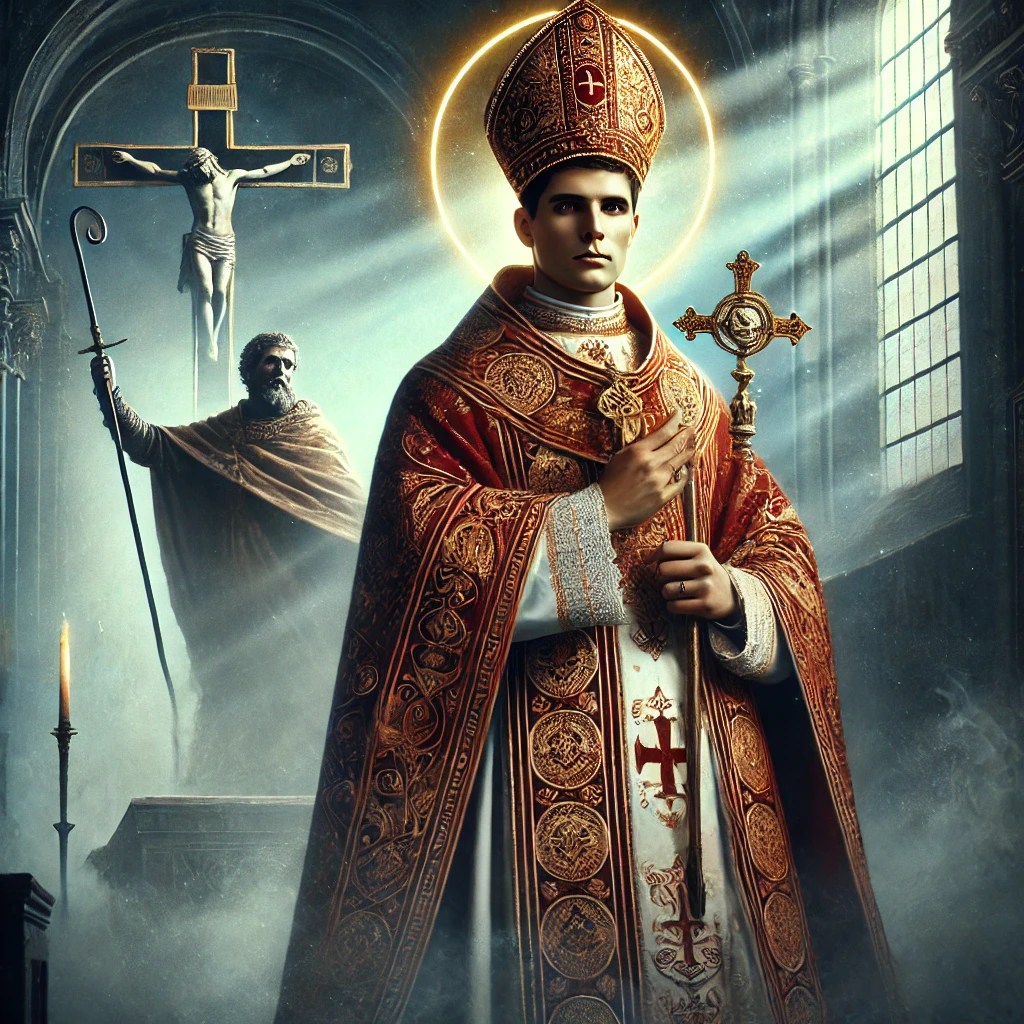
Saint Stanislaus of Szczepanów, a towering figure of moral courage in the 11th century, remains one of Poland’s most revered saints and a true witness of Christian discipleship. As the Bishop of Kraków, he became renowned for his fearless defense of truth and his unshakable commitment to justice in the face of royal tyranny. Canonized in 1253 by Pope Innocent IV, Saint Stanislaus is honored as a patron saint of Poland and Kraków, a symbol of faithful resistance to corruption, and a martyr who preferred death over compromising the Gospel of Christ. His life is a striking reminder that holiness often requires standing alone for what is right, even when it costs everything.
From Noble Roots to a Shepherd’s Staff
Saint Stanislaus was born on July 26, 1030, in the village of Szczepanów near Kraków, Poland, into a noble and devout family. His parents, Wielisław and Bogna, longed for a child and were blessed with Stanislaus, whom they dedicated to the Lord from his infancy. He was formed by the Christian values instilled in his home and later educated in the cathedral school of Gniezno. His intellectual gifts and deep faith led him to continue his theological studies in Paris, which was, at the time, one of the leading centers of ecclesiastical learning.
Upon returning to Poland, he was ordained a priest by Bishop Lambert II Suła of Kraków. Stanislaus quickly distinguished himself by his passionate preaching and compassionate pastoral care. In 1072, he was appointed Bishop of Kraków—an office he approached with humility and resolve. He focused on reforming the clergy, strengthening the Church’s influence, and promoting the spiritual life of the laity.
Yet what truly marked his episcopacy was his courage in calling out the moral failings of King Bolesław II. In a time when speaking truth to power could—and did—cost lives, Stanislaus stood as a spiritual father who would not abandon his flock. His legacy was not merely administrative or liturgical, but profoundly prophetic: he bore witness to the truth, no matter the cost.
Miracles in His Midst
While much of Saint Stanislaus’s sanctity was demonstrated through his virtue and leadership, one miraculous event in particular stands as a testament to his divine favor. In a legal dispute over land purchased for the Church, Stanislaus found himself accused of unlawfully seizing property. His accuser, a nobleman named Piotr, had died before the trial—but Stanislaus, trusting in God’s justice, prayed at Piotr’s tomb.
Miraculously, Piotr was raised from the dead and, standing before the king and court, confirmed that the bishop had indeed purchased the land legally. After delivering his testimony, Piotr peacefully returned to his grave. This astonishing resurrection affirmed not only Stanislaus’s honesty but also God’s power working through him. “Truly I tell you, if you have faith the size of a mustard seed… nothing will be impossible for you” (The Gospel of Matthew 17:20).
This miracle—so extraordinary and public—underscored his role as a shepherd not only of truth but of divine power. It wasn’t a spectacle for fame, but a sign that God was with him.
A Crown of Thorns
Saint Stanislaus’s unwavering fidelity to Christ and His Church ultimately placed him at odds with King Bolesław II, whose tyrannical and immoral behavior threatened both the Church and the people. Stanislaus repeatedly admonished the king, calling him to repentance. When the king continued his abuses, the bishop excommunicated him—a bold and dangerous move that sent shockwaves through the kingdom.
Refusing to be silenced, Stanislaus remained a visible sign of resistance to corruption. His stance enraged the king, who accused him of treason and sought his death. On April 11, 1079, while Stanislaus was celebrating Mass at the Church of Saint Michael on Skałka Hill in Kraków, King Bolesław entered with his guards.
When the soldiers refused to strike a bishop during the liturgy, Bolesław himself drew his sword and brutally murdered Stanislaus at the altar—making him a true martyr in every sense. His body was dismembered, and legend holds that eagles protected his remains until they were reverently buried. This gruesome act led to the king’s exile and repentance, while Stanislaus’s tomb became a sacred site of pilgrimage and prayer.
Glory Beyond the Grave
The veneration of Saint Stanislaus grew rapidly after his martyrdom. Countless pilgrims came to pray at his tomb in Wawel Cathedral, many reporting miraculous healings and divine interventions. His relics became objects of reverence and channels of grace, testifying to the holiness of one who had offered his life in defense of truth and justice.
The annual procession from Wawel Cathedral to the Church of Saint Michael on Skałka Hill continues to this day, commemorating the path of his martyrdom. Saint Stanislaus became a national symbol not only of Catholic identity but also of Poland’s enduring spirit in the face of tyranny. His intercession is especially sought in times of political turmoil, injustice, and for courage in speaking the truth.
Live the Legacy
Saint Stanislaus challenges us to ask ourselves what we are willing to risk for the truth. His life speaks powerfully to a generation that is often tempted to stay silent in the face of moral ambiguity. What does it look like for us to defend truth in a world that prizes convenience over conviction?
His witness reminds us that being a Christian means more than believing—it means acting with integrity and compassion, even when it’s difficult. In our workplaces, our families, and our communities, we can embody his courage by standing up for the vulnerable, resisting injustice, and speaking truth with love. Where is God calling you to be a witness today, even if it’s unpopular?
And let us not forget his heart for pastoral care. He was not only a prophet but also a shepherd. May we be people of both justice and mercy, challenging wrongdoing while caring tenderly for those entrusted to us.
Engage with Us!
We invite you to share your thoughts and reflections in the comments below. To spark discussion, consider these questions:
- How can we demonstrate moral courage in our daily interactions, following Saint Stanislaus’s example?
- In what ways can we support and advocate for those facing injustice in our communities?
- Reflecting on Saint Stanislaus’s life, how can we balance compassion with the need to confront wrongdoing?
Let’s support each other on our faith journeys, striving to act with love and integrity, as our Lord Jesus exemplified.
Saint Stanislaus, pray for us!
Follow us on Instagram and Facebook for more insights and reflections on living a faith-filled life.

 Holy Manna!
Leave a comment