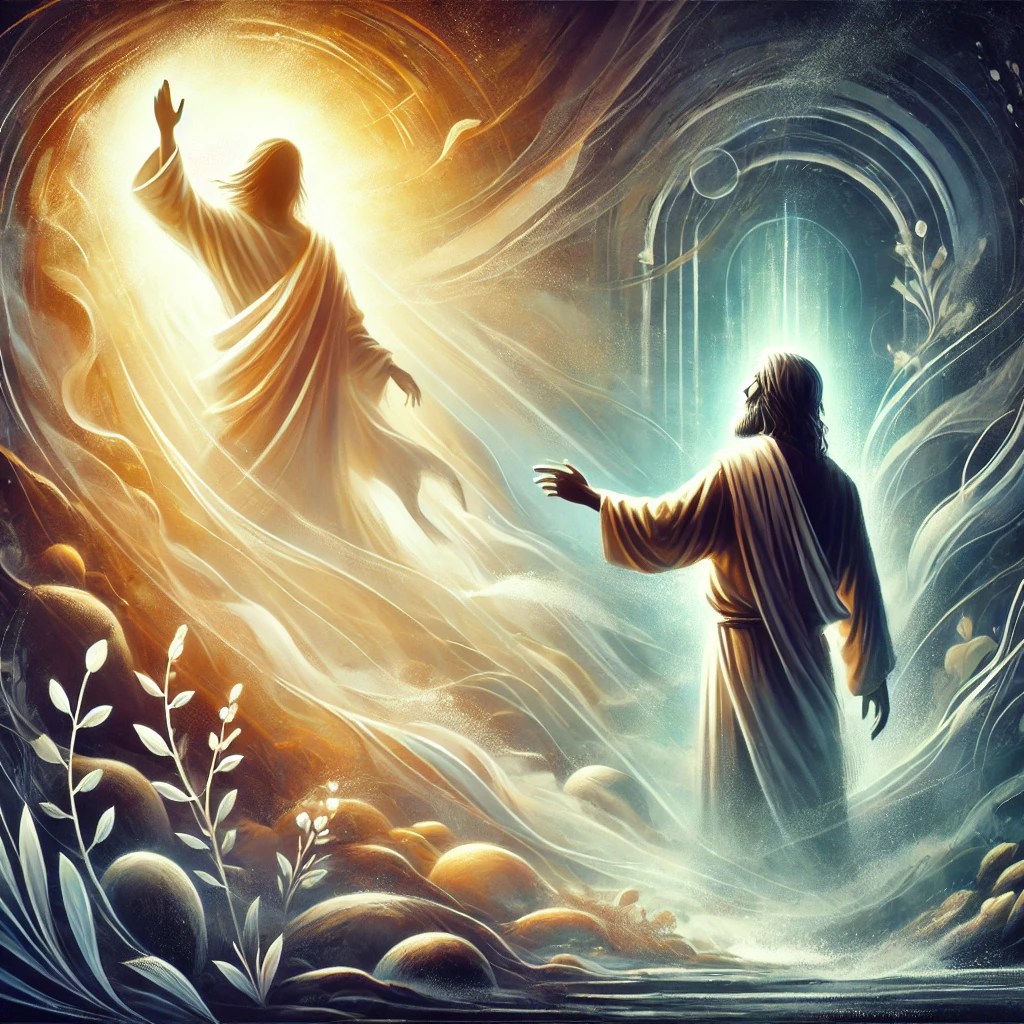
Come Forth!
Have you ever felt like your spirit was stuck in a tomb—buried beneath the weight of grief, sin, or despair? Today’s readings are a divine summons to rise, to breathe again, and to live anew in the Spirit of God. We are not abandoned in our darkness. Rather, our Lord approaches the stone that seals our hearts and cries out, “Come out!” This is more than a story of resurrection; it is an invitation to transformation.
The central theme connecting today’s readings is the promise of resurrection and new life through the Spirit. In Ezekiel, God speaks hope into a people who feel exiled, lifeless, and forgotten: “I will open your graves and make you come up out of them”. This powerful imagery reflects Israel’s return from exile, but it also foreshadows the deeper resurrection offered to all humanity through Christ. Psalm 130 echoes this longing: a soul waiting in the depths, crying out for God’s mercy and trusting in His power to redeem. St. Paul, in his letter to the Romans, makes it plain—if the Spirit of God who raised Jesus from the dead dwells in us, we are already being raised to new life, even in our mortal bodies.
This crescendo of hope and divine power finds its pinnacle in The Gospel of John, where Jesus raises Lazarus from the tomb. Not only is this a prelude to Jesus’ own resurrection, but it is also a deeply personal revelation of His identity: “I am the resurrection and the life”. Culturally, burial after four days signified that death was irreversible—yet Jesus defies even this finality. As the Church nears the climax of Lent, these readings stir us to reflect: What parts of my life need resurrection? Where do I need to hear Jesus say, ‘Come forth’?
First Reading – Ezekiel 37:12-14
From Graves to Glory: God’s Promise of Resurrection
The Book of Ezekiel is a prophetic text rich in symbolism, apocalyptic imagery, and hope born in exile. Ezekiel was both priest and prophet, called by God to minister to the Israelites during their Babylonian captivity in the 6th century B.C.—a time when Jerusalem had fallen, the Temple lay in ruins, and the people were spiritually crushed. Today’s reading comes from the famous “Valley of Dry Bones” vision in chapter 37, a striking metaphor for Israel’s despair and God’s promise to restore them. It fits perfectly into the Lenten journey and today’s theme of resurrection and new life through the Spirit, offering a foretaste of the resurrection not only of Israel as a nation but of the entire human family through Christ.
Ezekiel 37:12-14
New American Bible (Revised Edition)
12 Therefore, prophesy and say to them: Thus says the Lord God: Look! I am going to open your graves; I will make you come up out of your graves, my people, and bring you back to the land of Israel. 13 You shall know that I am the Lord, when I open your graves and make you come up out of them, my people! 14 I will put my spirit in you that you may come to life, and I will settle you in your land. Then you shall know that I am the Lord. I have spoken; I will do it—oracle of the Lord.
Detailed Exegesis
Verse 12 – “Therefore, prophesy and say to them: Thus says the Lord God: Look! I am going to open your graves; I will make you come up out of your graves, my people, and bring you back to the land of Israel.”
This verse is God’s bold declaration of hope. The imagery of graves represents the spiritual death and hopelessness the Israelites felt in exile. Opening graves is symbolic of divine intervention—only God has the power to restore life to what seems permanently lost. The promise to return them to the land of Israel assures them that God’s covenant is not broken, even in exile.
Verse 13 – “You shall know that I am the Lord, when I open your graves and make you come up out of them, my people!”
The repeated phrase “You shall know that I am the Lord” underscores the purpose behind this act of resurrection: God’s glory and self-revelation. In Jewish tradition, knowledge of the Lord comes not only from instruction but through direct experience of His saving power. This verse also echoes the central truth of salvation history—that God reveals Himself most profoundly through acts of deliverance.
Verse 14 – “I will put my spirit in you that you may come to life, and I will settle you in your land. Then you shall know that I am the Lord. I have spoken; I will do it—oracle of the Lord.”
Here the Spirit (Hebrew ruach) becomes the life-giving force. It is the same word used in Genesis when God breathes life into Adam and in John 20:22 when Jesus breathes on the disciples, giving them the Holy Spirit. God promises not only physical return but inner renewal—true life comes from the indwelling Spirit. The certainty of God’s word is emphasized: “I have spoken; I will do it”—a divine guarantee that His promises never fail.
Teachings
This passage deeply resonates with the teachings of the Catechism of the Catholic Church on resurrection and the life-giving role of the Holy Spirit. The Catechism declares: “In death, the separation of the soul from the body, the human body decays and the soul goes to meet God, while awaiting its reunion with its glorified body. God, in his almighty power, will definitively grant incorruptible life to our bodies by reuniting them with our souls, through the power of Jesus’ Resurrection” (CCC 997). The vision in Ezekiel is a prophetic anticipation of this promise, grounded in the hope that death is never the final word for those who belong to God.
St. Irenaeus, writing in the second century, affirms this in his Against Heresies: “As dry flour cannot be united into a lump of dough, or a loaf, but by the addition of moisture, so we, being many, could not become one in Christ Jesus without the water which comes down from heaven” (Book 3, Chapter 17). The “moisture” he refers to is the Holy Spirit—God’s breath that brings us from dryness to vitality, from death to communion.
Historically, this reading was used in early Christian catechesis to explain baptism as spiritual resurrection. The waters of baptism symbolically “open the grave” and allow the Holy Spirit to dwell within us. As Romans 6:4 teaches: “We were indeed buried with him through baptism into death, so that, just as Christ was raised from the dead… we too might live in newness of life”. Ezekiel’s vision thus takes on new dimensions in the light of Christ and the sacraments.
Reflection
This reading calls us to recognize the areas in our lives where we feel buried, lifeless, or stuck. Lent is a season of uncovering the spiritual “graves” we’ve built—places of unrepented sin, habitual indifference, or emotional numbness—and allowing God to breathe His Spirit back into us. The promise isn’t just for Israel; it’s for each of us.
Where do you need to feel the breath of God in your life today? What part of your soul longs to hear Him say, “Come out”? Let this passage be a moment of honest prayer. God is not intimidated by the depth of our despair; He specializes in resurrection. Perhaps it’s time to surrender control, believe in His promises, and trust that even now, the Spirit is moving stones away from your tomb.
Responsorial Psalm – Psalm 130
Out of the Depths: A Cry That Leads to Resurrection
Psalm 130, also known as De Profundis, is one of the seven Penitential Psalms and holds a sacred place in both Jewish and Christian liturgy. Attributed to an anonymous author, it likely emerged during or after the Babylonian exile—a time of national mourning and deep spiritual reflection. The psalm is a raw and honest prayer, a cry from the abyss of human suffering and sinfulness, expressing both contrition and profound trust in God’s mercy. It perfectly complements today’s theme of resurrection and new life through the Spirit by illustrating the spiritual resurrection that occurs when a soul turns to God from the depths of despair.
Psalm 130
New American Bible (Revised Edition)
Prayer for Pardon and Mercy
1 A song of ascents.
Out of the depths I call to you, Lord;
2 Lord, hear my cry!
May your ears be attentive
to my cry for mercy.
3 If you, Lord, keep account of sins,
Lord, who can stand?
4 But with you is forgiveness
and so you are revered.
5 I wait for the Lord,
my soul waits
and I hope for his word.
6 My soul looks for the Lord
more than sentinels for daybreak.
More than sentinels for daybreak,
7 let Israel hope in the Lord,
For with the Lord is mercy,
with him is plenteous redemption,
8 And he will redeem Israel
from all its sins.
Detailed Exegesis
Verse 1 – “Out of the depths I call to you, Lord;”
The psalmist begins in a place of profound desolation. “The depths” can be interpreted as physical danger, deep sorrow, or more poignantly, the spiritual abyss caused by sin. This cry acknowledges the psalmist’s helplessness and sets the tone for a prayer that arises not from strength, but from total dependence on God’s mercy.
Verse 2 – “Lord, hear my cry! May your ears be attentive to my cry for mercy.”
Here, we see the honest vulnerability of someone who believes God is listening. The psalmist pleads not just for attention but for mercy—acknowledging that what is needed is not justice, but forgiveness. This echoes the prayer of the tax collector in Luke 18:13: “God, be merciful to me, a sinner”.
Verse 3 – “If you, Lord, keep account of sins, Lord, who can stand?”
This rhetorical question unveils a fundamental truth: no one is righteous before God on their own merit. The verse humbles the reader, reminding us that divine mercy—not human goodness—is the foundation of our relationship with God.
Verse 4 – “But with you is forgiveness and so you are revered.”
The psalmist affirms the character of God as one of forgiveness. Interestingly, it is because God forgives that He is revered, not in spite of it. This upends worldly power structures and reveals that God’s authority is rooted in mercy, not domination.
Verse 5 – “I wait for the Lord, my soul waits and I hope for his word.”
This verse introduces the theme of patient, hopeful waiting. The soul that has cried out must now endure in faith. “His word” may refer to the Torah or a specific promise of deliverance. The act of waiting is itself a form of worship and surrender.
Verse 6 – “My soul looks for the Lord more than sentinels for daybreak. More than sentinels for daybreak,”
The repetition emphasizes eagerness and longing. Just as night watchmen strain to see the first signs of dawn, the psalmist yearns for God’s presence and redemption. It suggests a hope that endures through darkness, rooted in trust that morning will come.
Verse 7 – “Let Israel hope in the Lord, for with the Lord is mercy, with him is plenteous redemption,”
The personal cry now becomes communal. The psalmist invites all of Israel into this posture of hope. “Plenteous redemption” suggests that God’s saving power is not scarce or rationed—it overflows. It is enough for every exile, every sin, every wound.
Verse 8 – “And he will redeem Israel from all its sins.”
This final verse seals the psalm with certainty. Redemption is not a possibility but a promise. The hope expressed throughout the psalm culminates in the assurance that God will act definitively, not just for the individual but for the entire people of God.
Teachings
Psalm 130 aligns deeply with the Catholic understanding of divine mercy and the human need for repentance. The Catechism teaches: “The confession (or acknowledgment) of sins, even from a simply human point of view, frees us and facilitates our reconciliation with others. Through such an admission man looks squarely at the sins he is guilty of… and opens himself to God and to the communion of the Church” (CCC 1455). This is precisely what the psalmist models: honest confession that leads to liberation and restoration.
St. Augustine often turned to this psalm in his writings. In his Expositions on the Psalms, he writes: “From the depths of the heart the entire man cries: there is no feigned voice here… It is the deep place of our soul where God hears us” (Psalm 130, Sermon 130). Augustine saw this psalm as a template for deep, interior conversion—an echo of the soul awakening to grace even in its darkest moments.
Historically, Psalm 130 was prayed at funerals, symbolizing hope for the resurrection and God’s mercy for the dead. It is also prayed in Lauds, the morning prayer of the Church, reinforcing the image of light breaking through darkness. This liturgical use highlights the Church’s confidence that even from the grave—literal or spiritual—God calls His people to life.
Reflection
This psalm is a sacred mirror for anyone who has ever felt overwhelmed by failure, loss, or sorrow. It teaches us that the first step toward resurrection is not perfection but prayer—a cry from the heart. There is immense power in simply turning to God, in choosing to hope even when we feel unworthy or uncertain.
What “depths” do you find yourself in today? Where do you need to experience God’s plenteous redemption? Let this psalm shape your Lenten prayer: a prayer not of polished words, but of raw honesty. Wait for the Lord as the watchman waits for dawn—not passively, but with confidence that the One who hears from the depths will not delay in bringing new life.
Second Reading – Romans 8:8-11
Alive in the Spirit: The Power That Raises the Dead
St. Paul’s Letter to the Romans is a theological masterpiece, laying out the foundations of Christian faith—sin, grace, justification, and life in the Spirit. Today’s passage from chapter 8 is especially profound. Written to a Christian community divided between Jewish and Gentile converts, Paul seeks to unify them through the shared experience of life in Christ. He draws a sharp contrast between living “in the flesh” and living “in the Spirit,” reminding believers that the same Spirit who raised Jesus from the dead now dwells in them. This message fits seamlessly with today’s theme: resurrection and new life through the Spirit. It is not just about eternal life after death, but about the new life we begin living here and now, by grace.
Romans 8:8-11
New American Bible (Revised Edition)
8 and those who are in the flesh cannot please God. 9 But you are not in the flesh; on the contrary, you are in the spirit, if only the Spirit of God dwells in you. Whoever does not have the Spirit of Christ does not belong to him. 10 But if Christ is in you, although the body is dead because of sin, the spirit is alive because of righteousness. 11 If the Spirit of the one who raised Jesus from the dead dwells in you, the one who raised Christ from the dead will give life to your mortal bodies also, through his Spirit that dwells in you.
Detailed Exegesis
Verse 8 – “And those who are in the flesh cannot please God.”
Paul’s use of “flesh” (sarx in Greek) refers not to the body itself but to a way of life dominated by sin, selfishness, and separation from God. To be “in the flesh” is to live apart from the guidance of the Spirit. It is a state that cannot align with God’s will, because it resists His transforming grace.
Verse 9 – “But you are not in the flesh; on the contrary, you are in the spirit, if only the Spirit of God dwells in you. Whoever does not have the Spirit of Christ does not belong to him.”
Here Paul makes a dramatic shift. Christians are no longer defined by their former way of life. To “be in the spirit” means to live under the influence and guidance of the Holy Spirit. But there is also a warning—having the Spirit is not optional. It is the distinguishing mark of belonging to Christ.
Verse 10 – “But if Christ is in you, although the body is dead because of sin, the spirit is alive because of righteousness.”
This verse speaks to the paradox of Christian life: our bodies bear the effects of sin and mortality, but our spirits have been brought to life through righteousness—Christ’s righteousness, not our own. This new life is not merely ethical but ontological: it changes our very being.
Verse 11 – “If the Spirit of the one who raised Jesus from the dead dwells in you, the one who raised Christ from the dead will give life to your mortal bodies also, through his Spirit that dwells in you.”
This is the crescendo. Paul connects the resurrection of Jesus with our own future resurrection. The Spirit is not only a present guide but the divine agent of our eternal destiny. Just as God raised Jesus, so too will He raise us—body and soul—into glory. This promise is not symbolic; it is the literal and physical hope of the Christian faith.
Teachings
The Catechism reinforces this message in its teaching on the resurrection of the body: “The Christian Creed… culminates in the proclamation of the resurrection of the dead on the last day and in life everlasting” (CCC 988). This doctrine is not peripheral—it is central to what we believe. Paul’s words remind us that this resurrection is not just something we await; it begins now through the indwelling of the Spirit.
St. Cyril of Jerusalem, in his Catechetical Lectures, reflects on this mystery: “The Holy Spirit makes the soul new again through the waters of baptism, and after that, He gives it growth and strength… And if the Spirit dwells in you, He will also raise your mortal body to life, for the Spirit has the power to make alive” (Lecture 17). For Cyril, as for Paul, the Spirit is the divine breath that re-creates us and leads us toward eternal life.
The early Church Fathers also saw this passage as a guide to moral transformation. St. John Chrysostom emphasized that believers, being temples of the Holy Spirit, must not return to the ways of the flesh. He writes: “Where the Spirit is, there is power. If the Spirit of God dwells in you, then you must not live according to the flesh, but according to the Spirit” (Homily on Romans). This teaching forms the foundation of Christian morality—our transformation is not achieved by effort alone but through cooperation with the Spirit’s grace.
Reflection
This reading invites each of us to examine where we are living “in the flesh” rather than “in the Spirit.” Do we let the Spirit guide our decisions, our thoughts, our relationships? Or do we rely on our own strength, falling back into fear, pride, or selfishness? The resurrection life begins not just at death but in every moment we surrender to the Spirit’s prompting.
Are you aware of the Spirit dwelling within you? What areas of your life need to be reawakened by His presence? Paul’s words are both a challenge and a consolation. They challenge us to live as people who truly believe in the resurrection—and they console us with the truth that we are never alone. The Spirit who raised Jesus is in us, working even now to bring us to life. All we need to do is yield to Him.
Holy Gospel – John 11:1-45
Lazarus, Come Out!: The Miracle That Unveils the Messiah
The Gospel of John is uniquely theological and symbolic, often unveiling deep spiritual truths through signs and personal encounters. Chapter 11 presents the climactic seventh sign in John’s Gospel—the raising of Lazarus. This miraculous event not only prefigures Jesus’ own resurrection but is also the catalyst for the plot against His life. The narrative is steeped in cultural and religious significance: Lazarus had been dead for four days, a period believed in Jewish thought to confirm that the soul had definitively left the body. The miracle, then, is indisputable. Within the context of today’s readings, this Gospel passage is the living embodiment of resurrection and new life through the Spirit—it is a literal calling from the grave, echoing God’s promise through Ezekiel and Paul’s assurance that the Spirit gives life to our mortal bodies.
John 11:1-45
New American Bible (Revised Edition)
The Raising of Lazarus. 1 Now a man was ill, Lazarus from Bethany, the village of Mary and her sister Martha. 2 Mary was the one who had anointed the Lord with perfumed oil and dried his feet with her hair; it was her brother Lazarus who was ill. 3 So the sisters sent word to him, saying, “Master, the one you love is ill.” 4 When Jesus heard this he said, “This illness is not to end in death, but is for the glory of God, that the Son of God may be glorified through it.” 5 Now Jesus loved Martha and her sister and Lazarus. 6 So when he heard that he was ill, he remained for two days in the place where he was. 7 Then after this he said to his disciples, “Let us go back to Judea.” 8 The disciples said to him, “Rabbi, the Jews were just trying to stone you, and you want to go back there?” 9 Jesus answered, “Are there not twelve hours in a day? If one walks during the day, he does not stumble, because he sees the light of this world. 10 But if one walks at night, he stumbles, because the light is not in him.” 11 He said this, and then told them, “Our friend Lazarus is asleep, but I am going to awaken him.” 12 So the disciples said to him, “Master, if he is asleep, he will be saved.” 13 But Jesus was talking about his death, while they thought that he meant ordinary sleep. 14 So then Jesus said to them clearly, “Lazarus has died. 15 And I am glad for you that I was not there, that you may believe. Let us go to him.” 16 So Thomas, called Didymus, said to his fellow disciples, “Let us also go to die with him.”
17 When Jesus arrived, he found that Lazarus had already been in the tomb for four days. 18 Now Bethany was near Jerusalem, only about two miles away. 19 And many of the Jews had come to Martha and Mary to comfort them about their brother. 20 When Martha heard that Jesus was coming, she went to meet him; but Mary sat at home. 21 Martha said to Jesus, “Lord, if you had been here, my brother would not have died. 22 [But] even now I know that whatever you ask of God, God will give you.” 23 Jesus said to her, “Your brother will rise.” 24 Martha said to him, “I know he will rise, in the resurrection on the last day.” 25 Jesus told her, “I am the resurrection and the life; whoever believes in me, even if he dies, will live, 26 and everyone who lives and believes in me will never die. Do you believe this?” 27 She said to him, “Yes, Lord. I have come to believe that you are the Messiah, the Son of God, the one who is coming into the world.”
28 When she had said this, she went and called her sister Mary secretly, saying, “The teacher is here and is asking for you.” 29 As soon as she heard this, she rose quickly and went to him. 30 For Jesus had not yet come into the village, but was still where Martha had met him. 31 So when the Jews who were with her in the house comforting her saw Mary get up quickly and go out, they followed her, presuming that she was going to the tomb to weep there. 32 When Mary came to where Jesus was and saw him, she fell at his feet and said to him, “Lord, if you had been here, my brother would not have died.” 33 When Jesus saw her weeping and the Jews who had come with her weeping, he became perturbed and deeply troubled, 34 and said, “Where have you laid him?” They said to him, “Sir, come and see.” 35 And Jesus wept. 36 So the Jews said, “See how he loved him.” 37 But some of them said, “Could not the one who opened the eyes of the blind man have done something so that this man would not have died?”
38 So Jesus, perturbed again, came to the tomb. It was a cave, and a stone lay across it. 39 Jesus said, “Take away the stone.” Martha, the dead man’s sister, said to him, “Lord, by now there will be a stench; he has been dead for four days.” 40 Jesus said to her, “Did I not tell you that if you believe you will see the glory of God?” 41 So they took away the stone. And Jesus raised his eyes and said, “Father, I thank you for hearing me. 42 I know that you always hear me; but because of the crowd here I have said this, that they may believe that you sent me.” 43 And when he had said this, he cried out in a loud voice, “Lazarus, come out!” 44 The dead man came out, tied hand and foot with burial bands, and his face was wrapped in a cloth. So Jesus said to them, “Untie him and let him go.”
Session of the Sanhedrin. 45 Now many of the Jews who had come to Mary and seen what he had done began to believe in him.
Detailed Exegesis
Verse 1 – “Now a man was ill, Lazarus from Bethany, the village of Mary and her sister Martha.”
This verse introduces Lazarus, whose name means “God has helped.” His family is already familiar to Jesus and plays a significant role in the Gospel narrative. Bethany, located near Jerusalem, sets the stage for the events that will accelerate the Passion.
Verse 2 – “Mary was the one who had anointed the Lord with perfumed oil and dried his feet with her hair; it was her brother Lazarus who was ill.”
John references an event not yet described until chapter 12, indicating its theological importance. This foreshadowing links Mary’s act of love with the coming death and resurrection, binding themes of mourning and intimacy with Jesus.
Verse 3 – “So the sisters sent word to him, saying, ‘Master, the one you love is ill.’”
The message is simple and heartfelt. There is no request, just a statement that assumes Jesus’ compassion. It reveals the deep friendship between Jesus and Lazarus, framing the miracle within a relationship of love.
Verse 4 – “When Jesus heard this he said, ‘This illness is not to end in death, but is for the glory of God, that the Son of God may be glorified through it.’”
Jesus redefines the situation. The illness has a divine purpose—not to end in death but to reveal God’s glory. The phrase “that the Son of God may be glorified” points to the coming Passion and the revelation of His divinity.
Verses 5-6 – “Now Jesus loved Martha and her sister and Lazarus. So when he heard that he was ill, he remained for two days in the place where he was.”
These verses can seem contradictory—Jesus loves them, yet delays. But His delay is deliberate, orchestrating the miracle for maximum revelation. His love doesn’t shield from suffering but works through it for a greater good.
Verse 7 – “Then after this he said to his disciples, ‘Let us go back to Judea.’”
Jesus now turns toward danger—Judea, where hostility toward Him has escalated. His decision reflects courage and divine timing.
Verses 8-10 – “The disciples said to him, ‘Rabbi, the Jews were just trying to stone you, and you want to go back there?’ Jesus answered, ‘Are there not twelve hours in a day?…’”
Jesus’ answer points to divine providence. He walks in the “light,” meaning the Father’s will. There is no stumbling when one follows the light of truth.
Verses 11-15 – “‘Our friend Lazarus is asleep, but I am going to awaken him.’… ‘Lazarus has died. And I am glad for you that I was not there, that you may believe.’”
Jesus initially uses “sleep” as a metaphor for death, highlighting His view of death as temporary. His gladness isn’t callous—it’s because this delay will strengthen the disciples’ faith.
Verse 16 – “So Thomas, called Didymus, said… ‘Let us also go to die with him.’”
Often remembered for doubt, here Thomas shows deep loyalty. His words foreshadow the disciples’ future martyrdom and commitment.
Verses 17-20 – “When Jesus arrived, he found that Lazarus had already been in the tomb for four days… Martha heard that Jesus was coming, she went to meet him…”
The four days are crucial—death is considered irreversible. Martha’s initiative reflects her deep faith and relationship with Jesus.
Verses 21-24 – “‘Lord, if you had been here, my brother would not have died.’… ‘I know he will rise, in the resurrection on the last day.’”
Martha expresses faith, yet confines resurrection to the eschaton. Her statement reflects Jewish belief in the general resurrection.
Verses 25-26 – “Jesus told her, ‘I am the resurrection and the life… Do you believe this?’”
This is the theological heart of the passage. Jesus does not merely perform resurrection—He is the Resurrection. This is a bold claim of divinity and a promise of eternal life to those who believe.
Verse 27 – “She said… ‘Yes, Lord. I have come to believe that you are the Messiah, the Son of God…’”
Martha gives one of the strongest confessions of faith in the New Testament, recognizing Jesus’ messianic identity and divine mission.
Verses 28-32 – Mary is called, comes to Jesus, and repeats Martha’s words: ‘Lord, if you had been here…’”
Her grief moves Jesus deeply. The repetition of her statement underscores the pain of delay and the universal longing for Christ’s presence in suffering.
Verse 33 – “When Jesus saw her weeping… he became perturbed and deeply troubled.”
Jesus’ emotional response is profound. He is not detached; He enters into human sorrow. The Greek suggests a gut-wrenching reaction.
Verse 35 – “And Jesus wept.”
The shortest verse in Scripture—and one of the most powerful. God incarnate sheds tears at the tomb of His friend. His compassion is not abstract.
Verses 36-37 – The crowd sees His love but questions His power: ‘Could not the one who opened the eyes…?’”
Their question sets the stage for the miracle. Even in doubt, their comment acknowledges Jesus’ past miracles and presses on the tension of faith.
Verses 38-39 – “Jesus, perturbed again, came to the tomb… ‘Take away the stone.’”
Jesus stands before death itself. Martha’s hesitation reminds us of the human limits of faith. The stench of decay represents the reality of death.
Verse 40 – “‘Did I not tell you that if you believe you will see the glory of God?’”
Faith is the key to revelation. Jesus invites Martha—and all of us—to move from doubt to trust.
Verses 41-42 – Jesus prays aloud: ‘Father, I thank you… that they may believe that you sent me.’”
The prayer is for the benefit of the crowd. Jesus always aligns His will with the Father, and His miracles point to His divine mission.
Verse 43 – “‘Lazarus, come out!’”
This command is pure authority. Jesus calls into the realm of death and commands life. It is a prelude to His own resurrection and to ours.
Verse 44 – “The dead man came out… ‘Untie him and let him go.’”
Lazarus emerges still bound. Jesus instructs the community to unbind him—an image of the Church’s role in helping the newly resurrected walk freely.
Verse 45 – “Now many of the Jews… began to believe in him.”
The miracle fulfills its purpose. It leads people to faith and sets the stage for the Passion, as belief in Jesus begins to grow dangerously public.
Teachings
The Catechism teaches: “Christ’s Resurrection—and the risen Christ himself—is the principle and source of our future resurrection… Christ will raise us up ‘on the last day’” (CCC 655). The raising of Lazarus is not just a miracle—it is a sign that Jesus holds the keys to death and life. He doesn’t just promise life; He embodies it.
St. Augustine powerfully reflects: “The Lord called Lazarus by name. If he had not said ‘Lazarus,’ he would have emptied the tombs with a word” (Tractates on the Gospel of John, 49.1). This emphasizes Jesus’ power and intentionality. Lazarus is called not merely to live again, but to be a sign—a living prophecy of the power of Christ.
St. Gregory the Great saw Lazarus’ bindings as symbolic of the effects of sin: “Many are brought to life by repentance, but are still bound by the chains of their habits… Let them be unbound so they may serve God freely” (Homily 26 on the Gospels). The miracle is not complete until Lazarus is untied—just as our spiritual resurrection continues through the Church’s ministry of healing and formation.
Reflection
This Gospel invites us to identify with every character: the grieving sisters, the doubting crowd, even Lazarus himself. What tomb do you dwell in? What binds you still? Jesus stands before the stone and calls your name—not to shame you, but to bring you to life. His voice is stronger than death, His Spirit more powerful than decay.
Do you believe He is the Resurrection and the Life? Today, let that belief move you to action. Trust Him in your grief. Bring Him your delays, your doubts, your tombs. Let the Church help unbind you. Jesus does not only weep—He raises. And He is calling you to come out.
Come Forth and Live
Today’s readings together form a divine crescendo, a resounding call from the heart of God to each one of us: “Come forth!” From the graveyards of exile in Ezekiel, to the soul’s desperate cry in Psalm 130, to Paul’s proclamation of life in the Spirit in Romans, and culminating in the miraculous raising of Lazarus in the Gospel of John, we are reminded that our God is not distant from death—He conquers it. The Spirit that hovered over the waters at creation, the breath that revived dry bones, the presence that raised Jesus from the dead—that same Spirit dwells in us and calls us to new life.
Each passage reveals the mercy and power of God in a unique way: the promise to open graves and restore life, the invitation to trust and wait for redemption, the transformation that begins with the indwelling of the Spirit, and the ultimate demonstration of Christ’s authority over death. We are not meant to live entombed by fear, sin, or despair. The Lord invites us—gently and powerfully—to step into the light, to shed the grave clothes, and to begin again in Him.
What areas of your life need resurrection? Where is Jesus standing, waiting to speak your name? This week, let us respond to His voice. Let us turn to Him in prayer, invite the Spirit more fully into our hearts, and ask for the courage to rise. Because He lives, we are never truly dead. And because He calls, we are never truly lost. So come forth, beloved. Come forth—and live.
Engage with Us!
We’d love to hear how today’s powerful readings spoke to your heart. Share your reflections, prayers, or insights in the comments below—your words could be the light someone else needs. Let’s journey together as a community of faith, lifting one another in hope and trust in the God who calls us to new life.
Reflection Questions
First Reading – Ezekiel 37:12-14
Where do you feel like you’re stuck in a “grave” in your spiritual life? How can you invite God to breathe His Spirit into that area this week?
Responsorial Psalm – Psalm 130
What “depths” are you crying out from today? How can you trust in God’s mercy and wait with hope, like the watchman for the dawn?
Second Reading – Romans 8:8-11
Are you living more in the flesh or in the Spirit? What changes can you make to allow the Holy Spirit to lead you more fully each day?
Holy Gospel – John 11:1-45
What tomb is Jesus calling you out of today? What “grave clothes” do you need to leave behind so you can walk freely with Him?
Let us all strive to live as people of resurrection—unbound, redeemed, and radiant with the Spirit. May we walk in the light, serve with joy, and love with the mercy Jesus taught us, knowing that in Him, life always triumphs over death.
Follow us on Instagram and Facebook for more insights and reflections on living a faith-filled life.

 Holy Manna!
Leave a comment