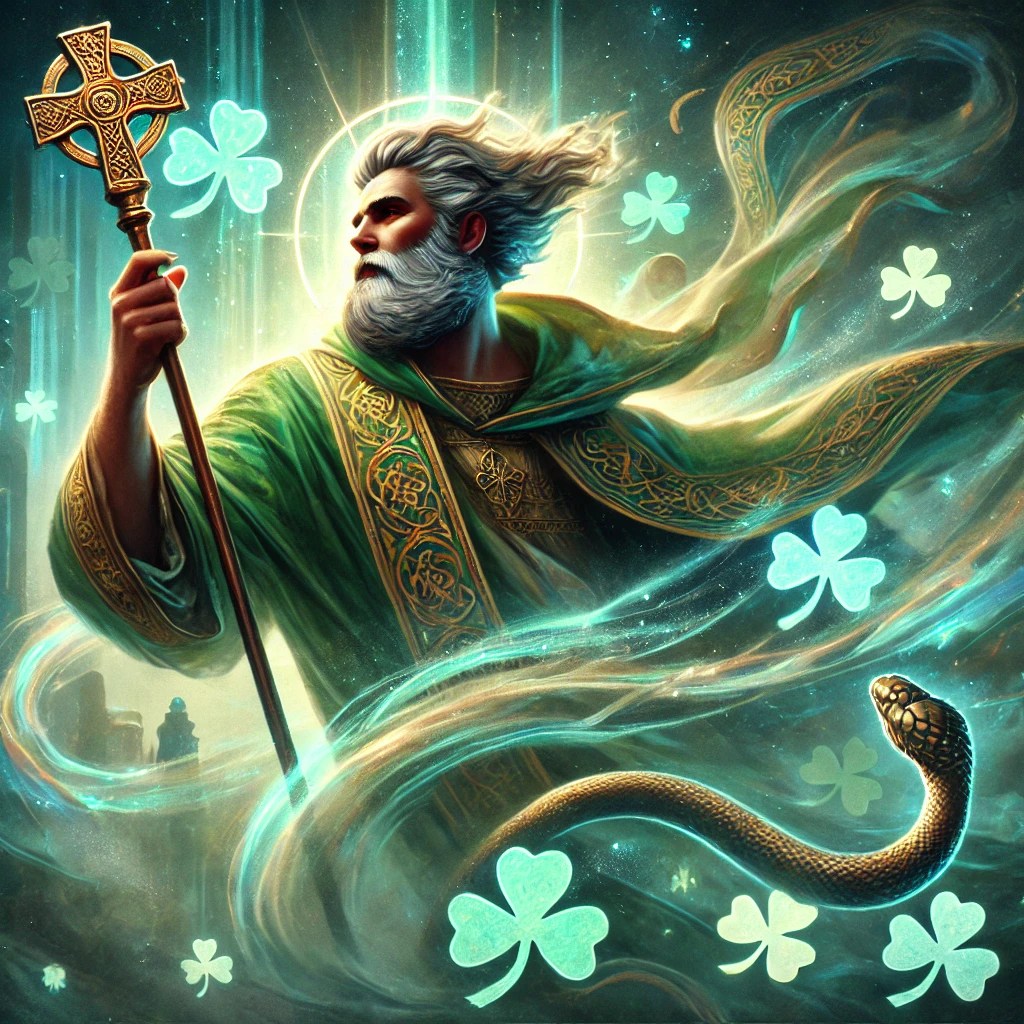
The Apostle of Ireland and the Light of the Emerald Isle
Saint Patrick, the beloved patron saint of Ireland, is one of the most well-known and celebrated saints in Christian history. Though his feast day on March 17 is often associated with parades, green attire, and festive gatherings, his life was marked by profound faith, relentless missionary work, and a deep love for God. Patrick is credited with bringing Christianity to Ireland, banishing pagan influences, and establishing churches that would shape the faith of the Irish people for generations. His life is a testimony to divine providence, resilience in suffering, and the transformative power of faith.
From Captivity to Calling
Born in Roman Britain around 385 AD, Patrick came from a Christian family, with his father, Calpurnius, serving as a deacon. Despite this religious upbringing, Patrick admitted in his Confessio that he was not particularly devout as a child. His life took a dramatic turn when, at the age of sixteen, he was captured by Irish raiders and sold into slavery in Ireland.
For six years, he labored as a shepherd, enduring hunger, cold, and isolation. In the midst of this suffering, Patrick turned to God with newfound devotion, praying constantly and deepening his relationship with Christ. He later wrote, “The love of God and His fear increased in me more and more, and my faith was strengthened” (Confessio).
One night, Patrick had a dream in which God told him to escape. Trusting in divine guidance, he fled over 200 miles to the Irish coast, where he found passage back to Britain. Though he was free, he could not forget the Irish people. A few years later, he received another vision in which the people of Ireland called him back, pleading, “We beg you, holy youth, to come and walk among us once more!” Moved by this call, Patrick entered religious training, was ordained a bishop, and returned to Ireland as a missionary.
The Power of God’s Presence
Saint Patrick’s ministry in Ireland was accompanied by numerous miracles, signs of God’s power at work through him. One of the most famous legends is that he drove all the snakes from Ireland. While there is no historical evidence of snakes ever inhabiting the island, this story is widely understood as a metaphor for his victory over paganism, casting out spiritual darkness and leading the people to Christ.
Another widely known miracle is his use of the shamrock to explain the mystery of the Holy Trinity. The Irish people, steeped in Druidic traditions, struggled to understand Christian doctrine. To make the concept of one God in three Persons—Father, Son, and Holy Spirit—more accessible, Patrick plucked a shamrock and used its three leaves on a single stem as a visual aid. This simple but profound explanation helped many embrace Christianity and remains a lasting symbol of the faith in Ireland.
Beyond these well-known stories, Saint Patrick is also credited with raising the dead. According to various accounts, he performed over thirty resurrection miracles, bringing people back to life through the power of Christ. These acts, along with his fearless preaching, led thousands to convert and strengthened the faith of the Irish people.
A Life of Persecution and Triumph
Saint Patrick’s mission was not without opposition. The druids and local chieftains saw Christianity as a threat to their authority and traditions. Many sought to kill him, and he was imprisoned on several occasions. Yet, Patrick never wavered. “Daily, I expect to be murdered, betrayed, or reduced to slavery. But I fear nothing, because of the promises of Heaven”, he wrote.
One of the most dramatic events of his life occurred on Easter Vigil at the Hill of Slane. The pagan High King Laoghaire had forbidden any fires to be lit before his own ceremonial bonfire. Defiantly, Patrick kindled a Paschal fire in honor of Christ’s resurrection. Enraged, the king sent his warriors to capture him. However, when they arrived, they could not see Patrick and his companions, as they were miraculously hidden. This bold act led to many conversions, and even the king, though not fully converted, granted Patrick permission to continue his ministry.
Despite hardships, Patrick’s faith remained unshakable. His mission flourished, and he baptized thousands, ordained priests, and established countless churches, monasteries, and schools that would shape the future of Irish Christianity.
A Saint’s Legacy
Even after his death, Saint Patrick’s intercession has been credited with many miracles. Pilgrims who visit his burial site in Downpatrick, Northern Ireland, report healings and spiritual conversions. His relics and sites associated with him, such as Croagh Patrick—where he is said to have fasted for forty days—continue to be places of pilgrimage and devotion.
Ireland itself is often considered one of his greatest miracles. Through his tireless efforts, he transformed an entire nation, turning it from paganism to Christianity. For centuries, Irish missionaries, inspired by his example, carried the Gospel to Europe and beyond, earning Ireland the title The Land of Saints and Scholars.
What We Can Learn from Saint Patrick
Saint Patrick’s life offers invaluable lessons for us today. His unwavering trust in God during suffering reminds us that trials can deepen our faith and draw us closer to Christ. His creative methods of evangelization challenge us to share our faith in ways that speak to the hearts of those around us. His boldness in preaching, despite persecution, calls us to be courageous witnesses of the Gospel.
How can we live out his legacy in our daily lives? First, we must cultivate resilience in our faith. Like Patrick, we should see hardships not as obstacles but as opportunities to grow in trust and reliance on God. Second, we should find creative ways to evangelize, sharing our faith with joy and clarity. Finally, we must commit to prayer, seeking God’s presence in all circumstances, just as Patrick did in the fields of Ireland.
Engage with Us!
We invite you to share your thoughts and reflections on Saint Patrick’s life and legacy in the comments below. Consider these questions to spark your contemplation:
How can Saint Patrick’s resilience inspire you to overcome personal challenges in your faith journey?
In what ways can you incorporate familiar symbols or traditions to share your faith with others?
How does regular prayer influence your ability to navigate hardships and remain steadfast in your beliefs?
As we reflect on Saint Patrick’s enduring legacy, let us support each other in our faith journeys, striving to embody the love and dedication exemplified by this remarkable saint. May we, like Patrick, be vessels of God’s grace, bringing light and hope to those around us.
Saint Patrick, pray for us!
Follow us on Instagram and Facebook for more insights and reflections on living a faith-filled life.

 Holy Manna!
Leave a comment