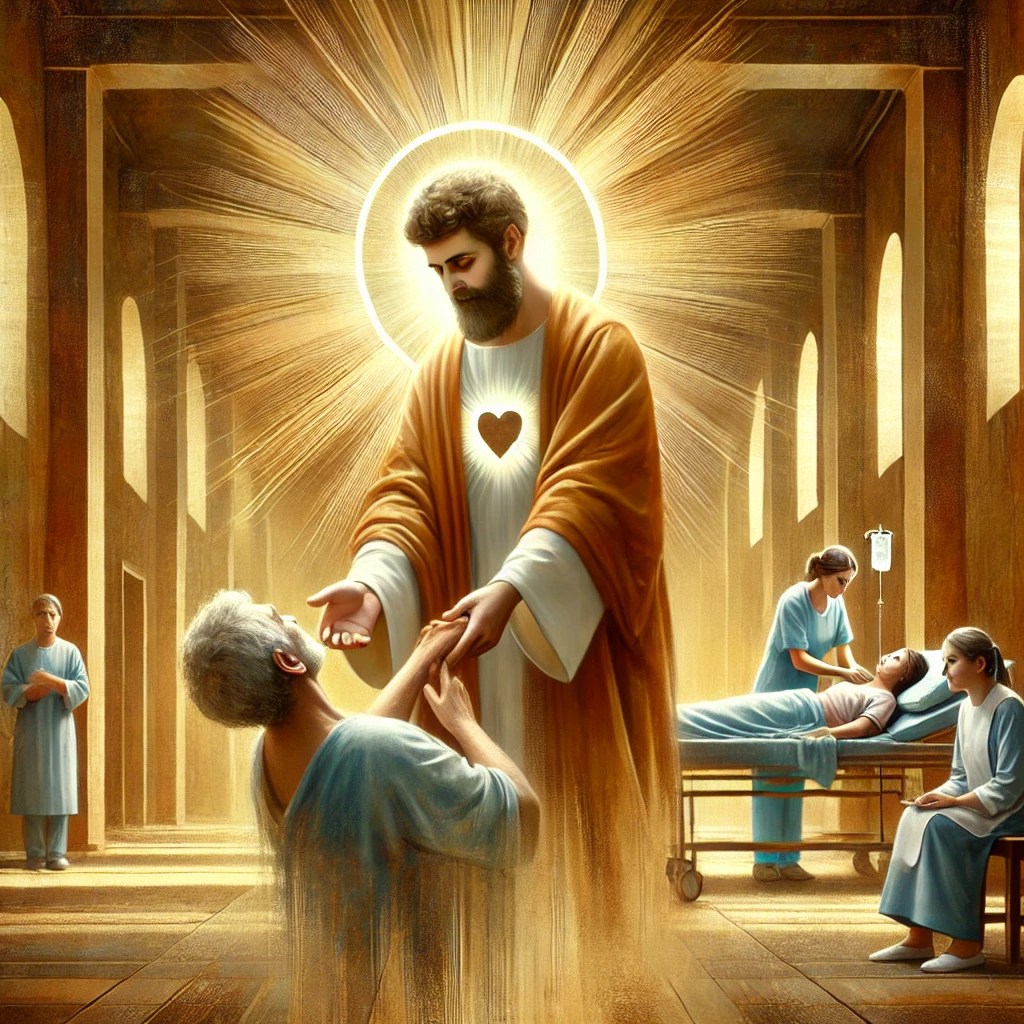
A Heart Ablaze with Compassion
Saint John of God, celebrated on March 8th, is a luminous figure in Christian tradition, renowned for his profound compassion and dedication to the marginalized. His legacy of mercy, healing, and unwavering faith continues to inspire countless people around the world. He is best known as the founder of the Brothers Hospitallers, a religious order dedicated to the care of the sick and the poor, a mission that endures today in hospitals and charitable institutions worldwide.
John’s life was a testament to divine transformation—one that reminds us that no matter where we come from or what mistakes we have made, God’s grace can work wonders in our lives. For his boundless love and service to the needy, Pope Leo XIII declared him the patron saint of hospitals, nurses, and the sick in 1886. His life challenges us to consider: how are we using our own gifts to serve those most in need?
From Soldier to Saint
Born João Duarte Cidade on March 8, 1495, in Montemor-o-Novo, Portugal, John spent his early years as a shepherd. His childhood was marked by uncertainty, as he was separated from his parents at a young age. Some accounts say he was taken from his home, while others suggest he left voluntarily to seek adventure. This period of instability led him to a reckless and impulsive life, which later included serving as a soldier in the Spanish army.
John’s time as a soldier was filled with violence and hardship. He fought in battles against the French and later the Turks, witnessing immense suffering and death. His moral compass wavered during these years, as military life exposed him to temptation, worldly pleasures, and a hardened heart. But God had other plans for him.
At the age of 40, John experienced a powerful conversion that changed the course of his life. While living in Granada, Spain, he heard a sermon by Saint John of Ávila, a renowned preacher and mystic. The words of Saint John of Ávila pierced his soul, making him aware of his past sins and leading him into an overwhelming state of repentance. He was so overcome with remorse that he ran through the streets, publicly confessing his sins and crying out for mercy. His emotional outburst led some to believe he had gone mad, and he was subsequently confined to a mental hospital.
It was during this time of suffering that John encountered Christ in a new way. The very people who cared for him—the poor, the sick, and the outcast—became the face of Jesus to him. When he was released, he dedicated himself entirely to serving those in need, giving up his past life to embrace a radical mission of charity and love.
Flames of Faith
Saint John of God’s life was adorned with acts of divine intervention that demonstrated his unwavering faith and God’s providence. Perhaps the most astonishing event occurred when a hospital in Granada caught fire. Without hesitation, John rushed into the burning building, rescuing patients who were unable to escape. Eyewitnesses reported that he fearlessly moved through the flames, emerging unharmed. When asked how he survived, he simply credited God’s protection, showing that his courage was deeply rooted in his trust in divine providence.
His miracles were not limited to acts of physical bravery. Many testified that John had the ability to heal the sick through prayer and touch. There are stories of paralyzed individuals regaining movement after his intercession, and of desperate souls finding peace after encountering his kindness. He truly embodied the words of Christ in Matthew 25:40:
“Whatever you did for one of the least of these brothers and sisters of mine, you did for me.”
John’s hospital became a place of refuge for the homeless, the sick, and the dying. He refused to turn anyone away, even when it meant exhausting his own resources. He begged on behalf of those in his care, urging the wealthy of Granada to support his mission. His faith was such that he trusted God would always provide, and indeed, miracles of provision often followed his acts of charity.
Humble Servant, Holy Warrior
John’s radical approach to charity was not always welcomed by society. Some believed his unconditional care for the poor encouraged laziness, while others accused him of allowing immoral individuals into his hospital. When confronted with these accusations, John responded with characteristic humility:
“I know of no bad person in my hospital except myself, who am unworthy to eat the bread of the poor.”
This profound humility silenced his critics and revealed the depth of his selflessness. His trials did not end there. In addition to financial struggles and societal opposition, John suffered from physical hardships due to the exhausting nature of his work. He took no rest, often sleeping on the floor of his hospital to remain close to his patients. Despite the overwhelming demands placed on him, he never lost sight of his mission.
His final act of sacrifice came when he attempted to rescue a drowning man. The effort left him severely weakened, and soon after, he fell ill. On March 8, 1550, he passed away, surrounded by the poor and sick whom he had so devotedly served. His death was not marked by grandeur, but by the deep love and gratitude of those whose lives he had touched.
Healing Across Time
John’s holiness did not cease with his passing. Miracles attributed to his intercession began almost immediately. Countless people reported healings after praying for his help, and his reputation for divine intervention spread rapidly. Pilgrimages to his relics became sources of healing and inspiration for the faithful.
His legacy was carried forward by the Brothers Hospitallers, the religious order he founded. Today, the order operates hospitals and charitable institutions around the world, continuing his mission of mercy and care for the suffering. Pope Alexander VIII canonized him in 1690, recognizing the extraordinary grace that marked his life.
The hospital he established in Granada remains a place of pilgrimage, where visitors seek both physical and spiritual healing. His relics, venerated in various locations, have been associated with miraculous recoveries. His legacy reminds us that holiness is not confined to any one period in time—it continues to shape and heal the world long after a saint has left this earth.
The Call to Compassion
Saint John of God’s life challenges us to reflect on our own call to service. His journey from soldier to saint reminds us that no past is too broken for God to redeem. His compassion for the sick and suffering calls us to open our hearts to those in need. His trust in divine providence urges us to rely on God’s grace in our own struggles.
So how can we live out his legacy today? We can start by looking at those who are suffering around us. It may not be the homeless or the physically ill, but perhaps those who are emotionally burdened, lonely, or in need of encouragement. We can cultivate a spirit of service in our homes, workplaces, and communities, knowing that every act of kindness—no matter how small—is an act of love for Christ.
John’s life teaches us that true greatness lies not in power or status, but in humble service. In a world often focused on self-interest, he stands as a beacon of sacrificial love. His example reminds us that, in the end, our greatest treasures are not stored on earth, but in the hearts of those we touch with Christ’s love.
Engage with Us!
We invite you to share your thoughts and reflections in the comments below. Consider these questions to spark discussion:
- How can Saint John of God’s transformation inspire us to seek personal growth in our own lives?
- In what ways can we practice humility and compassion in our daily interactions?
- How does serving others deepen our understanding of faith and community?
Let us support each other in our faith journey and strive to do everything with love, as our Lord Jesus did.
Saint John of God, pray for us!
Follow us on Instagram and Facebook for more insights and reflections on living a faith-filled life.

 Holy Manna!
Leave a comment