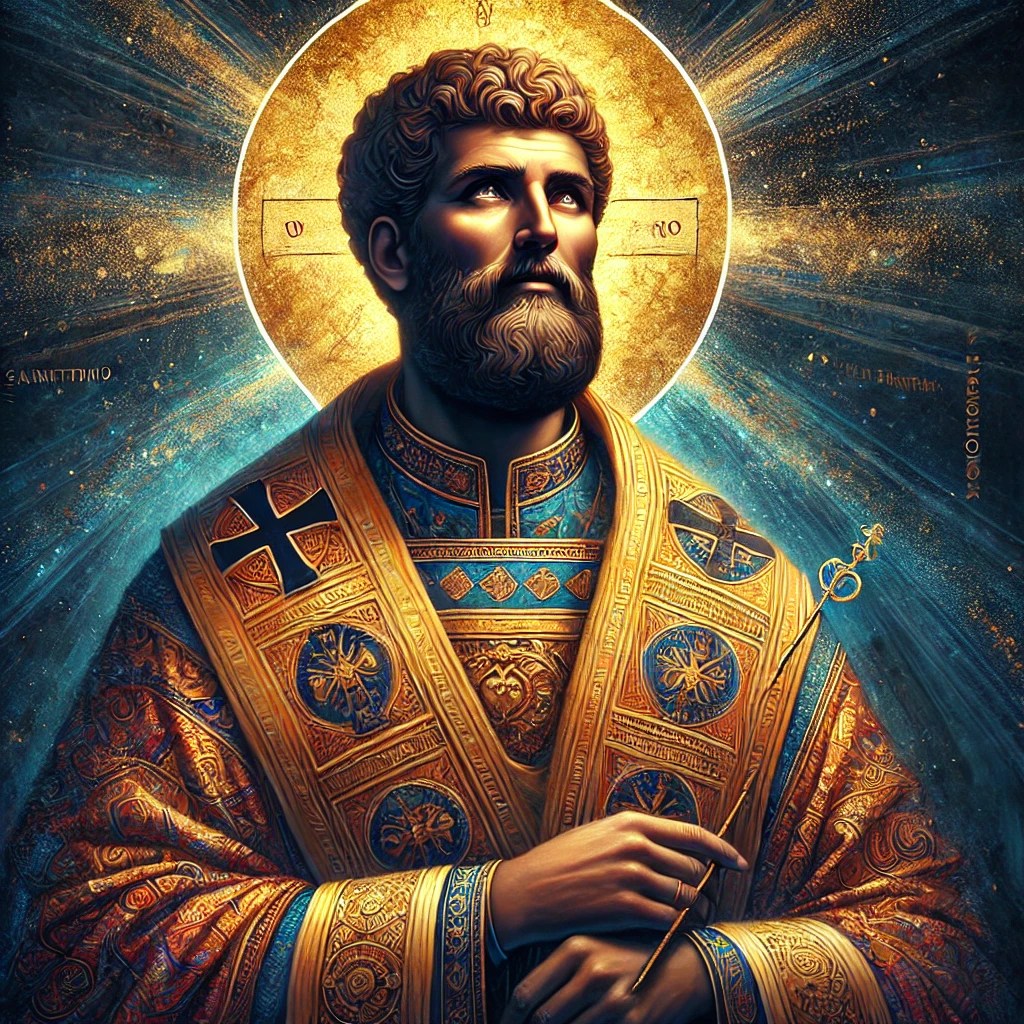
A Defender of Faith and Servant of the People
Saint Tarasius of Constantinople stands as a beacon of unwavering faith, humility, and service to both God and His people. As the Patriarch of Constantinople (784-806 AD), he was instrumental in restoring the veneration of sacred images, a practice that had been condemned by the Iconoclasts. His leadership in convening the Second Council of Nicaea (787 AD) was a pivotal moment in Church history, reaffirming the rightful place of icons in Christian worship. But beyond his role as a theological defender, Saint Tarasius was a man of deep compassion—his love for the poor and commitment to justice made him a true shepherd of the faithful. His life serves as an inspiring testimony to what it means to stand for truth, even in the face of political pressure and adversity.
From Noble Birth to Humble Servant of Christ
Born into a noble family in Constantinople around 730 AD, Tarasius was raised in a household that valued both education and virtue. His father, George, was a high-ranking judge, and his mother, Eucratia, ensured that he received a well-rounded upbringing in the faith. Excelling in both intellect and character, Tarasius was appointed as an imperial secretary under Emperor Constantine VI and Empress Irene, a prestigious role in the Byzantine court.
Despite his high status, Tarasius remained deeply devoted to Christ. He longed for a life of greater spiritual significance, and his opportunity came when Patriarch Paul IV, filled with remorse for his past complicity in Iconoclasm, abdicated his position. Recognizing Tarasius’s wisdom, piety, and commitment to the true faith, the clergy and Empress Irene unanimously chose him as the next Patriarch of Constantinople. However, Tarasius did not accept the role blindly. He declared that he would only assume the position if an ecumenical council was convened to settle the question of the veneration of icons once and for all. His demand was met, leading to the gathering of the Second Council of Nicaea in 787 AD, a council that restored sacred images to their rightful place in Christian worship.
As Patriarch, Saint Tarasius did more than defend doctrine—he embodied Christ’s call to serve the least among us. He used Church resources to aid the poor, established charitable institutions, and upheld justice in an era when power was often abused. He was not just a theological scholar; he was a shepherd who lived out the Gospel in both word and deed.
A Spiritual Leader Guided by Divine Wisdom
While no individual miracles during Saint Tarasius’s life are recorded in the same way as those of some other saints, his greatest “miracle” was his ability to unify the Church in a time of great division. The Second Council of Nicaea, which he helped organize, was a moment of divine intervention that corrected the errors of Iconoclasm and reaffirmed the faith of the Church. The restoration of icons was not simply about art or tradition—it was about upholding the truth that the Incarnation of Christ made sacred images a legitimate and meaningful form of worship. Through the intercession of the Holy Spirit, Tarasius’s leadership brought healing to the Church, ensuring that future generations could worship freely without fear of persecution.
Beyond his role in Church governance, Saint Tarasius displayed remarkable discernment and wisdom. His ability to navigate the dangerous waters of imperial politics without compromising his faith was itself a work of God’s grace. He inspired many through his personal holiness, his devotion to prayer, and his unwavering defense of the truth.
Trials, Tribulations, and a Martyr’s Heart
Saint Tarasius may not have been a martyr in the traditional sense, but his steadfastness in the face of political persecution earned him what the Church calls a “white martyrdom”—suffering for the faith without shedding blood. One of the greatest challenges of his patriarchate came when Emperor Constantine VI sought to divorce his wife and marry another woman. Since this act was against Church teachings, Tarasius refused to grant the emperor his approval. This led to immense pressure, threats, and even attempts to undermine his authority, but he remained firm.
In a time when many bishops succumbed to imperial pressure, Tarasius chose fidelity over comfort. His rejection of the emperor’s demands led to political isolation, yet he never wavered. He saw his duty as a shepherd of souls, not a servant of earthly rulers. His courage in upholding the sanctity of marriage and his unwavering faithfulness to Christ serve as examples for all who are called to stand for truth, even when it is unpopular.
Tarasius continued his mission until his death on February 25, 806 AD. He died peacefully, but his struggles in life were nothing short of heroic. He was a warrior for the faith—not with a sword, but with conviction, humility, and courage.
Signs and Wonders Beyond the Grave
After his passing, reports of miraculous healings and divine interventions at his tomb began to spread. Pilgrims visited his burial site at a monastery he had established on the Bosphorus, seeking his intercession. Many who prayed at his tomb experienced physical healings, conversions, and moments of profound spiritual renewal.
The Church quickly recognized him as a saint, and devotion to him spread throughout both the Eastern and Western traditions. His relics became a source of grace, reinforcing the belief that God works through the saints even after they have left this earthly life. The monastery he founded remained a place of prayer and pilgrimage for centuries, drawing the faithful who sought the same courage and wisdom that Saint Tarasius displayed during his lifetime.
Walking in the Footsteps of Saint Tarasius
Saint Tarasius’s life is a call to courageous faith, unwavering integrity, and selfless service. In an era when many leaders sought power for themselves, he used his authority to serve the poor, defend the faith, and protect the sanctity of marriage. His life challenges us to ask: Do we stand firm in our beliefs, even when it is difficult? Do we use our influence to lift others up, or for personal gain? Do we recognize that true leadership means serving rather than being served?
In our daily lives, we can follow Saint Tarasius’s example by seeking truth and justice, even when it is inconvenient. Whether it is standing up for Christian values in our workplaces, advocating for the marginalized, or deepening our prayer lives, his legacy reminds us that holiness is not passive—it requires action, conviction, and love.
May we learn from his example and boldly live out our faith, knowing that when we stand with Christ, we stand on the side of truth.
Engage with Us!
We invite you to reflect on Saint Tarasius’s remarkable journey and share your insights in the comments below. Consider the following questions to guide your contemplation:
- Standing Firm in Faith: Reflect on a time when you faced pressure to compromise your beliefs. How did you navigate the situation, and what did you learn from the experience?
- Balancing Secular and Spiritual Responsibilities: Saint Tarasius held significant secular authority before becoming Patriarch. How do you balance your worldly duties with your spiritual commitments?
- Responding to Injustice: When witnessing actions that contradict your moral or ethical values, how do you respond? What steps can you take to address such situations with courage and compassion?
Let us support one another in our faith journeys, striving to embody the love and mercy that Jesus exemplified in His earthly ministry.
Saint Tarasius, pray for us!
Follow us on Instagram and Facebook for more insights and reflections on living a faith-filled life.

 Holy Manna!
Leave a comment