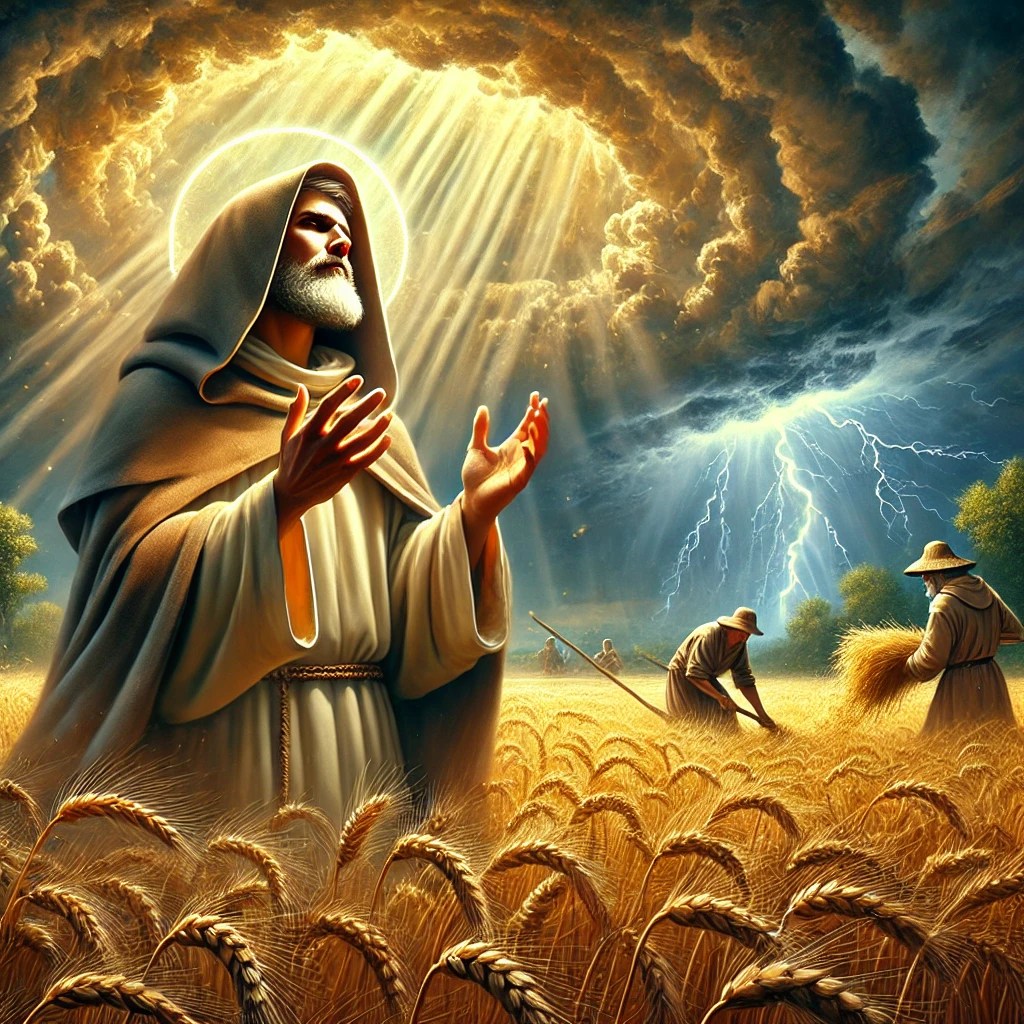
The Harvester Monk of Calabria
Saint John Theristus, known as “the Harvester,” is a remarkable figure in both Catholic and Eastern Orthodox traditions. Born in the 11th century in a time of great upheaval, his life was shaped by adversity, divine intervention, and unwavering faith. Despite the political and religious tensions following the Great Schism of 1054, Saint John’s legacy transcends division, drawing Christians of all backgrounds toward his example of holiness. He is celebrated for his miraculous role in saving a harvest, his deep monastic devotion, and his ability to bridge the gap between heaven and earth through prayer and humility. His story is one of escape, perseverance, and trust in God’s providence—an inspiring witness to the power of faith even in the face of suffering.
A Life Marked by Captivity, Escape, and Devotion
Saint John Theristus was born in 1049 in Calabria, a region in southern Italy that was often caught in the struggles between the Byzantine Empire, the Normans, and invading Saracens. His father, Arconte di Cursano, was a Byzantine landowner, but his life was cut short during a violent Saracen raid. John’s pregnant mother was taken captive and brought to Palermo, Sicily, which at the time was under Muslim rule. There, John was born and raised in a predominantly Muslim society, yet his mother ensured that he was raised in the Christian faith.
At the age of 14, John made a daring escape from captivity. Encouraged by his mother, he fled across the Strait of Messina in a rudderless boat, miraculously reaching the shores of Calabria. His survival alone was seen as a divine sign. Upon his return, he was drawn to the monastic life and sought refuge among the Basilian monks, an order dedicated to prayer, labor, and devotion to God. Over time, his sanctity became evident as he fully committed himself to the monastic rule, gaining a reputation for his humility, deep prayer life, and miracles.
The Miracle of the Harvest
One of the most well-documented miracles of Saint John Theristus is the one that earned him his unique title. During a particularly harsh season, a severe storm threatened to destroy the local wheat crops, placing the entire region at risk of famine. The farmers, recognizing John’s deep faith, sought his prayers for divine intervention.
John, known for his humility and trust in God, led the farmers in prayer, asking the Lord to have mercy on their struggling community. Miraculously, the storm did not sweep away the wheat as expected. Instead, the skies calmed just long enough for the farmers to complete their harvest, saving them from starvation. From that day forward, he was called Theristus, meaning “the Harvester.” This event reinforced his reputation as a man of prayer and a vessel of God’s grace.
Beyond this miracle, John was also known for his spiritual wisdom and healing abilities. He often prayed over the sick, many of whom were miraculously healed. His reputation spread across the region, drawing both peasants and nobility who sought his guidance and intercession.
Strength in Humility and Faith
John’s life was not without trials. He had already endured captivity, the loss of his father, and a perilous escape to freedom. However, his greatest challenges came in the form of spiritual warfare and opposition from those who doubted his sanctity. Despite his growing reputation, he remained deeply humble, avoiding positions of power or prestige.
His faithfulness was particularly tested in his interactions with the ruling class. Many nobles were skeptical of his influence among the people, and some sought to discredit him. But John never wavered in his commitment to prayer and monastic discipline. He continued working the land alongside the local farmers, seeing labor as a sacred act of devotion to God. His endurance in the face of these trials became an example to others that true holiness is found in perseverance, not in human recognition.
The Healing of a King
One of the most famous miracles associated with Saint John Theristus took place when King Roger II of Sicily suffered from a severe, festering wound on his face. No doctor could heal it, and the infection was worsening. Having heard of John’s holiness, the king sought his intercession. John, never seeking recognition for himself, merely touched the king with his simple monastic tunic and prayed over him. Immediately, the wound began to heal, and in a short time, the king was completely restored to health.
In gratitude, King Roger II founded a monastery in John’s honor, ensuring that his legacy of faith and prayer would continue to inspire future generations. The monastery became a place of pilgrimage, where many came seeking healing and spiritual renewal.
Saint John’s Legacy
Saint John Theristus passed away in 1129, but his miracles did not cease. His tomb became a site of divine healings, with many pilgrims reporting cures and spiritual conversions after seeking his intercession. Over the centuries, devotion to him spread, and his monastery continued to serve as a beacon of faith.
One of the most remarkable events in his posthumous veneration occurred in 2001 when Patriarch Bartholomew I of Constantinople formally returned Saint John’s relics to the monastery. This act symbolized a renewed connection between the Eastern and Western Christian traditions, reinforcing Saint John’s role as a unifying figure despite the historical divisions between Catholicism and Orthodoxy. His relics continue to be venerated by both traditions, a testament to his enduring impact.
A Saint for Our Time
Saint John Theristus’s life offers us powerful lessons on faith, perseverance, and humility. His story challenges us to trust in God, even in the midst of hardship. How often do we feel like our struggles are overwhelming, like the storm that threatened the farmers’ wheat? John reminds us that prayer and trust in God can bring miraculous results, even when all seems lost.
His humility in serving others teaches us that sanctity is not found in fame or recognition, but in everyday acts of love, labor, and prayer. We are called to see our daily work—whether in an office, at home, or in ministry—as an offering to God. Just as John worked alongside the farmers, we too can turn our labor into a prayerful act of devotion.
His life also invites us to deepen our prayer life. When faced with challenges, do we turn to God first, or do we try to solve things on our own? John’s miracles were rooted in his complete dependence on God. His story encourages us to cultivate a habit of prayer, trusting that even in our smallest petitions, God is listening.
Saint John Theristus stands as a reminder that miracles still happen, that faith has the power to change lives, and that even in the hardest of circumstances, God is at work. May his example inspire us to live with greater faith, humility, and compassion.
Engage with Us!
We invite you to share your thoughts and reflections on Saint John Theristus’s life. How does his story resonate with you? Have you experienced moments where faith transformed adversity into blessing? Let’s support each other in our faith journeys, striving to embody the love and compassion that Jesus exemplified.
Reflection Questions:
- Embracing Adversity: How can you transform personal challenges into opportunities for spiritual growth, following Saint John’s example?
- Serving Others: In what ways can you offer compassionate service to those in need within your community?
- Cultivating Humility: How can practicing humility enhance your relationships and spiritual well-being?
Together, let’s endeavor to live lives imbued with faith, love, and mercy, as our Lord Jesus Christ taught us.
Saint John Theristus, pray for us!
Follow us on Instagram and Facebook for more insights and reflections on living a faith-filled life.

 Holy Manna!
Leave a comment