Shepherds After the Heart of Christ
Have you ever considered what true leadership looks like in the eyes of God? The world often associates leadership with power, control, and prestige, but today’s readings present a radically different vision—one rooted in humility, service, and divine calling. From the exhortation of Saint Peter to the beloved imagery of Psalm 23 and Jesus’ commissioning of Peter in The Gospel of Matthew, we are reminded that the greatest leaders in the Kingdom of God are those who embrace the heart of a shepherd.
Shepherding was a deeply familiar image to the people of biblical times. In the ancient Near East, rulers were often described as shepherds, and Israel’s history is rich with figures—Moses, David, and the prophets—who were called to lead God’s people with care and devotion. Yet, Israel also witnessed the failure of selfish shepherds who sought personal gain rather than the good of the flock. This is the very warning Saint Peter gives in “Tend the flock of God in your midst, [overseeing] not by constraint but willingly, as God would have it, not for shameful profit but eagerly” (1 Peter 5:2). True leadership in the Church is never about dominance or self-interest; it is about humble service, following the example of Christ, the Good Shepherd.
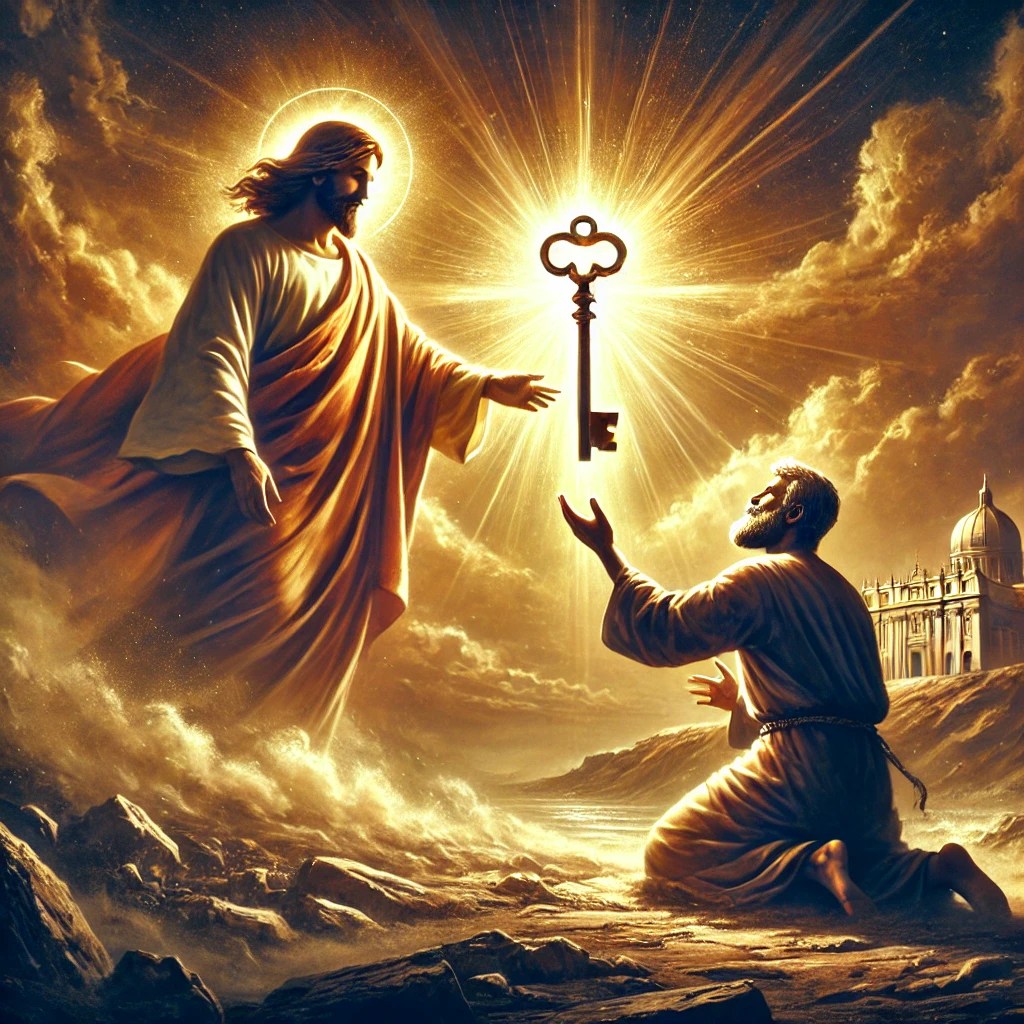
It is no coincidence that Jesus chose the image of a shepherd when commissioning Peter as the foundation of His Church. In today’s Gospel, Peter professes Jesus as the Messiah, and in response, Christ entrusts him with the authority to bind and loose, declaring, “You are Peter, and upon this rock I will build my church, and the gates of the netherworld shall not prevail against it” (Matthew 16:18). This moment is not merely about power; it is a call to responsibility. Peter, and all who follow in his footsteps, are to lead with the heart of Christ—guiding, protecting, and sacrificing for the flock. As we reflect on these readings, we are invited to ask ourselves: How am I called to be a shepherd in my own life? Whether in our families, workplaces, or communities, we are all entrusted with the care of others, and today’s Scriptures remind us that the path of true leadership is found in love and service.
First Reading – 1 Peter 5:1-4
The Heart of a True Shepherd
The First Letter of Peter was written to the early Christian communities in Asia Minor (modern-day Turkey), who were facing persecution and hardships. Peter, as the leader of the apostles, writes to encourage and guide them, particularly their elders, in how to lead with faith and perseverance. This passage offers direct advice to the “presbyters”—a term referring to the elders or overseers of the Church, the forerunners of today’s bishops and priests. In a time when leadership could be easily corrupted by power or fear, Peter reminds them of their true calling: to shepherd God’s flock, not for personal gain, but in humble service. His words reflect a deep understanding of Christ’s teaching that the greatest among us must be the servant of all.
1 Peter 5:1-4
New American Bible (Revised Edition)
Advice to Presbyters. 1 So I exhort the presbyters among you, as a fellow presbyter and witness to the sufferings of Christ and one who has a share in the glory to be revealed. 2 Tend the flock of God in your midst, [overseeing] not by constraint but willingly, as God would have it, not for shameful profit but eagerly. 3 Do not lord it over those assigned to you, but be examples to the flock. 4 And when the chief Shepherd is revealed, you will receive the unfading crown of glory.
Detailed Exegesis
Verse 1 – “So I exhort the presbyters among you, as a fellow presbyter and witness to the sufferings of Christ and one who has a share in the glory to be revealed.”
Peter begins by addressing the Church leaders with a tone of solidarity. Though he is the chief of the apostles, he does not elevate himself above them but calls himself a “fellow presbyter.” This humility is striking and sets the stage for his exhortation. He also identifies himself as a witness to Christ’s suffering, reinforcing the idea that true shepherds of God’s people must be ready to endure hardships for the sake of the Gospel. The mention of “the glory to be revealed” reminds the reader that leadership in the Church is not about earthly rewards but about sharing in Christ’s future glory.
Verse 2 – “Tend the flock of God in your midst, [overseeing] not by constraint but willingly, as God would have it, not for shameful profit but eagerly.”
This verse is central to Peter’s message. The image of tending a flock is a direct reference to Christ’s command to Peter in John 21:15-17, where Jesus tells him, “Feed my sheep.” Shepherding God’s people requires willingness, not coercion. It is a ministry of love, not an obligation. Peter also warns against seeking “shameful profit,” reminding leaders that the Church is not a place for personal advancement or gain but for selfless service.
Verse 3 – “Do not lord it over those assigned to you, but be examples to the flock.”
Here, Peter contrasts true leadership with the worldly style of ruling through dominance and fear. This echoes Jesus’ own words in Matthew 20:25-28: “Whoever wishes to be great among you shall be your servant.” Leaders in the Church are not meant to be overlords but models of holiness. Their authority must come from their example of faith, humility, and love, not from force or superiority.
Verse 4 – “And when the chief Shepherd is revealed, you will receive the unfading crown of glory.”
The “chief Shepherd” refers to Christ Himself. All shepherds of God’s people are ultimately under His authority. The reward for faithful leadership is not immediate power or comfort but an “unfading crown of glory” in eternity. This image of a crown is significant because, in the Greco-Roman world, victors in athletic competitions were awarded a laurel wreath, which eventually withered. Peter contrasts this with the eternal reward of heaven, which never fades.
Teachings from the Church
The Catechism of the Catholic Church affirms the nature of Church leadership as one of service, not self-glorification: “The ordained ministry is at the service of the common priesthood. It is directed at the unfolding of the baptismal grace of all Christians.” (CCC 1547). This means that bishops, priests, and deacons exist not for their own honor but to help the faithful grow in holiness.
Saint Augustine, one of the Church’s greatest theologians, also speaks to this reality in his Sermon 340: “The honor of a bishop is in being esteemed not for his high station but for his service; not in lording it over others but in bearing their burdens.” This echoes Peter’s words, reinforcing that true shepherds lead by example, not by command.
Throughout history, we see this principle lived out by holy leaders like St. John Vianney, the patron saint of priests, who devoted his life to the pastoral care of souls. He once said, “The priesthood is the love of the heart of Jesus.” A true shepherd reflects the love of Christ, putting the spiritual well-being of his flock above all else.
Reflection
This reading challenges us to rethink leadership in our own lives. Whether or not we hold an official position, we all have opportunities to be shepherds—guiding our children, mentoring friends, or supporting those in need. Peter’s exhortation reminds us that our authority comes not from position but from our example. Are we leading with humility and love, or are we seeking recognition and control?
Perhaps God is calling you to a new way of shepherding today. Maybe it’s being a better example in your family, your workplace, or your parish. Maybe it’s offering guidance to someone struggling in their faith. Take a moment to reflect: Am I leading as Christ would have me lead? True shepherds don’t seek their own gain—they lay down their lives for the flock. Today, let us strive to be the kind of leaders who reflect the heart of Christ, the chief Shepherd, in all we do.
Responsorial Psalm – Psalm 23
The Lord, Our True Shepherd
Few passages in Scripture are as beloved and comforting as Psalm 23. Written by King David, this psalm speaks to the deep trust that God’s people are called to place in Him. In the ancient world, the image of a shepherd was commonly used to describe kings and leaders. Shepherds not only guided their flocks, but they protected them from danger and ensured they found food and rest. David, who himself was once a shepherd before becoming king, understood this imagery well. His psalm expresses complete reliance on God, portraying Him as the perfect Shepherd who leads, provides, and defends His people.
Today’s psalm fits seamlessly into the theme of shepherding and leadership. Just as Saint Peter exhorts Church leaders to tend God’s flock with love, and Jesus entrusts Peter with the care of His Church, Psalm 23 reminds us that all true leadership comes from God. Christ is the Good Shepherd, and those who lead in His name must reflect His guidance and care. This psalm is a song of trust, an invitation to rest in God’s providence, knowing that He walks with us through every valley and leads us to eternal life.
Psalm 23
New American Bible (Revised Edition)
The Lord, Shepherd and Host
1 A psalm of David.
The Lord is my shepherd;
there is nothing I lack.
2 In green pastures he makes me lie down;
to still waters he leads me;
3 he restores my soul.
He guides me along right paths
for the sake of his name.
4 Even though I walk through the valley of the shadow of death,
I will fear no evil, for you are with me;
your rod and your staff comfort me.
5 You set a table before me
in front of my enemies;
You anoint my head with oil;
my cup overflows.
6 Indeed, goodness and mercy will pursue me
all the days of my life;
I will dwell in the house of the Lord
for endless days.
Detailed Exegesis
Verse 1 – “The Lord is my shepherd; there is nothing I lack.”
David begins with a bold declaration: God is his Shepherd, and because of that, he lacks nothing. This statement is one of profound trust. In a world where people constantly seek security in wealth, status, or human relationships, this verse reminds us that our ultimate provision comes from God alone. He knows what we need and cares for us as a loving shepherd cares for his sheep.
Verse 2 – “In green pastures he makes me lie down; to still waters he leads me.”
Sheep only rest when they feel completely safe, and they will not drink from rushing waters. This verse speaks to God’s gentle, intentional care—He does not simply provide, but He leads us to places of peace and restoration. Spiritually, this foreshadows the nourishment of the soul that we receive from God, particularly in the sacraments. The Eucharist is the “green pasture” that sustains us, and Baptism is the “still water” that purifies and renews us.
Verse 3 – “He restores my soul. He guides me along right paths for the sake of his name.”
Sin and suffering often leave us weary, but God is always ready to restore us. The phrase “for the sake of his name” is significant—it means that God’s guidance is not just about us individually, but about His divine plan. He calls us to holiness, and when we follow His paths, we bring glory to His name. This verse reminds us of the necessity of following God’s will rather than our own, trusting that He will always lead us rightly.
Verse 4 – “Even though I walk through the valley of the shadow of death, I will fear no evil, for you are with me; your rod and your staff comfort me.”
This is perhaps the most well-known verse of the psalm. Life inevitably brings suffering, and we will all face dark valleys—whether through grief, illness, or spiritual trials. Yet, the psalmist does not say he will avoid the valley, but that he will not fear it. The reason? God is present. The “rod” and “staff” are the tools of a shepherd: the rod protects from threats, while the staff guides. This verse reassures us that God’s presence is both protective and directive, ensuring that we are never alone in our struggles.
Verse 5 – “You set a table before me in front of my enemies; You anoint my head with oil; my cup overflows.”
The imagery shifts from that of a shepherd to that of a host. In biblical times, welcoming a guest with a feast and anointing them with oil was a sign of great honor. Even in the presence of enemies—amidst trials—God provides abundantly for His people. The overflowing cup signifies divine blessing, a foreshadowing of the grace poured out in the Eucharist, where we are spiritually nourished despite the struggles of the world.
Verse 6 – “Indeed, goodness and mercy will pursue me all the days of my life; I will dwell in the house of the Lord for endless days.”
The word “pursue” is striking—God’s love is not passive, but active. His mercy follows us, seeking to bring us home to Him. The psalmist expresses the ultimate hope: eternal communion with God. The phrase “dwell in the house of the Lord” points to heaven, the final resting place for all who trust in the Shepherd.
Teachings from the Church
The Catechism affirms that God is the ultimate Shepherd of His people: “The divine shepherd calls each of his sheep by name and leads them. They are nourished by his hand and guided by his voice.” (CCC 754). This passage reminds us that our relationship with God is not distant or abstract, but deeply personal. He knows each of us intimately and desires to lead us into His grace.
Saint Gregory the Great, a Pope known for his reflections on pastoral care, wrote: “The Good Shepherd has laid down His life for His sheep, that in our Sacrament, He might feed us with the food of His flesh.” This directly connects Psalm 23 with the Eucharist, where Christ continues to shepherd His people by nourishing them with His very Body and Blood.
Throughout history, many saints have turned to Psalm 23 in times of trial. Saint Thérèse of Lisieux once wrote: “I am only a weak and helpless little lamb, but my Shepherd keeps me in His arms.” This echoes the heart of the psalm—trusting in God’s care, even when we feel small or vulnerable.
Reflection
This psalm is an invitation to trust. In moments of fear, uncertainty, or difficulty, do we truly believe that the Lord is our Shepherd? It is easy to say, but harder to live out when we feel lost or afraid. Yet, Psalm 23 reassures us that we are never alone. Even in our darkest valleys, God walks with us.
Perhaps today is a day to rest in the green pastures of God’s grace. Spend some time in prayer, reflecting on where God is leading you. Are you resisting His guidance, or are you allowing Him to shepherd you? Are there areas of your life where you need to surrender control and trust in His care?
As we continue our journey of faith, let us hold onto the promise that we will one day “dwell in the house of the Lord for endless days.” Until then, may we walk with confidence, knowing that our Shepherd never abandons His flock.
Holy Gospel – Matthew 16:13-19
Upon This Rock
The passage from The Gospel of Matthew is one of the most pivotal moments in salvation history: the moment when Simon Peter boldly proclaims Jesus as the Messiah and, in response, Jesus declares him the rock upon which He will build His Church. This conversation takes place in Caesarea Philippi, a region known for its pagan temples and political significance. It is here, in the midst of worldly power, that Jesus establishes the foundation of divine authority—the Church. This moment is not just about Peter as an individual but about the establishment of a structure that will carry forward Christ’s mission.
This Gospel passage fits beautifully within today’s theme of shepherding and leadership. We see Peter, the one whom Jesus previously called to “feed my sheep” (John 21:15-17), receiving the keys to the Kingdom of Heaven. The imagery of the keys is significant—throughout biblical history, keys were a symbol of authority, often given to royal stewards who governed on behalf of the king. Here, Christ is appointing Peter as the steward of His Church, ensuring that His flock will always have a shepherd to guide them. In a world where authority is often misused, this passage reminds us that true leadership in the Church is not about power, but about service, responsibility, and divine calling.
Matthew 16:13-19
New American Bible (Revised Edition)
13 When Jesus went into the region of Caesarea Philippi he asked his disciples, “Who do people say that the Son of Man is?” 14 They replied, “Some say John the Baptist, others Elijah, still others Jeremiah or one of the prophets.” 15 He said to them, “But who do you say that I am?” 16 Simon Peter said in reply, “You are the Messiah, the Son of the living God.” 17 Jesus said to him in reply, “Blessed are you, Simon son of Jonah. For flesh and blood has not revealed this to you, but my heavenly Father. 18 And so I say to you, you are Peter, and upon this rock I will build my church, and the gates of the netherworld shall not prevail against it. 19 I will give you the keys to the kingdom of heaven. Whatever you bind on earth shall be bound in heaven; and whatever you loose on earth shall be loosed in heaven.”
Detailed Exegesis
Verse 13 – “When Jesus went into the region of Caesarea Philippi, he asked his disciples, ‘Who do people say that the Son of Man is?’”
Jesus deliberately chooses Caesarea Philippi as the setting for this monumental conversation. The city was filled with temples dedicated to pagan gods, as well as a monument to Caesar, who was worshiped as a deity. By asking this question in such a place, Jesus is prompting His disciples to recognize the stark contrast between worldly power and divine kingship. He refers to Himself as the “Son of Man,” a title that echoes the prophecy in Daniel 7:13-14, where the Son of Man is given eternal dominion by God.
Verse 14 – “They replied, ‘Some say John the Baptist, others Elijah, still others Jeremiah or one of the prophets.’”
The people of Israel were waiting for a great prophet, someone who would restore the nation and prepare the way for the Messiah. The disciples’ response reflects common speculation—some saw Jesus as John the Baptist returned, others linked Him to Elijah, who was expected to come before the Messiah (Malachi 4:5-6). The comparison to Jeremiah is also significant because Jeremiah was a prophet who suffered greatly for calling Israel to repentance. However, none of these identities capture the full reality of who Jesus truly is.
Verse 15 – “He said to them, ‘But who do you say that I am?’”
Jesus shifts the question from a general one to a personal one. This is the heart of discipleship—not merely knowing what others say about Jesus, but answering for oneself. The question demands a response that is not just intellectual but deeply personal and transformative.
Verse 16 – “Simon Peter said in reply, ‘You are the Messiah, the Son of the living God.’”
Peter’s response is a profound confession of faith. Unlike the crowds who saw Jesus as just another prophet, Peter recognizes Him as the Messiah—the long-awaited Anointed One—and even more, the Son of the living God. This declaration sets him apart as one who truly understands Jesus’ divine identity. It is no coincidence that Peter is the one to answer—his faith and willingness to boldly proclaim the truth make him the ideal foundation for the Church.
Verse 17 – “Jesus said to him in reply, ‘Blessed are you, Simon son of Jonah. For flesh and blood has not revealed this to you, but my heavenly Father.’”
Jesus affirms that Peter’s understanding is not based on human wisdom but divine revelation. Faith is a gift from God, and Peter’s ability to see Jesus for who He truly is comes from grace.
Verse 18 – “And so I say to you, you are Peter, and upon this rock I will build my church, and the gates of the netherworld shall not prevail against it.”
Here, Jesus gives Simon a new name—Peter (from Petros, meaning Rock). In biblical tradition, a change in name signifies a new mission (as seen with Abraham and Jacob). Jesus is establishing something enduring and unshakable—the Church. The promise that “the gates of the netherworld shall not prevail against it” is crucial. Gates are defensive structures, meaning that hell is not on the offensive; rather, the Church is advancing, and evil cannot withstand it.
Verse 19 – “I will give you the keys to the kingdom of heaven. Whatever you bind on earth shall be bound in heaven; and whatever you loose on earth shall be loosed in heaven.”
The keys symbolize authority, echoing Isaiah 22:22, where Eliakim is given the “key of the house of David.” This authority includes binding and loosing—terms used in rabbinic Judaism to refer to decisions regarding doctrine and discipline. Jesus entrusts Peter with this responsibility, a role that continues in the papacy today.
Teachings from the Church
The Catechism affirms the significance of this passage, stating: “The Lord made Simon alone, whom he named Peter, the ‘rock’ of his Church. He gave him the keys of his Church and instituted him shepherd of the whole flock.” (CCC 881). This confirms that Peter’s role was not symbolic or temporary but a foundational aspect of Christ’s plan for His Church.
Saint John Chrysostom reflects on this passage, saying: “What then did Christ do? Since Peter had confessed Him to be the Son of God, He in turn confers on Peter a great dignity… showing that many would war against it, and in vain.” This emphasizes the strength of the Church, built on the solid foundation of Peter’s faith.
Historically, this passage has shaped the understanding of the papacy. The early Church Fathers, such as Saint Augustine and Saint Ambrose, saw Peter’s role as a sign of unity within the Church. The succession of popes from Peter ensures that the Church remains anchored in Christ’s teachings, guided by the Holy Spirit.
Reflection
This Gospel challenges us to reflect on our own profession of faith. Who do we say that Jesus is? It is not enough to know about Him—we must know Him personally, as Peter did. Faith is not merely an intellectual exercise; it is a living relationship that transforms our hearts.
Just as Peter was called to be a shepherd, we too are called to lead others to Christ. In our families, workplaces, and communities, do we witness to the truth with courage? Do we trust that Christ is building His Church, even when we face opposition?
Today, let us ask for the grace to follow Peter’s example—to boldly proclaim Jesus as the Messiah and to build our lives on the unshakable foundation of faith. May we recognize that, like Peter, we are called to be rocks of faith in a world that desperately needs the truth of Christ. How is God calling you to be a witness today?
Called to Shepherd, Called to Follow
Throughout today’s readings, we are given a profound vision of leadership in God’s Kingdom—one rooted not in power, but in humility and love. Saint Peter reminds us that true shepherds tend their flock eagerly, not for gain but for service. Psalm 23 reassures us that God Himself is our Shepherd, leading us with gentleness and care. And in The Gospel of Matthew, Jesus establishes Peter as the rock upon which His Church will stand, entrusting him with the authority to bind and loose, to guide and protect His people.
At the heart of these readings is a simple but powerful truth: Christ is the Good Shepherd, and all who lead in His name must reflect His heart. Whether we are called to shepherd others as parents, teachers, mentors, or friends, our leadership must always point back to Him. But we are also called to be sheep—to trust in His guidance, to follow where He leads, even through the darkest valleys. In every season of life, we are both shepherds and followers, called to care for others while placing our trust in the One who cares for us.
Today, let us take a moment to reflect: How is God calling me to be a shepherd in my own life? Am I leading with humility, patience, and love? Am I following Christ with trust, even when the path is uncertain? The world needs faithful witnesses, people who lead by example and stand firm in truth. May we have the courage to say, like Peter, “You are the Messiah, the Son of the living God.” And may we walk boldly in the path He sets before us, trusting that the Good Shepherd will never leave His flock.
Engage with Us!
We would love to hear from you! Share your thoughts and reflections in the comments below. How did today’s readings speak to your heart? How is God calling you to grow in faith and leadership? Let’s encourage one another as we walk this journey together.
Reflection Questions:
First Reading – 1 Peter 5:1-4
What does it mean to be a shepherd in your own life? Are there ways in which you can lead with more humility and love? How can you support the leaders in your parish or community?
Responsorial Psalm – Psalm 23
Do you trust God as your Shepherd? Are there areas in your life where you struggle to surrender control? How can you rest in the peace that He provides, even in difficult times?
Holy Gospel – Matthew 16:13-19
Who do you say that Jesus is? How do you proclaim Him as the Messiah in your daily life? What steps can you take to build your faith on the solid rock of Christ and His Church?
Let us go forward today with hearts open to God’s call, ready to lead where He asks and follow where He guides. May we live each moment with the love, mercy, and humility that Jesus taught us, trusting that He, the Good Shepherd, is always by our side. Amen!
Follow us on Instagram and Facebook for more insights and reflections on living a faith-filled life.

 Holy Manna!
Leave a comment