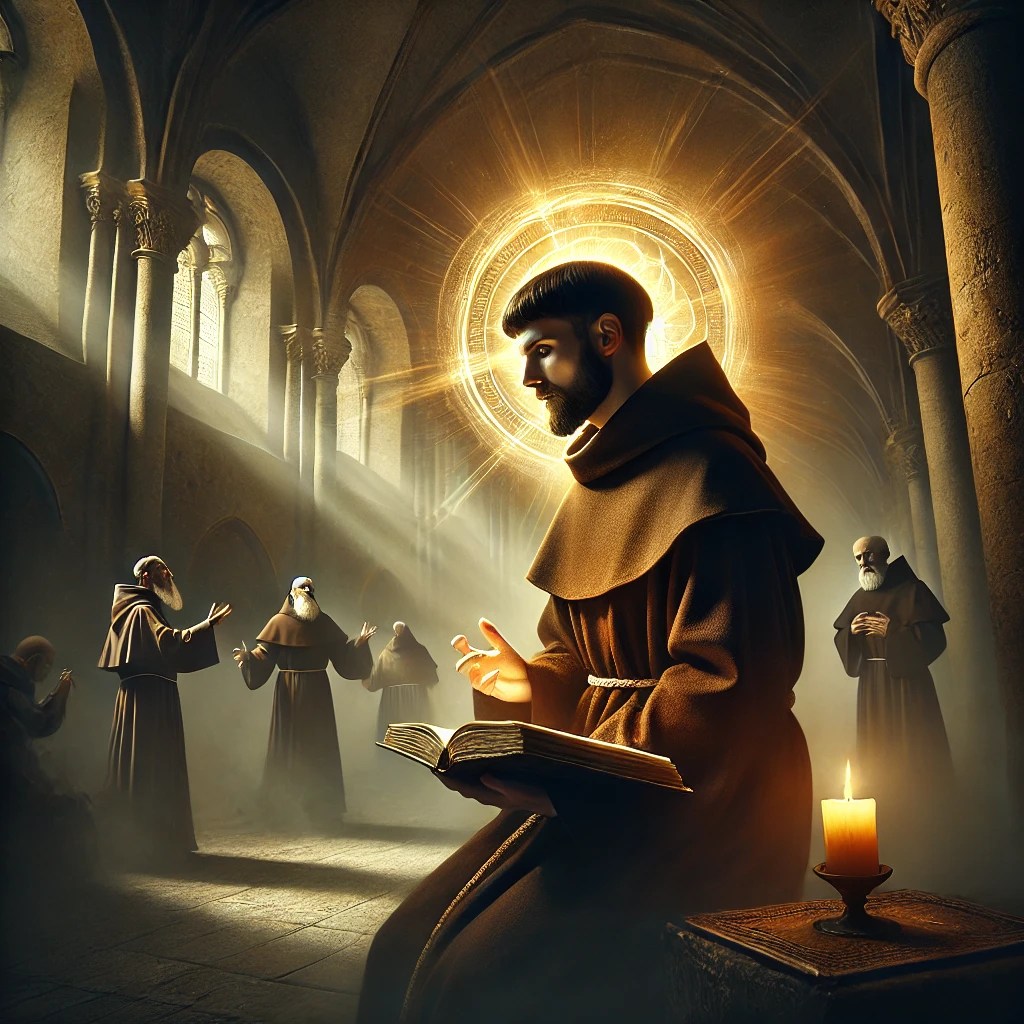
A Zealous Reformer and Devoted Hermit
Saint Peter Damian, born in 1007 in Ravenna, Italy, is one of the Church’s greatest reformers, theologians, and spiritual writers. Known for his fierce opposition to corruption within the clergy and his unwavering commitment to asceticism, he played a crucial role in the Gregorian Reform movement. His dedication to monastic discipline and his prolific writings earned him recognition as a Doctor of the Church in 1828. Peter Damian’s life was a testament to humility, self-denial, and an uncompromising pursuit of holiness. His story continues to inspire those who seek to align their lives with God’s will, rejecting the fleeting pleasures of the world in favor of eternal truth.
From Orphan to Saint
Born into a poor family, Peter Damian was orphaned at a young age. His early years were marked by suffering and neglect under the care of his eldest brother, who forced him into hard labor and deprived him of a proper upbringing. But God had greater plans. Another brother, Damian, recognized Peter’s potential and took him under his wing, ensuring he received an education. Out of gratitude, Peter later adopted his brother’s name, becoming known as Peter Damian.
Excelling in his studies, Peter became a distinguished teacher of rhetoric, earning renown for his intellect and wisdom. However, despite his academic success, he felt an increasing call to renounce worldly pursuits and devote himself entirely to God. Around the year 1035, he left behind his secular career and entered the hermitage of Fonte Avellana, a secluded monastery known for its strict ascetic practices. There, he embraced a life of prayer, fasting, and self-denial, seeking to purify his soul and grow in holiness.
Peter Damian quickly became known for his deep spirituality, rigorous discipline, and commitment to reforming monastic life. He later became the prior of Fonte Avellana, and under his leadership, the community flourished. His influence extended beyond the monastery as he worked tirelessly to bring moral and spiritual renewal to the Church. His letters, treatises, and sermons condemned simony (the buying and selling of church offices), clerical immorality, and laxity in religious life. Though he longed for solitude, God continually called him to engage with the world, fighting for the purity and integrity of the Church.
Signs and Wonders
Saint Peter Damian’s life was marked by extraordinary signs of divine favor. One of the most notable miracles he witnessed occurred in 1050. A woman, having succumbed to temptation, attempted to use the consecrated Host for sorcery. However, a vigilant priest stopped her, retrieving the Eucharist just in time. Miraculously, the Host transformed before their eyes—one half appeared as the true Body of Christ, while the other half retained the appearance of bread. This event was seen as a divine affirmation of the doctrine of transubstantiation, reinforcing the real presence of Christ in the Eucharist.
Beyond witnessing miracles, Peter Damian himself performed acts of great mercy and healing. Accounts suggest that through his prayers and intercessions, individuals suffering from grave illnesses experienced unexpected recoveries. His life, rooted in deep faith and unwavering devotion, reflected the power of holiness to bring about God’s intervention in the world.
A Champion of Reform
Peter Damian’s zealous fight for Church reform did not come without great opposition. In the 11th century, the Catholic Church was plagued by widespread corruption, particularly within the clergy. Simony was rampant, and many priests lived in open disregard for celibacy. Peter wrote extensively against these abuses, calling for a return to purity and holiness. His writings, particularly The Book of Gomorrah, addressed the moral decay of the clergy and urged for spiritual renewal.
His bold stance often placed him in conflict with powerful figures. At times, his denunciations of corruption made him a target of hostility, and he faced resistance from those who wished to maintain the status quo. Despite this, he remained fearless, upholding the truth even in the face of adversity. His courage and dedication led to Pope Stephen IX appointing him as Cardinal-Bishop of Ostia, a position he reluctantly accepted out of obedience. Though he fulfilled his duties with integrity, his heart longed for the quiet solitude of monastic life. Eventually, he was granted permission to return to Fonte Avellana, where he continued his work as a spiritual guide and reformer.
Though Peter Damian was not a martyr in the traditional sense, his life was one of profound sacrifice. He endured hardship, opposition, and the burdens of responsibility, yet remained steadfast in his mission to glorify God. His resilience in the face of struggle is a testament to the power of faith and divine calling.
The Power of His Legacy
After his death on February 22, 1072, in Faenza, Italy, miracles attributed to his intercession began to spread. Many reported healings and divine interventions at his burial site, and devotion to him grew rapidly. His influence was so profound that he was spontaneously venerated as a saint by the faithful.
Peter Damian’s writings and reforms left an indelible mark on the Church. His letters and theological works continue to inspire scholars, priests, and laypeople alike. The monastery of Fonte Avellana, which he helped strengthen, remains a place of pilgrimage and spiritual reflection. In 1828, Pope Leo XII officially declared him a Doctor of the Church, recognizing his theological contributions and unwavering defense of Christian virtue.
To this day, Saint Peter Damian is venerated as a model of integrity, self-discipline, and reform. His life serves as a reminder that true holiness requires courage—the courage to stand against corruption, to embrace sacrifice, and to trust in God’s plan above all else.
Living the Legacy of Saint Peter Damian
Saint Peter Damian’s life challenges us to examine our own faith and devotion. Are we willing to stand for truth even when it is unpopular? Do we strive for purity and integrity in our own spiritual lives? In a time when moral compromise is often accepted, his example calls us to radical holiness.
His dedication to prayer and self-denial reminds us of the power of spiritual discipline. In an age of distractions, how often do we seek solitude with God? Do we prioritize prayer, fasting, and contemplation, or do we allow the busyness of life to consume us? Peter Damian teaches us that true fulfillment is not found in worldly success, but in a heart fully surrendered to God.
His story also speaks to the power of perseverance. Though he faced immense obstacles, he never wavered in his commitment to reform. As followers of Christ, we too are called to be courageous in our faith, to speak out against injustice, and to live lives of deep integrity. Let us ask for his intercession, that we may follow his example with boldness and conviction.
Engage with Us!
We invite you to delve deeper into the life of Saint Peter Damian and share your reflections. How does his commitment to reform resonate with you? In what ways can his example inspire your personal faith journey? Join the conversation in the comments below, and let’s support one another in living out the virtues exemplified by this remarkable saint.
Reflection Questions:
- In confronting personal or communal challenges, how can Saint Peter Damian’s courage and dedication guide your actions?
- What steps can you take to cultivate a deeper prayer life, following the example of Saint Peter Damian’s monastic devotion?
- How does the Eucharistic miracle witnessed by Saint Peter Damian strengthen your belief in the real presence of Christ in the Eucharist?
Let us strive to embody the love and mercy that Jesus taught, supporting each other in our collective journey toward spiritual growth and integrity.
Saint Peter Damian, pray for us!
Follow us on Instagram and Facebook for more insights and reflections on living a faith-filled life.

 Holy Manna!
Leave a comment