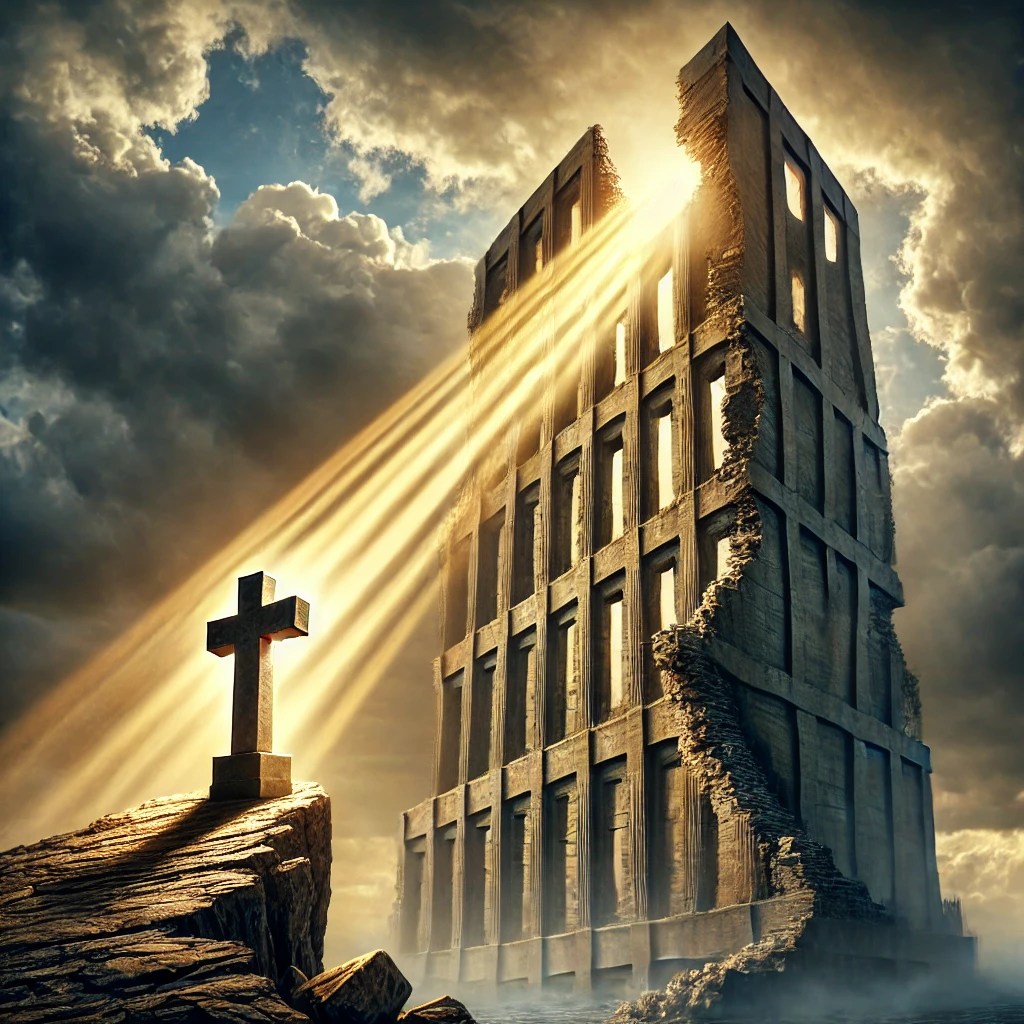
Whose Plans Will Stand?
We all have dreams, ambitions, and desires for our lives. We set goals, make plans, and work hard to achieve them. But have you ever felt like no matter how much effort you put in, things don’t go as expected? Today’s readings remind us of a powerful truth: only God’s plans endure, while human ambition without Him leads to confusion and loss. The people of Babel sought to build a name for themselves, but their pride led to division. The psalmist declares that “the plan of the Lord stands forever”, showing that God alone has the final word. And in the Gospel, Jesus calls us to let go of self-reliance, take up our cross, and follow Him—because true life is found in surrender, not in striving for worldly success.
The Tower of Babel account (Genesis 11) takes place in ancient Mesopotamia, where cities were centers of power and identity. The people’s desire to build a tower “with its top in the sky” was not just about architecture—it was about defiance, an attempt to create security and greatness apart from God. This contrasts sharply with the message of Psalm 33, which reminds us that “the Lord foils the plan of nations” and that only those who belong to Him will stand firm. Jesus’ words in The Gospel of Mark further reveal this truth: “Whoever loses his life for my sake and that of the gospel will save it.” Instead of chasing earthly security, Jesus calls us to radical trust in God’s will, even when it means carrying a cross.
So, whose plans will we follow—ours or God’s? Are we building our own towers, or are we surrendering to the Architect of eternity? Today’s readings challenge us to recognize when pride or self-sufficiency gets in the way of true discipleship. God does not destroy human ambition, but He redirects it toward something far greater than we could ever build on our own. As we reflect on these passages, let’s ask ourselves: Am I striving for my own glory, or am I surrendering to God’s perfect plan for my life?
First Reading – Genesis 11:1-9
When Ambition Divides
The story of the Tower of Babel is one of the most well-known passages in Genesis, yet its message is often misunderstood. Taking place in the early history of humanity, this event follows the great flood, during a time when the descendants of Noah sought to establish themselves as a unified people. The land of Shinar, located in ancient Mesopotamia, was a region known for its early civilization and advanced building techniques. However, what seemed like a noble endeavor—constructing a great city—was, in reality, a project fueled by human pride and defiance against God’s will. Instead of obeying God’s command to “be fruitful and multiply, and fill the earth” (Genesis 9:1), they sought security in their own achievements, rejecting reliance on God. This rebellion against divine authority led to their downfall, revealing a timeless truth: when human ambition is disconnected from God, it breeds division rather than unity.
Genesis 11:1-9
New American Bible (Revised Edition)
Tower of Babel. 1 The whole world had the same language and the same words. 2 When they were migrating from the east, they came to a valley in the land of Shinar and settled there. 3 They said to one another, “Come, let us mold bricks and harden them with fire.” They used bricks for stone, and bitumen for mortar. 4 Then they said, “Come, let us build ourselves a city and a tower with its top in the sky, and so make a name for ourselves; otherwise we shall be scattered all over the earth.”
5 The Lord came down to see the city and the tower that the people had built. 6 Then the Lord said: If now, while they are one people and all have the same language, they have started to do this, nothing they presume to do will be out of their reach. 7 Come, let us go down and there confuse their language, so that no one will understand the speech of another. 8 So the Lord scattered them from there over all the earth, and they stopped building the city. 9 That is why it was called Babel, because there the Lord confused the speech of all the world. From there the Lord scattered them over all the earth.
Detailed Exegesis
Verse 1 – “The whole world had the same language and the same words.”
At this time, humanity was still united, both in speech and in purpose. Language symbolizes not just communication but also cultural and spiritual unity. This opening verse sets the stage for the dramatic shift that follows—the breakdown of human harmony due to pride and self-reliance.
Verse 2 – “When they were migrating from the east, they came to a valley in the land of Shinar and settled there.”
Movement from the east often carries symbolic meaning in Scripture. Adam and Eve were cast out of Eden “to the east” (Genesis 3:24), and Cain was sent eastward after his sin (Genesis 4:16). Here, settling in Shinar suggests a desire to establish security apart from God, instead of trusting in His providence.
Verse 3 – “They said to one another, ‘Come, let us mold bricks and harden them with fire.’ They used bricks for stone, and bitumen for mortar.”
This verse highlights the technological advancement of the people. Fired bricks and bitumen (a type of tar) were cutting-edge materials in Mesopotamian construction. While these innovations were not sinful in themselves, they became instruments of a greater problem—prideful independence from God.
Verse 4 – “Then they said, ‘Come, let us build ourselves a city and a tower with its top in the sky, and so make a name for ourselves; otherwise, we shall be scattered all over the earth.’”
Here, their true motivation is revealed: self-glorification. The phrase “make a name for ourselves” indicates a direct challenge to God’s sovereignty. Rather than seeking His name and blessing, they sought their own, mirroring the sin of Adam and Eve—attempting to become like God (Genesis 3:5). Their fear of being scattered shows their refusal to trust in God’s original plan for humanity to spread across the earth.
Verse 5 – “The Lord came down to see the city and the tower that the people had built.”
This anthropomorphic language—God coming down—emphasizes the insignificance of human achievements before Him. No matter how high they built their tower, it was still beneath the gaze of God. It is a reminder that no human work, no matter how grand, can elevate us to divine status.
Verse 6 – “Then the Lord said: If now, while they are one people and all have the same language, they have started to do this, nothing they presume to do will be out of their reach.”
God acknowledges human potential, but the issue is not their capability—it is their direction. Their unity, instead of being used for good, is being used in rebellion against Him. Left unchecked, their ambition would only lead to greater evil.
Verse 7 – “Come, let us go down and there confuse their language, so that no one will understand the speech of another.”
God’s response is not destruction but dispersion. By confusing their language, He prevents them from continuing in their prideful pursuit. This also serves as an act of mercy—had they succeeded, their arrogance could have led them further from salvation.
Verse 8 – “So the Lord scattered them from there over all the earth, and they stopped building the city.”
What they feared most—being scattered—became their reality. But rather than a punishment, this was a correction, bringing them back in alignment with God’s original command.
Verse 9 – “That is why it was called Babel, because there the Lord confused the speech of all the world. From there the Lord scattered them over all the earth.”
The name Babel is a wordplay, resembling the Hebrew verb balal, meaning “to confuse.” This moment marks the origin of linguistic and cultural diversity, emphasizing the consequence of seeking unity apart from God.
Teachings from the Church
The story of Babel echoes the Church’s teachings on pride and humility. The Catechism of the Catholic Church warns that “pride is a disordered desire for one’s own excellence” (CCC 1866). The people of Babel exemplified this by seeking greatness apart from God, rather than receiving it as a gift from Him. Their fate serves as a warning that pride leads to division, while humility brings unity.
St. Augustine reflects on Babel in The City of God, contrasting it with Pentecost. He writes: “Just as pride divides, so does humility unite. The scattering of tongues at Babel is reversed at Pentecost, where the Holy Spirit brings all nations together in one faith.” (City of God, 16.4). This reveals that while Babel symbolizes division due to human arrogance, the coming of the Holy Spirit unites people in the true purpose of glorifying God.
Historically, the lesson of Babel played out in Israel’s own history. Whenever they sought power without God—such as in the building of alliances with pagan nations—the result was destruction and exile. The same is true today: when nations, families, or individuals prioritize their own plans over God’s, disorder follows. But when we surrender to His will, He leads us to unity and fulfillment.
Reflection
How often do we try to “build our own towers”—pursuing success, recognition, or control over our lives without trusting in God? Just like the people of Babel, we can fall into the trap of believing that our achievements define us. But today’s reading reminds us that only God’s plan stands firm. Are there areas in your life where you are resisting God’s will? Have you placed your security in human achievements rather than in the Lord?
God is not against ambition, but He desires that our ambitions align with His purpose. Instead of seeking to “make a name for ourselves,” we are called to glorify His name. Jesus, in the Gospel, shows us the way: surrender, humility, and obedience lead to true greatness. When we lay down our pride and trust in Him, He builds something far greater than we ever could. Today, let’s reflect: Am I chasing my own plans, or am I seeking first the Kingdom of God?
Responsorial Psalm – Psalm 33:10-15
The Lord’s Plans Prevail
In a world where people strive for control, power, and influence, Psalm 33 stands as a firm reminder that God alone directs history. This psalm, attributed to an anonymous author, belongs to the category of hymns of praise, celebrating God’s sovereignty over creation and human affairs. In ancient Israel, psalms were used in liturgical worship, shaping the people’s understanding of their relationship with God. The central message of Psalm 33 aligns perfectly with today’s theme: human ambition crumbles, but God’s will endures. Where the people of Babel sought security in their own strength, this psalm declares that true security is found only in the Lord. Instead of building our own towers, we are called to trust in His eternal plan.
Psalm 33:10-15
New American Bible (Revised Edition)
10 The Lord foils the plan of nations,
frustrates the designs of peoples.
11 But the plan of the Lord stands forever,
the designs of his heart through all generations.
12 Blessed is the nation whose God is the Lord,
the people chosen as his inheritance.
13 From heaven the Lord looks down
and observes the children of Adam,
14 From his dwelling place he surveys
all who dwell on earth.
15 The One who fashioned together their hearts
is the One who knows all their works.
Detailed Exegesis
Verse 10 – “The Lord foils the plan of nations, frustrates the designs of peoples.”
This verse speaks to God’s authority over worldly powers. Just as He scattered the people of Babel when their ambitions led them astray, God continues to intervene in human history, ensuring that His divine purpose prevails. Earthly rulers and nations may believe they are in control, but their plans are subject to the will of God.
Verse 11 – “But the plan of the Lord stands forever, the designs of his heart through all generations.”
Unlike human plans, which are temporary and fragile, God’s plan is eternal. This echoes Isaiah 46:10, where God declares, “My plan shall stand, and I will do all that I please.” While we often seek certainty in our own strategies, true stability comes from surrendering to His divine wisdom.
Verse 12 – “Blessed is the nation whose God is the Lord, the people chosen as his inheritance.”
This verse reflects the covenant relationship between God and Israel. As His chosen people, Israel was set apart to be a light to the nations. However, this blessing is not limited to Israel—it extends to all who place their trust in God. The Church, as the new Israel, inherits this promise, reminding us that a nation, family, or individual is truly blessed when they live under God’s rule.
Verse 13 – “From heaven the Lord looks down and observes the children of Adam.”
God’s sovereignty is not distant or indifferent. He actively watches over humanity, guiding history with both justice and mercy. The phrase “children of Adam” highlights our shared humanity—no nation, people, or individual is beyond God’s gaze.
Verse 14 – “From his dwelling place he surveys all who dwell on earth.”
This imagery of God’s divine throne reminds us that while we see only fragments of reality, He sees the full picture. The Lord surveys not just our actions, but our hearts, knowing the true intentions behind our desires. Are we striving for self-glory, or are we seeking His kingdom?
Verse 15 – “The One who fashioned together their hearts is the One who knows all their works.”
This verse speaks to God’s intimate knowledge of humanity. He is not only Creator but also the One who understands the deepest desires of our hearts. Unlike human leaders who judge by external appearances, God sees our true motivations. This is both comforting and convicting—He knows when we seek Him sincerely, and when we are merely building towers of pride.
Teachings from the Church
The theme of divine sovereignty is central to Catholic teaching. The Catechism affirms: “The power of God is loving, for he is our Father; and mysterious, for only faith can discern it when it ‘is made perfect in weakness.’” (CCC 268). This means that God’s authority is not oppressive, but deeply personal—He guides us with love, not force.
St. Thomas Aquinas reflects on God’s governance in Summa Theologica, writing: “Since the will of God is the cause of things, whatever is in things, whether as to being, or as to any kind of perfection, is necessarily subject to the divine will.” (ST I, q.19, a.6). This reinforces the truth that human efforts are meaningful only when aligned with God’s plan. Our greatest wisdom is found in surrendering to His divine will.
Historically, the Church has witnessed this truth unfold countless times. Empires have risen and fallen, but God’s Church has remained. The Tower of Babel collapsed, but Pentecost united people through the Holy Spirit. Even when worldly powers appear unstoppable, God remains in control. The lesson is clear: human plans will fail if they oppose Him, but those who trust in His will are never shaken.
Reflection
Where do we place our trust? Like the builders of Babel, do we rely on our own strength, or do we trust in God’s eternal plan? This psalm invites us to reflect on whether we are striving for personal success or surrendering to God’s purpose. Do you truly believe that God’s plan for your life is better than your own?
Faith requires humility. It means accepting that we do not always see the full picture, but trusting that God does. Instead of being frustrated when our plans fail, we are called to seek His guidance. Today, let’s ask ourselves: Am I inviting God into my decisions? Do I pray before making choices, or do I rely on my own understanding? The Lord’s plans stand forever—when we align ourselves with Him, we find true peace and purpose.
Holy Gospel – Mark 8:34-9:1
The Cost of Discipleship
In The Gospel of Mark, Jesus’ words are often direct and challenging, calling His followers to a radical way of life. Today’s passage takes place at a pivotal moment in His ministry. Just before this, Jesus had asked His disciples, “Who do you say that I am?” (Mark 8:29), and Peter had rightly identified Him as the Christ. However, Peter and the others still did not fully grasp what that meant. They expected a victorious Messiah, but Jesus revealed that His mission involved suffering and the cross. Now, He extends that challenge to His followers: true discipleship requires self-denial and trust in God’s plan.
This passage speaks directly to today’s theme—surrendering human ambition to God’s will. Just as the builders of Babel sought to make a name for themselves, we are often tempted to cling to our own desires. But Jesus turns worldly logic upside down: to save our lives, we must lose them. In a time when Roman rule and persecution made following Christ dangerous, these words would have been particularly shocking. Yet, they remain just as relevant today. Jesus calls us to put aside our own “towers” of pride, security, and self-reliance, and instead take up the cross—trusting in God’s eternal plan.
Mark 8:34-9:1
New American Bible (Revised Edition)
The Conditions of Discipleship. 34 He summoned the crowd with his disciples and said to them, “Whoever wishes to come after me must deny himself, take up his cross, and follow me. 35 For whoever wishes to save his life will lose it, but whoever loses his life for my sake and that of the gospel will save it. 36 What profit is there for one to gain the whole world and forfeit his life? 37 What could one give in exchange for his life? 38 Whoever is ashamed of me and of my words in this faithless and sinful generation, the Son of Man will be ashamed of when he comes in his Father’s glory with the holy angels.”
1 He also said to them, “Amen, I say to you, there are some standing here who will not taste death until they see that the kingdom of God has come in power.”
Detailed Exegesis
Verse 34 – “He summoned the crowd with his disciples and said to them, ‘Whoever wishes to come after me must deny himself, take up his cross, and follow me.’”
Jesus’ call is not just for the apostles but for everyone. Discipleship is not passive—it requires an active decision to reject selfishness and embrace God’s will. Taking up the cross was not metaphorical for His audience. In Roman times, crucifixion was a brutal execution reserved for criminals. Jesus is telling His followers that being His disciple means being willing to suffer—even to the point of death.
Verse 35 – “For whoever wishes to save his life will lose it, but whoever loses his life for my sake and that of the gospel will save it.”
Here, Jesus presents the great paradox of faith. Clinging to earthly security—whether wealth, status, or even physical life—will ultimately lead to loss. But when we surrender ourselves completely to God, we find eternal life. This echoes His later words in John 12:24: “Unless a grain of wheat falls to the ground and dies, it remains just a grain of wheat; but if it dies, it produces much fruit.”
Verse 36 – “What profit is there for one to gain the whole world and forfeit his life?”
This is a direct challenge to worldly ambition. Many people chase success, wealth, and power, believing these will bring fulfillment. But Jesus warns that even if someone were to gain everything they desired, it would be meaningless if they lost their soul in the process. This speaks directly to the story of Babel—what good was their great tower if it separated them from God?
Verse 37 – “What could one give in exchange for his life?”
No amount of wealth or achievement can buy eternal life. Jesus emphasizes that our soul is of infinite value, and once lost, it cannot be bought back. This is why He urges us to trust in God’s plan rather than our own fleeting ambitions.
Verse 38 – “Whoever is ashamed of me and of my words in this faithless and sinful generation, the Son of Man will be ashamed of when he comes in his Father’s glory with the holy angels.”
This verse carries both warning and promise. If we deny Christ—whether out of fear, embarrassment, or worldly pressures—He will deny us at the final judgment. But if we remain faithful, even when it costs us something, He will acknowledge us before the Father.
Verse 9:1 – “He also said to them, ‘Amen, I say to you, there are some standing here who will not taste death until they see that the kingdom of God has come in power.’”
This verse has been widely discussed by theologians. It is often understood as a reference to the Transfiguration, which happens immediately after this passage (Mark 9:2-8), or as a foreshadowing of Christ’s resurrection and the coming of the Holy Spirit at Pentecost. Either way, it reaffirms that God’s plan is unfolding, even if we do not fully understand it.
Teachings from the Church
The call to deny oneself and take up the cross is central to Catholic teaching. The Catechism states: “The way of perfection passes by way of the Cross. There is no holiness without renunciation and spiritual battle.” (CCC 2015). This reminds us that true discipleship is not about comfort or success—it is about surrendering to God, even when it is difficult.
St. John Paul II frequently spoke about the necessity of the cross in the Christian life. In Salvifici Doloris, he writes: “Christ does not explain in the abstract the reasons for suffering, but before all else he says: ‘Follow me!’ Come! Take part through your suffering in this work of saving the world.” (SD 26). This echoes Jesus’ invitation in today’s Gospel. Our suffering, when united with Christ’s, has redemptive value.
Throughout history, the greatest saints have embraced this teaching. St. Ignatius of Loyola, for example, gave up his noble status to follow Christ, famously praying: “Take, Lord, and receive all my liberty, my memory, my understanding, and my entire will. All that I have and possess, You have given me. To You, Lord, I return it.” This total surrender reflects what Jesus asks of us in today’s Gospel.
Reflection
Following Christ is not easy. It requires daily sacrifices, a willingness to let go of control, and trust that God’s plan is better than our own. Yet, Jesus assures us that the cost of discipleship is nothing compared to the reward of eternal life. Are there areas in your life where you are resisting the cross? Is there something you are clinging to that is keeping you from fully trusting in God?
The world tells us that happiness comes from success, wealth, and comfort. But Jesus tells us that true fulfillment is found in surrender. He invites us to let go of our own ambitions, take up the cross, and follow Him. Today, let’s ask ourselves: Am I building my own tower, or am I building my life on Christ?
Building on God’s Foundation
Today’s readings weave together a profound truth: human ambition apart from God leads to confusion, but surrendering to His will brings life. The people of Babel sought to establish their own security and greatness, only to be scattered and divided. The psalmist reminds us that “the plan of the Lord stands forever”, revealing that true stability is found in trusting God’s designs rather than our own. Jesus then gives us the ultimate call: to deny ourselves, take up our cross, and follow Him. In a world that teaches us to seek comfort, power, and self-fulfillment, Christ calls us to something radically different—to lose our lives for His sake so that we may find true life.
The Tower of Babel was built on pride, but it crumbled. The cross was built on sacrifice, and it stands forever. Which foundation are we building on? Are we relying on our own wisdom and striving for worldly success, or are we surrendering our plans to God? Jesus reminds us that no amount of earthly gain is worth losing our soul. But when we entrust our lives to Him, we receive something far greater than anything we could achieve on our own—eternal life in His Kingdom.
God’s plan is always greater than ours. His ways are higher than our ways. Will you trust Him? Will you let go of your own ambitions and seek first His Kingdom? Today, let’s reflect on the areas of our lives where we are still trying to “build our own towers” and ask for the grace to surrender them to the Lord. When we step aside and allow Him to be the Architect of our lives, we will find a peace and fulfillment that nothing in this world can provide. Lord, help us to lay down our pride and follow You wherever You lead!
Engage with Us!
We’d love to hear from you! How did today’s readings speak to your heart? Share your reflections in the comments below and join the conversation. Let’s walk this journey of faith together, encouraging one another to trust in God’s perfect plan.
Reflection Questions:
📖 First Reading (Genesis 11:1-9): Are there areas in your life where you are trying to “build your own tower” instead of trusting in God’s plan? How can you surrender your ambitions to Him today?
🎶 Responsorial Psalm (Psalm 33:10-15): Do you truly believe that God’s plan for your life is better than your own? How can you deepen your trust in His wisdom and timing?
✝️ Gospel (Mark 8:34-9:1): What does “taking up your cross” look like in your daily life? Are there sacrifices you are resisting that God is calling you to embrace?
May we strive to build our lives on Christ, trusting that His plans are always greater than our own. Let us walk each day with faith, surrender, and love, living out the mercy and sacrifice Jesus taught us. Whatever we do, may it be for His glory! 🙏✨
Follow us on Instagram and Facebook for more insights and reflections on living a faith-filled life.

 Holy Manna!
Leave a comment