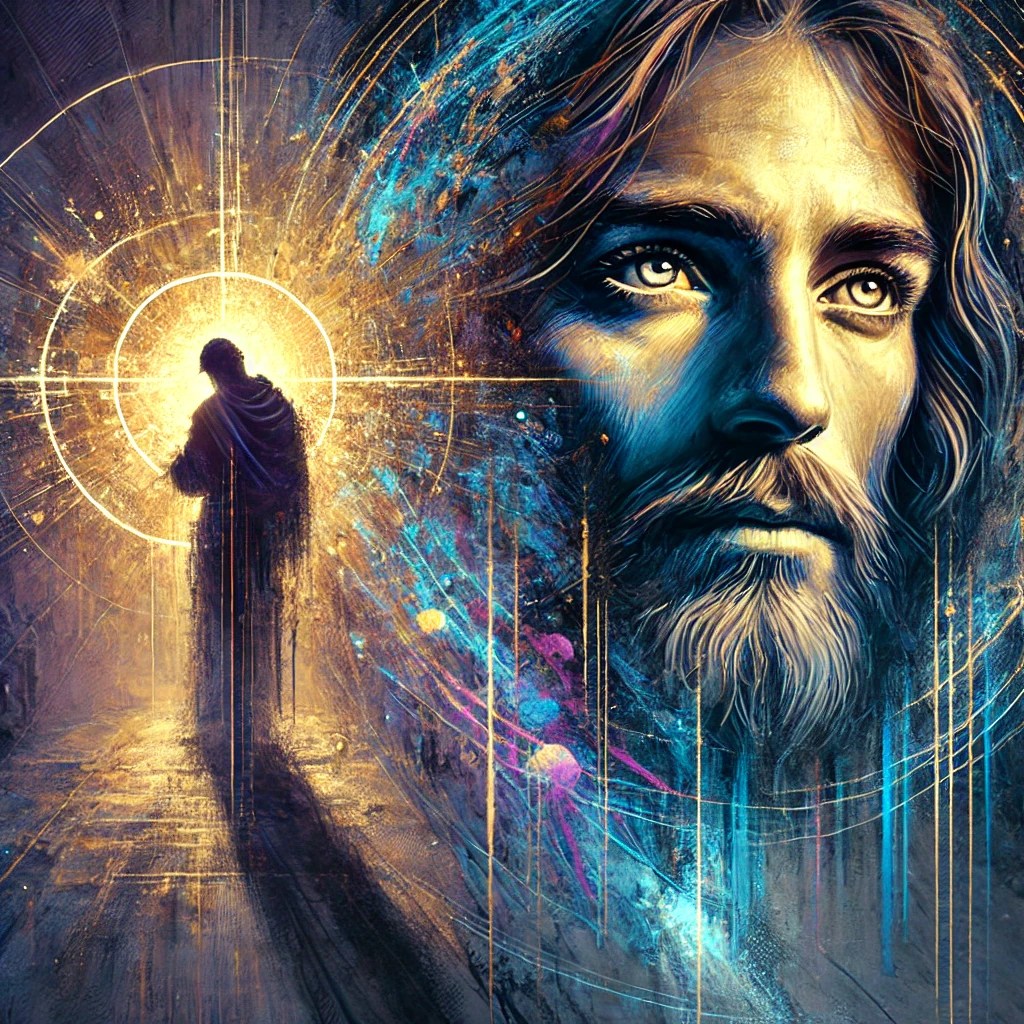
Trusting God’s Plan Beyond Our Understanding
Have you ever struggled to understand God’s plan, wondering why He allows certain things to unfold the way they do? Today’s readings remind us that God’s ways are higher than ours, yet He remains faithful to His covenant, guiding us through history, suffering, and redemption. From the promise to Noah after the flood to Jesus’ revelation of His mission, we see a pattern: God makes covenants, calls us to trust Him, and challenges us to see beyond our limited perspective.
In Genesis, God establishes a covenant with Noah, assuring him that never again will He destroy the earth by flood. This promise, sealed with the sign of the rainbow, reveals God’s mercy and faithfulness—not just to humanity but to all creation. Yet, as history unfolds, we see that humanity continues to struggle with sin, needing deeper redemption. The psalm echoes this longing, as the people cry out for God’s presence, trusting that He hears their prayers and will restore them. But the most radical part of God’s covenant is revealed in The Gospel of Mark: Jesus is the Messiah, yet not the conquering king the disciples expected. Instead, He must suffer, be rejected, and die before rising again. Peter, like many of us, recoils at this truth, struggling to see God’s wisdom in suffering.
God’s covenant is unshakable, but our response often wavers. We, like Peter, prefer a God who fits our expectations, yet Jesus calls us to think as God does, not as humans do. This requires faith—faith that even when the world seems broken, God is still working, and His promises will be fulfilled. Today’s readings invite us to reflect: Are we willing to trust God’s covenant even when it challenges our understanding?
First Reading – Genesis 9:1-13
A Covenant of Mercy and New Beginnings
The story of Noah and the flood is one of the most well-known narratives in Genesis, revealing both divine justice and divine mercy. After the great flood, which cleansed the earth of corruption, Noah and his family emerge into a world that has been given a second chance. It is here that God establishes His covenant, promising never again to destroy the earth by water. This covenant is unique—it is not only with humanity but with all living creatures, underscoring God’s deep care for His creation. In the ancient Near Eastern culture, covenants were serious, binding agreements that determined relationships between kings and their subjects. Yet, unlike human covenants, which were often conditional, God’s covenant with Noah is entirely based on His mercy. The sign of this promise, the rainbow, is a visible reminder of God’s unchanging faithfulness, a theme that runs through all of today’s readings.
Genesis 9:1-13
New American Bible (Revised Edition)
Covenant with Noah. 1 God blessed Noah and his sons and said to them: Be fertile and multiply and fill the earth. 2 Fear and dread of you shall come upon all the animals of the earth and all the birds of the air, upon all the creatures that move about on the ground and all the fishes of the sea; into your power they are delivered. 3 Any living creature that moves about shall be yours to eat; I give them all to you as I did the green plants. 4 Only meat with its lifeblood still in it you shall not eat. 5 Indeed for your own lifeblood I will demand an accounting: from every animal I will demand it, and from a human being, each one for the blood of another, I will demand an accounting for human life.
6 Anyone who sheds the blood of a human being,
by a human being shall that one’s blood be shed;
For in the image of God
have human beings been made.
7 Be fertile, then, and multiply; abound on earth and subdue it.
8 God said to Noah and to his sons with him: 9 See, I am now establishing my covenant with you and your descendants after you 10 and with every living creature that was with you: the birds, the tame animals, and all the wild animals that were with you—all that came out of the ark. 11 I will establish my covenant with you, that never again shall all creatures be destroyed by the waters of a flood; there shall not be another flood to devastate the earth. 12 God said: This is the sign of the covenant that I am making between me and you and every living creature with you for all ages to come: 13 I set my bow in the clouds to serve as a sign of the covenant between me and the earth.
Detailed Exegesis
Verse 1 – “God blessed Noah and his sons and said to them: Be fertile and multiply and fill the earth.”
This blessing echoes the original command given to Adam and Eve in Genesis 1:28. It reaffirms God’s desire for human life to flourish, showing that even after judgment, His will is for renewal and growth. Humanity is given a fresh start, and Noah stands as a new father of nations, prefiguring the role of Abraham and, ultimately, the new creation in Christ.
Verse 2 – “Fear and dread of you shall come upon all the animals of the earth and all the birds of the air, upon all the creatures that move about on the ground and all the fishes of the sea; into your power they are delivered.”
This verse establishes human dominion over creation, yet it also marks a shift from the harmony seen in Eden. The relationship between humans and animals is now characterized by fear, a consequence of sin that fractured the original unity of creation.
Verse 3 – “Any living creature that moves about shall be yours to eat; I give them all to you as I did the green plants.”
For the first time in Scripture, God permits humanity to eat meat. This marks a significant change, likely reflecting the need for sustenance in a post-flood world. However, it also foreshadows the sacrificial system of the Old Covenant and, ultimately, the Eucharistic feast in the New Covenant, where Christ offers His own Body as true food.
Verse 4 – “Only meat with its lifeblood still in it you shall not eat.”
The prohibition against consuming blood underscores the sacredness of life. In ancient Israelite thought, blood symbolized life itself (see Leviticus 17:11). This reverence for life points forward to Christ, whose blood would be poured out for the salvation of the world.
Verse 5 – “Indeed for your own lifeblood I will demand an accounting: from every animal I will demand it, and from a human being, each one for the blood of another, I will demand an accounting for human life.”
God establishes the gravity of taking human life, emphasizing that all life belongs to Him. This verse introduces the principle of divine justice—humanity is accountable for the shedding of innocent blood, a teaching that remains central to Catholic moral doctrine.
Verse 6 – “Anyone who sheds the blood of a human being, by a human being shall that one’s blood be shed; for in the image of God have human beings been made.”
This verse reinforces the dignity of human life, which is rooted in being made in God’s image (Imago Dei). The Catechism affirms this truth: “Man alone is called to share, by knowledge and love, in God’s own life. It was for this end that he was created, and this is the fundamental reason for his dignity” (CCC 356).
Verse 7 – “Be fertile, then, and multiply; abound on earth and subdue it.”
This reiteration of verse 1 emphasizes humanity’s role as stewards of creation. The call to “subdue” the earth does not imply exploitation but responsible care, a teaching that resonates with Catholic social doctrine on environmental stewardship (Laudato Si’).
Verse 8-10 – “God said to Noah and to his sons with him: See, I am now establishing my covenant with you and your descendants after you and with every living creature that was with you—all that came out of the ark.”
Unlike many Old Testament covenants, which are primarily between God and Israel, this covenant includes all creation. This universal scope prefigures the New Covenant in Christ, which is open to all nations.
Verse 11 – “I will establish my covenant with you, that never again shall all creatures be destroyed by the waters of a flood; there shall not be another flood to devastate the earth.”
God’s promise reveals His mercy. Though humanity will continue to sin, God commits Himself to patience and restoration rather than total destruction.
Verse 12-13 – “God said: This is the sign of the covenant that I am making between me and you and every living creature with you for all ages to come: I set my bow in the clouds to serve as a sign of the covenant between me and the earth.”
The rainbow serves as a divine reminder of God’s mercy. In biblical imagery, the bow is often a weapon of war, but here God lays it down, symbolizing peace. This foreshadows the ultimate peace brought through Christ’s sacrifice.
Teachings
The Church sees in this covenant a foreshadowing of baptism, which washes away sin and initiates a new life in Christ. “Just as through the waters of the great flood you made a sign of the waters of Baptism, that make an end of sin and a new beginning of goodness” (CCC 1219). Baptism, like the flood, represents both judgment and mercy, calling us to live as children of the covenant.
This reading also highlights the sanctity of human life. The Catechism teaches: “Human life is sacred because from its beginning it involves the creative action of God and it remains forever in a special relationship with the Creator, who is its sole end” (CCC 2258). This truth forms the foundation of Catholic teaching on the dignity of all people, from conception to natural death.
Finally, the universal nature of God’s covenant prefigures the mission of the Church. Just as the covenant with Noah extended to all living creatures, the New Covenant in Christ extends to all nations. The Second Vatican Council affirms: “All men are called to this catholic unity of the People of God” (Lumen Gentium 13). The Church, like Noah’s ark, is a vessel of salvation, inviting all into communion with Christ.
Reflection
This reading challenges us to reflect on God’s mercy and our responsibility as His covenant people. God’s promise to Noah reminds us that He is always faithful, even when humanity fails. Are we living in gratitude for His mercy, or do we take it for granted? How do we uphold the dignity of human life in our daily choices?
Moreover, we are called to be stewards of creation. In what ways do our actions honor or harm the world God has entrusted to us? Are we caring for the earth as a sacred gift, or are we neglecting our responsibility?
Lastly, Noah’s obedience to God’s will, even when it seemed incomprehensible, is a powerful witness. Do we trust God’s plan, even when it challenges our understanding? Are we willing to walk in faith, knowing that His promises endure?
Responsorial Psalm – Psalm 102:16-23, 29
The God Who Sees and Restores
The Book of Psalms is a collection of prayers, hymns, and laments composed over centuries, reflecting the spiritual life of Israel. Psalm 102 is a penitential psalm, expressing deep sorrow and dependence on God while also proclaiming His power to restore and redeem. Written during or after the Babylonian exile, it speaks to a people who have suffered but hold onto the hope that God will rebuild Zion and hear the cries of the afflicted. This psalm fits beautifully into today’s readings by echoing the theme of God’s covenant faithfulness. Just as He promised Noah He would never again destroy the earth by flood, He also promises to restore His people and be attentive to their suffering. The psalm reminds us that, even when we feel abandoned, God is near, listening, and working for our ultimate good.
Psalm 102:16-23, 29
New American Bible (Revised Edition)
16 The nations shall fear your name, Lord,
all the kings of the earth, your glory,
17 Once the Lord has rebuilt Zion
and appeared in glory,
18 Heeding the plea of the lowly,
not scorning their prayer.
19 Let this be written for the next generation,
for a people not yet born,
that they may praise the Lord:
20 “The Lord looked down from the holy heights,
viewed the earth from heaven,
21 To attend to the groaning of the prisoners,
to release those doomed to die.”
22 Then the Lord’s name will be declared on Zion,
his praise in Jerusalem,
23 When peoples and kingdoms gather
to serve the Lord.
29 May the children of your servants live on;
may their descendants live in your presence.
Detailed Exegesis
Verse 16 – “The nations shall fear your name, Lord, all the kings of the earth, your glory.”
This verse reflects a prophetic vision of God’s universal reign. The psalmist foresees a time when not only Israel but all nations will acknowledge the power and majesty of the Lord. This aligns with the covenant theme in Genesis 9, where God’s promise is not just for Noah but for all of creation. It also foreshadows Christ, in whom salvation extends beyond Israel to all people (cf. Matthew 28:19).
Verse 17 – “Once the Lord has rebuilt Zion and appeared in glory,”
Zion, the dwelling place of God, represents His presence among His people. During the Babylonian exile, the destruction of Jerusalem and the Temple left the Israelites feeling abandoned. This verse expresses the hope that God will restore what was lost, a theme found throughout salvation history. In a spiritual sense, this foreshadows Christ’s mission to rebuild and renew humanity through His death and resurrection.
Verse 18 – “Heeding the plea of the lowly, not scorning their prayer.”
This verse reassures us that God hears the cries of the oppressed and marginalized. In biblical tradition, the “lowly” are those who suffer injustice or hardship, yet trust in God’s mercy. Jesus Himself embodies this when He says, “Blessed are the poor in spirit, for theirs is the kingdom of heaven” (Matthew 5:3). This echoes today’s Gospel, where Peter struggles to accept Jesus’ path of suffering, not realizing that God’s plan often involves humility and surrender.
Verse 19 – “Let this be written for the next generation, for a people not yet born, that they may praise the Lord.”
The psalmist emphasizes the importance of passing down faith through generations. Just as Noah’s covenant was for his descendants, and Jesus’ sacrifice was for all future believers, this verse highlights God’s ongoing work throughout history. It challenges us to reflect on how we share our faith with the next generation.
Verse 20 – “The Lord looked down from the holy heights, viewed the earth from heaven,”
This poetic imagery reminds us that God is transcendent yet deeply involved in human affairs. He is not a distant deity but a loving Father who sees our struggles. This aligns with the covenant theme—God does not abandon His people but remains ever-watchful and merciful.
Verse 21 – “To attend to the groaning of the prisoners, to release those doomed to die.”
This verse evokes themes of liberation and redemption. In a historical context, it may refer to the exiles in Babylon or those enslaved under foreign rule. Spiritually, it points to Jesus, who came to free humanity from the bondage of sin. This connects to Mark 8:31, where Jesus predicts His suffering and resurrection as the ultimate act of liberation.
Verse 22 – “Then the Lord’s name will be declared on Zion, his praise in Jerusalem,”
Jerusalem is central to salvation history. From the Old Testament sacrifices to Jesus’ crucifixion and resurrection, it is the place where God’s name is most glorified. This verse anticipates the coming of the Messiah, who would fulfill all the promises of restoration.
Verse 23 – “When peoples and kingdoms gather to serve the Lord.”
This verse continues the theme of universal worship. It echoes Philippians 2:10-11: “At the name of Jesus, every knee should bend… and every tongue confess that Jesus Christ is Lord.” It reminds us that God’s covenant is for all nations, fulfilled in Christ.
Verse 29 – “May the children of your servants live on; may their descendants live in your presence.”
This final verse ties back to the covenant theme in Genesis 9. Just as God promised Noah that his descendants would fill the earth, this psalmist prays for future generations to remain in God’s presence. It reminds us that faith is not just about the present moment but about an enduring relationship with God across time.
Teachings
The Catechism of the Catholic Church teaches that God’s faithfulness is at the heart of the covenant: “The covenant in the Old Testament prepares for and declares the new covenant in Christ. The people of God, established in Zion, are called to live in His presence forever.” (CCC 781-782). This reflects today’s psalm, which looks forward to a future where all nations praise God together.
Saint Augustine, in his Expositions on the Psalms, comments that Psalm 102 reveals God’s deep compassion for humanity: “God does not abandon those in distress but listens to their cries. Even when He seems silent, He is working for our redemption.” This aligns with Peter’s misunderstanding in the Gospel—human suffering is not a sign of God’s absence but a path to deeper communion with Him.
Historically, this psalm resonated deeply with Jewish exiles and later with Christians facing persecution. The early Church saw in these verses a promise that God would ultimately restore His people, whether in earthly trials or in eternal life. The words about prisoners being set free were especially powerful in the context of Roman oppression, where many Christians suffered for their faith. This reinforces the covenant theme: even in suffering, God’s promises remain.
Reflection
This psalm invites us to trust in God’s covenant faithfulness, even when life feels uncertain. Like the exiles longing for restoration or Peter struggling to understand Jesus’ mission, we often resist God’s plans when they don’t align with our expectations. But Scripture reminds us that God’s ways are higher than ours, and He is always working for our good.
In daily life, we can live this message by surrendering our struggles to God in prayer, trusting that He hears and answers in His perfect timing. We are also called to be witnesses of His faithfulness, encouraging others with the hope we have in Christ. When was the last time you shared a testimony of how God has been faithful in your life? How can you trust in His plan even when you don’t fully understand it?
Psalm 102 reassures us that God sees our pain, listens to our prayers, and will one day restore all things. As we reflect on His covenant love, let us ask: Am I willing to praise God even in the waiting? Do I truly believe that His promises endure for all generations?
Holy Gospel – Mark 8:27-33
Seeing as God Sees: The True Mission of Christ
The Gospel of Mark is often described as the “Gospel of action,” highlighting Jesus’ identity and mission through His miracles, teachings, and interactions with His disciples. By the time we reach Mark 8, Jesus has performed numerous signs, from healing the sick to feeding the multitudes, leading many to wonder who He truly is. In today’s passage, Jesus directly asks His disciples to declare their understanding of His identity. Peter boldly proclaims Him as the Messiah, yet he struggles to accept the full truth—Jesus must suffer and die. This passage marks a turning point in the Gospel, as Jesus shifts His focus from miracles to the ultimate purpose of His mission: the Cross.
Culturally, the Jewish people at the time were longing for a Messiah who would liberate them from Roman oppression and restore Israel’s former glory. Many expected a warrior king like David, someone who would bring political victory. Peter, along with the rest of the disciples, likely shared this expectation. However, Jesus reveals a deeper reality: the true Messiah does not come to conquer earthly powers but to save humanity through suffering, rejection, and resurrection. This moment is a lesson in discipleship—following Christ means surrendering human expectations and trusting in God’s greater plan, even when it involves suffering.
Mark 8:27-33
New American Bible (Revised Edition)
27 Now Jesus and his disciples set out for the villages of Caesarea Philippi. Along the way he asked his disciples, “Who do people say that I am?” 28 They said in reply, “John the Baptist, others Elijah, still others one of the prophets.” 29 And he asked them, “But who do you say that I am?” Peter said to him in reply, “You are the Messiah.” 30 Then he warned them not to tell anyone about him.
The First Prediction of the Passion. 31 He began to teach them that the Son of Man must suffer greatly and be rejected by the elders, the chief priests, and the scribes, and be killed, and rise after three days. 32 He spoke this openly. Then Peter took him aside and began to rebuke him. 33 At this he turned around and, looking at his disciples, rebuked Peter and said, “Get behind me, Satan. You are thinking not as God does, but as human beings do.”
Detailed Exegesis
Verse 27 – “Now Jesus and his disciples set out for the villages of Caesarea Philippi. Along the way he asked his disciples, ‘Who do people say that I am?’”
Caesarea Philippi was a region known for its pagan temples and Roman influence. It is significant that Jesus chooses this setting to ask about His identity, contrasting Himself with the world’s false gods. His question invites the disciples to reflect not only on what others say about Him but on their own understanding of who He is. This is a question that remains relevant today: Who do we say Jesus is in our own lives?
Verse 28 – “They said in reply, ‘John the Baptist, others Elijah, still others one of the prophets.’”
The responses show that the people recognized Jesus as someone special, associating Him with key figures in Jewish history. John the Baptist was a great prophet who called for repentance, and Elijah was expected to return before the coming of the Messiah (cf. Malachi 4:5). However, these identifications fall short—Jesus is not merely another prophet; He is the fulfillment of all prophecy.
Verse 29 – “And he asked them, ‘But who do you say that I am?’ Peter said to him in reply, ‘You are the Messiah.’”
This is the heart of the passage. Jesus moves from public perception to personal conviction. Peter’s declaration is profound—he recognizes Jesus as the long-awaited Messiah. However, as the following verses show, his understanding of the Messiah’s role is incomplete.
Verse 30 – “Then he warned them not to tell anyone about him.”
Jesus often instructs people to remain silent about His identity, a theme known as the “Messianic Secret.” He does this because the people’s expectations of the Messiah are flawed. If the crowds heard Peter’s confession without understanding the Cross, they would try to make Jesus king by force (cf. John 6:15). His mission must unfold according to God’s plan.
Verse 31 – “He began to teach them that the Son of Man must suffer greatly and be rejected by the elders, the chief priests, and the scribes, and be killed, and rise after three days.”
This is the first explicit prediction of Jesus’ Passion. The term “Son of Man” comes from Daniel 7:13-14, where it describes a divine figure given authority by God. However, Jesus redefines this title by connecting it to suffering and sacrifice. The necessity of His suffering is crucial—He does not die as a victim of circumstance but as part of God’s salvific plan.
Verse 32 – “He spoke this openly. Then Peter took him aside and began to rebuke him.”
Peter, despite his confession of faith, cannot accept a suffering Messiah. His reaction reflects human resistance to the idea that salvation comes through suffering. In rebuking Jesus, Peter mirrors the temptation Jesus faced in the wilderness, where Satan offered Him power without the Cross (cf. Matthew 4:8-10).
Verse 33 – “At this he turned around and, looking at his disciples, rebuked Peter and said, ‘Get behind me, Satan. You are thinking not as God does, but as human beings do.’”
Jesus’ response is sharp and direct. He calls Peter “Satan” because Peter is echoing the temptation to avoid the Cross. The phrase “You are thinking not as God does, but as human beings do” is a crucial lesson. Human wisdom seeks comfort and power, but God’s wisdom embraces sacrifice and love. This is a moment of correction and discipleship—Peter must learn to see through God’s perspective.
Teachings
The Catechism of the Catholic Church explains the necessity of Christ’s suffering: “By his obedience unto death, Jesus accomplished the substitution of the suffering Servant, who makes himself ‘an offering for sin,’ when ‘he bore the sin of many’ and who ‘shall make many to be accounted righteous, for he shall bear their iniquities’” (CCC 615, quoting Isaiah 53:10-12). This reinforces that Jesus’ death was not an accident but a sacrifice willed for the redemption of humanity.
Saint Thomas Aquinas teaches that human reasoning often resists divine wisdom, just as Peter did. He writes, “To those who only see with earthly eyes, the idea of a suffering Savior is incomprehensible. But God’s wisdom is beyond human understanding, and through the Passion, Christ defeats sin and death.” (Summa Theologica, III, q. 46, a. 3). This echoes Jesus’ rebuke of Peter—God’s ways are not our ways.
Historically, early Christians faced intense persecution, and many struggled with the idea of a crucified Messiah. Roman culture viewed crucifixion as shameful, yet Christianity proclaimed it as the source of salvation. Saint Paul addresses this in 1 Corinthians 1:23: “We proclaim Christ crucified, a stumbling block to Jews and foolishness to Gentiles.” This Gospel passage reminds us that to follow Jesus, we must embrace the Cross.
Reflection
This passage challenges us to reflect on our own understanding of Jesus. Like Peter, we may confess our faith in Christ but struggle when His plan does not align with our expectations. Do we see Jesus as He truly is, or do we try to fit Him into our personal desires for comfort and success?
To apply this message to daily life, we must learn to trust God even when His ways seem difficult. This means accepting suffering with faith, knowing that it has redemptive value. It also means surrendering our will to God’s, rather than trying to shape His plans to fit our own. How do I react when God’s path for me involves struggle or sacrifice? Do I, like Peter, resist the Cross, or do I trust that through suffering, I will find resurrection?
Jesus calls us to think as God does, not as humans do. This requires prayer, humility, and a willingness to let go of our own expectations. Today, let us ask ourselves: Am I truly following Christ, even when it leads to the Cross?
Trusting the Covenant: Seeing Through God’s Eyes
Today’s readings reveal a powerful truth: God’s covenant is eternal, but our response to it requires faith, trust, and a willingness to see beyond human understanding. From Noah’s covenant in Genesis, where God promises never to destroy the earth again, to the Psalmist’s reassurance that God hears the cries of the suffering, to Jesus’ revelation that true discipleship means embracing the Cross—each passage points to the reality that God’s ways are not our ways. We are invited to trust in His promises, even when they unfold in ways we don’t expect.
Like Peter, we often want a Messiah who fits our vision—one who brings victory without sacrifice, blessings without trials. But Jesus teaches us that true faith means surrendering our expectations and allowing God to shape our hearts through suffering and redemption. Just as Noah had to trust in God’s promise after the flood, and the exiles in the Psalms had to believe in restoration, we too are called to trust that God’s plans are far greater than our own. How do we respond when God’s will challenges our understanding? Do we resist, or do we surrender and allow Him to transform us?
God’s covenant love remains unshaken, no matter our doubts or struggles. Today, we are invited to shift our perspective—to think not as humans do, but as God does. This means embracing the Cross, trusting that through suffering, resurrection follows. As you go forward, take a moment to reflect: Where is God calling me to deeper trust? How can I live today as a true disciple, seeing through the eyes of faith rather than the limitations of human reasoning? May we, like Noah, like the psalmist, and like Peter—who ultimately learned from his mistakes—choose to trust in the God who is always faithful.
Engage with Us!
We would love to hear your thoughts and reflections on today’s readings! How is God speaking to you through His Word? Share your insights in the comments, and let’s grow in faith together. Here are some questions to guide your reflection:
First Reading – Genesis 9:1-13: What does God’s covenant with Noah reveal about His mercy and faithfulness? How do you see God’s promises reflected in your own life?
Responsorial Psalm – Psalm 102:16-23, 29: How does this psalm reassure you of God’s presence in times of suffering? Have you experienced moments where you felt God was distant, only to later realize He was working all along?
Holy Gospel – Mark 8:27-33: Who do you say Jesus is in your life? Do you struggle, like Peter, to accept that following Christ means embracing the Cross? How can you shift your perspective to see as God sees?
May these reflections inspire you to live with faith, trust, and surrender, knowing that God’s covenant love never fails. As you walk through today, let every action be done with the love and mercy Jesus has taught us. Be bold in your faith, steadfast in hope, and generous in love—just as Christ is with us. God bless you on your journey!
Follow us on Instagram and Facebook for more insights and reflections on living a faith-filled life.

 Holy Manna!
Leave a comment