A Scholar’s Journey
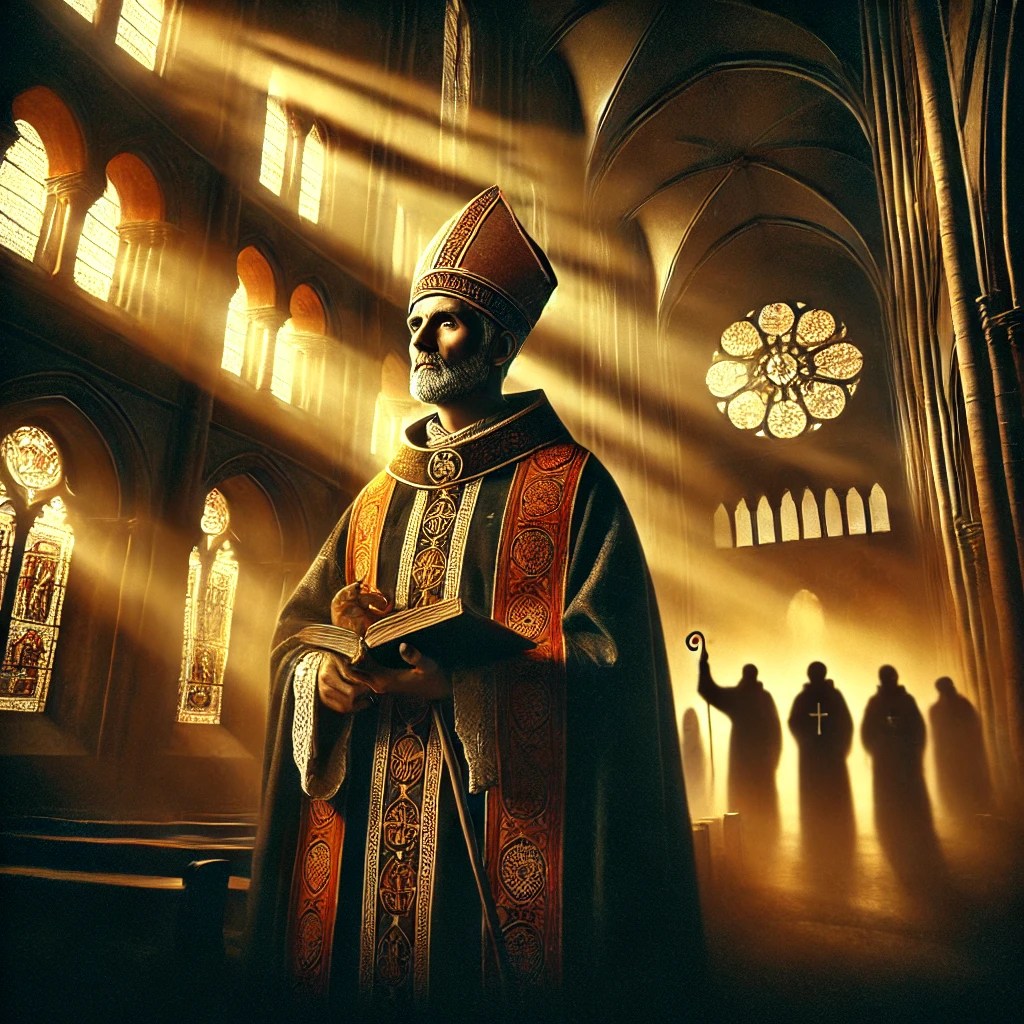
Saint Boniface of Lausanne, born in 1183 in Brussels, Belgium, was a man of great intellect and deep faith. From a young age, he exhibited a profound love for learning, which led him to pursue higher education at the prestigious University of Paris. There, he distinguished himself as a gifted scholar and became a renowned lecturer in theology and dogma. His passion for teaching extended beyond the classroom, shaping his vision for the Church and its clergy.
Boniface’s influence as a teacher was felt not only in Paris but also in Cologne, Germany, where he served as a lecturer. His deep understanding of theology and Scripture earned him the respect of both students and fellow theologians. However, his scholarly pursuits were not solely for intellectual satisfaction—they were driven by a desire to deepen his relationship with God and to lead others to the truth.
In 1231, Boniface was appointed Bishop of Lausanne, Switzerland, a role that would define the latter part of his life. Stepping into this position, he carried with him a strong sense of duty to uphold the integrity of the Church. His episcopacy was marked by a relentless commitment to reform, as he sought to purify the clergy and reestablish moral order within the diocese. His boldness in confronting corruption, both within the Church and the political sphere, made him a revered yet controversial figure. Boniface’s fearless dedication to truth and justice would ultimately test his endurance, yet he remained unwavering in his commitment to the Gospel.
A Voice for Justice
Unlike many saints whose lives were marked by supernatural miracles, Boniface’s greatest wonders were his unwavering courage and resilience in the face of opposition. His deep-rooted faith and steadfast moral convictions were his most powerful testimonies to divine grace. Perhaps one of the most remarkable events of his life occurred when he openly denounced the widespread corruption within both the clergy and secular authorities. His fearless outspokenness did not go unnoticed—it earned him powerful enemies.
One such enemy was Emperor Frederick II, who opposed Boniface’s firm stance against political interference in Church matters. In retaliation, agents of the emperor orchestrated a violent assault against the bishop. Struck down and severely beaten, Boniface’s very life hung in the balance. However, against all odds, he survived the brutal attack. His survival was not just an act of physical endurance, but a testament to the divine protection surrounding him. Many saw this as a sign of God’s favor upon his mission.
Despite the miracle of his survival, Boniface knew that his continued presence as bishop would only bring further unrest to Lausanne. Understanding the importance of humility and obedience to God’s will, he sought permission from Pope Gregory IX to resign from his episcopal duties. The pope granted his request, and Boniface left behind the political struggles of Lausanne to return to a life of prayer and contemplation. He spent his remaining years at La Cambre Abbey near Brussels, where he devoted himself to a life of quiet devotion and service to God.
The Legacy of a Holy Defender
Although Saint Boniface of Lausanne was not a martyr in the traditional sense, his suffering for the sake of justice and truth was no less profound. His legacy is one of courage in the face of persecution, a reminder that faithfulness to God sometimes requires standing alone against powerful forces. His decision to step away from political turmoil did not signify defeat but rather a deep wisdom that recognized when his mission had been fulfilled.
Boniface passed away in 1260, leaving behind a Church that had been purified through his fearless reform efforts. His commitment to truth and justice continued to inspire many long after his death. In recognition of his holiness, Pope Clement XI officially canonized him in 1702. His feast day is celebrated on February 19th, and he remains a patron of those who seek justice and truth in the Church.
Pilgrims continue to visit La Cambre Abbey, where he spent his final years, to seek his intercession and honor his memory. While he may not have performed dramatic miracles, his steadfast commitment to righteousness and his survival against persecution stand as testaments to the power of faith. His story reminds us that sainthood is not always marked by signs and wonders, but often by the quiet, unwavering commitment to God’s truth.
Living the Virtues of Saint Boniface
Saint Boniface’s life holds powerful lessons for us today. He reminds us that being a follower of Christ often means standing firm in the face of opposition. His courage to speak truth, even when it was unpopular, challenges us to reflect on our own willingness to uphold righteousness. Do we defend the truth of the Gospel in our daily lives? Are we willing to endure discomfort or criticism for the sake of Christ?
His deep love for learning also speaks to us. Boniface saw knowledge not as an end in itself, but as a way to understand and serve God better. In a world filled with misinformation and superficial knowledge, we are called to seek true wisdom—one that aligns with God’s truth. How can we grow in our understanding of the faith? Do we take time to study Scripture and the teachings of the Church?
Finally, his humility in stepping away from power when necessary is a lesson in discernment. Boniface knew when to fight and when to step back, trusting that God’s will was greater than his personal mission. In our own lives, we must learn to listen for God’s guidance, knowing that true success is found in obedience to Him. Are we willing to surrender our own plans to follow where God leads us?
Engage with Us!
We invite you to share your thoughts and reflections on the life of Saint Boniface of Lausanne in the comments below. How does his unwavering commitment inspire you in your faith journey? Let’s support each other in striving to embody the love and mercy that Jesus taught us.
Reflection Questions:
- In what ways can you stand firm in your convictions when facing opposition?
- How does the pursuit of knowledge enhance your spiritual journey?
- What steps can you take to address and reform injustices within your community?
Together, let us encourage one another to live out our faith with courage and compassion, following the example of Saint Boniface.
Saint Boniface, pray for us!
Follow us on Instagram and Facebook for more insights and reflections on living a faith-filled life.

 Holy Manna!
Leave a comment