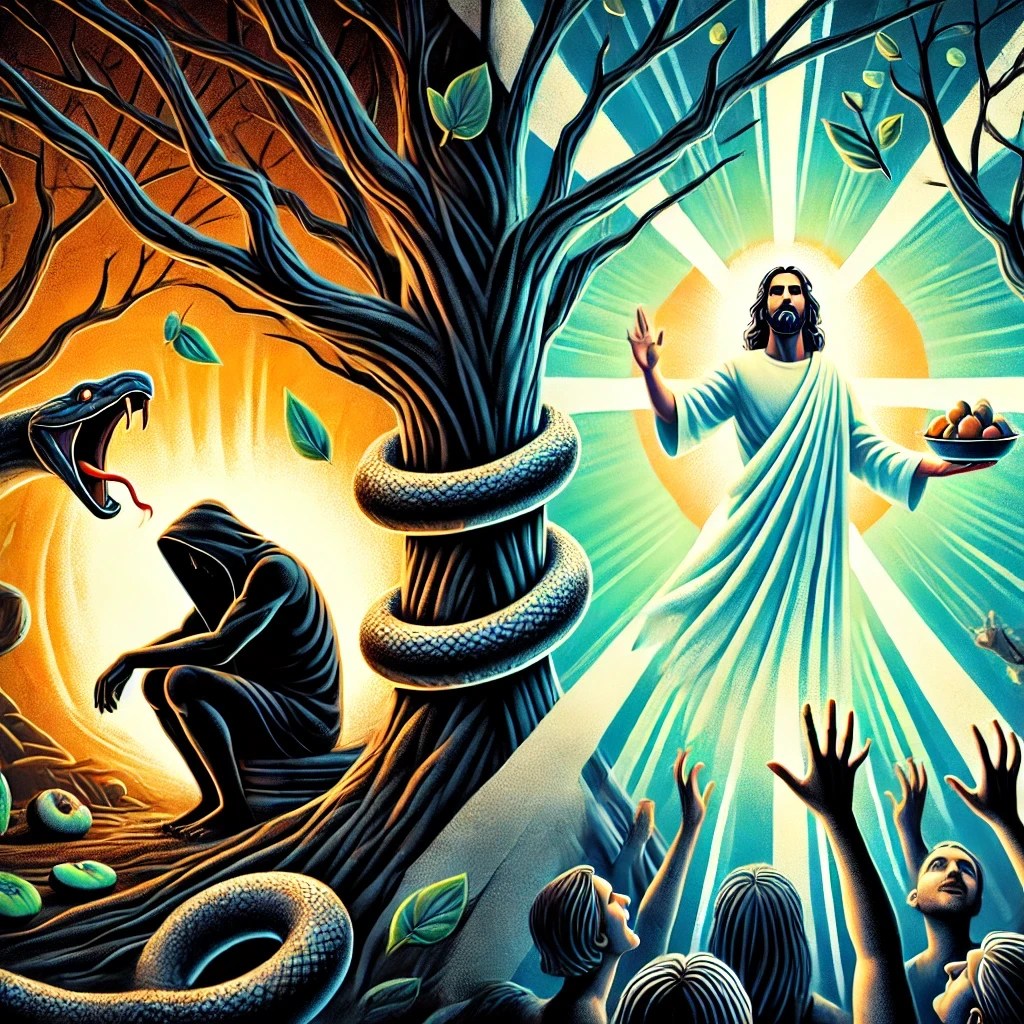
From the Fall to Fulfillment
Have you ever made a mistake so big that you felt like there was no way to recover from it? Perhaps you hurt someone you love, failed to meet an important responsibility, or made a decision that left lasting consequences. Today’s readings remind us that while sin brings suffering, God never abandons His people. From the fall of Adam and Eve to the psalmist’s cry for mercy and Jesus’ miraculous feeding of the crowd, we see a common thread: even in our brokenness, God provides.
The story of the fall in Genesis is one of loss—Adam and Eve lose their innocence, their closeness to God, and their place in Eden. Yet, in the midst of their exile, God clothes them, a small but profound act of mercy. The psalm echoes this theme, acknowledging human frailty while pleading for God’s compassion: “Relent, O Lord! How long? Have pity on your servants!” This cry for divine mercy finds its answer in The Gospel of Mark, where Jesus, moved with pity, nourishes a hungry crowd in the wilderness. Where Adam and Eve’s sin brought separation and suffering, Jesus’ generosity prefigures the Eucharist, the ultimate remedy for our spiritual hunger.
Today’s readings call us to reflect on our own need for God’s mercy. We all experience moments of failure, distance, or emptiness, but God continually reaches out to us. Just as He did not leave Adam and Eve completely forsaken, and just as Jesus fed the thousands, God provides—whether through forgiveness, wisdom, or daily sustenance. The question is, are we open to receiving His mercy?
First Reading – Genesis 3:9-24
From Sin to Separation: The Weight of the Fall
The Book of Genesis is the foundation of the entire biblical narrative, setting the stage for humanity’s relationship with God. Genesis 3 is particularly significant, as it recounts the moment when sin first entered the world, altering the course of human history. This passage, often referred to as The Fall of Man, describes Adam and Eve’s disobedience and the resulting consequences. Theologically, this chapter is critical because it introduces the doctrine of Original Sin, a fundamental teaching of the Catholic Church. The pain, suffering, and mortality that follow Adam and Eve’s transgression illustrate the grave effects of sin—not just for them, but for all of humanity.
However, even in this moment of judgment, we glimpse God’s mercy. Though Adam and Eve are exiled from Eden, God provides them with clothing, showing His continued care. Additionally, within the very curse pronounced upon the serpent, we find the first promise of redemption: “I will put enmity between you and the woman, and between your offspring and hers; They will strike at your head, while you strike at their heel” (Genesis 3:15). This verse, known as the Protoevangelium, is the first prophecy of Christ’s victory over sin and death. Today’s reading sets the foundation for understanding our need for redemption—a theme echoed in the Responsorial Psalm and ultimately fulfilled in the Gospel through Christ’s compassion and provision.
Genesis 3:9-24
New American Bible (Revised Edition)
9 The Lord God then called to the man and asked him: Where are you? 10 He answered, “I heard you in the garden; but I was afraid, because I was naked, so I hid.” 11 Then God asked: Who told you that you were naked? Have you eaten from the tree of which I had forbidden you to eat? 12 The man replied, “The woman whom you put here with me—she gave me fruit from the tree, so I ate it.” 13 The Lord God then asked the woman: What is this you have done? The woman answered, “The snake tricked me, so I ate it.”
14 Then the Lord God said to the snake:
Because you have done this,
cursed are you
among all the animals, tame or wild;
On your belly you shall crawl,
and dust you shall eat
all the days of your life.
15 I will put enmity between you and the woman,
and between your offspring and hers;
They will strike at your head,
while you strike at their heel.
16 To the woman he said:
I will intensify your toil in childbearing;
in pain you shall bring forth children.
Yet your urge shall be for your husband,
and he shall rule over you.
17 To the man he said: Because you listened to your wife and ate from the tree about which I commanded you, You shall not eat from it,
Cursed is the ground because of you!
In toil you shall eat its yield
all the days of your life.
18 Thorns and thistles it shall bear for you,
and you shall eat the grass of the field.
19 By the sweat of your brow
you shall eat bread,
Until you return to the ground,
from which you were taken;
For you are dust,
and to dust you shall return.
20 The man gave his wife the name “Eve,” because she was the mother of all the living.
21 The Lord God made for the man and his wife garments of skin, with which he clothed them. 22 Then the Lord God said: See! The man has become like one of us, knowing good and evil! Now, what if he also reaches out his hand to take fruit from the tree of life, and eats of it and lives forever? 23 The Lord God therefore banished him from the garden of Eden, to till the ground from which he had been taken. 24 He expelled the man, stationing the cherubim and the fiery revolving sword east of the garden of Eden, to guard the way to the tree of life.
Detailed Exegesis
Verse 9 – “The Lord God then called to the man and asked him: Where are you?”
God’s question is not for His own knowledge—He already knows where Adam is—but rather an invitation for Adam to acknowledge his state. This moment reflects how sin causes separation from God, and yet He always seeks us out, longing for our return.
Verse 10 – “I heard you in the garden; but I was afraid, because I was naked, so I hid.”
Fear and shame are immediate effects of sin. Before the Fall, Adam and Eve lived in perfect harmony with God. Now, their disobedience has distorted their perception of themselves and their Creator, leading them to hide rather than seek His presence.
Verse 11 – “Who told you that you were naked? Have you eaten from the tree of which I had forbidden you to eat?”
God’s response is not one of immediate condemnation but of questioning, giving Adam a chance to confess. This demonstrates God’s justice and mercy—He always gives us an opportunity to repent.
Verse 12 – “The woman whom you put here with me—she gave me fruit from the tree, so I ate it.”
Instead of taking responsibility, Adam shifts the blame to Eve—and even subtly to God, who created her. This reveals how sin distorts relationships, leading to division rather than unity.
Verse 13 – “The Lord God then asked the woman: What is this you have done? The woman answered, ‘The snake tricked me, so I ate it.’”
Like Adam, Eve refuses to accept full responsibility. Her answer, however, acknowledges that she was deceived—pointing to the cunning nature of sin.
Verse 14 – “Then the Lord God said to the snake: Because you have done this, cursed are you among all the animals, tame or wild; On your belly you shall crawl, and dust you shall eat all the days of your life.”
The serpent is cursed above all creatures, signifying total defeat. This imagery of crawling in the dust represents humiliation and subjugation, a foreshadowing of Satan’s ultimate downfall.
Verse 15 – “I will put enmity between you and the woman, and between your offspring and hers; They will strike at your head, while you strike at their heel.”
This is the Protoevangelium—the first Gospel. It foretells the struggle between good and evil, ultimately fulfilled in Christ’s victory over Satan. The “offspring of the woman” refers to Jesus, who crushes the serpent through His Passion, Death, and Resurrection.
Verse 16 – “To the woman he said: I will intensify your toil in childbearing; in pain you shall bring forth children. Yet your urge shall be for your husband, and he shall rule over you.”
Eve’s punishment includes pain in childbirth and a shift in the marital dynamic. However, through Mary, the New Eve, this curse is transformed into a blessing—her Fiat brings forth the Savior of the world.
Verse 17 – “To the man he said: Because you listened to your wife and ate from the tree about which I commanded you, You shall not eat from it, cursed is the ground because of you! In toil you shall eat its yield all the days of your life.”
Adam’s punishment is tied to the land—work, which was originally a joy, will now be laborious. This reflects how sin distorts our relationship with creation.
Verse 18 – “Thorns and thistles it shall bear for you, and you shall eat the grass of the field.”
Thorns and thistles symbolize the struggles of life, mirroring Christ’s crown of thorns—a sign that He will bear the consequences of sin for us.
Verse 19 – “By the sweat of your brow you shall eat bread, until you return to the ground, from which you were taken; For you are dust, and to dust you shall return.”
This verse underscores human mortality. It is recalled in the Ash Wednesday liturgy, reminding us of our need for repentance.
Verse 20 – “The man gave his wife the name ‘Eve,’ because she was the mother of all the living.”
Despite the curse of death, Eve’s name signifies hope—life will continue, and through her lineage, salvation will come.
Verse 21 – “The Lord God made for the man and his wife garments of skin, with which he clothed them.”
Even after their sin, God provides for Adam and Eve, foreshadowing how He will clothe us with grace through Christ.
Verse 22-24 – “Then the Lord God said: See! The man has become like one of us, knowing good and evil! Now, what if he also reaches out his hand to take fruit from the tree of life, and eats of it and lives forever? The Lord God therefore banished him from the garden of Eden, to till the ground from which he had been taken. He expelled the man, stationing the cherubim and the fiery revolving sword east of the garden of Eden, to guard the way to the tree of life.”
Humanity is exiled from Eden, yet this is ultimately an act of mercy—if they had eaten from the tree of life in their fallen state, they would have remained in sin forever. God’s plan for redemption was already unfolding.
Teachings
The Catechism of the Catholic Church explains that Original Sin is not a personal sin committed by us, but a condition inherited from Adam and Eve: “Original sin is called ‘sin’ only in an analogical sense: it is a sin ‘contracted’ and not ‘committed’—a state and not an act” (CCC 404). This fallen nature affects all aspects of our lives, making us prone to sin and in need of God’s grace.
However, God does not abandon humanity. The Church Fathers saw in Genesis 3:15 the first announcement of the Gospel—what St. Irenaeus called “the first proclamation of the Good News” (Against Heresies, 3.23.7). The Blessed Virgin Mary, as the New Eve, plays a crucial role in salvation history by bearing Christ, who crushes the serpent’s head.
The consequences of Adam’s sin are reversed through Christ, the New Adam. St. Paul writes, “For just as through the disobedience of one person the many were made sinners, so through the obedience of one the many will be made righteous” (Romans 5:19). This foreshadows how Christ’s sacrifice restores what was lost in Eden.
Reflection
This passage is a sobering reminder of the seriousness of sin. Like Adam and Eve, we often try to hide from God when we fall short. But He calls out to us, asking, “Where are you?”—not because He doesn’t know, but because He desires for us to return to Him. Are there areas in your life where you have been avoiding God’s call?
Despite their sin, Adam and Eve were not utterly forsaken. God clothed them, providing for their needs even in exile. This reflects how He continues to provide for us today, even when we feel distant from Him. How can you recognize and receive God’s mercy in your life this week?
Lastly, this passage invites us to consider our accountability. Adam and Eve shifted the blame, refusing to take responsibility for their choices. In our spiritual journey, we must ask ourselves: Do I own up to my sins, or do I justify them? The Sacrament of Reconciliation is a gift where we acknowledge our sins, receive mercy, and begin anew. Let us not be afraid to step out from hiding and answer when God calls: “Where are you?”
Responsorial Psalm – Psalm 90:2-6, 12-13
Teach Us to Count Our Days: Seeking Wisdom in Mortality
Psalm 90 is one of the oldest psalms in the Bible, attributed to Moses. It is a reflective and penitential prayer that contrasts the eternal nature of God with the fleeting existence of humanity. Unlike many other psalms, which are filled with praise or supplication, Psalm 90 is deeply introspective, acknowledging human frailty and the inevitability of death while pleading for divine mercy and wisdom. In the historical and cultural context of ancient Israel, this psalm would have resonated with a people constantly faced with exile, suffering, and the reality of life’s brevity.
This psalm fits seamlessly into today’s readings by reinforcing the theme of humanity’s brokenness and need for God’s provision. In Genesis 3, Adam and Eve’s sin introduces death into the world—“For you are dust, and to dust you shall return”—a truth echoed in this psalm. Yet, the psalm does not leave us in despair; it reminds us that true wisdom comes from recognizing our dependence on God. This prayer of Moses prepares us to understand the Gospel reading, where Jesus provides sustenance to the hungry. While the psalmist cries out for divine mercy, Jesus answers that prayer through His compassion and abundant provision.
Psalm 90:2-6
New American Bible (Revised Edition)
2 Before the mountains were born,
the earth and the world brought forth,
from eternity to eternity you are God.
3 You turn humanity back into dust,
saying, “Return, you children of Adam!”
4 A thousand years in your eyes
are merely a day gone by,
Before a watch passes in the night,
5 you wash them away;
They sleep,
and in the morning they sprout again like an herb.
6 In the morning it blooms only to pass away;
in the evening it is wilted and withered.
12 Teach us to count our days aright,
that we may gain wisdom of heart.
13 Relent, O Lord! How long?
Have pity on your servants!
Detailed Exegesis
Verse 2 – “Before the mountains were born, the earth and the world brought forth, from eternity to eternity you are God.”
This verse establishes the eternal nature of God. Unlike humanity, which is bound by time and mortality, God exists beyond creation. Mountains, often symbols of permanence and stability, are nothing compared to God’s timeless existence. This verse reminds us of our place in the grand design—we are finite, but God is eternal.
Verse 3 – “You turn humanity back into dust, saying, ‘Return, you children of Adam!’”
This verse recalls Genesis 3:19, where God declares that humanity will return to dust due to sin. It highlights the consequence of the Fall: human mortality. The phrase “children of Adam” reinforces that this fate is universal, affecting all of humanity. Yet, God’s command to “return” can also be understood spiritually—as a call to repentance.
Verse 4 – “A thousand years in your eyes are merely a day gone by, before a watch passes in the night.”
This verse presents a striking contrast between human perception of time and God’s perspective. To us, a thousand years is immense, but to God, it is fleeting. This theme appears in 2 Peter 3:8: “With the Lord one day is like a thousand years and a thousand years like one day.” This verse invites us to trust in God’s timing, even when His plans unfold differently than we expect.
Verse 5 – “You wash them away; they sleep, and in the morning they sprout again like an herb.”
Human life is compared to grass—fragile, temporary, and easily swept away. The metaphor of sleep implies that death is not the end but a transition. In Christian theology, this verse foreshadows the hope of resurrection, reminding us that though we are frail, God holds eternity in His hands.
Verse 6 – “In the morning it blooms only to pass away; in the evening it is wilted and withered.”
This verse reinforces the brevity of life. Just as grass flourishes briefly before fading, so too does human life pass quickly. This imagery invites humility and an awareness of life’s impermanence. Rather than despair, we are called to recognize each day as a gift.
Verse 12 – “Teach us to count our days aright, that we may gain wisdom of heart.”
This verse is the heart of the psalm, offering a plea for wisdom. Unlike worldly knowledge, biblical wisdom comes from recognizing our dependence on God. The Catechism states: “Man’s vocation is to make God manifest by acting in conformity with his creation ‘in the image and likeness of God’” (CCC 2085). True wisdom leads us to live according to God’s will.
Verse 13 – “Relent, O Lord! How long? Have pity on your servants!”
This cry for mercy acknowledges human weakness and God’s justice. The psalmist, like Adam and Eve, recognizes the weight of sin but appeals to God’s compassion. This longing is fulfilled in Christ, who takes on our sins and offers divine mercy through His sacrifice.
Teachings
The brevity of life should not lead us to despair but to wisdom. The Catechism teaches: “God calls man to seek him, to know him, to love him with all his strength” (CCC 1). Recognizing our mortality is the beginning of wisdom because it directs our hearts toward God. Rather than living for fleeting pleasures, we are invited to seek eternal truth.
St. Augustine reflected on this in Confessions: “You have made us for yourself, O Lord, and our hearts are restless until they rest in you.” This echoes the psalmist’s plea to “gain wisdom of heart.” True fulfillment does not come from earthly achievements but from aligning our lives with God’s purpose.
The Church reminds us that our days on earth are a preparation for eternity. Pope Benedict XVI once said: “Faith is not merely a set of doctrines; it is the compass that guides our journey, showing us that beyond the horizon of death, there is hope.” This psalm invites us to live with eternity in mind, making choices that reflect our trust in God’s plan.
Reflection
This psalm is a powerful reminder to pause and reflect on how we use our time. Life is fleeting, and each day is a gift from God. How often do we take time to seek wisdom rather than distractions? The psalmist asks God to teach us to count our days—not so we live in fear of death, but so we live with purpose.
Another key message is our need for God’s mercy. Just as Adam and Eve faced the reality of their sin, we, too, must acknowledge our dependence on God. Do we pray for wisdom and mercy, or do we rely on our own understanding? This psalm invites us to cultivate a heart of humility and gratitude.
Lastly, this reading challenges us to trust in God’s timing. A thousand years are but a moment to Him. Do we grow impatient when God’s plans unfold differently than expected? Instead of clinging to our own timeline, we are called to surrender and trust that He is leading us toward eternal life. Let us pray, as the psalmist did, “Teach us to count our days aright, that we may gain wisdom of heart.”
Holy Gospel – Mark 8:1-10
The Bread of Mercy: God’s Provision for the Hungry
The Gospel of Mark is the shortest of the four Gospels but is known for its urgency and action-packed narrative. Mark often highlights Jesus’ miracles as signs of His divine authority and compassion. Today’s reading recounts the miraculous feeding of the four thousand, a moment that reveals Christ’s deep concern for both the physical and spiritual needs of His people. In the historical and cultural context, food scarcity was a common struggle, especially for those in the wilderness. Jesus’ act of multiplying the loaves and fishes would have been seen as a sign of God’s provision, echoing the Old Testament accounts of manna in the desert (Exodus 16) and Elisha’s multiplication of bread (2 Kings 4:42-44).
This passage connects with the broader theme of today’s readings: God’s mercy in the face of human brokenness. In Genesis 3, Adam and Eve are expelled from the garden, destined to toil for their food. The psalmist in Psalm 90 laments human frailty and cries out for divine wisdom and mercy. In this Gospel, we see the fulfillment of that longing—Jesus, moved with compassion, provides for the crowd. Where Adam’s sin brought scarcity, Christ’s love brings abundance. The feeding of the four thousand is not just a miracle of provision; it is a foretaste of the Eucharist, the ultimate gift that satisfies our deepest hunger.
Mark 8:1-10
New American Bible (Revised Edition)
The Feeding of the Four Thousand. 1 In those days when there again was a great crowd without anything to eat, he summoned the disciples and said, 2 “My heart is moved with pity for the crowd, because they have been with me now for three days and have nothing to eat. 3 If I send them away hungry to their homes, they will collapse on the way, and some of them have come a great distance.” 4 His disciples answered him, “Where can anyone get enough bread to satisfy them here in this deserted place?” 5 Still he asked them, “How many loaves do you have?” “Seven,” they replied. 6 He ordered the crowd to sit down on the ground. Then, taking the seven loaves he gave thanks, broke them, and gave them to his disciples to distribute, and they distributed them to the crowd. 7 They also had a few fish. He said the blessing over them and ordered them distributed also. 8 They ate and were satisfied. They picked up the fragments left over—seven baskets. 9 There were about four thousand people.
He dismissed them 10 and got into the boat with his disciples and came to the region of Dalmanutha.
Detailed Exegesis
Verse 1 – “In those days when there again was a great crowd without anything to eat, he summoned the disciples and said,”
The phrase “again” suggests that this is a second miraculous feeding, distinct from the feeding of the five thousand (Mark 6:30-44). The fact that the people are without food emphasizes both their physical and spiritual hunger. Jesus’ first response is not frustration, but compassion.
Verse 2 – “My heart is moved with pity for the crowd, because they have been with me now for three days and have nothing to eat.”
Jesus’ words reveal His deep empathy. Unlike Adam and Eve, who turned away from God’s provision in Eden, this crowd has remained with Jesus, trusting in His teaching even when it meant going without food. Their faith is met with His mercy.
Verse 3 – “If I send them away hungry to their homes, they will collapse on the way, and some of them have come a great distance.”
This verse highlights the severity of their condition. Jesus recognizes their vulnerability and does not want them to suffer. This moment mirrors God’s care for the Israelites in the desert—He did not let them starve, but provided manna daily.
Verse 4 – “His disciples answered him, ‘Where can anyone get enough bread to satisfy them here in this deserted place?’”
Despite witnessing Jesus’ previous miracles, the disciples still struggle to trust in His power. Their question reflects human doubt—how often do we question whether God can provide for our needs, even after He has done so time and time again?
Verse 5 – “Still he asked them, ‘How many loaves do you have?’ ‘Seven,’ they replied.”
The number seven symbolizes completeness in biblical tradition. Though the disciples see scarcity, Jesus sees sufficiency. This moment foreshadows the Eucharist—God takes what little we have and transforms it into something abundant.
Verse 6 – “He ordered the crowd to sit down on the ground. Then, taking the seven loaves he gave thanks, broke them, and gave them to his disciples to distribute, and they distributed them to the crowd.”
This verse closely mirrors the Last Supper (Mark 14:22). The sequence of actions—taking, giving thanks, breaking, distributing—is Eucharistic in nature. This feeding is not just about bread; it is about Jesus preparing His followers for the true Bread of Life.
Verse 7 – “They also had a few fish. He said the blessing over them and ordered them distributed also.”
The inclusion of fish, like the loaves, recalls the miracle of the five thousand. Fish was an early Christian symbol for Christ Himself, reinforcing the idea that He is the one who truly nourishes.
Verse 8 – “They ate and were satisfied. They picked up the fragments left over—seven baskets.”
The abundance of leftovers signifies the superabundance of God’s grace. When God provides, He does so beyond our expectations. This moment also prefigures how, in the Eucharist, no one is left wanting.
Verse 9-10 – “There were about four thousand people. He dismissed them and got into the boat with his disciples and came to the region of Dalmanutha.”
Jesus provides, and then He moves on. His mission is not just to feed but to lead people toward deeper faith. The journey continues—just as it does for us in our spiritual lives.
Teachings
The Catechism emphasizes that Jesus’ miracles are signs of the Kingdom of God: “Jesus accompanies his words with many ‘mighty works and wonders and signs,’ which manifest that the kingdom is present in him and attest that he was the promised Messiah” (CCC 547). The feeding of the four thousand is one such sign, revealing God’s mercy and prefiguring the Eucharist.
St. John Chrysostom saw this miracle as a foreshadowing of Christ’s continued provision through the Church: “Just as Christ multiplied the loaves, so too does He multiply His grace, nourishing all who come to Him in faith.” This teaches us that spiritual hunger is satisfied only in Christ.
The Church Fathers also recognized the connection between this miracle and the Last Supper. St. Augustine wrote: “Recognize in this bread that which hung upon the cross, and in this cup that which was poured from His side.” The Eucharist is the ultimate fulfillment of this miracle, offering us Christ Himself as our nourishment.
Reflection
This Gospel challenges us to trust in God’s provision. Like the disciples, we often doubt whether He can provide for our needs, despite past blessings. Do we truly believe that God will sustain us, both physically and spiritually? When faced with difficulties, do we focus on scarcity, or do we trust in God’s abundance?
It also invites us to reflect on how we respond to spiritual hunger. The crowd in this passage followed Jesus for three days without food. Their hunger for His teaching was greater than their physical hunger. Are we as willing to sacrifice for our faith? Do we prioritize seeking Christ, or do we allow our worldly concerns to take precedence?
Finally, this passage calls us to recognize the Eucharist as the ultimate fulfillment of God’s mercy. Just as Jesus multiplied the loaves, He continues to offer Himself to us in the Sacrament of the Altar. The question remains: Are we approaching the Eucharist with the same hunger and faith as those who followed Jesus into the wilderness? Let us pray for the grace to trust in His provision and to seek Him with hearts that long for true nourishment.
From Scarcity to Abundance: Trusting in God’s Mercy
Today’s readings guide us through the human journey from sin and separation to mercy and fulfillment. In Genesis, we see the devastating consequences of the Fall—Adam and Eve’s disobedience introduces suffering, toil, and death into the world. Yet, even in their exile, God provides, clothing them and promising redemption. The Psalm echoes this theme, reminding us of life’s brevity and our deep need for divine wisdom and mercy. It is a cry from a heart that recognizes its frailty and turns to the Lord for guidance. This longing for mercy finds its fulfillment in the Gospel of Mark, where Jesus, moved with compassion, feeds the hungry crowd. In this miraculous provision, we see a glimpse of the Eucharist—the ultimate sign of God’s abundance, offering not just physical sustenance but eternal life.
Each of these readings reveals a God who does not abandon His people. Though sin leads to separation, our Father continually reaches out to us, calling us back. He clothes the fallen, offers wisdom to the searching, and nourishes the hungry. This pattern of divine mercy is not just a historical account—it is a reality in our lives today. Every time we turn away, He calls us back. Every time we cry out for help, He answers. Every time we come to Him in need, He provides.
Let today’s readings be an invitation to trust in God’s mercy. Like Adam and Eve, we have all experienced moments of failure. Like the psalmist, we have all felt the weight of life’s fleeting nature. And like the crowd in the Gospel, we all hunger for something greater. The good news is that God sees our need, hears our cries, and responds with love. He is waiting to clothe us with grace, fill us with wisdom, and feed us with the Bread of Life. The question is, will we open our hearts to receive Him?
Engage with Us!
We invite you to share your thoughts in the comments below! How did today’s readings speak to your heart? Reflect on the messages of sin, mercy, and provision, and let us know how God is working in your life. Your reflections may inspire and encourage someone else on their journey of faith.
Reflection Questions:
First Reading (Genesis 3:9-24): Where are you hiding from God in your life? Are there areas where you shift blame instead of taking responsibility for your spiritual growth? How can you step forward in faith and embrace His mercy?
Responsorial Psalm (Psalm 90:2-6, 12-13): What does “teaching us to count our days aright” mean in your own life? How can recognizing life’s brevity help you live with greater purpose and trust in God?
Holy Gospel (Mark 8:1-10): Do you truly trust that God will provide for your needs? How does this passage challenge your understanding of scarcity versus abundance in your faith journey? How can you hunger for Christ as much as the crowd hungered for His word?
May we go forth today with hearts open to God’s mercy, trusting in His wisdom, and seeking Him above all else. Let us live with gratitude, knowing that He provides for every need—physically, emotionally, and spiritually. And let us remember to do everything with the love and mercy that Jesus taught us. God bless you!
Follow us on Instagram and Facebook for more insights and reflections on living a faith-filled life.

 Holy Manna!
Leave a comment