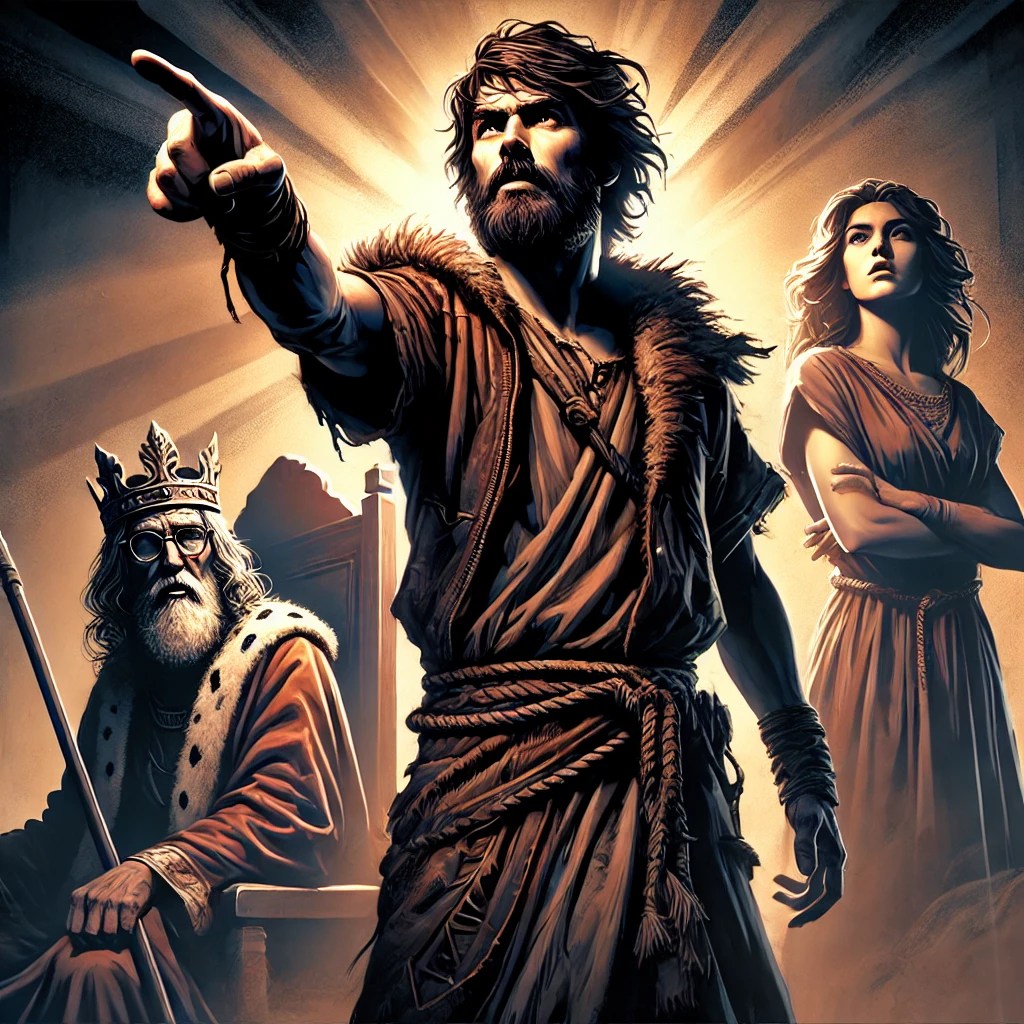
Faithfulness in the Face of Fear:
Have you ever faced a moment when standing for truth felt risky? When speaking out for what is right could cost you friendships, comfort, or even safety? Today’s readings challenge us to remain faithful to God despite fear, temptation, or pressure to compromise.
From the encouragement in Hebrews to the unwavering trust in Psalm 27 and the courageous witness of John the Baptist in The Gospel of Mark, we see a common theme: faithfulness to God, even when it comes at a cost.
Historically, John the Baptist’s martyrdom took place in the time of Herod Antipas, the ruler of Galilee, who was more concerned with power and reputation than with righteousness. His fear of losing face among his guests led him to execute a man he knew to be holy. This tragic moment reminds us that compromising truth for worldly approval can lead to devastating consequences. Yet, John’s faithfulness echoes the words of Hebrews: “The Lord is my helper, I will not be afraid” (Hebrews 13:6).
As we reflect on these readings, let’s ask ourselves: What fears hold me back from fully trusting God? Am I willing to stand for truth, even when it’s unpopular? Today, we are invited to deepen our faith and find courage in God, knowing that He is our refuge and strength.
First Reading – Hebrews 13:1-8
Faith That Stands the Test of Time
The Letter to the Hebrews was written to Jewish Christians who were facing persecution and struggling to remain steadfast in their faith. Many were tempted to revert to old religious practices or seek security in worldly comforts. In response, the author of Hebrews calls them to unwavering faith in Christ, who is “the same yesterday, today, and forever” (Hebrews 13:8).
This passage serves as a powerful encouragement to remain faithful amid trials. It reminds believers to practice love, hospitality, and moral integrity while trusting in God’s providence rather than material wealth. The early Christians lived in a society that was often hostile to their faith—much like John the Baptist, who paid the price for standing for truth in today’s Gospel. Through these verses, we are challenged to anchor our lives in Christ and trust that He will never abandon us.
Hebrews 13:1-8
New American Bible (Revised Edition)
1 Let mutual love continue. 2 Do not neglect hospitality, for through it some have unknowingly entertained angels. 3 Be mindful of prisoners as if sharing their imprisonment, and of the ill-treated as of yourselves, for you also are in the body. 4 Let marriage be honored among all and the marriage bed be kept undefiled, for God will judge the immoral and adulterers. 5 Let your life be free from love of money but be content with what you have, for he has said, “I will never forsake you or abandon you.” 6 Thus we may say with confidence:
“The Lord is my helper,
[and] I will not be afraid.
What can anyone do to me?”
7 Remember your leaders who spoke the word of God to you. Consider the outcome of their way of life and imitate their faith. 8 Jesus Christ is the same yesterday, today, and forever.
Detailed Exegesis
Verse 1 – “Let mutual love continue.”
This simple yet profound command echoes Jesus’ teaching: “By this everyone will know that you are my disciples, if you love one another” (John 13:35). The Greek word for “love” here is philadelphia, meaning brotherly love—a reminder that Christian faith is lived out in relationships. Love must be active, persistent, and unwavering, even in difficult times.
Verse 2 – “Do not neglect hospitality, for through it some have unknowingly entertained angels.”
This verse references the story of Abraham in Genesis 18, where he welcomed three strangers who turned out to be divine messengers. Hospitality was a central virtue in the ancient Jewish and Christian communities. It is also a spiritual discipline—when we welcome others, we welcome Christ Himself (Matthew 25:35).
Verse 3 – “Be mindful of prisoners as if sharing their imprisonment, and of the ill-treated as of yourselves, for you also are in the body.”
Early Christians were often imprisoned for their faith. This verse calls believers to solidarity, reminding them that suffering for Christ is part of the Christian journey. Romans 12:15 reinforces this idea: “Rejoice with those who rejoice, weep with those who weep.”
Verse 4 – “Let marriage be honored among all and the marriage bed be kept undefiled, for God will judge the immoral and adulterers.”
Marriage, as instituted by God, is sacred. This verse speaks against the sexual immorality that was prevalent in the Greco-Roman world, urging Christians to uphold purity and fidelity. The Church teaches that marriage is a covenant that reflects Christ’s love for His Church (Ephesians 5:25-32).
Verse 5 – “Let your life be free from love of money but be content with what you have, for he has said, ‘I will never forsake you or abandon you.’”
This verse warns against materialism, echoing Jesus’ words: “You cannot serve both God and money” (Matthew 6:24). True security is found in God’s promises, not in wealth or possessions.
Verse 6 – “Thus we may say with confidence: ‘The Lord is my helper, and I will not be afraid. What can anyone do to me?’”
This powerful declaration comes from Psalm 118:6. It reinforces trust in God’s protection, reminding us that earthly fears should never overshadow divine confidence.
Verse 7 – “Remember your leaders who spoke the word of God to you. Consider the outcome of their way of life and imitate their faith.”
The early Church greatly valued apostolic tradition and the witness of Christian leaders. This verse encourages believers to learn from those who have remained faithful to Christ, even unto death—just as John the Baptist did in today’s Gospel.
Verse 8 – “Jesus Christ is the same yesterday, today, and forever.”
This verse is the foundation of Christian hope. While the world constantly changes, Jesus remains constant. His truth, mercy, and love are eternal.
Teachings of the Church
The Catechism of the Catholic Church emphasizes that faith is not simply intellectual assent but a total trust in God. “Faith is first of all a personal adherence of man to God” (CCC 150). The call to love, hospitality, purity, and detachment from wealth aligns with Christ’s teachings in the Beatitudes (“Blessed are the poor in spirit, for theirs is the kingdom of heaven” – Matthew 5:3).
Saint John Chrysostom, in his commentary on Hebrews, teaches that faithfulness in small things—such as hospitality or moral purity—prepares us for greater trials. He writes: “He who is faithful in little is faithful in much; thus, we must practice virtue in daily life before we can withstand persecution.”
Throughout Church history, martyrs like Saint Thomas More exemplified this passage. He remained faithful to God’s law over human authority, declaring before his execution: “I die the king’s faithful servant, but God’s first.”
Reflection
This reading invites us to evaluate where we place our trust. Do we rely on wealth, status, or human approval, or do we trust that God will never forsake us? It also challenges us to live out our faith boldly—through love, hospitality, and moral integrity.
Consider these questions in prayer today:
Do I truly believe that Christ is the same yesterday, today, and forever?
Am I willing to stand for truth, even when it is unpopular?
How can I show greater love and hospitality to those around me?
May we, like John the Baptist, have the courage to remain faithful, trusting that the Lord is our helper, and we need not be afraid.
Responsorial Psalm – Psalm 27:1, 3, 5, 8-9
Fearless Trust in the Lord
The Book of Psalms is the prayer book of Israel, filled with hymns of praise, lament, and thanksgiving. Psalm 27 is a powerful declaration of trust in God’s protection. Traditionally attributed to King David, this psalm was likely composed during a time of personal danger—perhaps when he was pursued by King Saul or facing threats from his enemies. Despite the external pressures, David proclaims that his strength is not found in military power or human alliances but in God alone.
This psalm beautifully aligns with today’s theme of faithfulness amid trials. While Hebrews encourages believers to trust in God rather than worldly security, and John the Baptist in today’s Gospel embodies courageous faithfulness unto death, Psalm 27 provides the prayerful response: “The Lord is my light and my salvation; whom should I fear?” (Psalm 27:1). It serves as a reminder that when we seek the Lord above all else, fear loses its grip on us.
Psalm 27:1, 3, 5, 8-9
New American Bible (Revised Edition)
Trust in God
1 Of David.
The Lord is my light and my salvation;
whom should I fear?
The Lord is my life’s refuge;
of whom should I be afraid?
3 Though an army encamp against me,
my heart does not fear;
Though war be waged against me,
even then do I trust.
5 For God will hide me in his shelter
in time of trouble,
He will conceal me in the cover of his tent;
and set me high upon a rock.
8 “Come,” says my heart, “seek his face”;
your face, Lord, do I seek!
9 Do not hide your face from me;
do not repel your servant in anger.
You are my salvation; do not cast me off;
do not forsake me, God my savior!
Detailed Exegesis
Verse 1 – “The Lord is my light and my salvation; whom should I fear? The Lord is my life’s refuge; of whom should I be afraid?”
Light in Scripture represents God’s presence, guidance, and truth. Jesus Himself declares, “I am the light of the world” (John 8:12). To call the Lord our salvation means acknowledging that He alone delivers us from sin, suffering, and even death. Fear is dispelled when we recognize that God is both our protector and our eternal refuge.
Verse 3 – “Though an army encamp against me, my heart does not fear; though war be waged against me, even then do I trust.”
This verse conveys absolute confidence in God, even in the face of overwhelming danger. It reflects the mindset of countless saints who stood firm amid persecution—like John the Baptist, who remained faithful even as Herod’s court conspired against him. Trusting in God does not mean the absence of trials, but rather the assurance that He is greater than any battle we face.
Verse 5 – “For God will hide me in his shelter in time of trouble, He will conceal me in the cover of his tent; and set me high upon a rock.”
The imagery of being hidden in God’s tent refers to divine protection. In the Old Testament, the tabernacle or tent of meeting was the place where God’s presence dwelled among the Israelites. To be concealed by God means to be under His care and guidance. The phrase “set me high upon a rock” recalls Jesus’ teaching that the wise man builds his house upon the rock (Matthew 7:24-25), signifying a faith that cannot be shaken.
Verse 8 – “‘Come,’ says my heart, ‘seek his face’; your face, Lord, do I seek!”
To seek God’s face is a recurring biblical theme, symbolizing a desire for an intimate relationship with Him. In Exodus 33:11, Moses spoke with the Lord “face to face,” highlighting deep communion. This verse invites us to turn to God in every situation, making Him our primary focus.
Verse 9 – “Do not hide your face from me; do not repel your servant in anger. You are my salvation; do not cast me off; do not forsake me, God my savior!”
Here, we see an honest plea—an expression of both trust and vulnerability. Even the most faithful believers have moments of spiritual dryness, where God’s presence feels distant. Yet, as Hebrews reminds us, “I will never forsake you or abandon you” (Hebrews 13:5). This verse calls us to remain steadfast in seeking God, even when He seems hidden.
Teachings of the Church
The Catechism teaches that true trust in God means surrendering to His will, even when trials arise: “Faith in God the Father Almighty can be put to the test by the experience of evil and suffering… but we must turn to the witnesses of faith: to Abraham, who ‘in hope believed against hope’; to the Virgin Mary, who, in ‘her pilgrimage of faith,’ walked into the ‘night of faith’ in sharing the darkness of her Son’s suffering and death” (CCC 164).
Saint Augustine, reflecting on Psalm 27, wrote: “God does not promise that we will not suffer, but that He will be with us in our suffering. When you fear the storm, do not look at the waves—look at the One who walks on water.” His words remind us that faith does not eliminate fear; it gives us the courage to face it.
Historically, this psalm has been a source of strength for persecuted Christians throughout history, from the early martyrs in Rome to modern-day believers suffering for their faith. It is a prayer of confidence that God is always in control, even in the darkest moments.
Reflection
This psalm invites us to examine our own fears and uncertainties. Where do we seek refuge when trials come? Do we run to God, or do we turn to worldly solutions? True peace comes not from the absence of difficulties but from trusting that God is with us in them.
Take a moment today to reflect:
What fears are keeping me from fully trusting in God’s plan?
When I face trials, do I turn to prayer first, or do I seek security in other things?
How can I grow in confidence that the Lord is my refuge and salvation?
May we, like the psalmist, learn to say with unwavering faith: “The Lord is my light and my salvation; whom should I fear?”
Holy Gospel – Mark 6:14-29
The Cost of Truth: The Martyrdom of John the Baptist
The Gospel of Mark is the shortest and most action-packed of the four Gospels, emphasizing Jesus’ divine authority and the cost of discipleship. In today’s Gospel, we witness the brutal martyrdom of John the Baptist at the hands of King Herod. This passage is not just a historical account but a profound lesson on the consequences of standing for truth in a world that resists it.
During this time, Herod Antipas ruled Galilee under the authority of Rome. He had married Herodias, his brother Philip’s wife, in direct violation of Jewish law (Leviticus 18:16). John the Baptist, known for his fearless preaching, publicly condemned this unlawful union. Herodias, enraged by John’s accusations, sought revenge. In a moment of weakness, Herod—more concerned with pleasing his guests than doing what was right—ordered John’s execution.
This passage fits perfectly within today’s theme of faithfulness amid trials. Like John, we are called to stand for truth even when it comes at great cost. His courage echoes the words of Psalm 27: “The Lord is my light and my salvation; whom should I fear?” and Hebrews 13: “Jesus Christ is the same yesterday, today, and forever.” John’s story is a sobering reminder that discipleship demands courage, but God’s truth is always worth defending.
Mark 6:14-29
New American Bible (Revised Edition)
14 King Herod heard about it, for his fame had become widespread, and people were saying, “John the Baptist has been raised from the dead; that is why mighty powers are at work in him.” 15 Others were saying, “He is Elijah”; still others, “He is a prophet like any of the prophets.” 16 But when Herod learned of it, he said, “It is John whom I beheaded. He has been raised up.”
The Death of John the Baptist. 17 Herod was the one who had John arrested and bound in prison on account of Herodias, the wife of his brother Philip, whom he had married. 18 John had said to Herod, “It is not lawful for you to have your brother’s wife.” 19 Herodias harbored a grudge against him and wanted to kill him but was unable to do so. 20 Herod feared John, knowing him to be a righteous and holy man, and kept him in custody. When he heard him speak he was very much perplexed, yet he liked to listen to him. 21 She had an opportunity one day when Herod, on his birthday, gave a banquet for his courtiers, his military officers, and the leading men of Galilee. 22 Herodias’s own daughter came in and performed a dance that delighted Herod and his guests. The king said to the girl, “Ask of me whatever you wish and I will grant it to you.” 23 He even swore [many things] to her, “I will grant you whatever you ask of me, even to half of my kingdom.” 24 She went out and said to her mother, “What shall I ask for?” She replied, “The head of John the Baptist.” 25 The girl hurried back to the king’s presence and made her request, “I want you to give me at once on a platter the head of John the Baptist.” 26 The king was deeply distressed, but because of his oaths and the guests he did not wish to break his word to her. 27 So he promptly dispatched an executioner with orders to bring back his head. He went off and beheaded him in the prison. 28 He brought in the head on a platter and gave it to the girl. The girl in turn gave it to her mother. 29 When his disciples heard about it, they came and took his body and laid it in a tomb.
Detailed Exegesis
Verse 14 – “King Herod heard about it, for his fame had become widespread, and people were saying, ‘John the Baptist has been raised from the dead; that is why mighty powers are at work in him.’”
Herod was hearing rumors about Jesus and His miraculous works. The people speculated that He was John the Baptist resurrected, showing the lasting impact of John’s ministry. This reflects the power of a righteous life—John’s influence continued even after his death.
Verse 15 – “Others were saying, ‘He is Elijah’; still others, ‘He is a prophet like any of the prophets.’”
The expectation that Elijah would return before the Messiah (Malachi 4:5) led many to associate Jesus with him. This confusion highlights the difficulty people had in recognizing Jesus as the promised Christ.
Verse 16 – “But when Herod learned of it, he said, ‘It is John whom I beheaded. He has been raised up.’”
Herod’s guilt and paranoia are evident here. He had silenced John, but his conscience was unsettled. Sin often leads to fear—his actions haunted him because he knew John was righteous.
Verse 17 – “Herod was the one who had John arrested and bound in prison on account of Herodias, the wife of his brother Philip, whom he had married.”
John’s imprisonment was politically and personally motivated. He was a threat to Herod’s reputation because he openly condemned his unlawful marriage. Like many today, Herod tried to suppress the truth rather than face it.
Verse 18 – “John had said to Herod, ‘It is not lawful for you to have your brother’s wife.’”
John’s fearless proclamation of truth cost him his freedom. His words were rooted in Jewish law (Leviticus 18:16), but Herod refused to repent. This verse reminds us that speaking God’s truth often invites opposition.
Verse 19 – “Herodias harbored a grudge against him and wanted to kill him but was unable to do so.”
Herodias represents those who reject truth in favor of personal gain. Instead of humbling herself, she allowed bitterness to consume her, leading to deadly consequences.
Verse 20 – “Herod feared John, knowing him to be a righteous and holy man, and kept him in custody. When he heard him speak he was very much perplexed, yet he liked to listen to him.”
Herod respected John but lacked the moral courage to act on his words. Many people admire righteousness but hesitate to embrace it fully, fearing what they might lose.
Verse 21 – “She had an opportunity one day when Herod, on his birthday, gave a banquet for his courtiers, his military officers, and the leading men of Galilee.”
Herod’s banquet was a grand affair filled with influential figures. Such gatherings often led to reckless decisions, as pride and the desire to impress others took precedence over righteousness.
Verse 22 – “Herodias’s own daughter came in and performed a dance that delighted Herod and his guests. The king said to the girl, ‘Ask of me whatever you wish and I will grant it to you.’”
This was likely a seductive dance, further illustrating the corruption of Herod’s court. Herod’s reckless offer shows how unchecked desires and the need for approval can lead to disastrous decisions.
Verse 23 – “He even swore [many things] to her, ‘I will grant you whatever you ask of me, even to half of my kingdom.’”
Herod’s prideful oath put him in a dangerous position. Rather than acting with wisdom, he let his emotions dictate his words, a mistake that ultimately led to murder.
Verse 24 – “She went out and said to her mother, ‘What shall I ask for?’ She replied, ‘The head of John the Baptist.’”
Herodias seized her moment for revenge. Her hatred of John overshadowed any sense of morality, leading to a horrific request.
Verse 25 – “The girl hurried back to the king’s presence and made her request, ‘I want you to give me at once on a platter the head of John the Baptist.’”
The urgency in her demand reflects Herodias’s deep-seated malice. This scene is a stark contrast to John’s steadfast faith—while Herodias clings to power and vengeance, John clings to truth.
Verse 26 – “The king was deeply distressed, but because of his oaths and the guests he did not wish to break his word to her.”
Herod’s distress shows that he knew this was wrong, but his pride prevented him from backing down. The fear of losing face among his guests was stronger than his fear of God.
Verse 27-28 – “So he promptly dispatched an executioner with orders to bring back his head. He went off and beheaded him in the prison. He brought in the head on a platter and gave it to the girl. The girl in turn gave it to her mother.”
John’s death was the result of human weakness, pride, and vengeance. Though he lost his life, he gained eternal glory, fulfilling Jesus’ words: “Whoever loses his life for my sake will find it” (Matthew 16:25).
Verse 29 – “When his disciples heard about it, they came and took his body and laid it in a tomb.”
John’s disciples honored him in death, just as Jesus’ disciples would later do for Him. His earthly mission ended, but his witness endures.
Teachings of the Church
The Catechism teaches that martyrdom is the highest form of witness: “Martyrdom is the supreme witness given to the truth of the faith: it means bearing witness even unto death” (CCC 2473). John the Baptist exemplifies this as he dies for upholding God’s law.
Saint Bede writes: “John gave his life for Christ, though he had not been commanded to deny Him. For the truth, he laid down his life.” His words remind us that defending moral truth is as important as proclaiming Christ directly.
Throughout history, saints like Thomas More and Maximilian Kolbe followed John’s example, choosing faithfulness over compromise. Their stories encourage us to do the same.
Reflection
This passage challenges us to ask ourselves:
Do I have the courage to stand for truth, even when it is unpopular?
Am I more concerned with pleasing others or pleasing God?
How can I grow in boldness like John the Baptist?
John’s life teaches us that faithfulness comes at a cost, but eternity with Christ is worth far more than anything we could lose.
Unshakable Faith: Choosing God Over Fear
Today’s readings weave together a powerful message about faithfulness in the face of trials. Hebrews 13 calls us to live with love, hospitality, and moral integrity, trusting that God will never abandon us. Psalm 27 reminds us that when the Lord is our refuge, fear has no power over us. Finally, the Gospel of Mark presents the ultimate witness to truth—John the Baptist, who remained faithful to God even unto death.
At the heart of these passages is a profound challenge: Will we choose to trust God completely, or will we let fear and compromise dictate our choices? Herod feared the opinions of others more than he feared God, leading him to commit a terrible injustice. John the Baptist, on the other hand, feared nothing but God Himself and stood firm in truth, even at the cost of his life.
Faithfulness to God is not always easy. It requires courage, perseverance, and an unwavering trust that He is in control, even when the world seems against us. But today’s readings assure us that He will never forsake those who remain steadfast. As Hebrews 13:6 proclaims: “The Lord is my helper, I will not be afraid. What can anyone do to me?”
Take a moment today to reflect on your own journey of faith. Where is God calling you to be courageous? What fears are holding you back from trusting Him fully? Ask for the grace to stand firm, knowing that Jesus Christ, “the same yesterday, today, and forever”, will always be by your side.
May we, like John the Baptist, boldly proclaim God’s truth in a world that desperately needs it, and may we find our strength in Him alone.
Engage with Us!
We would love to hear your thoughts on today’s readings! How do these passages speak to your heart? Share your reflections in the comments below so we can grow together in faith and encourage one another in our spiritual journeys.
Here are some reflection questions to guide your thoughts:
First Reading – Hebrews 13:1-8: What does it mean for you to trust in God’s promises rather than worldly security? How can you practice greater love, hospitality, and moral integrity in your daily life?
Responsorial Psalm – Psalm 27:1, 3, 5, 8-9: Where do you seek refuge when fear or anxiety creeps in? How can you deepen your trust in God as your light and salvation?
Holy Gospel – Mark 6:14-29: John the Baptist stood for truth even when it cost him everything. What truths are you being called to stand for in your own life? How can you cultivate a faith that remains unshaken in the face of challenges?
No matter where we are on our journey, God is calling us to deeper trust, greater courage, and unwavering love. May we live each day with the boldness of John the Baptist, the trust of the psalmist, and the faithfulness of the early Christians. Let’s go forward, strengthened by the love and mercy Jesus taught us, knowing that He is always with us.
Follow us on Instagram and Facebook for more insights and reflections on living a faith-filled life.

 Holy Manna!
Leave a comment