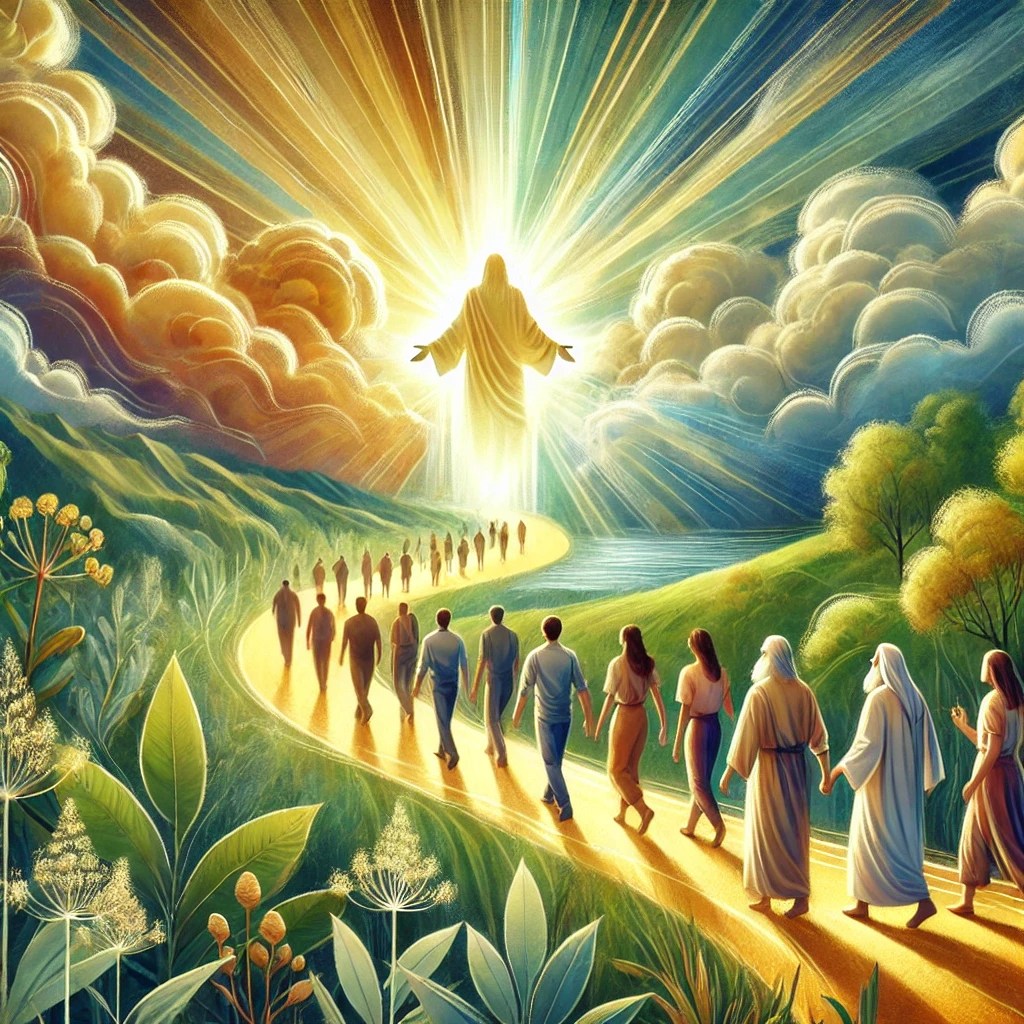
A Heart Aligned with God’s Will
Have you ever paused to wonder what God truly desires from us? Is it our rituals, our offerings, or something deeper—perhaps the very surrender of our hearts and lives? Today’s readings invite us to reflect on this profound question and challenge us to reexamine how we approach our relationship with God.
At the heart of these passages is the theme of obedience to God’s will. The readings reveal that true worship and intimacy with God stem not from external sacrifices but from a deep, internal alignment with His divine plan. This journey toward surrender is not new to humanity. The Old Covenant, with its system of animal sacrifices, foreshadowed the perfect sacrifice of Jesus Christ, whose obedience to the Father’s will offers us salvation and sanctification. Through Christ, we are invited into a transformative relationship with God that redefines even our closest earthly connections.
To fully grasp today’s message, it’s helpful to remember the context of these texts. For the Jewish people, sacrifices were central to their covenant with God, serving as a way to atone for sins and express devotion. However, as the First Reading from Hebrews highlights, these sacrifices were only a “shadow of the good things to come.” “Behold, I come to do your will” is Christ’s declaration that fulfills and replaces these rituals (Hebrews 10:7). It reveals that what God truly desires is a heart aligned with His will.
In the Responsorial Psalm, we hear the psalmist echoing this truth, proclaiming: “Sacrifice and offering you do not want; you opened my ears. Holocaust and sin-offering you do not request” (Psalm 40:7). Instead, God desires a life that proclaims His righteousness and mercy. Finally, in the Gospel of Mark, Jesus invites us into a radical redefinition of family, declaring: “Whoever does the will of God is my brother and sister and mother” (Mark 3:35). This shifts the focus from earthly ties to a heavenly family united by obedience to God’s will.
As we journey through today’s readings, let us reflect: How open are we to surrendering our will to God’s? Are we truly offering our lives as a response to His love? These are the questions that shape our walk with Christ and draw us closer to the heart of the Father.
First Reading – Hebrews 10:1-10
A Shadow of the Good Things to Come
The First Reading comes from the Letter to the Hebrews, a deeply theological and pastoral text written to encourage Jewish Christians who were tempted to return to the practices of the Mosaic Law. For centuries, the Jewish people adhered to the Law’s sacrificial system, which provided a way to atone for sins and maintain their covenantal relationship with God. However, these sacrifices, though commanded by God, were only temporary measures pointing toward a greater reality. The author of Hebrews explains that these sacrifices were merely a “shadow” of the ultimate redemption to come through Christ. Written in a time when temple worship still defined Jewish life, this letter boldly proclaims the insufficiency of the old sacrifices and the transformative power of Christ’s singular offering. Today’s reading brings this into focus, reminding us that true worship and salvation are found in surrendering to God’s will, perfectly revealed in Christ.
This passage speaks directly to the theme of today’s readings: obedience to God’s will as the ultimate form of worship. Christ’s sacrifice, rooted in His unwavering obedience, fulfilled and replaced the Old Covenant sacrifices. The imagery of Christ saying, “Behold, I come to do your will”, underscores that God desires not external rituals but hearts and lives committed to His will. This teaching holds profound implications for us, calling us to go beyond outward expressions of faith and live in alignment with God’s plan.
Hebrews 10:1-10
New American Bible (Revised Edition)
One Sacrifice Instead of Many. 1 Since the law has only a shadow of the good things to come, and not the very image of them, it can never make perfect those who come to worship by the same sacrifices that they offer continually each year. 2 Otherwise, would not the sacrifices have ceased to be offered, since the worshipers, once cleansed, would no longer have had any consciousness of sins? 3 But in those sacrifices there is only a yearly remembrance of sins, 4 for it is impossible that the blood of bulls and goats take away sins. 5 For this reason, when he came into the world, he said:
“Sacrifice and offering you did not desire,
but a body you prepared for me;
6 holocausts and sin offerings you took no delight in.
7 Then I said, ‘As is written of me in the scroll,
Behold, I come to do your will, O God.’”
8 First he says, “Sacrifices and offerings, holocausts and sin offerings, you neither desired nor delighted in.” These are offered according to the law. 9 Then he says, “Behold, I come to do your will.” He takes away the first to establish the second. 10 By this “will,” we have been consecrated through the offering of the body of Jesus Christ once for all.
Detailed Exegesis
Verse 1
“Since the law has only a shadow of the good things to come, and not the very image of them, it can never make perfect those who come to worship by the same sacrifices that they offer continually each year.”
The Mosaic Law, with its prescribed sacrifices, was not an end in itself but a foreshadowing of Christ’s ultimate sacrifice. The word “shadow” conveys something incomplete, temporary, and lacking substance. These sacrifices, repeated annually, served as reminders of sin but could not cleanse the worshiper’s soul. The author emphasizes that true perfection—complete reconciliation with God—was beyond the reach of the Old Covenant sacrifices.
Verse 2
“Otherwise, would not the sacrifices have ceased to be offered, since the worshipers, once cleansed, would no longer have had any consciousness of sins?”
This rhetorical question highlights the inadequacy of the sacrifices. If they truly cleansed the people of their sins, there would be no need for repetition. Their constant re-offering signified their inability to address the root of human sinfulness, leaving worshipers still burdened by guilt and estranged from God.
Verse 3
“But in those sacrifices there is only a yearly remembrance of sins.”
The Day of Atonement, central to Jewish worship, served as an annual reminder of humanity’s brokenness and need for reconciliation with God. Instead of erasing sin, these sacrifices reinforced its presence, pointing to humanity’s need for a more profound and lasting solution.
Verse 4
“For it is impossible that the blood of bulls and goats take away sins.”
Animal sacrifices, though prescribed in the Law, were inherently limited. They served as a symbol of atonement but could not truly address the spiritual separation caused by sin. Only a perfect, divine sacrifice could bridge the gap between humanity and God.
Verse 5
“For this reason, when he came into the world, he said: ‘Sacrifice and offering you did not desire, but a body you prepared for me.’”
This verse quotes Psalm 40:6-8 and places the words in the mouth of Christ, who acknowledges that God’s ultimate desire is not external sacrifices but obedience. Christ’s incarnation—His body prepared for sacrifice—marks the fulfillment of God’s redemptive plan.
Verse 6-7
“Holocausts and sin offerings you took no delight in. Then I said, ‘As is written of me in the scroll, Behold, I come to do your will, O God.’”
These verses emphasize the shift from ritual sacrifices to personal surrender. Christ’s obedience, foretold in Scripture, embodies the perfect response to God’s will, replacing the empty rituals of the Old Covenant.
Verse 8-9
“First he says, ‘Sacrifices and offerings, holocausts and sin offerings, you neither desired nor delighted in.’ These are offered according to the law. Then he says, ‘Behold, I come to do your will.’ He takes away the first to establish the second.”
Jesus fulfills God’s will by abolishing the Old Covenant and inaugurating the New Covenant. This shift is not merely a rejection of the old system but a fulfillment of its purpose in the person of Christ. His obedience establishes the definitive path to salvation.
Verse 10
“By this ‘will,’ we have been consecrated through the offering of the body of Jesus Christ once for all.”
Through Christ’s obedience and sacrifice, believers are sanctified and brought into full communion with God. His single, perfect offering surpasses all prior sacrifices and establishes a new relationship between humanity and God.
Teachings
The Catechism of the Catholic Church offers profound insights into the significance of Christ’s sacrifice. CCC 606 explains that Christ’s entire life was an offering to the Father, culminating in His death on the cross. His obedience, as highlighted in CCC 614, fulfills the Old Covenant and inaugurates the New Covenant: “The sacrifice of Christ is unique; it completes and surpasses all other sacrifices.” Furthermore, CCC 1992 emphasizes that through Christ’s sacrifice, we are justified and sanctified, receiving grace as a free gift.
St. Augustine reflects on this reading by highlighting that true worship comes from a heart aligned with God’s will. He writes, “God desires not what we give to Him, but that we give ourselves.” This teaching challenges us to move beyond mere external acts and embrace a life wholly surrendered to God. Historically, the early Church’s transition from temple sacrifices to the Eucharist reflects this profound truth. The Eucharist is the ultimate expression of Christ’s sacrifice, celebrated daily as the source and summit of Christian life.
Reflection
This reading invites us to reflect on the nature of our own worship. Are we simply going through the motions, offering external acts without a deeper surrender to God’s will? Or are we aligning our lives with the perfect obedience of Christ? True worship begins with a heart committed to God, and this requires trust, humility, and a willingness to let go of our own plans.
In daily life, we can strive to follow Christ’s example by seeking God’s will in all things. This means turning to Him in prayer, asking, Lord, how can I serve You today? It also means surrendering areas of resistance or pride, trusting that His plans are for our ultimate good. Through the Eucharist, we are reminded of Christ’s perfect offering, and we are invited to unite our own lives to His sacrifice.
How does this reading challenge you to go deeper in your relationship with God? Are there areas of your life where you are holding back from fully trusting in His will? Let us open our hearts to Christ’s transformative obedience and allow it to shape our own journey toward holiness.
Responsorial Psalm – Psalm 40:2, 4, 7-8, 10-11
A Song of Obedience and Trust
The Responsorial Psalm today comes from Psalm 40, a heartfelt hymn of thanksgiving and trust in God. Traditionally attributed to King David, this psalm reflects a deep awareness of God’s faithfulness and the psalmist’s commitment to doing God’s will. In ancient Israel, psalms were not only prayers but also communal hymns that expressed the people’s relationship with God. Psalm 40 combines gratitude for God’s past deliverance with a recognition that true worship involves more than external sacrifices—it calls for a life of obedience and proclamation of God’s goodness.
This psalm fits seamlessly into today’s theme of aligning ourselves with God’s will. Just as the First Reading from Hebrews emphasizes the insufficiency of sacrifices without obedience, the psalmist acknowledges that God desires a willing heart over ritual offerings. The psalm also points us toward Christ, whose obedience perfectly fulfilled the Father’s will. Let us explore this beautiful text that calls us to trust in God’s faithfulness and proclaim His righteousness in our lives.
Psalm 40:2, 4, 7-8, 10-11
New American Bible (Revised Edition)
2 Surely, I wait for the Lord;
who bends down to me and hears my cry,
4 And puts a new song in my mouth,
a hymn to our God.
Many shall look on in fear
and they shall trust in the Lord.
7 Sacrifice and offering you do not want;
you opened my ears.
Holocaust and sin-offering you do not request;
8 so I said, “See; I come
with an inscribed scroll written upon me.
10 When I sing of your righteousness
in a great assembly,
See, I do not restrain my lips;
as you, Lord, know.
11 I do not conceal your righteousness
within my heart;
I speak of your loyalty and your salvation.
I do not hide your mercy or faithfulness from a great assembly.
Detailed Exegesis
Verse 2
“Surely, I wait for the Lord; who bends down to me and hears my cry.”
The psalm begins with a statement of trust and patience. The psalmist speaks of waiting for the Lord, confident in God’s attentiveness and compassion. This image of God “bending down” reflects His closeness and care for His people, offering comfort to those who cry out to Him.
Verse 4
“And puts a new song in my mouth, a hymn to our God. Many shall look on in fear and they shall trust in the Lord.”
Here, the psalmist celebrates God’s deliverance, which inspires a “new song” of praise. This deliverance is not only personal but also serves as a testimony to others. By witnessing God’s faithfulness, many are led to awe (“fear”) and trust in Him. This verse reminds us that our experiences of God’s mercy can inspire others to turn to Him.
Verse 7
“Sacrifice and offering you do not want; you opened my ears. Holocaust and sin-offering you do not request.”
The psalmist echoes a profound truth about God’s desire for inward obedience rather than outward rituals. While sacrifices were an important part of Israelite worship, they were never meant to replace a heart open to God’s will. The phrase “you opened my ears” suggests a readiness to listen and respond to God’s voice.
Verse 8
“So I said, ‘See; I come with an inscribed scroll written upon me.’”
This verse conveys the psalmist’s willingness to fulfill God’s will. The “inscribed scroll” could symbolize the Law or God’s covenant, written not just on parchment but internalized in the psalmist’s heart. It reflects a personal commitment to live according to God’s plan.
Verse 10
“When I sing of your righteousness in a great assembly, see, I do not restrain my lips; as you, Lord, know.”
The psalmist proclaims God’s righteousness openly, unafraid to declare His goodness before others. This public praise is an act of witness, showing that worship is not limited to private devotion but includes proclaiming God’s works to the community.
Verse 11
“I do not conceal your righteousness within my heart; I speak of your loyalty and your salvation. I do not hide your mercy or faithfulness from a great assembly.”
This verse emphasizes the psalmist’s eagerness to share God’s mercy and faithfulness with others. True worship involves both personal devotion and a willingness to proclaim God’s love, inspiring others to trust in Him.
Teachings
The Catechism teaches that true worship requires the internal disposition of obedience and trust, as seen in CCC 2098: “The acts of faith, hope, and charity flow from and are nourished by the worship of God.” This psalm illustrates how faith and trust in God’s mercy lead to authentic worship. The rejection of external sacrifices in favor of a willing heart aligns with CCC 2563, which emphasizes that true prayer comes from the depths of the heart: “The heart is the dwelling-place where I am, where I live; it is the place of truth, where we choose life or death.”
St. Augustine’s reflections on the psalms highlight their Christological dimension. He interprets Psalm 40 as a prophecy of Christ’s obedience and mission, fulfilled in His Incarnation and sacrifice. Augustine writes, “The psalmist’s words find their perfection in Christ, who became the perfect offering not of bulls or goats but of Himself.” Historically, the Church has used Psalm 40 during liturgical celebrations to emphasize trust in God’s faithfulness and the call to proclaim His works.
Reflection
Psalm 40 challenges us to reflect on the nature of our worship. Are we simply going through the motions, offering external acts of devotion without a deeper commitment to God’s will? Or are we allowing God to open our ears and write His law on our hearts, as the psalmist describes? This reading invites us to move beyond ritualism and embrace a life of obedience and proclamation.
In our daily lives, we can apply this psalm by taking time to reflect on God’s faithfulness and mercy, thanking Him for the ways He has delivered us. Like the psalmist, we can share our testimony of God’s goodness with others, encouraging them to place their trust in Him. This might involve reaching out to someone in need, offering words of hope and encouragement, or simply speaking openly about our faith when opportunities arise.
How does this psalm inspire you to trust in God more fully? Are there ways in which you can proclaim His faithfulness to others this week? Let us open our ears to God’s voice and commit ourselves to His will, offering Him not empty sacrifices but hearts filled with trust and gratitude.
Holy Gospel – Mark 3:31-35
The Family of God: Redefining Belonging
Today’s Gospel reading from Mark offers a striking moment in Jesus’ ministry where He redefines the meaning of family. In a cultural context where familial ties were central to Jewish identity, Jesus’ words would have been both radical and challenging. For His Jewish audience, the family unit symbolized stability, continuity, and covenantal responsibility. Yet, Jesus reveals a deeper reality: belonging to God’s family is not determined by bloodline or ancestry but by obedience to God’s will. This teaching complements the other readings, emphasizing that true closeness to God comes through doing His will and aligning ourselves with His divine plan.
The Gospel of Mark, known for its urgency and straightforward narrative, often portrays Jesus breaking through cultural norms to proclaim the Kingdom of God. In this passage, Jesus does just that, inviting us to see our relationship with God in terms of discipleship and obedience rather than external or societal markers. This Gospel invites us to reflect on how we define our identity and to consider what it means to be part of God’s family.
Mark 3:31-35
New American Bible (Revised Edition)
Jesus and His Family. 31 His mother and his brothers arrived. Standing outside they sent word to him and called him. 32 A crowd seated around him told him, “Your mother and your brothers [and your sisters] are outside asking for you.” 33 But he said to them in reply, “Who are my mother and [my] brothers?” 34 And looking around at those seated in the circle he said, “Here are my mother and my brothers. 35 [For] whoever does the will of God is my brother and sister and mother.”
Detailed Exegesis
Verse 31
“His mother and his brothers arrived. Standing outside they sent word to him and called him.”
Mary and Jesus’ relatives come to see Him while He is teaching a crowd. In Jewish culture, family responsibilities were highly valued, and it would have been expected for Jesus to prioritize their arrival. However, their standing “outside” while Jesus is “inside” with His followers subtly symbolizes a contrast between familial obligations and spiritual priorities.
Verse 32
“A crowd seated around him told him, ‘Your mother and your brothers [and your sisters] are outside asking for you.’”
The crowd relays the message, likely expecting Jesus to pause His teaching and attend to His family. This verse reflects the cultural expectation of honoring family, especially one’s mother, which would have been a core tenet of Jewish life. However, Jesus uses this moment to teach a profound spiritual truth.
Verse 33
“But he said to them in reply, ‘Who are my mother and [my] brothers?’”
Jesus’ response is not a rejection of His biological family but a rhetorical question meant to shift the focus from earthly relationships to spiritual kinship. This moment invites the crowd, and us, to consider a broader definition of family rooted in obedience to God.
Verse 34
“And looking around at those seated in the circle he said, ‘Here are my mother and my brothers.’”
Jesus turns the attention to His disciples, those who have chosen to follow Him and listen to His teaching. His gesture underscores that true family is found among those who share in the mission of God’s Kingdom. This redefinition of family highlights the inclusivity of God’s love, extending beyond biological ties to embrace all who do His will.
Verse 35
“[For] whoever does the will of God is my brother and sister and mother.”
This concluding verse encapsulates the core message of the passage. Jesus explicitly links familial belonging to obedience to God’s will. It is a call to prioritize our relationship with God above all else, reminding us that our ultimate identity is found in Him. This teaching is deeply Christological, as Jesus Himself embodies perfect obedience to the Father.
Teachings
The Catechism sheds light on this Gospel passage by emphasizing the spiritual family established in Christ. CCC 2233 states: “Becoming a disciple of Jesus means accepting the invitation to belong to God’s family, to live in conformity with His way of life.” This teaching reaffirms that discipleship is the path to true kinship with God. Similarly, CCC 764 highlights the Church as the family of God: “The Church is the family of God. By her very existence, she reveals that those who hear the Word of God and act on it belong to the Kingdom.”
The writings of St. John Chrysostom reflect on this passage, emphasizing the inclusivity of God’s family. He writes, “Christ shows that kinship to Him is not based on nature but on virtue. For it is not the mother but the obedient one who is truly blessed.” Historically, the early Church saw this teaching as a call to unity among believers, transcending ethnic, social, and familial divisions. This understanding laid the foundation for the Church’s universal mission.
Reflection
This Gospel reading invites us to reflect on the nature of our relationship with God and others. Are we living as members of God’s family, committed to doing His will, or are we still clinging to earthly definitions of belonging and identity? Jesus’ words challenge us to evaluate where our ultimate loyalty lies and to prioritize our relationship with God above all else.
In daily life, this teaching calls us to embrace our spiritual family—the Church—and to see our fellow believers as brothers and sisters in Christ. It also challenges us to live out our faith actively, seeking God’s will in every aspect of our lives. This could mean making time for prayer and discernment, serving those in need, or cultivating virtues that reflect God’s love.
How does this Gospel reshape your understanding of family and belonging? In what ways can you better align your life with God’s will this week? Let us open our hearts to the profound reality that we are part of God’s family, united not by blood but by faith and obedience to His divine plan.
Behold, I Come to Do Your Will
Today’s readings weave together a beautiful and challenging theme: that true worship, intimacy with God, and belonging to His family are found not in external rituals or earthly ties but in a heart surrendered to His will. The First Reading from Hebrews reminds us that Christ’s perfect obedience replaced the old sacrifices with a New Covenant, consecrating us through His ultimate offering. The Responsorial Psalm echoes this truth, proclaiming that God desires not sacrifices but a life of trust, obedience, and public testimony to His goodness. Finally, the Gospel of Mark calls us to embrace our identity as members of God’s family, rooted in doing His will and living as disciples.
Together, these readings challenge us to move beyond superficial acts of faith and allow God’s will to shape every aspect of our lives. They remind us that through Christ’s sacrifice, we are not only saved but also invited into a deeper, transformative relationship with God—one that redefines how we worship, how we see ourselves, and how we relate to others.
As you reflect on today’s readings, consider how you might more fully embrace God’s will in your life. Is there an area where you are holding back, resisting His plan or clinging to the comforts of routine over the courage of discipleship? Perhaps you are being called to step out in trust, to proclaim His goodness to others, or to deepen your relationship with Him through prayer and the sacraments.
How is God inviting you to draw closer to Him today? What steps can you take to live out His will with greater faith and commitment? Let us, like Christ, echo the words of the psalmist in our hearts: “Here I am; I come to do Your will” (Hebrews 10:7, Psalm 40:8). May this be our prayer and our purpose as we journey together toward holiness and the fullness of life in God’s family.
Engage with Us!
We’d love to hear how today’s readings resonate with you! Share your reflections in the comments below, and let’s grow together as we seek to align our lives with God’s will. Here are some questions to guide your thoughts and inspire discussion:
First Reading – Hebrews 10:1-10: How does Christ’s perfect obedience challenge you to trust more deeply in God’s plan for your life? Are there areas where you are holding back from surrendering fully to His will?
Responsorial Psalm – Psalm 40:2, 4, 7-8, 10-11: What “new song” of praise has God placed in your heart recently? How can you proclaim His mercy and faithfulness to those around you?
Holy Gospel – Mark 3:31-35: What does it mean to you to be part of God’s family? How can you prioritize doing God’s will in your daily relationships and decisions?
As we go forth, let us strive to live with the love, mercy, and obedience that Jesus exemplified. Together, may we walk in faith, trusting in God’s plan and sharing His goodness with a world in need. Remember, every act of love and surrender to God’s will is a step closer to the fullness of life He desires for us. Let’s encourage one another to live as true disciples, united in Christ’s family and committed to His mission.
Follow us on Instagram and Facebook for more insights and reflections on living a faith-filled life.

 Holy Manna!
Leave a comment