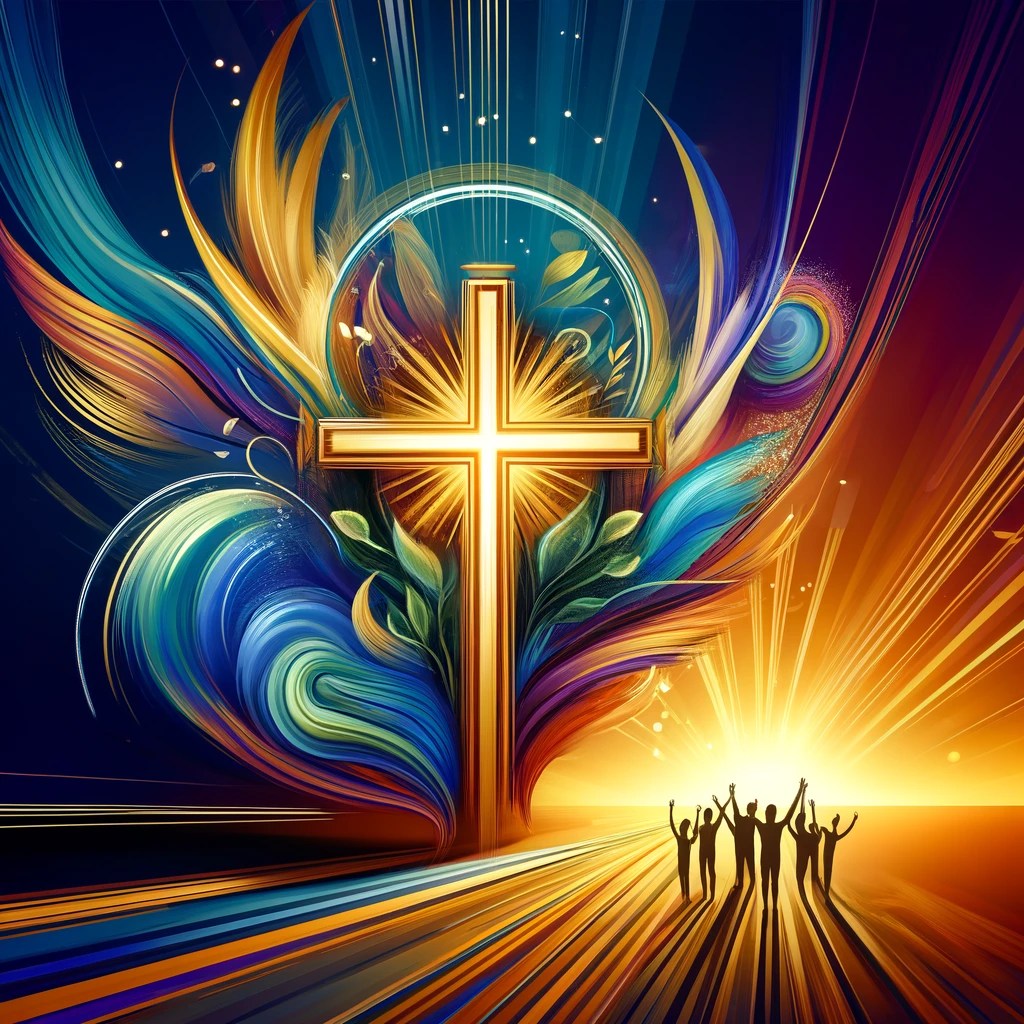
A Kingdom United in Christ’s Victory
Have you ever stopped to consider the beauty of Christ’s singular victory over sin and how it shapes our lives today? Today’s readings invite us into the heart of God’s redemptive plan—a plan marked by profound mercy, decisive victory, and the universal call to faith. At the center of these passages is the unifying theme of Christ’s ultimate triumph over sin and His call for our faithful response.
The first reading from Hebrews introduces us to the radical reality of the new covenant, sealed not with repeated sacrifices but with Christ’s singular, perfect offering for the forgiveness of sins. The responsorial psalm then bursts forth in song, celebrating this victory with the joy and gratitude that flow from God’s faithfulness. Finally, the Gospel of Mark reminds us of the stakes: a divided kingdom cannot stand, and rejecting the Holy Spirit’s work is a rejection of salvation itself.
This message would have been particularly meaningful to early Christians. For the Jewish audience of Hebrews, the idea of a “new covenant” meant a break from the Temple’s sacrificial system, a challenging shift toward seeing Jesus as the fulfillment of God’s promises. Meanwhile, in Mark’s Gospel, the scribes’ accusations against Jesus reflect a deeper spiritual battle—a refusal to accept Him as the true source of redemption. In both contexts, today’s readings encourage us to see the unshakable truth of Christ’s saving work and to rejoice in the life it offers us.
How will you respond to this truth today? Will your heart sing with the psalmist, or will it wrestle with the temptation to doubt Christ’s power in your life? As we explore these readings, let us reflect on the ways God calls us to live in the freedom and joy of His victory, united in His love and faithful to the guidance of the Holy Spirit.
First Reading – Hebrews 9:15, 24-28
A New Covenant of Redemption
The Letter to the Hebrews holds a unique place in the New Testament, offering a profound theological exploration of Christ as the eternal high priest and mediator of the new covenant. Today’s passage highlights a pivotal truth: Christ’s sacrifice on the cross is the definitive act of redemption, replacing the repeated sacrifices of the old covenant with a single, perfect offering. For Jewish Christians in the first century, this message would have challenged their understanding of the Temple and its rituals, revealing Jesus as the fulfillment of everything the old covenant foreshadowed. As we reflect on this passage, we are invited to consider how Christ’s once-for-all sacrifice transforms our lives and secures our hope of eternal salvation.
Hebrews 9:15, 24-28
New American Bible (Revised Edition)
15 For this reason he is mediator of a new covenant: since a death has taken place for deliverance from transgressions under the first covenant, those who are called may receive the promised eternal inheritance.
24 For Christ did not enter into a sanctuary made by hands, a copy of the true one, but heaven itself, that he might now appear before God on our behalf. 25 Not that he might offer himself repeatedly, as the high priest enters each year into the sanctuary with blood that is not his own; 26 if that were so, he would have had to suffer repeatedly from the foundation of the world. But now once for all he has appeared at the end of the ages to take away sin by his sacrifice. 27 Just as it is appointed that human beings die once, and after this the judgment, 28 so also Christ, offered once to take away the sins of many, will appear a second time, not to take away sin but to bring salvation to those who eagerly await him.
Detailed Exegesis
Verse 15: “For this reason he is mediator of a new covenant: since a death has taken place for deliverance from transgressions under the first covenant, those who are called may receive the promised eternal inheritance.”
This verse reveals Christ as the mediator who bridges the gap between humanity and God. Through His death, He fulfills the requirements of the first covenant, which could not fully atone for sin, and inaugurates the new covenant that offers eternal salvation. The “promised eternal inheritance” speaks of the divine life and communion with God that believers are now called to share.
Verse 24: “For Christ did not enter into a sanctuary made by hands, a copy of the true one, but heaven itself, that he might now appear before God on our behalf.”
Here, the author contrasts the earthly Temple with the heavenly sanctuary. The Temple rituals of the old covenant were merely symbolic of the ultimate reality found in Christ. By entering heaven itself, Christ intercedes for us directly before God, embodying the role of the eternal high priest.
Verse 25-26: “Not that he might offer himself repeatedly, as the high priest enters each year into the sanctuary with blood that is not his own; if that were so, he would have had to suffer repeatedly from the foundation of the world. But now once for all he has appeared at the end of the ages to take away sin by his sacrifice.”
These verses emphasize the sufficiency and finality of Christ’s sacrifice. Unlike the high priest who offered animal sacrifices annually on Yom Kippur, Christ’s single offering is effective for all time. His mission to “take away sin” is the culmination of salvation history, fulfilling God’s plan from the very beginning.
Verse 27-28: “Just as it is appointed that human beings die once, and after this the judgment, so also Christ, offered once to take away the sins of many, will appear a second time, not to take away sin but to bring salvation to those who eagerly await him.”
This passage connects Christ’s first coming with His second. While His first coming dealt with sin through His sacrificial death, His second coming will bring the fullness of salvation to those who remain faithful. This verse calls us to live in hope and readiness for Christ’s return.
Teachings
The Catechism of the Catholic Church underscores the significance of Christ’s priesthood and sacrifice. In CCC 613, it teaches that “Christ’s death is both the Paschal sacrifice that accomplishes the definitive redemption of men, through the Lamb of God who takes away the sin of the world, and the sacrifice of the New Covenant, which restores man to communion with God.” St. Thomas Aquinas also reflects on this in his Summa Theologica, where he explains that Christ’s sacrifice is perfect because it was offered by the God-Man, whose infinite love and obedience could fully atone for humanity’s sin.
Historically, this passage also reflects the transition early Christians faced as they moved from Temple-based worship to the Eucharistic celebration. The Church Fathers often interpreted this text as pointing to the Mass, where the once-for-all sacrifice of Christ is made present sacramentally.
Reflection
Christ’s sacrifice is not merely a historical event—it is a living reality that continues to shape our lives. Through His death, He invites us into the new covenant, a covenant not of ritualistic offerings but of transformed hearts. How often do we pause to reflect on the magnitude of this gift? Do we live with the gratitude and hope that come from knowing our eternal inheritance is secure in Him?
In our daily lives, this passage challenges us to surrender fully to God’s mercy and embrace the redemption Christ has won for us. Practical steps could include participating more intentionally in the Mass, where we encounter the reality of His sacrifice, or setting aside time for Eucharistic Adoration to meditate on His love. Finally, how are we preparing our hearts to meet Christ when He comes again? Are we eagerly awaiting Him as the source of our salvation?
Let us live with the confidence and joy of those who belong to the new covenant, singing with the psalmist, “Sing a new song to the Lord, for he has done marvelous deeds” (Psalm 98:1).
Responsorial Psalm – Psalm 98:1-6
Sing to the Lord
The Psalms, known as the prayer book of the Bible, capture the deepest cries of the human heart, ranging from lamentation to exuberant praise. Psalm 98 is a hymn of victory, celebrating the marvelous deeds of God and His faithfulness to Israel. Historically, it reflects the joyful response of the people to God’s salvation, perhaps written during a time of deliverance or after witnessing His mighty hand in battle. For Christians, this psalm finds its ultimate fulfillment in Christ’s victory over sin and death. Today’s reading resonates with the theme of rejoicing in the redemption offered by the new covenant, calling all nations to join in the song of salvation.
Psalm 98:1-6
New American Bible (Revised Edition)
The Coming of God
1 A psalm.
Sing a new song to the Lord,
for he has done marvelous deeds.
His right hand and holy arm
have won the victory.
2 The Lord has made his victory known;
has revealed his triumph in the sight of the nations,
3 He has remembered his mercy and faithfulness
toward the house of Israel.
All the ends of the earth have seen
the victory of our God.
4 Shout with joy to the Lord, all the earth;
break into song; sing praise.
5 Sing praise to the Lord with the lyre,
with the lyre and melodious song.
6 With trumpets and the sound of the horn
shout with joy to the King, the Lord.
Detailed Exegesis
Verse 1: “Sing a new song to the Lord, for he has done marvelous deeds. His right hand and holy arm have won the victory.”
This opening verse calls for a “new song,” symbolizing a fresh act of divine intervention—God’s ultimate saving act. The “right hand and holy arm” refer to God’s power and might, often depicted in the Old Testament as delivering His people. For Christians, this foreshadows the victory of Christ, who defeated sin and death through His resurrection.
Verse 2: “The Lord has made his victory known; has revealed his triumph in the sight of the nations.”
God’s saving power is not hidden but proclaimed to all nations. In the Old Testament, this victory is seen in God’s deliverance of Israel. In the New Testament, this verse points to the universality of Christ’s salvation, as He commissions His disciples to bring the Gospel to the ends of the earth (Matthew 28:19).
Verse 3: “He has remembered his mercy and faithfulness toward the house of Israel. All the ends of the earth have seen the victory of our God.”
God’s mercy and faithfulness are central to His covenant relationship with Israel. The psalmist celebrates that this fidelity extends beyond Israel, reaching “the ends of the earth.” In Christ, the promises made to Israel are fulfilled and extended to all humanity, as emphasized in Romans 15:8-9.
Verse 4: “Shout with joy to the Lord, all the earth; break into song; sing praise.”
This verse calls for a universal response to God’s salvation. The psalmist’s invitation to “all the earth” underscores that God’s works are not limited to one nation or people, aligning with the Gospel’s message of inclusivity.
Verse 5: “Sing praise to the Lord with the lyre, with the lyre and melodious song.”
The mention of musical instruments highlights the joy and exuberance fitting for God’s victory. It reminds us that worship is not only verbal but can also be expressed through art, music, and creativity, all of which glorify God.
Verse 6: “With trumpets and the sound of the horn shout with joy to the King, the Lord.”
The psalmist emphasizes a royal image of God as King. The trumpet and horn, often used in royal ceremonies, signal God’s sovereign reign over creation. For Christians, this kingship finds its ultimate expression in Christ, the King of Kings, whose victory calls for jubilant celebration.
Teachings
The Catechism speaks to the role of praise and worship in our relationship with God. In CCC 2639, it states, “Praise is the form of prayer which recognizes most immediately that God is God. It lauds God for his own sake and gives him glory, quite beyond what he does, but simply because HE IS.” Psalm 98 embodies this praise, inviting us to worship God not only for His deeds but for His very being.
The writings of St. Augustine often reflect on the Psalms as a source of prayer and reflection. Regarding songs of praise, he wrote, “He who sings prays twice,” reminding us that music and song are powerful means of connecting our hearts to God. Historically, this psalm has been associated with liturgical celebrations, particularly during Advent and Christmas, when the Church proclaims the joy of Christ’s incarnation and the salvation He brings to the world.
Reflection
Psalm 98 calls us to joyful praise of God’s victory in our lives. How often do we take time to thank God for the “marvelous deeds” He has worked in our own story? Do we share the joy of our faith with others, as the psalmist invites “all the earth” to do?
This passage challenges us to incorporate praise into our daily lives. Consider starting or ending your day by recounting the ways God has been faithful to you. Attend Mass with greater intention, recognizing it as the ultimate celebration of Christ’s victory. You might even reflect on ways to use your own creative gifts—whether music, art, or writing—to glorify God.
How can you sing a “new song” to the Lord today? Let the joy of God’s triumph inspire you to live in gratitude and share His love with those around you. With the psalmist, we are called to shout with joy to the King, the Lord, who has done—and continues to do—great things.
Holy Gospel – Mark 3:22-30
The Kingdom of God: Divided or United?
The Gospel of Mark draws us into the heart of Jesus’ mission: proclaiming and establishing the Kingdom of God. In today’s passage, Jesus confronts accusations from the scribes that He casts out demons by the power of Beelzebul. This moment reflects the growing opposition to His ministry and a failure to recognize the true source of His power—the Holy Spirit. For the Jewish leaders, Jesus’ works posed a challenge to their understanding of authority and the Kingdom of God. For us, this Gospel warns against spiritual blindness and calls us to embrace the unifying power of Christ’s victory over evil. This ties beautifully into today’s theme of Christ’s ultimate triumph and the call to faith in His salvation.
Mark 3:22-30
New American Bible (Revised Edition)
22 The scribes who had come from Jerusalem said, “He is possessed by Beelzebul,” and “By the prince of demons he drives out demons.”
Jesus and Beelzebul. 23 Summoning them, he began to speak to them in parables, “How can Satan drive out Satan? 24 If a kingdom is divided against itself, that kingdom cannot stand. 25 And if a house is divided against itself, that house will not be able to stand. 26 And if Satan has risen up against himself and is divided, he cannot stand; that is the end of him. 27 But no one can enter a strong man’s house to plunder his property unless he first ties up the strong man. Then he can plunder his house. 28 Amen, I say to you, all sins and all blasphemies that people utter will be forgiven them. 29 But whoever blasphemes against the holy Spirit will never have forgiveness, but is guilty of an everlasting sin.” 30 For they had said, “He has an unclean spirit.”
Detailed Exegesis
Verse 22: “The scribes who had come from Jerusalem said, ‘He is possessed by Beelzebul,’ and ‘By the prince of demons he drives out demons.’”
The scribes accuse Jesus of using demonic power to perform exorcisms. “Beelzebul” refers to a pagan deity, often associated with Satan. This accusation reflects their refusal to see Jesus’ works as coming from God. Their opposition reveals a hardened heart and a resistance to the truth, a theme echoed in Jesus’ later warning about blaspheming against the Holy Spirit.
Verse 23: “Summoning them, he began to speak to them in parables, ‘How can Satan drive out Satan?’”
Jesus confronts their accusation with logic. A divided force cannot succeed, and it is absurd to suggest that Satan would work against himself. This rhetorical question exposes the illogical nature of their claim and begins to point toward the true source of His power—the Holy Spirit.
Verse 24-25: “If a kingdom is divided against itself, that kingdom cannot stand. And if a house is divided against itself, that house will not be able to stand.”
Jesus uses the imagery of a kingdom and a household to illustrate the destructive power of division. A divided house or kingdom is vulnerable and doomed to collapse. This teaching not only applies to the accusations against Him but also serves as a broader warning to His followers about the dangers of division within the Church and among believers.
Verse 26: “And if Satan has risen up against himself and is divided, he cannot stand; that is the end of him.”
Jesus explains that Satan’s power cannot endure division. His ministry, marked by the casting out of demons, demonstrates the Kingdom of God breaking into the world and overpowering Satan’s domain.
Verse 27: “But no one can enter a strong man’s house to plunder his property unless he first ties up the strong man. Then he can plunder his house.”
This verse shifts the focus to Jesus’ authority over Satan. The “strong man” represents Satan, and Jesus is the one who has entered his “house” to bind him. By His power, Jesus is reclaiming what Satan has stolen—freeing people from sin and spiritual oppression.
Verse 28-29: “Amen, I say to you, all sins and all blasphemies that people utter will be forgiven them. But whoever blasphemes against the holy Spirit will never have forgiveness, but is guilty of an everlasting sin.”
Jesus offers a profound teaching on forgiveness, emphasizing that all sins can be forgiven except for the rejection of the Holy Spirit’s work. Blasphemy against the Holy Spirit signifies a persistent refusal to recognize and accept God’s grace and power, which is the foundation of salvation.
Verse 30: “For they had said, ‘He has an unclean spirit.’”
This verse provides context for Jesus’ warning. The scribes’ refusal to acknowledge the Holy Spirit at work in Jesus illustrates the hardness of heart that leads to spiritual blindness and rejection of salvation.
Teachings
The Catechism addresses the sin of blasphemy against the Holy Spirit in CCC 1864: “There are no limits to the mercy of God, but anyone who deliberately refuses to accept his mercy by repenting rejects the forgiveness of his sins and the salvation offered by the Holy Spirit.” This teaching highlights the danger of a hardened heart and the importance of openness to God’s grace.
St. Cyril of Jerusalem also warns against attributing God’s works to evil, as it blinds us to the truth and leads to spiritual destruction. Historically, this Gospel reminds us of the challenges Jesus faced during His ministry, particularly the opposition of religious leaders who clung to their authority rather than embracing the coming of the Kingdom of God.
Reflection
Jesus’ warning against division and spiritual blindness invites us to examine our own hearts. Do we recognize the Holy Spirit at work in our lives and in the world around us? Or do we allow skepticism or pride to blind us to God’s power and presence?
This passage challenges us to promote unity in our families, communities, and the Church. Division weakens the Body of Christ, while unity strengthens our witness to the world. Consider steps you can take to heal divisions in your relationships or parish.
Additionally, Jesus’ teaching on the unforgivable sin calls us to reflect on our openness to God’s grace. Are we fully receptive to the Holy Spirit, or do we resist His promptings out of fear or doubt? Take time to pray for a heart that is humble, open, and responsive to the Spirit’s work.
As we meditate on this Gospel, let us renew our commitment to live as members of God’s Kingdom—united in Christ, attentive to the Holy Spirit, and confident in the victory He has won for us. How can you strengthen your faith in God’s power and share that faith with others today?
Living in the Victory of Christ
Today’s readings weave together a beautiful tapestry of hope, redemption, and the unshakable triumph of Christ over sin and death. In the First Reading, we are reminded of the definitive power of Christ’s sacrifice, which inaugurates the new covenant and secures our eternal inheritance. The Responsorial Psalm echoes with joyful praise, calling all creation to celebrate the marvelous deeds of God’s salvation. Finally, the Holy Gospel warns us of the dangers of division and spiritual blindness, urging us to embrace the unifying power of the Holy Spirit and the Kingdom of God.
Together, these readings invite us to marvel at the greatness of God’s love and mercy, to reflect on the gift of salvation won for us, and to renew our commitment to live as members of His Kingdom. Christ’s victory is complete and final—there is nothing we can add to it—but we are called to respond with faith, gratitude, and joyful participation in the life of the Church.
How can you live more fully in the victory of Christ today? Perhaps it’s by taking time to thank Him for the “marvelous deeds” in your life or by seeking healing in relationships where division lingers. Maybe it’s by opening your heart more deeply to the Holy Spirit’s guidance, especially in moments when doubt or fear arise.
Let today’s message inspire you to live boldly and joyfully as a witness to God’s goodness. Trust in the sufficiency of Christ’s sacrifice, rejoice in the hope of salvation, and proclaim His victory to the world. Will you sing a new song to the Lord this week, inviting others to join you in the joy of His Kingdom? Let your life reflect the truth that, through Christ, we are already victorious.
Engage with Us!
We would love to hear your thoughts on today’s readings! Share your reflections in the comments and let us know how these passages spoke to your heart. Here are a few questions to inspire your reflection and discussion:
- First Reading (Hebrews 9:15, 24-28): How does Christ’s once-for-all sacrifice change the way you view forgiveness and salvation? What does “eagerly awaiting Him” look like in your life?
- Responsorial Psalm (Psalm 98:1-6): What “marvelous deeds” of God are you most thankful for today? How can you invite others to join in your song of praise?
- Holy Gospel (Mark 3:22-30): Are there any ways you resist the work of the Holy Spirit in your life? How can you foster unity in your relationships, parish, or community to reflect God’s Kingdom?
Let us encourage one another to live boldly and faithfully, walking in the joy of Christ’s victory and sharing His love with everyone we meet. May we do everything with the love, mercy, and humility that Jesus taught us, bringing glory to God in all that we do. We look forward to journeying with you in faith!
Follow us on Instagram and Facebook for more insights and reflections on living a faith-filled life.

 Holy Manna!
Leave a comment