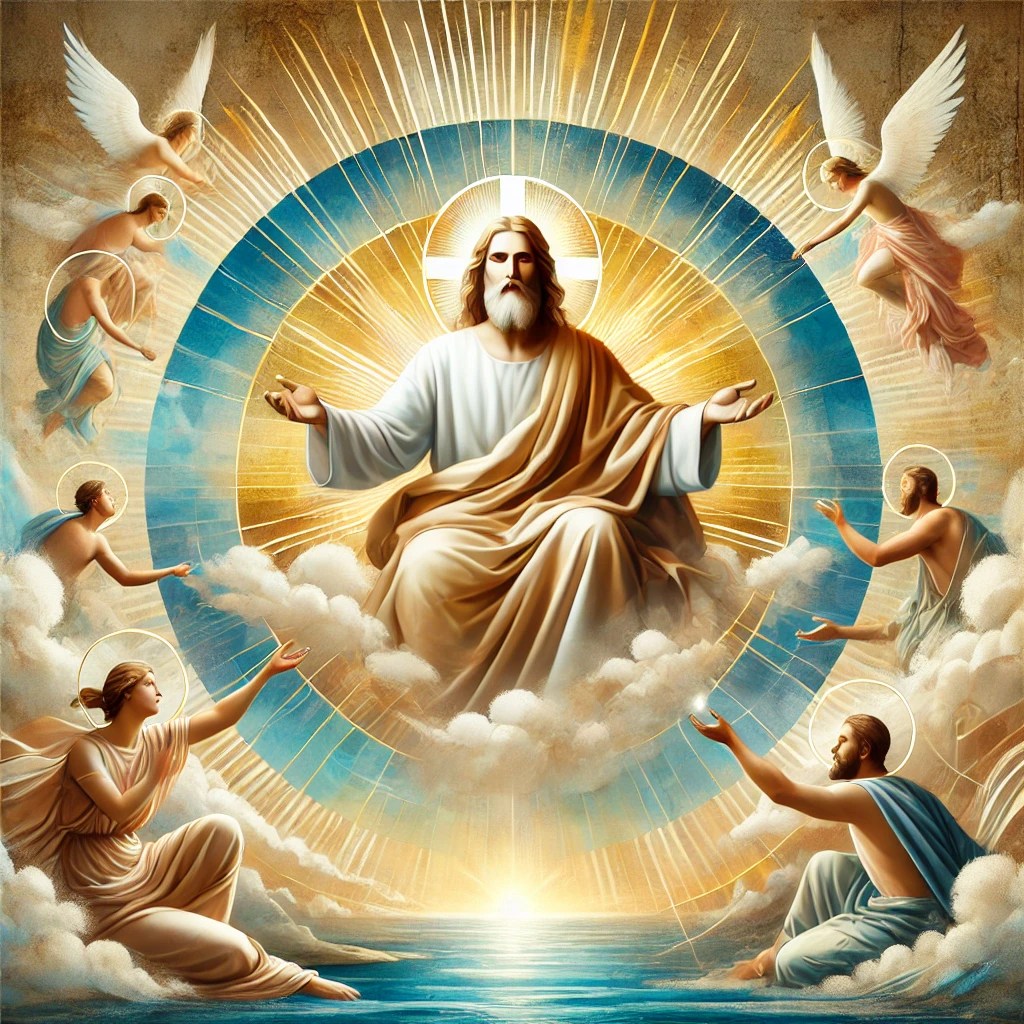
The Eternal High Priest
Have you ever paused to consider what it means to truly approach God? In today’s readings, we are invited to reflect on Jesus as the eternal High Priest, the perfect mediator who bridges the gap between humanity and the divine. He is not only the fulfillment of the Old Covenant but also the one who calls us into a deeper relationship with God through His perfect sacrifice and unending mercy.
The first reading from Hebrews unveils Jesus as the High Priest who offered Himself as the ultimate sacrifice “once for all” (Hebrews 7:27). This profound act contrasts sharply with the repeated offerings of the Old Covenant, which foreshadowed the perfection found in Christ. In the Responsorial Psalm, we hear the psalmist proclaim, “Sacrifice and offering you do not want… I delight to do your will, my God” (Psalm 40:7-9). These words are a prophetic echo of Christ’s obedience to the Father, which brought forth the new and eternal covenant.
In the Gospel of Mark, we see Jesus’ divine authority and mercy on full display as crowds from every direction flock to Him. They seek His healing and salvation, a longing that reflects the human heart’s ultimate desire to be made whole. Even unclean spirits acknowledge Him, crying out, “You are the Son of God” (Mark 3:11).
Historically, these readings draw us into the tension between the Old Covenant’s system of priests and sacrifices and the New Covenant’s fulfillment in Christ. The earthly tabernacle and sacrifices, so central to Jewish worship, were “a copy and shadow of the heavenly sanctuary” (Hebrews 8:5). Jesus’ life, death, and resurrection reveal the full reality—God’s plan to unite us to Himself through the perfect priesthood of His Son.
How can today’s readings inspire us to approach God with gratitude and trust in Jesus, our eternal High Priest? As we journey through these passages, let us open our hearts to the One who intercedes for us, delights in doing the Father’s will, and calls us to experience His saving mercy.
First Reading – Hebrews 7:25–8:6
The Eternal High Priest: A Better Covenant
The Letter to the Hebrews is one of the most theologically rich texts in Sacred Scripture. Written to a community familiar with Jewish traditions and the Old Covenant, the epistle emphasizes Jesus as the fulfillment of all the promises and practices of the Mosaic Law. The Jewish audience would have understood the role of the high priest as an intercessor, someone who offered sacrifices for the people’s sins. Today’s passage draws a stark contrast between the limited, human priesthood of the Old Covenant and the perfect, eternal priesthood of Christ.
This reading connects deeply to the theme of Jesus as the ultimate High Priest, a figure who surpasses the earthly priests not only in His perfection but also in His ability to intercede eternally for humanity. The passage highlights His unique sacrifice—a single, all-encompassing act of love that brings about a new covenant based on God’s grace and better promises.
Hebrews 7:25-8:6
New American Bible (Revised Edition)
25 Therefore, he is always able to save those who approach God through him, since he lives forever to make intercession for them.
26 It was fitting that we should have such a high priest: holy, innocent, undefiled, separated from sinners, higher than the heavens. 27 He has no need, as did the high priests, to offer sacrifice day after day, first for his own sins and then for those of the people; he did that once for all when he offered himself. 28 For the law appoints men subject to weakness to be high priests, but the word of the oath, which was taken after the law, appoints a son, who has been made perfect forever.
Chapter 8
Heavenly Priesthood of Jesus. 1 The main point of what has been said is this: we have such a high priest, who has taken his seat at the right hand of the throne of the Majesty in heaven, 2 a minister of the sanctuary and of the true tabernacle that the Lord, not man, set up. 3 Now every high priest is appointed to offer gifts and sacrifices; thus the necessity for this one also to have something to offer. 4 If then he were on earth, he would not be a priest, since there are those who offer gifts according to the law. 5 They worship in a copy and shadow of the heavenly sanctuary, as Moses was warned when he was about to erect the tabernacle. For he says, “See that you make everything according to the pattern shown you on the mountain.” 6 Now he has obtained so much more excellent a ministry as he is mediator of a better covenant, enacted on better promises.
Detailed Exegesis
Verse 25: “Therefore, he is always able to save those who approach God through him, since he lives forever to make intercession for them.”
This verse reveals the heart of Jesus’ priestly role: intercession. Unlike the priests of the Old Covenant, whose lives and ministries were finite, Jesus’ priesthood is eternal. He “always” intercedes for us, reflecting His active role as mediator. The phrase “able to save” emphasizes the completeness of His salvific power—He saves us not partially, but fully, offering eternal life to those who approach God through Him.
Verse 26: “It was fitting that we should have such a high priest: holy, innocent, undefiled, separated from sinners, higher than the heavens.”
Here, the qualities of Christ are laid bare: His holiness and separation from sin qualify Him as the perfect High Priest. While earthly priests were flawed and required purification for their own sins, Christ’s sinlessness makes Him uniquely capable of serving as the unblemished offering for humanity. The phrase “higher than the heavens” points to His divine origin and exaltation at the right hand of the Father.
Verse 27: “He has no need, as did the high priests, to offer sacrifice day after day, first for his own sins and then for those of the people; he did that once for all when he offered himself.”
The repetitive nature of sacrifices under the Old Covenant highlighted their imperfection—they could never fully cleanse humanity from sin. Jesus, however, offered Himself “once for all,” marking the definitive end of the old sacrificial system. His sacrifice is unrepeatable because it is perfect and complete, rooted in His divine nature and love for humanity.
Verse 28: “For the law appoints men subject to weakness to be high priests, but the word of the oath, which was taken after the law, appoints a son, who has been made perfect forever.”
The distinction between the Levitical priesthood and Jesus’ priesthood is clarified. The former was established by the law and entrusted to flawed men; the latter is grounded in God’s eternal promise (the “word of the oath”). Jesus, as the Son, embodies perfection, fulfilling the requirements of both priest and sacrifice.
Verse 8:1-2: “We have such a high priest, who has taken his seat at the right hand of the throne of the Majesty in heaven, a minister of the sanctuary and of the true tabernacle that the Lord, not man, set up.”
This imagery of Christ seated at God’s right hand highlights His divine authority and fulfillment of the priestly role. The “true tabernacle” contrasts with the earthly tabernacle of the Old Covenant, which was merely a shadow of heavenly realities.
Teachings
The Catechism of the Catholic Church teaches that Jesus’ priesthood is unique and eternal. Paragraph 1544 explains, “Everything that the priesthood of the Old Covenant prefigured finds its fulfillment in Christ Jesus, the ‘one mediator between God and men’” (1 Timothy 2:5). Jesus’ sacrifice is the ultimate act of love, uniting heaven and earth and rendering obsolete the need for repetitive sacrifices.
St. Thomas Aquinas, in his Summa Theologiae, reflects on the sufficiency of Christ’s sacrifice, stating, “The priesthood of Christ is eternal because it is exercised by the power of an indestructible life” (ST III, Q.22, A.3). His priesthood, rooted in His divine nature, transcends human limitations, securing salvation for all who seek Him.
Reflection
How does Christ’s role as the eternal High Priest inspire your relationship with God? This passage invites us to approach Jesus with confidence and trust, knowing that He continually intercedes for us. His sacrifice reminds us that our salvation is not dependent on our merit but on His infinite grace. Reflecting on this truth can deepen our faith and help us surrender more fully to God’s love.
In daily life, this reading challenges us to emulate Christ’s obedience and selflessness. Consider where you might need to let go of control and place your trust in God. Are there areas in your life where pride, fear, or doubt hinder you from fully surrendering to His will? Through prayer and meditation on the Eucharist—where Christ’s perfect sacrifice is made present—we can draw closer to Him and align our hearts with His.
As you reflect on this passage, ask yourself: Am I living in gratitude for the better covenant Jesus has established? How can I actively seek to live in obedience to God’s will? Open your heart to Christ’s eternal intercession and let His example of holiness inspire you to strive for a life rooted in faith and love.
Responsorial Psalm – Psalm 40:7–10, 17
Delighting in God’s Will: A Song of Obedience
The Book of Psalms is often referred to as the prayer book of the Bible, giving voice to every human emotion in its relationship with God. Psalm 40 is a beautiful reflection on obedience, gratitude, and trust in God’s saving power. In today’s excerpt, the psalmist contrasts outward rituals of sacrifice with the deeper call to internal submission to God’s will, a theme that aligns perfectly with Jesus’ role as the eternal High Priest. This psalm is often interpreted prophetically, with its message pointing directly to Christ, who fully embodied delight in doing the Father’s will.
Historically, sacrifices were central to Jewish worship, but the psalmist’s words reveal a shift toward understanding that true worship flows from the heart and aligns with God’s law. Today, as we meditate on this psalm, we are reminded of Christ’s obedience and how He invites us to share in His mission by joyfully doing the will of the Father.
Psalm 40:7-10, 17
New American Bible (Revised Edition)
7 Sacrifice and offering you do not want;
you opened my ears.
Holocaust and sin-offering you do not request;
8 so I said, “See; I come
with an inscribed scroll written upon me.
9 I delight to do your will, my God;
your law is in my inner being!”
10 When I sing of your righteousness
in a great assembly,
See, I do not restrain my lips;
as you, Lord, know.
17 While those who seek you
rejoice and be glad in you.
May those who long for your salvation
always say, “The Lord is great.”
Detailed Exegesis
Verse 7: “Sacrifice and offering you do not want; you opened my ears. Holocaust and sin-offering you do not request.”
This verse underscores God’s preference for obedience over external ritual. The phrase “you opened my ears” evokes the image of a servant whose ears are attentive to the master’s command, signifying readiness to hear and obey. It anticipates the teachings of Jesus, who declared, “I desire mercy, not sacrifice” (Matthew 9:13). The psalmist reveals a God who desires a heart attuned to His will more than outward offerings.
Verse 8: “So I said, ‘See; I come with an inscribed scroll written upon me.’”
The psalmist expresses a readiness to fulfill God’s law, symbolized by the “inscribed scroll,” which represents God’s commands written on the heart. This imagery echoes the prophecy of Jeremiah: “I will place my law within them and write it upon their hearts” (Jeremiah 31:33). Jesus, as the Word made flesh, fulfills this promise by perfectly living out God’s will.
Verse 9: “I delight to do your will, my God; your law is in my inner being!”
This verse expresses the psalmist’s joy in obedience. True worship is not a burden but a delight when one is fully aligned with God’s law. Christ embodies this perfectly, as He stated, “My food is to do the will of the one who sent me” (John 4:34). His obedience even unto death serves as the ultimate example for us.
Verse 10: “When I sing of your righteousness in a great assembly, see, I do not restrain my lips; as you, Lord, know.”
The psalmist commits to proclaiming God’s goodness publicly. This act of praise acknowledges that true worship is not private but communal, drawing others to encounter God’s righteousness. For Christians, this points to our call to evangelize, sharing the Gospel in word and deed.
Verse 17: “While those who seek you rejoice and be glad in you. May those who long for your salvation always say, ‘The Lord is great.’”
The psalm ends with a note of hope and joy for those who seek God. The psalmist encourages believers to rejoice in God’s saving power, a call that resonates with the gratitude and hope we are invited to live out in Christ.
Teachings
The Catechism highlights the relationship between sacrifice and obedience. Paragraph 2100 states, “Outward sacrifice, to be genuine, must be the expression of spiritual sacrifice: ‘The sacrifice acceptable to God is a broken spirit….’ The prophets of the Old Covenant often denounced sacrifices that were not from the heart or not coupled with love of neighbor” (cf. Psalm 51:17; Amos 5:21-25). Jesus fulfills this teaching by offering Himself in perfect obedience to the Father’s will, embodying what it means to delight in God’s law.
St. Augustine reflects on this psalm in his writings, emphasizing that Christ’s perfect sacrifice replaces the need for the burnt offerings described in the Old Covenant. Augustine writes, “God does not seek offerings for the sake of offerings, but for the transformation of the heart through love and obedience” (Exposition on the Psalms).
Reflection
This psalm calls us to examine our own approach to worship and obedience. Are we simply going through the motions, or are we delighting in God’s will? How can we internalize God’s law so that it becomes the driving force behind our actions and decisions? Like the psalmist, we are called to joyfully proclaim God’s righteousness in both word and deed.
In daily life, this means seeking opportunities to align our choices with God’s law, whether through acts of charity, fidelity to prayer, or surrendering areas of pride and selfishness. Consider how you can make God’s will the center of your life. Reflect on these questions: Am I offering my heart to God fully, or am I holding something back? How can I bring others to rejoice and say, ‘The Lord is great?’ May this psalm inspire us to live with hearts open to God’s will and to delight in sharing His love with the world.
Holy Gospel – Mark 3:7–12
Jesus’ Mercy: The Healer Who Draws All to Himself
The Gospel of Mark is known for its vivid and fast-paced portrayal of Jesus’ public ministry, emphasizing His authority, compassion, and mission to proclaim the Kingdom of God. In today’s passage, we witness Jesus withdrawing to the sea as people from all over the region seek Him. The crowds come with a sense of urgency, longing for healing and salvation, while unclean spirits cry out, recognizing His divine identity. This passage paints a compelling picture of Jesus as both healer and Son of God, offering mercy and salvation to all who seek Him.
Culturally, the region described encompasses Galilee, Judea, and beyond, demonstrating the far-reaching impact of Jesus’ ministry. People from Jewish and Gentile areas alike were drawn to Him, showing that His mission extended beyond the boundaries of Israel. This passage ties into today’s theme by illustrating Jesus’ role as the ultimate mediator between humanity and God. His actions reveal His mercy and His authority as the eternal High Priest who intercedes for all.
Mark 3:7-12
New American Bible (Revised Edition)
The Mercy of Jesus. 7 Jesus withdrew toward the sea with his disciples. A large number of people [followed] from Galilee and from Judea. 8 Hearing what he was doing, a large number of people came to him also from Jerusalem, from Idumea, from beyond the Jordan, and from the neighborhood of Tyre and Sidon. 9 He told his disciples to have a boat ready for him because of the crowd, so that they would not crush him. 10 He had cured many and, as a result, those who had diseases were pressing upon him to touch him. 11 And whenever unclean spirits saw him they would fall down before him and shout, “You are the Son of God.” 12 He warned them sternly not to make him known.
Detailed Exegesis
Verse 7: “Jesus withdrew toward the sea with his disciples. A large number of people [followed] from Galilee and from Judea.”
Jesus’ withdrawal to the sea demonstrates His awareness of the growing attention and tension surrounding His ministry. Despite His desire for solitude or respite, the crowds follow Him, showing the universal human longing for healing and hope. This verse highlights Jesus’ accessibility and His willingness to meet people in their need, even in moments of retreat.
Verse 8: “Hearing what he was doing, a large number of people came to him also from Jerusalem, from Idumea, from beyond the Jordan, and from the neighborhood of Tyre and Sidon.”
The mention of diverse regions reflects the widespread reputation of Jesus and the inclusivity of His ministry. People from predominantly Jewish areas (Galilee, Judea, and Jerusalem) and Gentile territories (Idumea, Tyre, and Sidon) flock to Him. This foreshadows the universal nature of Christ’s mission, breaking down barriers between Jews and Gentiles and fulfilling God’s promise of salvation for all nations.
Verse 9: “He told his disciples to have a boat ready for him because of the crowd, so that they would not crush him.”
The image of the crowd pressing upon Jesus underscores the intensity of their desperation and need. The boat serves as a practical solution, allowing Jesus to continue His ministry while managing the overwhelming response. Spiritually, this moment reminds us of Christ’s deep compassion for humanity, as He seeks ways to meet the needs of the multitudes.
Verse 10: “He had cured many and, as a result, those who had diseases were pressing upon him to touch him.”
This verse reveals the profound impact of Jesus’ healing ministry. The people’s eagerness to touch Him reflects their faith in His power and their longing for restoration. In a spiritual sense, it symbolizes the human desire to be in close contact with the divine and to receive God’s saving grace.
Verse 11: “And whenever unclean spirits saw him they would fall down before him and shout, ‘You are the Son of God.’”
The unclean spirits’ recognition of Jesus’ divine identity underscores His authority over all creation, including the spiritual realm. Their cries, though true, are silenced by Jesus, reflecting His control over the timing and nature of His self-revelation. This moment points to the spiritual battle underlying His ministry and His ultimate victory over sin and evil.
Verse 12: “He warned them sternly not to make him known.”
By silencing the unclean spirits, Jesus asserts His authority and ensures that His mission unfolds according to the Father’s will. His time for full revelation has not yet come, as His ministry must lead to the cross and resurrection. This verse highlights the careful unfolding of God’s plan for salvation.
Teachings
The Catechism emphasizes Christ’s role as the compassionate healer and mediator. Paragraph 1503 teaches, “Christ’s compassion toward the sick and his many healings of every kind of infirmity are a resplendent sign that ‘God has visited his people.’” Jesus’ miracles not only demonstrate His divine authority but also reveal His deep love for humanity.
St. John Chrysostom reflects on the crowds in this passage, noting that their hunger for healing symbolizes humanity’s greater need for spiritual healing and redemption. He writes, “The multitude came seeking miracles, yet Christ desired to heal their souls. His mercy extended beyond their immediate needs, drawing them closer to the Kingdom of God.”
Reflection
This passage invites us to consider our own approach to Jesus. Do we seek Him only in times of need, or do we long for a deeper, ongoing relationship with Him? How often do we press upon Him in prayer, trusting in His power to heal and restore?
In our daily lives, we are called to imitate Christ’s compassion. Just as He met people in their brokenness, we can bring healing and hope to those around us through acts of love, service, and kindness. Reflect on how you can become a vessel of Christ’s mercy in your community.
Am I willing to draw close to Jesus, even when life feels overwhelming or uncertain? How can I invite others to encounter the healing power of Christ in their own lives? Let this Gospel inspire us to trust in His mercy and to share His love with a world in desperate need of healing.
Draw Near to the Eternal High Priest
Today’s readings converge around the profound truth that Jesus Christ is the eternal High Priest, the perfect mediator who bridges the gap between humanity and God. In the First Reading, we see how Christ surpasses the limitations of the Old Covenant by offering Himself as the ultimate sacrifice “once for all” (Hebrews 7:27). The psalm reminds us that true worship comes not from external rituals but from a heart that delights in doing God’s will (Psalm 40:8). In the Gospel, we witness the mercy of Jesus as He heals and restores all who come to Him, while His divine authority is proclaimed even by unclean spirits (Mark 3:11).
Together, these passages reveal a God who desires not just our offerings, but our hearts—hearts open to His grace, trust, and love. Jesus, the eternal High Priest, invites us to approach Him with confidence, knowing that He intercedes for us and delights in our willingness to align our lives with God’s will.
How can we respond to this call in our daily lives? By seeking Jesus in prayer, participating in the sacraments, and living out His compassion and mercy in our interactions with others, we can draw closer to the One who saves us. Let us open our hearts to the transformative power of His love and allow Him to lead us on the path of holiness.
As we go forth today, may we carry these words in our hearts: “I delight to do your will, my God; your law is in my inner being!” (Psalm 40:8). Let them inspire us to live each day in gratitude for Christ’s sacrifice and with a renewed commitment to follow Him more faithfully.
Will you take the next step toward Him today? Trust in the eternal High Priest who intercedes for you, and let His mercy guide your life.
Engage with Us!
We would love to hear how today’s readings speak to your heart. Share your reflections in the comments and join the conversation as we journey together in faith. Here are some questions to guide your thoughts:
- First Reading (Hebrews 7:25–8:6): How does understanding Jesus as the eternal High Priest deepen your gratitude for His sacrifice? In what ways can you approach God more confidently through Christ?
- Responsorial Psalm (Psalm 40:7–10, 17): What does it mean for you to “delight in doing God’s will”? Are there areas in your life where you can surrender more fully to His plans?
- Holy Gospel (Mark 3:7–12): How can you imitate Jesus’ compassion in your daily interactions? When have you experienced His healing and mercy in your life?
We encourage you to take these questions to prayer and share your insights with our community. Let’s support one another as we strive to live lives of faith, inspired by the love and mercy Jesus taught us. Remember, every step you take toward Him is met with His eternal intercession and grace. May God bless you abundantly as you walk in His will!
Follow us on Instagram and Facebook for more insights and reflections on living a faith-filled life.

 Holy Manna!
Leave a comment