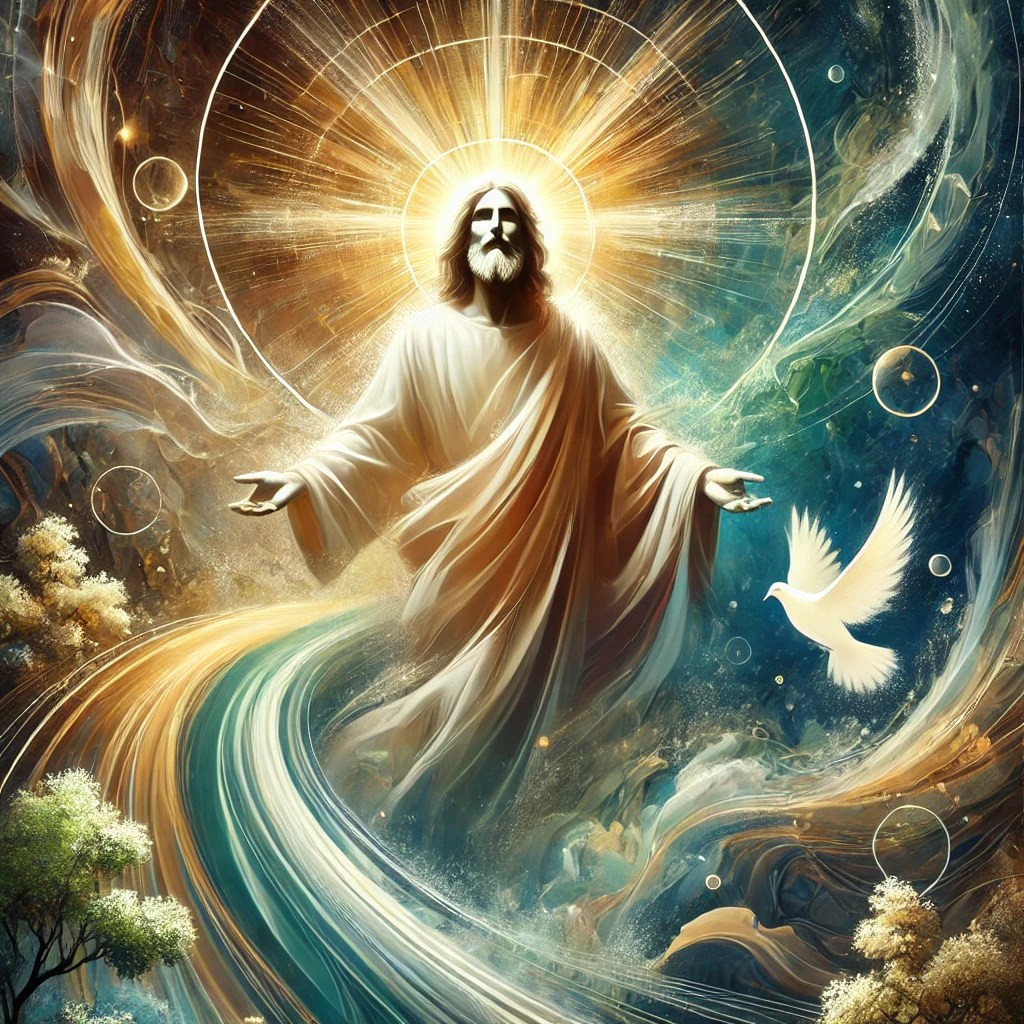
Christ’s Eternal Mission of Life and Restoration
Have you ever pondered the eternal nature of Christ’s mission? Today’s readings invite us to reflect on Jesus as the eternal high priest, whose divine authority surpasses earthly limitations to bring life, healing, and restoration. How does this reality challenge the way we see God working in our lives today?
The figure of Melchizedek in Hebrews and Psalm 110 is central to understanding Christ’s priesthood. Melchizedek, the mysterious “king of Salem” and “priest of God Most High,” appears in the Old Testament as a figure without beginning or end. This prefigures Jesus, whose priesthood is eternal and life-giving, not bound by lineage or law. For early Jewish Christians, this would have been a powerful symbol: Jesus fulfills and surpasses the priesthood of the Old Covenant.
In the Gospel from Mark, Jesus demonstrates the life-giving essence of His priesthood by healing a man with a withered hand on the Sabbath. This act not only reveals His divine power but also challenges rigid interpretations of the law. Jesus shows that His mission prioritizes mercy and restoration over legalism, fulfilling the deeper purpose of God’s law: the salvation and flourishing of life.
Through these passages, we see a central theme emerge: Christ, the eternal priest, brings God’s life and restoration into a broken world. As we explore today’s readings, let us open our hearts to the timeless truth of Jesus’ priesthood and His call to bring healing and renewal to every aspect of our lives.
First Reading – Hebrews 7:1-3, 15-17
Christ, the Righteous King and Eternal Intercessor
The Letter to the Hebrews was written to Jewish Christians struggling to reconcile their heritage with the new reality of Christ’s fulfillment of the Old Covenant. In today’s passage, we are introduced to Melchizedek, a mysterious Old Testament figure mentioned in Genesis 14, who is both king and priest. This dual role foreshadows the ultimate fulfillment found in Jesus Christ, whose priesthood is eternal and whose reign brings peace and righteousness. In the time of the early Church, this parallel would have been deeply significant for Jewish converts, as it affirmed Jesus as the true High Priest, not through lineage but through divine authority.
This reading beautifully ties into today’s theme by establishing that Christ’s priesthood transcends time and space, bringing eternal life and restoration.
Hebrews 7:1-3, 15-17
New American Bible (Revised Edition)
Melchizedek, a Type of Christ. 1 This “Melchizedek, king of Salem and priest of God Most High,” “met Abraham as he returned from his defeat of the kings” and “blessed him.” 2 And Abraham apportioned to him “a tenth of everything.” His name first means righteous king, and he was also “king of Salem,” that is, king of peace. 3 Without father, mother, or ancestry, without beginning of days or end of life, thus made to resemble the Son of God, he remains a priest forever.
15 It is even more obvious if another priest is raised up after the likeness of Melchizedek, 16 who has become so, not by a law expressed in a commandment concerning physical descent but by the power of a life that cannot be destroyed. 17 For it is testified:
“You are a priest forever
according to the order of Melchizedek.”
Detailed Exegesis
Verse 1: “This ‘Melchizedek, king of Salem and priest of God Most High,’ ‘met Abraham as he returned from his defeat of the kings’ and ‘blessed him.’”
Melchizedek’s dual role as king and priest is unique in the Old Testament, and his encounter with Abraham emphasizes his superiority. By blessing Abraham, Melchizedek demonstrates his divine appointment. In this way, he prefigures Christ, who blesses humanity not just as a priest but as the King of Peace.
Verse 2: “And Abraham apportioned to him ‘a tenth of everything.’ His name first means righteous king, and he was also ‘king of Salem,’ that is, king of peace.”
Abraham’s act of tithing to Melchizedek shows acknowledgment of Melchizedek’s higher status. The name “righteous king” and “king of peace” align perfectly with the identity of Christ, who is both our righteousness (1 Corinthians 1:30) and the bringer of ultimate peace (John 14:27).
Verse 3: “Without father, mother, or ancestry, without beginning of days or end of life, thus made to resemble the Son of God, he remains a priest forever.”
Melchizedek’s lack of genealogy symbolizes an eternal priesthood, which finds its perfect fulfillment in Jesus. Unlike the Levitical priesthood, dependent on ancestry, Christ’s priesthood is eternal, divine, and unbroken.
Verses 15-16: “It is even more obvious if another priest is raised up after the likeness of Melchizedek, who has become so, not by a law expressed in a commandment concerning physical descent but by the power of a life that cannot be destroyed.”
Here, the author of Hebrews makes it clear: Jesus’ priesthood does not depend on lineage but on the eternal power of His divine life. His resurrection affirms this, proving that His priesthood cannot be corrupted by death.
Verse 17: “For it is testified: ‘You are a priest forever according to the order of Melchizedek.’”
This quotation from Psalm 110 underscores the eternal nature of Christ’s priesthood. Jesus is not just a priest temporarily mediating between God and humanity—He intercedes eternally, making Him the perfect fulfillment of this prophecy.
Teachings
The Catechism of the Catholic Church explains Christ’s priesthood as eternal and unique: “Christ’s redemptive sacrifice is unique, accomplished once for all; yet it is made present in the Eucharistic sacrifice of the Church” (CCC 1545). This teaching reminds us that, like Melchizedek’s offering, the Eucharist is both a royal banquet and a sacrificial act that perpetuates Christ’s intercession.
St. Thomas Aquinas emphasized the superiority of Christ’s priesthood in his Summa Theologica: “The priesthood of Christ is eternal because it flows from His divine nature and the everlasting love of the Father” (ST III, Q.22, A.3). This teaching deepens our understanding of Christ’s role as the eternal mediator between humanity and God.
Reflection
In our daily lives, how often do we seek to rely on Christ’s eternal priesthood? Do we trust in His divine authority to bring restoration to the brokenness in our hearts and lives? This reading reminds us that Jesus, our High Priest, is always interceding for us and offering us peace.
Take time today to reflect on areas in your life where you need healing or peace. Offer these to Christ in prayer, trusting in His eternal priesthood to bring renewal. How can you grow in trusting God’s plan, even when it doesn’t align with earthly expectations? By drawing near to Christ, the King of Peace, we open ourselves to the life-giving grace of His eternal mission.
Responsorial Psalm – Psalm 110:1-4
The Eternal King-Priest
The Responsorial Psalm for today is a royal psalm attributed to King David, rich with Messianic prophecy. It proclaims the enthronement of the Messiah, who is both king and priest in the order of Melchizedek. Written in the context of Israel’s monarchy, this psalm would have been a reminder to the Jewish people that God’s chosen king was also His mediator, entrusted with spiritual authority. In today’s readings, Psalm 110 reinforces the theme of Christ’s eternal priesthood and kingship, fulfilling the promises of the Old Testament in a way that surpasses all expectations.
Psalm 110:1-4
New American Bible (Revised Edition)
God Appoints the King both King and Priest
1 A psalm of David.
The Lord says to my lord:
“Sit at my right hand,
while I make your enemies your footstool.”
2 The scepter of your might:
the Lord extends your strong scepter from Zion.
Have dominion over your enemies!
3 Yours is princely power from the day of your birth.
In holy splendor before the daystar,
like dew I begot you.
4 The Lord has sworn and will not waver:
“You are a priest forever in the manner of Melchizedek.”
Detailed Exegesis
Verse 1: “The Lord says to my lord: ‘Sit at my right hand, while I make your enemies your footstool.’”
This opening verse is one of the most frequently cited Messianic prophecies in the New Testament (Matthew 22:44, Acts 2:34-35). The “Lord” (God the Father) addresses “my lord” (the Messiah), granting Him a position of honor and authority. Sitting at the right hand symbolizes divine kingship and victory. Jesus fulfills this prophecy through His ascension, where He sits at the Father’s right hand, interceding for us eternally (Romans 8:34).
Verse 2: “The scepter of your might: the Lord extends your strong scepter from Zion. Have dominion over your enemies!”
The “scepter” is a symbol of royal authority, extended from Zion, the spiritual center of God’s covenant with His people. This dominion foreshadows Christ’s universal reign as the King of Kings. His authority is not limited to a political kingdom but extends to the hearts and souls of all who follow Him.
Verse 3: “Yours is princely power from the day of your birth. In holy splendor before the daystar, like dew I begot you.”
This verse points to the divine origin of the Messiah, underscoring His eternal nature. The poetic imagery of the “daystar” and “dew” evokes purity, renewal, and divine mystery, reflecting the eternal priesthood of Christ, who was “begotten, not made” (Nicene Creed). His mission is rooted in holiness and divine purpose.
Verse 4: “The Lord has sworn and will not waver: ‘You are a priest forever in the manner of Melchizedek.’”
God’s oath establishes the Messiah’s eternal priesthood in the order of Melchizedek, rather than the temporary Levitical priesthood. This verse is directly connected to the First Reading and highlights the uniqueness of Christ’s priesthood: eternal, universal, and directly instituted by God. As the Catechism states, “Christ is the unique mediator between God and men” (CCC 1544).
Teachings
The Catechism teaches that Christ’s priesthood is eternal and rooted in God’s unchanging promise: “The one priesthood of Christ is made present through the ministerial priesthood, which is distinct yet at the service of the common priesthood of all the faithful” (CCC 1547). This psalm also reminds us that Christ’s kingship and priesthood are inseparable, fulfilling God’s covenantal promises.
St. Augustine reflects on this psalm in his Expositions on the Psalms, emphasizing that Christ’s role as both priest and king establishes a kingdom of justice and mercy: “He rules as king in our hearts and mediates as priest for our salvation.” This dual role provides assurance that Christ’s reign is one of both power and grace.
Reflection
This psalm challenges us to consider Christ’s reign in our own lives. Do we fully embrace Him as our King and allow His authority to guide our actions? Do we seek His intercession as our eternal priest, trusting in His power to transform us?
Take time today to pray with this psalm, asking Christ to reign in your heart and life. Reflect on His dual role as king and priest, and consider how you can submit to His authority with trust and love. How can you bring His justice and mercy into your relationships and daily decisions? Allow this psalm to remind you that Christ’s priesthood and kingship are not distant concepts but active realities that can transform your life today.
Holy Gospel – Mark 3:1-6
Mercy instead of Perfection
The Gospel of Mark emphasizes Jesus’ divine authority and the unfolding of His mission to bring healing and restoration to humanity. In today’s passage, Jesus heals a man with a withered hand, a seemingly simple act that becomes a point of contention with the Pharisees. This event takes place within the cultural and religious tensions of first-century Judaism, where strict Sabbath laws often clashed with Jesus’ life-giving mission. By healing on the Sabbath, Jesus challenges rigid interpretations of the law, revealing that mercy and restoration are at the heart of God’s commands. This Gospel ties into today’s theme by illustrating the restorative nature of Christ’s priesthood and His authority to fulfill the law in love.
Mark 3:1-6
New American Bible (Revised Edition)
A Man with a Withered Hand. 1 Again he entered the synagogue. There was a man there who had a withered hand. 2 They watched him closely to see if he would cure him on the sabbath so that they might accuse him. 3 He said to the man with the withered hand, “Come up here before us.” 4 Then he said to them, “Is it lawful to do good on the sabbath rather than to do evil, to save life rather than to destroy it?” But they remained silent. 5 Looking around at them with anger and grieved at their hardness of heart, he said to the man, “Stretch out your hand.” He stretched it out and his hand was restored. 6 The Pharisees went out and immediately took counsel with the Herodians against him to put him to death.
Detailed Exegesis
Verse 1: “Again he entered the synagogue. There was a man there who had a withered hand.”
Jesus’ presence in the synagogue underscores His role as a teacher and healer. The man with the withered hand represents physical brokenness but also the spiritual and social marginalization often associated with disabilities in Jewish culture. Jesus’ focus on this man sets the stage for an act of profound compassion and divine authority.
Verse 2: “They watched him closely to see if he would cure him on the sabbath so that they might accuse him.”
The Pharisees’ scrutiny reveals their hardened hearts. Instead of seeking God’s glory, they are preoccupied with finding fault in Jesus. This verse highlights the legalism that had overshadowed the true purpose of the Sabbath: a day for worship, rest, and renewal.
Verse 3: “He said to the man with the withered hand, ‘Come up here before us.’”
Jesus calls the man into the center of attention, making his need visible to all. This act is deliberate, as it forces the Pharisees and onlookers to confront the true question: Is the Sabbath a day to honor God through love and mercy, or through rigid adherence to rules?
Verse 4: “Then he said to them, ‘Is it lawful to do good on the sabbath rather than to do evil, to save life rather than to destroy it?’ But they remained silent.”
Jesus’ question is direct and challenges the Pharisees’ understanding of the law. By remaining silent, they reveal their inability—or unwillingness—to embrace the deeper meaning of God’s commandments, which are centered on love and the flourishing of life.
Verse 5: “Looking around at them with anger and grieved at their hardness of heart, he said to the man, ‘Stretch out your hand.’ He stretched it out and his hand was restored.”
Jesus’ anger reflects righteous indignation at the Pharisees’ lack of compassion, while His grief shows His deep love and desire for their conversion. The healing itself is a demonstration of Christ’s divine authority and the restorative power of His priesthood. By restoring the man’s hand, Jesus reveals the true purpose of the law: to bring life and wholeness.
Verse 6: “The Pharisees went out and immediately took counsel with the Herodians against him to put him to death.”
The Pharisees’ reaction shows how deeply entrenched their opposition to Jesus has become. Their collaboration with the Herodians, a political group, illustrates their willingness to compromise their values in order to eliminate Jesus. This foreshadows the growing hostility that will ultimately lead to Christ’s Passion.
Teachings
The Catechism reminds us that Christ fulfills the law not by abolishing it but by bringing it to its fullness through love: “The Sabbath was made for man, not man for the Sabbath” (CCC 2173). Jesus’ healing on the Sabbath reveals that God’s law is not about restriction but about life-giving freedom and renewal.
St. John Chrysostom teaches that Jesus’ actions demonstrate the primacy of love in the law: “He who healed the hand also wishes to heal the heart. For what is the Sabbath but rest, and what greater rest can there be than freedom from sin?” This ties directly to Jesus’ mission to restore both body and soul.
Reflection
This Gospel challenges us to reflect on how we view God’s commandments. Do we approach our faith with a heart of love, or do we sometimes fall into rigid legalism that misses the point of God’s law?
Jesus calls us to prioritize mercy, compassion, and healing in our interactions with others. Take a moment to examine your own life. Are there areas where you focus more on rules than on relationships? How can you bring God’s love and restoration to those around you?
Let us ask Jesus to soften our hearts, just as He restored the man’s hand, so that we too may live out His mission of life and mercy in the world.
Living in the Eternal Priesthood of Christ
Today’s readings reveal a profound truth: Jesus Christ is our eternal High Priest, who reigns with divine authority and brings life and restoration to a broken world. From the mysterious figure of Melchizedek in the Letter to the Hebrews, to the promise of an eternal king-priest in Psalm 110, and finally to Jesus’ healing on the Sabbath in the Gospel of Mark, we see that Christ’s mission transcends human laws and limitations. His priesthood is rooted in mercy, love, and the power to save.
Through His eternal priesthood, Christ calls us to embrace His life-giving mission in our own lives. He invites us to step beyond mere legalism and into a relationship of trust and renewal with Him. His authority is not one of domination but of service and compassion, and He challenges us to live out the same spirit of love in our daily interactions.
Take time today to reflect on the areas of your life where you may need Christ’s healing touch. Are there hardened places in your heart, like the Pharisees, where you resist His grace? Allow Him to restore you, just as He restored the man with the withered hand. Open your heart to His priestly intercession and let Him lead you into deeper trust and surrender.
Let this day’s readings inspire you to live with the same mercy and compassion that Christ exemplifies. How can you bring His light to someone in need today? Whether through a kind word, an act of service, or a prayerful heart, be a vessel of His peace and restoration in the world. Christ, the eternal High Priest, invites you to join Him in His mission of love—will you answer His call?
Engage with Us!
We’d love to hear how today’s readings have touched your heart! Share your reflections in the comments below and join our community in exploring the richness of God’s Word. Here are some questions to help you dive deeper:
- First Reading (Hebrews 7:1-3, 15-17): How does Christ’s eternal priesthood give you hope in your own spiritual journey? How can you lean on His intercession in times of struggle?
- Responsorial Psalm (Psalm 110:1-4): What does it mean to you that Christ is both King and Priest? How can you allow Him to reign in your life and guide your decisions?
- Holy Gospel (Mark 3:1-6): How can you prioritize love and mercy over rigid rules in your relationships? Are there ways you can bring healing and restoration to someone in need this week?
Let us encourage one another to live a life of faith, grounded in the love and mercy Jesus taught us. As we go forth, may we be His hands and feet in the world, spreading His healing and peace wherever we go. Together, let’s embrace His eternal priesthood and make His love known!
Follow us on Instagram and Facebook for more insights and reflections on living a faith-filled life.

 Holy Manna!
Leave a comment