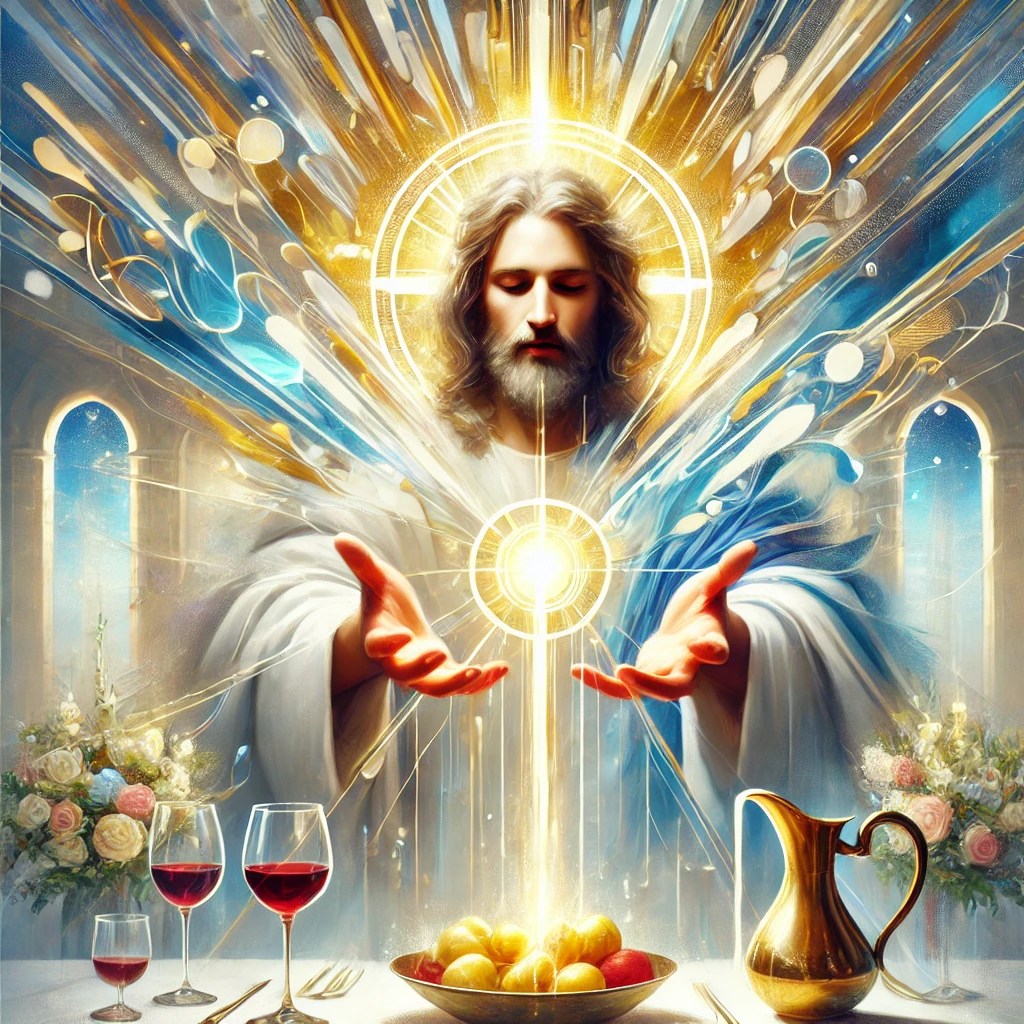
Embracing the Newness of Christ
Have you ever wondered what it means to be truly transformed by Christ? Today’s readings invite us to reflect on Jesus’ role as the eternal High Priest who not only intercedes for us but also ushers in a new way of living. From the rich imagery of priesthood in Hebrews and Psalm 110 to the Gospel’s call to embrace renewal, we see a consistent theme: Christ’s priesthood brings about a profound transformation, fulfilling the old covenant and inviting us into something entirely new.
The concept of priesthood runs deep in both Jewish and Christian traditions. In ancient Israel, priests were chosen to act as mediators between God and the people, offering sacrifices for sin and interceding on their behalf. The First Reading from Hebrews connects this tradition to Christ, who, though fully divine, shared in our human weaknesses and learned obedience through suffering. The psalm builds on this theme, pointing to a priesthood that transcends time—“in the manner of Melchizedek,” a mysterious figure representing a priesthood ordained by God, not bound by lineage or human appointment.
Finally, the Gospel of Mark invites us to reflect on the transformative power of Christ’s presence. Through His imagery of new wine and fresh wineskins, Jesus reminds us that His ministry is not simply an extension of the old covenant but something radically new. Are we prepared to let go of old ways and embrace the newness Christ offers?
As we explore today’s readings, let us open our hearts to the eternal priesthood of Jesus and the transformation He desires to bring into our lives. How is God calling you to embrace renewal and draw closer to Him today?
First Reading – Hebrews 5:1-10
Called to Be Like Christ: The Perfect High Priest
The Letter to the Hebrews was written to early Jewish Christians who were wrestling with their identity in light of Christ’s fulfillment of the Law and the Prophets. These believers were deeply rooted in the Jewish priestly tradition, which saw the high priest as the central figure of the faith. The high priest acted as the intermediary between God and His people, entering the Holy of Holies once a year to offer atonement for their sins. However, this priesthood was inherently limited, as it was dependent on human priests who themselves were imperfect and temporary. This context makes the contrast between the Levitical priesthood and the eternal priesthood of Christ all the more striking.
The author of Hebrews uses rich theological imagery to explain how Jesus, though not of the priestly tribe of Levi, was divinely appointed as High Priest “according to the order of Melchizedek.” This phrase is steeped in Jewish tradition, referring to the mysterious priest-king of Salem who blessed Abraham (Genesis 14:18-20). Melchizedek’s priesthood was unique—it was not hereditary and was not tied to the Law. By connecting Jesus to Melchizedek, the text emphasizes His eternal and universal priesthood, a role that goes beyond the limitations of human priests. Today’s reading reminds us of the central truth of our faith: Christ’s priesthood and sacrifice are the foundation of our salvation. It also invites us to reflect on the transformative power of Christ’s obedience, suffering, and intercession for us.
Hebrews 5:1-10
New American Bible (Revised Edition)
1 Every high priest is taken from among men and made their representative before God, to offer gifts and sacrifices for sins. 2 He is able to deal patiently with the ignorant and erring, for he himself is beset by weakness 3 and so, for this reason, must make sin offerings for himself as well as for the people. 4 No one takes this honor upon himself but only when called by God, just as Aaron was. 5 In the same way, it was not Christ who glorified himself in becoming high priest, but rather the one who said to him:
“You are my son;
this day I have begotten you”;
6 just as he says in another place:
“You are a priest forever
according to the order of Melchizedek.”
7 In the days when he was in the flesh, he offered prayers and supplications with loud cries and tears to the one who was able to save him from death, and he was heard because of his reverence. 8 Son though he was, he learned obedience from what he suffered; 9 and when he was made perfect, he became the source of eternal salvation for all who obey him, 10 declared by God high priest according to the order of Melchizedek.
Detailed Exegesis
Verse 1: “Every high priest is taken from among men and made their representative before God, to offer gifts and sacrifices for sins.”
The role of the high priest was to bridge the gap between humanity and God. By offering sacrifices, he acknowledged the people’s sins and sought to restore their relationship with God. This verse introduces the priesthood as a divinely instituted role of mediation, a precursor to Christ’s perfect mediation. It reminds us that reconciliation with God is not something we can achieve on our own; we need a representative who understands both the divine and human dimensions.
Verse 2: “He is able to deal patiently with the ignorant and erring, for he himself is beset by weakness.”
Earthly priests, being human, were familiar with the frailties and struggles of those they served. This empathy made them more effective mediators. Christ, though sinless, fully experienced the human condition through the Incarnation. His ability to sympathize with our weaknesses is reflected in CCC 457, which explains that the Son of God became man to share in our suffering and redeem us.
Verse 3: “And so, for this reason, must make sin offerings for himself as well as for the people.”
This verse contrasts the limitations of human priests with the perfection of Christ. While human priests needed atonement for their own sins, Christ’s sacrifice was pure and unblemished. His priesthood is unparalleled because He offered Himself as the perfect sacrifice for all humanity, once and for all.
Verse 4: “No one takes this honor upon himself but only when called by God, just as Aaron was.”
The priesthood was not a position one could claim; it was a divine vocation. Aaron, the first high priest, was called by God in the Old Testament. Similarly, Christ’s priesthood was not self-proclaimed but divinely ordained, fulfilling the prophecies of the Old Testament and revealing God’s plan of salvation.
Verse 5-6: “You are my son; this day I have begotten you. … You are a priest forever according to the order of Melchizedek.”
These verses bring together two pivotal psalms (Psalm 2:7 and Psalm 110:4) to emphasize the divine nature of Christ’s priesthood. The reference to Melchizedek signals that Christ’s priesthood is eternal and universal, not bound by the old covenant or the Law. This transcendent priesthood fulfills God’s promise of salvation for all people.
Verse 7: “In the days when he was in the flesh, he offered prayers and supplications with loud cries and tears to the one who was able to save him from death, and he was heard because of his reverence.”
This verse vividly recalls Jesus’ agony in the Garden of Gethsemane (Matthew 26:36-46), where He submitted fully to the Father’s will despite the immense suffering it entailed. His prayers were heard not by sparing Him from death but by granting victory over death through the Resurrection. It shows us the power of reverence and trust in God’s will, even in the face of suffering.
Verse 8-9: “Son though he was, he learned obedience from what he suffered; and when he was made perfect, he became the source of eternal salvation for all who obey him.”
This passage reflects the paradox of Christ’s divinity and humanity. Though He was the Son of God, He embraced suffering to fulfill His mission. His obedience to the Father, even unto death, becomes the model for our own discipleship. Through His suffering, He became the source of salvation, opening the path to eternal life for all who follow Him.
Verse 10: “Declared by God high priest according to the order of Melchizedek.”
The repetition of Melchizedek’s priesthood reinforces Christ’s unique role. His priesthood is eternal, not based on human lineage, and it establishes a new covenant that surpasses the old.
Teachings
The priesthood of Christ fulfills the Old Testament’s foreshadowing of a perfect mediator between God and humanity. The Catechism of the Catholic Church explains that Christ’s priesthood is rooted in His one perfect sacrifice on the cross, which reconciles us to the Father (CCC 1544–1545). St. John Chrysostom wrote that Christ’s priesthood is the ultimate expression of God’s mercy, as it allows us to approach the throne of grace with confidence (cf. Hebrews 4:16). Historically, the figure of Melchizedek prefigures the universality of Christ’s priesthood, as Melchizedek was not bound by the Levitical system. This shows that God’s plan for salvation was always intended to extend to all nations.
Reflection
What does it mean for Christ to be your High Priest today? In our daily lives, we often face struggles, failures, and moments of weakness. This reading reminds us that we are never alone. Christ, as the eternal High Priest, intercedes for us, offering His perfect sacrifice for our sins. His example of obedience and trust in the Father challenges us to surrender our will to God, even in times of suffering. How can you unite your struggles with Christ’s sacrifice? Perhaps it’s by trusting God with a difficult decision or by offering your challenges to Him in prayer. Take a moment today to reflect on the areas of your life where you need Christ’s healing and intercession. Let this reading inspire you to deepen your relationship with Him, knowing that His priesthood is eternal and His love for you is without limit. Are you ready to embrace the newness Christ offers and live in the light of His perfect sacrifice?
Responsorial Psalm – Psalm 110:1-4
Christ, the Eternal Priest-King
Psalm 110 is one of the most quoted psalms in the New Testament, emphasizing the messianic prophecy of Christ as both King and High Priest. Attributed to King David, this psalm holds significant theological importance in understanding the dual role of Jesus as priest and ruler. In Jewish tradition, the king represented God’s authority over His people, while the priest mediated between God and humanity. However, in Israel, these roles were distinct—no one person held both offices. In Psalm 110, David prophetically envisions a future figure who would embody both roles perfectly, a fulfillment found in Christ. This psalm ties directly into today’s theme of Jesus as the eternal High Priest in the order of Melchizedek, who reigns with divine authority and offers salvation to all.
Psalm 110:1-4
New American Bible (Revised Edition)
God Appoints the King both King and Priest
1 A psalm of David.
The Lord says to my lord:
“Sit at my right hand,
while I make your enemies your footstool.”
2 The scepter of your might:
the Lord extends your strong scepter from Zion.
Have dominion over your enemies!
3 Yours is princely power from the day of your birth.
In holy splendor before the daystar,
like dew I begot you.
4 The Lord has sworn and will not waver:
“You are a priest forever in the manner of Melchizedek.”
Detailed Exegesis
Verse 1: “The Lord says to my lord: ‘Sit at my right hand, while I make your enemies your footstool.’”
This opening verse reveals a divine conversation between God and “my lord,” understood in Christian tradition as a reference to the Messiah. The phrase “sit at my right hand” signifies a position of supreme authority and honor, a fulfillment seen in Christ’s Ascension (see Acts 2:33). The imagery of enemies becoming a footstool reflects the ultimate triumph of Christ over sin, death, and evil, aligning with His role as both King and High Priest.
Verse 2: “The scepter of your might: the Lord extends your strong scepter from Zion. Have dominion over your enemies!”
The scepter symbolizes the authority of a king, extended from Zion, the sacred mountain representing God’s dwelling place. This verse points to the universal reign of Christ, who exercises dominion not through earthly power but through divine authority. The Church sees this as a foreshadowing of Christ’s victory over sin, extending His reign to all nations through the Gospel (cf. CCC 541).
Verse 3: “Yours is princely power from the day of your birth. In holy splendor before the daystar, like dew I begot you.”
This poetic imagery describes the eternal nature of the Messiah’s kingship and priesthood. The phrase “before the daystar” evokes timelessness, emphasizing Christ’s divine origin. The “dew” suggests renewal and life, mirroring the new covenant brought by Jesus. This verse echoes the divine begetting mentioned in Hebrews 5:5 and reflects Christ’s unique relationship with the Father.
Verse 4: “The Lord has sworn and will not waver: ‘You are a priest forever in the manner of Melchizedek.’”
Here, the psalm culminates in a solemn declaration of an eternal priesthood. Unlike the Levitical priesthood, which was hereditary and limited to the descendants of Aaron, the priesthood of Melchizedek (Genesis 14:18) represents a universal and eternal calling. By linking Jesus to Melchizedek, this verse underscores His divine appointment as the ultimate mediator between God and humanity, a theme echoed in Hebrews 5:6.
Teachings
The Catechism highlights the significance of Christ’s kingship and priesthood in CCC 1544–1545, emphasizing that His sacrifice on the cross establishes Him as the eternal mediator. St. Augustine interpreted Psalm 110 as a prophecy of Christ’s universal reign, showing how His priesthood surpasses the old covenant by offering a perfect and eternal sacrifice. Historically, the figure of Melchizedek prefigures Christ’s priesthood, as noted in the Church Fathers’ writings, particularly in St. Ambrose’s commentary on how Melchizedek’s offering of bread and wine points to the Eucharist. This psalm is also central to the Church’s understanding of the Ascension, where Christ takes His place at the right hand of the Father as our High Priest and King.
Reflection
How does Christ’s role as both King and Priest inspire you in your daily life? This psalm reminds us of the sovereignty of Christ, who reigns not only over the universe but also over our individual hearts. His priesthood invites us to approach Him with confidence, knowing that He intercedes for us before the Father. Reflect on areas of your life where you need to surrender control to Christ’s kingship. Are there places where you resist His authority or struggle to trust in His plan? This psalm also calls us to participate in Christ’s priestly mission by offering our own lives as a spiritual sacrifice, as St. Paul teaches in Romans 12:1. Consider how you can imitate Christ’s example by extending His love and mercy to others. What steps can you take today to live more fully under the reign of Christ, the eternal Priest-King? Let this psalm inspire you to trust in His victory and to align your life with His will.
Holy Gospel – Mark 2:18-22
New Wine, New Life: Embracing Christ’s Transformative Presence
The Gospel of Mark was written to early Christians facing persecution, offering them encouragement through the account of Jesus’ life, teachings, and miracles. Today’s passage introduces a discussion between Jesus and those questioning His disciples’ actions. In Jewish culture, fasting was a common practice for expressing repentance, mourning, or devotion to God. Both the Pharisees and the disciples of John the Baptist adhered to these traditions. However, Jesus introduces a new perspective, using the imagery of a wedding feast, unshrunken cloth, and wineskins to challenge their understanding of religious observance. His message ties directly into today’s theme: the transformative power of Christ’s priesthood and ministry, which brings newness to both our relationship with God and our spiritual practices.
Mark 2:18-22
New American Bible (Revised Edition)
18 The disciples of John and of the Pharisees were accustomed to fast. People came to him and objected, “Why do the disciples of John and the disciples of the Pharisees fast, but your disciples do not fast?” 19 Jesus answered them, “Can the wedding guests fast while the bridegroom is with them? As long as they have the bridegroom with them they cannot fast. 20 But the days will come when the bridegroom is taken away from them, and then they will fast on that day. 21 No one sews a piece of unshrunken cloth on an old cloak. If he does, its fullness pulls away, the new from the old, and the tear gets worse. 22 Likewise, no one pours new wine into old wineskins. Otherwise, the wine will burst the skins, and both the wine and the skins are ruined. Rather, new wine is poured into fresh wineskins.”
Detailed Exegesis
Verse 18: “The disciples of John and of the Pharisees were accustomed to fast. People came to him and objected, ‘Why do the disciples of John and the disciples of the Pharisees fast, but your disciples do not fast?’”
This verse sets the stage for a question that reflects the religious expectations of the time. Fasting was not only a personal act of devotion but also a public expression of piety. The Pharisees fasted regularly to demonstrate their commitment to the Law, while John’s disciples likely fasted as a sign of repentance and preparation for the coming Messiah. The question reveals their confusion about why Jesus’ disciples, despite being associated with a rabbi, did not adhere to these practices. This moment underscores the tension between old religious customs and the newness Christ brings.
Verse 19: “Jesus answered them, ‘Can the wedding guests fast while the bridegroom is with them? As long as they have the bridegroom with them they cannot fast.’”
Jesus introduces the metaphor of a wedding feast to describe His presence among them. In Jewish culture, a wedding was a time of joy and celebration, and fasting during such an occasion would have been unthinkable. By identifying Himself as the bridegroom, Jesus aligns with Old Testament imagery in which God is portrayed as the bridegroom of Israel (see Isaiah 54:5 and Hosea 2:19-20). His presence signals a time of rejoicing, not mourning, as He inaugurates a new covenant with His people.
Verse 20: “But the days will come when the bridegroom is taken away from them, and then they will fast on that day.”
Here, Jesus hints at His future Passion and death, when His disciples will experience sorrow and fasting will become appropriate. This verse reflects the already-and-not-yet tension of the Kingdom of God. While Jesus’ earthly ministry is a time of joy, it points toward His ultimate sacrifice, after which His followers will fast in anticipation of His return.
Verse 21: “No one sews a piece of unshrunken cloth on an old cloak. If he does, its fullness pulls away, the new from the old, and the tear gets worse.”
This analogy illustrates the incompatibility of Christ’s message with the rigid structures of the old covenant. Just as unshrunken cloth would damage an old garment, attempting to fit the Gospel into the framework of the old Law would create conflict and division. Jesus’ teachings and ministry are not merely an addition to the old ways; they are something entirely new.
Verse 22: “Likewise, no one pours new wine into old wineskins. Otherwise, the wine will burst the skins, and both the wine and the skins are ruined. Rather, new wine is poured into fresh wineskins.”
The image of new wine and wineskins further emphasizes the transformative nature of Christ’s mission. New wine, as it ferments, would expand and require flexible wineskins to contain it. Old, brittle wineskins could not handle the expansion, symbolizing the inability of the old covenant to contain the new life Jesus offers. This calls for a complete renewal of the heart and mind, as echoed in Romans 12:2.
Teachings
The Catechism teaches that Christ’s coming fulfills the Law and the Prophets, bringing a new and eternal covenant that surpasses the old (CCC 1965–1966). Fasting, while an important practice, takes on new meaning in the light of Christ. The Church encourages fasting as a way to unite ourselves with the sacrifice of Jesus and prepare our hearts to receive His grace (CCC 1434). St. John Chrysostom beautifully interprets this passage, stating that Jesus’ presence is a cause for celebration, but the discipline of fasting becomes an essential practice for spiritual renewal after His departure. Historically, the Church has embraced fasting as a way to align with Christ’s suffering while also celebrating the joy of His Resurrection, balancing mourning with hope.
Reflection
How do you embrace the newness Christ brings into your life? This Gospel challenges us to examine whether we are clinging to old habits, traditions, or mindsets that prevent us from fully living out the Gospel. Jesus calls us to transformation, not simply adherence to rituals. Are there areas in your life where you resist change or struggle to surrender control to Christ? Consider how you can cultivate a heart that is open to receiving the “new wine” of His grace. Perhaps it means letting go of outdated ways of thinking, seeking reconciliation with others, or deepening your prayer life.
As we reflect on this passage, let us remember that Christ’s presence is a cause for joy and renewal. Even in seasons of fasting or sorrow, His Resurrection offers us hope. Take time today to ask: What “old wineskins” do I need to let go of to make room for the new life Christ offers? Let this Gospel inspire you to embrace His transformative love and carry it into every aspect of your life.
Embracing the Newness of Christ: A Call to Transformation
Today’s readings paint a beautiful and cohesive picture of Christ’s eternal priesthood and the transformative power of His presence in our lives. From the Letter to the Hebrews, we are reminded of Jesus’ unique role as the High Priest who understands our struggles and offers the perfect sacrifice for our salvation. The Responsorial Psalm reinforces this truth, declaring Christ as the eternal Priest-King in the order of Melchizedek, whose reign and priesthood bring renewal to the world. Finally, the Gospel of Mark challenges us to embrace the newness Christ offers, leaving behind old ways of thinking and living, and allowing His grace to expand and transform our hearts.
The common thread running through these passages is Christ’s power to bring about a new covenant, one that not only fulfills the old but surpasses it in every way. Jesus invites us to celebrate His presence, trust in His eternal priesthood, and open our lives to the transformation He offers. In Him, the boundaries of the old covenant are broken, and a new and living relationship with God is made possible.
What does this mean for us today? It means that we are called to respond. Christ’s sacrifice demands not just acknowledgment but action—an openness to be renewed, to leave behind the “old wineskins” of sin, fear, and complacency, and to embrace the “new wine” of faith, hope, and love. This invitation requires courage, humility, and trust in His plan for our lives.
Take a moment to reflect on how today’s readings speak to you personally. Are there areas in your life where you resist the newness Christ offers? Perhaps it’s a habit, a grudge, or a fear that holds you back. Today, Jesus reminds you that He is both your High Priest and your King, ready to intercede for you and lead you to a deeper relationship with the Father.
As you go about your day, let this truth guide you: Christ’s priesthood is eternal, His love is transformative, and His grace is abundant. Trust in His power to renew your heart and surrender to His will. How will you live out this calling today? May these readings inspire you to take a step closer to Christ, allowing His presence to fill your life with hope, joy, and newness.
Engage with Us!
We’d love to hear your thoughts and reflections on today’s readings! How is Christ’s eternal priesthood and the newness He offers speaking to your heart today? Share your insights, prayers, or questions in the comments below—your reflections may inspire someone else on their spiritual journey.
Here are some questions to guide your reflection:
- First Reading (Hebrews 5:1-10): How does Christ’s example of obedience and suffering encourage you to trust in God’s plan during challenging times?
- Responsorial Psalm (Psalm 110:1-4): In what ways can you surrender to Christ as your King and Priest in your daily life?
- Holy Gospel (Mark 2:18-22): What “old wineskins” might you need to let go of to make room for the newness Christ offers?
As we journey through this day, let us strive to live a life rooted in faith, inspired by Christ’s sacrifice, and guided by His transformative love. May everything we do reflect the mercy and compassion Jesus taught us, so that we may draw closer to Him and be a light for others in the world. Let His grace transform you and lead you to live fully in His love.
Follow us on Instagram and Facebook for more insights and reflections on living a faith-filled life.

 Holy Manna!
Leave a comment