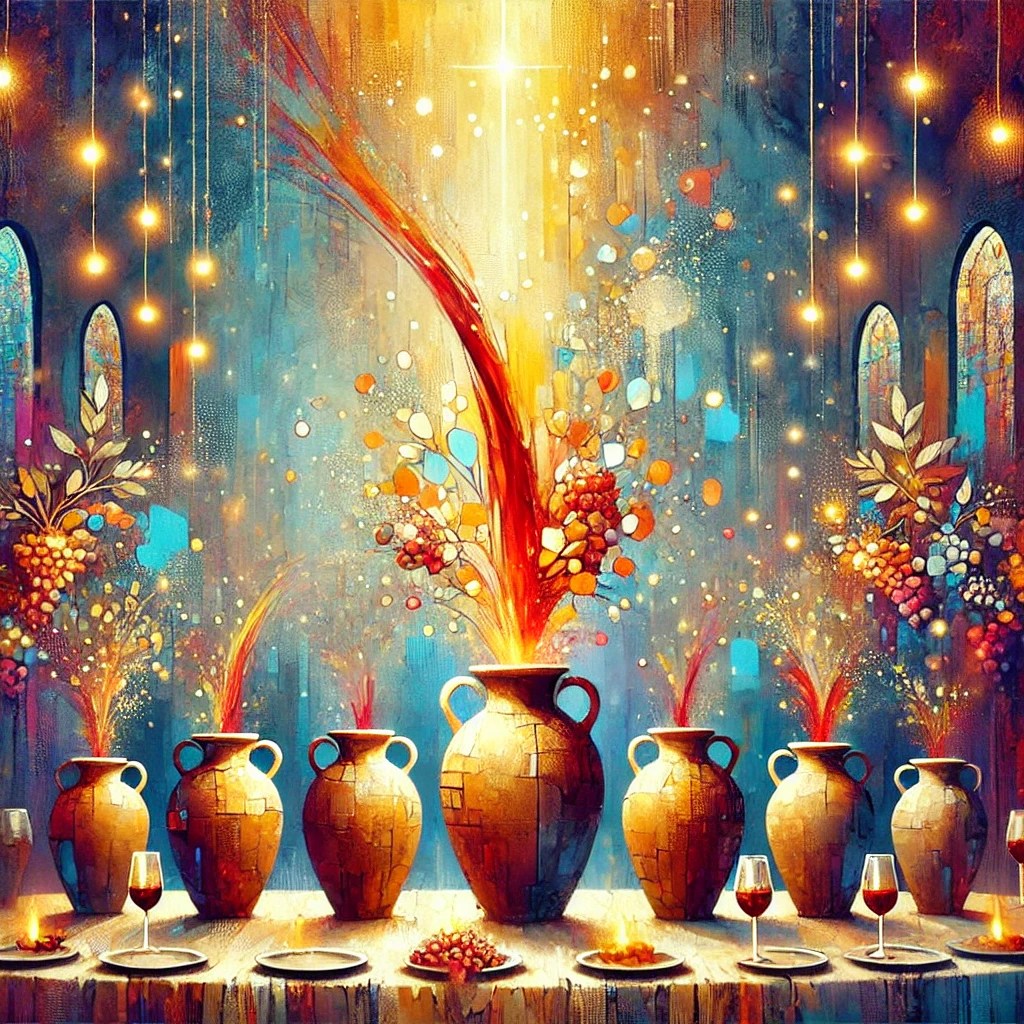
A Wedding of Joy and Renewal
Have you ever felt like something ordinary in your life was unexpectedly transformed into something extraordinary? Moments like these reflect God’s work of renewal and abundance, a theme woven through today’s readings.
The readings for today’s Mass invite us into a reflection on God’s transformative power—a power that restores, renews, and brings forth joy. From the promise of a new name and identity in Isaiah, to the proclamation of God’s marvelous deeds in Psalm 96, to the diversity of spiritual gifts in 1 Corinthians, and finally, to the miracle of water turned to wine in The Gospel of John, we see a God who delights in elevating the ordinary into the extraordinary for the sake of His people.
Culturally, the imagery of a wedding—a symbol of covenant, joy, and abundance—features prominently in both the Old Testament and the New Testament readings. In ancient Israel, weddings were not just personal celebrations but communal events that symbolized God’s covenantal relationship with His people. This symbolism is evident in Isaiah 62, where the Lord rejoices over Zion as a bridegroom rejoices over his bride, and it comes to life in The Gospel of John, where Jesus performs His first public miracle at a wedding feast.
Religiously, the connection between spiritual gifts (as described in 1 Corinthians) and God’s acts of renewal reminds us of how He equips His people to share in His mission of transforming the world. These gifts are not just tools but manifestations of the Spirit’s presence, showing us that every believer plays a part in God’s grand design.
As you read today’s passages, consider: How does God desire to transform your life today? What gifts has He given you to reflect His glory in the world around you? Let us approach the table of the Lord with hearts open to His renewing grace and ready to proclaim His marvelous deeds.
First Reading – Isaiah 62:1-5
From Desolation to Delight: God’s Unfailing Covenant
The Book of Isaiah, one of the major prophetic works in the Old Testament, is often called the “Fifth Gospel” due to its rich Messianic themes. Today’s passage is drawn from the third section of Isaiah, written during or shortly after the Israelites’ return from exile in Babylon. This was a time of rebuilding, both physically and spiritually, as the people restored Jerusalem and sought to reclaim their identity as God’s chosen. Amid their struggles and doubts, Isaiah delivers a message of hope: Zion, once forsaken, will become the delight of the Lord, cherished like a bride on her wedding day.
This promise of restoration fits beautifully with today’s theme of God’s transformative power. Just as Zion is renewed and given a new name, the Gospel recounts Jesus’ first miracle, where He transforms water into wine at the wedding in Cana. Both passages reflect the joy and intimacy of God’s covenant, calling us to trust in His power to bring renewal and life.
Isaiah 62:1-5
New American Bible (Revised Edition)
A New Name for Zion
1 For Zion’s sake I will not be silent,
for Jerusalem’s sake I will not keep still,
Until her vindication shines forth like the dawn
and her salvation like a burning torch.
2 Nations shall behold your vindication,
and all kings your glory;
You shall be called by a new name
bestowed by the mouth of the Lord.
3 You shall be a glorious crown in the hand of the Lord,
a royal diadem in the hand of your God.
4 No more shall you be called “Forsaken,”
nor your land called “Desolate,”
But you shall be called “My Delight is in her,”
and your land “Espoused.”
For the Lord delights in you,
and your land shall be espoused.
5 For as a young man marries a virgin,
your Builder shall marry you;
And as a bridegroom rejoices in his bride
so shall your God rejoice in you.
Detailed Exegesis
“For Zion’s sake I will not be silent, for Jerusalem’s sake I will not keep still” (v. 1): Isaiah speaks with the voice of God, declaring His unrelenting commitment to His people. God’s faithfulness and His refusal to abandon Zion remind us of His active presence in our lives. This verse sets the tone for the passage, emphasizing God’s determination to bring justice and salvation.
“Until her vindication shines forth like the dawn and her salvation like a burning torch” (v. 1): The imagery of dawn and a torch conveys brightness and clarity. God’s vindication of Zion will be as visible and undeniable as the rising sun. Salvation is not a distant hope but a present reality, shining brightly for all to see.
“Nations shall behold your vindication, and all kings your glory” (v. 2): The restoration of Zion will be a sign to the nations, showcasing God’s power and faithfulness. This anticipates Christ’s mission, where salvation extends beyond Israel to all people, fulfilling the promise made to Abraham.
“You shall be called by a new name bestowed by the mouth of the Lord” (v. 2): In the Bible, a name signifies identity and purpose. God’s act of renaming Zion symbolizes her transformation and renewal. This new name reflects her restored relationship with God, similar to the way baptism gives each of us a new identity as children of God.
“You shall be a glorious crown in the hand of the Lord, a royal diadem in the hand of your God” (v. 3): Zion is described as a precious adornment, reflecting her worth and dignity in God’s eyes. This verse reminds us that we, too, are God’s cherished creation, destined for glory.
“No more shall you be called ‘Forsaken,’ nor your land called ‘Desolate’” (v. 4): The renaming of Zion from “Forsaken” to “My Delight is in her” reflects a profound transformation. God does not merely restore; He rejoices in His people, turning their shame into joy. This change in name signals the end of separation and the beginning of intimacy with God.
“For as a young man marries a virgin, your Builder shall marry you” (v. 5): Marriage imagery is used throughout Scripture to describe God’s covenantal relationship with His people. Here, God is portrayed as a bridegroom rejoicing in His bride. This intimate language prefigures Christ as the bridegroom of the Church, as described in Ephesians 5:25-27.
Teachings
The Catechism of the Catholic Church reflects on the covenantal love between God and His people: “The covenant between God and Israel had prepared the way for the new and everlasting covenant in which the Son of God, by becoming incarnate and giving His life, gives His bride the Church into the very communion of the Trinity” (CCC 1612). This passage from Isaiah prefigures the ultimate union between Christ and His Church, where God’s love transforms and redeems His people.
Saint John Chrysostom highlights that God’s joy in His people reflects His immense love and mercy. He writes, “He who created us takes delight in us, not for our merits but because of His goodness, showing that His love is without limit.” This truth reminds us that God’s love is freely given, not earned, and that His work in our lives is always for our good.
Reflection
God’s promise to Zion reminds us that no situation is beyond His power to restore. Just as Zion’s desolation was transformed into delight, so too can God renew the barren places in our lives. When we feel forgotten or forsaken, this passage reassures us that God is actively working to bring us into deeper intimacy with Him.
What areas of your life feel “forsaken” or “desolate”? How might God be inviting you to trust in His power to renew and restore?
We can live this message by dedicating time each day to prayer, asking God to reveal how He is transforming our lives. Reflect on the ways God has brought joy and renewal in the past, and trust that He continues to work in unseen ways. Celebrate your identity as God’s beloved by sharing His love with those who feel abandoned or forgotten.
God delights in you and calls you by a new name. Trust in His promise to make all things new, and rejoice in the joy of being His beloved!
Responsorial Psalm – Psalm 96:1-3, 7-10
Sing to the Lord a New Song: A Call to Universal Praise
Psalm 96 is a hymn of universal praise to God, celebrating His reign over all creation. Likely composed for use in liturgical worship, this psalm encourages the people of Israel to proclaim the greatness of the Lord to all nations. Its historical context may trace back to the dedication of the Ark of the Covenant in Jerusalem or another significant moment of God’s salvific presence among His people.
The psalm beautifully aligns with today’s readings, particularly Isaiah’s promise of Zion’s vindication and the Gospel’s revelation of Christ’s glory at the wedding in Cana. It reminds us that God’s transformative love is not confined to one people or place but extends to all creation. As we reflect on this psalm, we are invited to join in proclaiming His greatness and to recognize His reign in every aspect of our lives.
Psalm 96:1-3, 7-10
New American Bible (Revised Edition)
God of the Universe
1 Sing to the Lord a new song;
sing to the Lord, all the earth.
2 Sing to the Lord, bless his name;
proclaim his salvation day after day.
3 Tell his glory among the nations;
among all peoples, his marvelous deeds.
7 Give to the Lord, you families of nations,
give to the Lord glory and might;
8 give to the Lord the glory due his name!
Bring gifts and enter his courts;
9 bow down to the Lord, splendid in holiness.
Tremble before him, all the earth;
10 declare among the nations: The Lord is king.
The world will surely stand fast, never to be shaken.
He rules the peoples with fairness.
Detailed Exegesis
“Sing to the Lord a new song; sing to the Lord, all the earth” (v. 1): The call to sing a “new song” signifies a response to God’s fresh acts of salvation. In biblical tradition, a new song often celebrates a specific event of deliverance or revelation. Here, the invitation to “all the earth” highlights the universality of God’s kingship, foreshadowing the inclusion of the Gentiles in Christ’s redemptive mission.
“Sing to the Lord, bless His name; proclaim His salvation day after day” (v. 2): Blessing God’s name is a way of honoring His character and deeds. The psalmist urges continual proclamation of His salvation, emphasizing that praise is not a one-time event but a daily response to God’s ongoing work in our lives. This verse ties into the Gospel, where the miracle at Cana becomes a sign of Christ’s saving power, meant to be shared and proclaimed.
“Tell His glory among the nations; among all peoples, His marvelous deeds” (v. 3): The psalm expands its focus from Israel to all nations, reflecting God’s universal reign. His “marvelous deeds” recall the Exodus, the return from exile, and ultimately, the work of Christ, whose miracles and passion reveal God’s glory to the world.
“Give to the Lord, you families of nations, give to the Lord glory and might” (v. 7): This verse reinforces the call for all nations to acknowledge God’s sovereignty. By attributing glory and might to the Lord, the psalmist recognizes that all power and honor belong to Him alone. It is an invitation for every people to worship and submit to the true King.
“Bring gifts and enter His courts; bow down to the Lord, splendid in holiness” (v. 8-9): The act of bringing gifts and bowing down reflects a posture of worship and humility. The phrase “splendid in holiness” captures God’s majesty, calling worshippers to approach Him with reverence and awe. This mirrors the reverence shown at the wedding in Cana, where Christ’s miracle reveals His divine authority.
“Declare among the nations: The Lord is king. The world will surely stand fast, never to be shaken” (v. 10): Proclaiming “The Lord is king” affirms God’s unchanging sovereignty over creation. The assurance that the world “will never be shaken” reflects God’s providence, reminding us that His reign brings stability and justice. This ties into Isaiah’s vision of Zion’s restoration, where God’s presence secures peace and joy for His people.
Teachings
The Catechism of the Catholic Church teaches that praise is a fundamental response to God’s greatness: “Praise is the form of prayer which recognizes most immediately that God is God. It lauds Him for His own sake and gives Him glory” (CCC 2639). This psalm exemplifies the universality of praise, calling all creation to glorify God.
Saint John Paul II reflects on the psalms as a school of prayer, noting that they teach us to turn every experience—joy, suffering, triumph—into an opportunity to glorify God. Psalm 96 invites us to participate in this act of worship, recognizing that God’s reign brings salvation and justice to the whole world.
Reflection
Psalm 96 calls us to a life of continual praise, reminding us that our worship is not just for our benefit but also a witness to the nations. Through our words and actions, we are called to proclaim God’s glory and share the good news of His salvation with others.
How often do you take time to reflect on God’s marvelous deeds in your life? In what ways can you proclaim His glory to those around you?
In our daily lives, we can live this psalm by cultivating a heart of gratitude, intentionally praising God for His blessings, both big and small. Take a moment each day to recognize His hand at work in your life and share that joy with someone else. By doing so, we participate in the universal song of praise, joining creation in declaring, “The Lord is king!”
Second Reading – 1 Corinthians 12:4-11
The Spirit’s Gifts: Unity in Diversity
In this section of 1 Corinthians, St. Paul addresses the Christian community in Corinth, a city known for its cultural diversity and social complexities. The Corinthian church was facing divisions caused by pride and a lack of understanding regarding spiritual gifts. Paul writes to remind the community that these gifts come from the same Spirit and are given for the benefit of all.
Today’s reading fits beautifully with the overarching theme of God’s transformative work in His people. Just as God transforms Zion in Isaiah and reveals His glory in the miracle at Cana, the Spirit equips each believer with unique gifts to serve the Church and proclaim God’s greatness. These gifts are not for personal glorification but for building up the Body of Christ, reflecting the unity and love that characterize God’s reign.
1 Corinthians 12:4-11
New American Bible (Revised Edition)
4 There are different kinds of spiritual gifts but the same Spirit; 5 there are different forms of service but the same Lord; 6 there are different workings but the same God who produces all of them in everyone. 7 To each individual the manifestation of the Spirit is given for some benefit. 8 To one is given through the Spirit the expression of wisdom; to another the expression of knowledge according to the same Spirit; 9 to another faith by the same Spirit; to another gifts of healing by the one Spirit; 10 to another mighty deeds; to another prophecy; to another discernment of spirits; to another varieties of tongues; to another interpretation of tongues. 11 But one and the same Spirit produces all of these, distributing them individually to each person as he wishes.
Detailed Exegesis
“There are different kinds of spiritual gifts but the same Spirit” (v. 4): Paul begins by emphasizing the source of all spiritual gifts: the Holy Spirit. The diversity of gifts within the Church reflects the creativity and generosity of the Spirit, but their unity in origin underscores their purpose in fostering harmony and collaboration.
“There are different forms of service but the same Lord” (v. 5): Paul broadens the discussion by referring to “forms of service,” reminding the Corinthians that gifts are meant for serving others, not for personal gain. The focus on “the same Lord” points to Jesus Christ as the model of humble and selfless service.
“There are different workings but the same God who produces all of them in everyone” (v. 6): Here, Paul attributes the “workings” to God the Father, completing the Trinitarian framework. Each person’s abilities and contributions are part of God’s plan, showing that He works uniquely through every individual.
“To each individual the manifestation of the Spirit is given for some benefit” (v. 7): Paul highlights that every believer has a role to play in the community. The gifts of the Spirit are not meant to elevate one person over another but to benefit the Church as a whole. This verse reminds us that our gifts, no matter how small, have a purpose in God’s plan.
“To one is given through the Spirit the expression of wisdom; to another the expression of knowledge according to the same Spirit” (v. 8): Wisdom and knowledge are two of the gifts Paul identifies, both rooted in understanding and applying God’s truth. Wisdom often refers to practical discernment, while knowledge involves a deeper comprehension of divine mysteries. Both are essential for guiding the Church.
“To another faith by the same Spirit; to another gifts of healing by the one Spirit” (v. 9): Faith here is not the basic faith shared by all believers but a special gift of extraordinary trust in God. The “gifts of healing” demonstrate God’s power to restore, often serving as a visible sign of His love and presence within the community.
“To another mighty deeds; to another prophecy; to another discernment of spirits” (v. 10): Mighty deeds, or miracles, reveal God’s direct intervention in the world. Prophecy involves speaking God’s truth, often to guide or correct the community, while discernment of spirits helps to distinguish between divine inspiration and false influences.
“To another varieties of tongues; to another interpretation of tongues” (v. 10): The gift of tongues, along with its interpretation, symbolizes the universality of the Gospel. This gift, often misunderstood in Corinth, needed proper guidance to ensure it edified the community rather than causing confusion.
“But one and the same Spirit produces all of these, distributing them individually to each person as He wishes” (v. 11): Paul concludes by emphasizing that all these gifts come from the same Spirit, who sovereignly determines how they are distributed. This reinforces the message that the gifts are not earned or chosen but freely given according to God’s will.
Teachings
The Catechism of the Catholic Church teaches that the Holy Spirit is the source of all charisms, which are “oriented toward sanctifying grace” and meant to benefit the Church (CCC 799-801). Paul’s message to the Corinthians echoes this teaching, reminding us that the gifts of the Spirit are signs of God’s presence and tools for building up the Body of Christ.
Saint Thomas Aquinas explains that spiritual gifts are “given for the common good” and reflect God’s desire for unity in diversity. These gifts are not meant to create divisions but to inspire mutual love and service, mirroring the unity of the Trinity.
Reflection
This reading challenges us to recognize and embrace the gifts God has given us, not for our own glory but for the good of the Church and the world. It also calls us to value and encourage the gifts of others, understanding that each person’s unique contributions are part of God’s design.
What gifts has the Holy Spirit given you, and how are you using them to serve others? Do you celebrate and affirm the gifts of those around you?
Take time to reflect on the ways God is working through you and those in your community. Pray for the humility to serve with your gifts and the wisdom to support others in their spiritual journeys. By embracing the Spirit’s work in our lives, we participate in the unity and love that reflect God’s kingdom.
Holy Gospel – John 2:1-11
The Wedding at Cana: A Miracle of Transformation and Revelation
The wedding at Cana, recounted in The Gospel of John, is not only Jesus’ first public miracle but also a profound revelation of His divine mission. This event is rich with symbolism and theological significance, pointing to the abundance of grace that comes through Christ. Weddings in Jewish culture were joyous and communal celebrations, often lasting several days. They symbolized the covenant between God and His people, a theme found throughout Scripture.
In this setting, Jesus chooses to reveal His glory by transforming water into wine, prefiguring the ultimate transformation of humanity through His Passion, death, and Resurrection. This miracle marks the beginning of His signs, which are carefully chosen in John’s Gospel to reveal His identity as the Son of God. Today’s Gospel fits perfectly with the theme of transformation in the other readings. Just as Zion is renewed and the Spirit distributes gifts to unify the Church, Jesus brings joy and abundance where there was lack, inaugurating the New Covenant. This passage invites us to see Christ as the one who transforms not only the physical but also the spiritual, bringing about renewal and hope in our lives.
John 2:1-11
New American Bible (Revised Edition)
The Wedding at Cana. 1 On the third day there was a wedding in Cana in Galilee, and the mother of Jesus was there. 2 Jesus and his disciples were also invited to the wedding. 3 When the wine ran short, the mother of Jesus said to him, “They have no wine.” 4 [And] Jesus said to her, “Woman, how does your concern affect me? My hour has not yet come.” 5 His mother said to the servers, “Do whatever he tells you.” 6 Now there were six stone water jars there for Jewish ceremonial washings, each holding twenty to thirty gallons. 7 Jesus told them, “Fill the jars with water.” So they filled them to the brim. 8 Then he told them, “Draw some out now and take it to the headwaiter.” So they took it. 9 And when the headwaiter tasted the water that had become wine, without knowing where it came from (although the servers who had drawn the water knew), the headwaiter called the bridegroom 10 and said to him, “Everyone serves good wine first, and then when people have drunk freely, an inferior one; but you have kept the good wine until now.” 11 Jesus did this as the beginning of his signs in Cana in Galilee and so revealed his glory, and his disciples began to believe in him.
Detailed Exegesis
“On the third day there was a wedding in Cana in Galilee, and the mother of Jesus was there” (v. 1): The mention of “the third day” is significant, as it foreshadows the Resurrection. This timing connects the miracle at Cana to the greater work of salvation that Jesus will accomplish. Cana, a small village, is an unlikely place for such a momentous event, underscoring how God often works in humble and ordinary settings. Mary’s presence is notable; she plays a key role in initiating the miracle, showing her awareness of and concern for the needs of others.
“Jesus and His disciples were also invited to the wedding” (v. 2): Jesus’ participation in a wedding highlights the importance of marriage in God’s plan. By attending this celebration, He sanctifies the institution of marriage and affirms its role as a reflection of God’s covenant with His people. His disciples are also present, signifying the beginning of their journey of witnessing and believing in His works.
“When the wine ran short, the mother of Jesus said to Him, ‘They have no wine.’” (v. 3): Mary’s statement reflects her attentiveness and compassion. In Jewish culture, running out of wine at a wedding would have been a source of shame for the hosts, and Mary seeks to prevent this. Her words also carry a deeper meaning, as wine symbolizes joy and the blessings of the covenant. The lack of wine points to the limitations of the old covenant, which Jesus has come to fulfill and surpass.
“Jesus said to her, ‘Woman, how does your concern affect me? My hour has not yet come.’” (v. 4): Jesus’ use of the term “Woman” is not dismissive but reverent, connecting Mary to the “woman” prophesied in Genesis 3:15 and the “woman” in Revelation 12. This signals her role in salvation history as the New Eve. Jesus’ reference to His “hour” points to the culmination of His mission in His Passion and Resurrection, where His glory will be fully revealed.
“His mother said to the servers, ‘Do whatever He tells you.’” (v. 5): Mary’s directive demonstrates her faith in Jesus and her role as an intercessor. Her words are a call to discipleship, inviting us to trust in Jesus and obey Him without hesitation. This is a model of perfect faith, as Mary does not question Jesus’ response but confidently leaves the outcome in His hands.
“Now there were six stone water jars there for Jewish ceremonial washings, each holding twenty to thirty gallons” (v. 6): The stone jars, used for ritual purification, symbolize the old covenant and its practices. By choosing these vessels for His miracle, Jesus signifies that He is bringing something entirely new—grace and salvation that surpass the old order. The size of the jars emphasizes the abundance of His blessings.
“Jesus told them, ‘Fill the jars with water.’ So they filled them to the brim.” (v. 7): The act of filling the jars to the brim highlights the completeness of Jesus’ gift. It also shows the cooperation of the servants, who follow Jesus’ instructions without fully understanding His plan. Their obedience is a lesson in trust and faith.
“Then He told them, ‘Draw some out now and take it to the headwaiter.’ So they took it.” (v. 8): The servers’ actions demonstrate faith in Jesus’ command, even though they cannot yet see the outcome. This mirrors the faith we are called to have in Jesus, trusting His word even when we do not immediately perceive the results.
“When the headwaiter tasted the water that had become wine… he said, ‘You have kept the good wine until now.’” (v. 9-10): The transformation of water into wine reveals Jesus’ divine power and foreshadows the abundance of the New Covenant. The headwaiter’s amazement at the quality of the wine reflects how God’s gifts surpass human expectations. The “good wine” symbolizes the joy and grace of salvation brought by Christ.
“Jesus did this as the beginning of His signs in Cana in Galilee and so revealed His glory, and His disciples began to believe in Him.” (v. 11): This miracle is the first of many signs in John’s Gospel that reveal Jesus’ identity and mission. The disciples’ faith is strengthened as they witness His power, marking the start of their journey of belief. This verse underscores the purpose of the signs: to reveal Jesus’ divine glory and invite faith.
Teachings
The Catechism of the Catholic Church reflects on this passage, stating, “The Church attaches great importance to Jesus’ presence at the wedding at Cana. She sees in it the confirmation of the goodness of marriage and the proclamation that thenceforth marriage will be an efficacious sign of Christ’s presence” (CCC 1613). This teaching emphasizes that marriage is a reflection of Christ’s covenant with the Church, sanctified by His presence and grace.
Saint Thomas Aquinas reflects on the miracle at Cana as a sign of the superabundance of God’s grace. He writes, “The water represents the Old Law, while the wine represents the grace of the New Law, which Christ brings to completion.” This transformation invites us to trust in the transformative power of God, who takes what is ordinary and makes it extraordinary.
Reflection
This Gospel passage is a profound reminder that Christ is present in every aspect of our lives, even in the ordinary and joyful moments. His ability to transform water into wine speaks to His power to bring renewal and abundance to the areas of our lives that feel lacking or empty.
What areas of your life are in need of transformation? How can you invite Christ into those spaces to work His miracles? Are you willing to “do whatever He tells you,” as Mary instructed the servers?
Take time to reflect on the ways Christ has already brought joy and renewal into your life. Share your gratitude with others and invite them to trust in His transformative power. Through faith and obedience, we can participate in the unfolding of His glory and experience the fullness of life that He offers. Let us, like the disciples, deepen our belief in Him as we witness His miraculous work in our lives.
A Feast of Renewal: God’s Transformative Love in Our Lives
Today’s readings weave together a beautiful tapestry of transformation, unity, and joy. From Isaiah’s vision of Zion’s restoration to the Psalm’s call for universal praise, from St. Paul’s reminder of the Spirit’s gifts to John’s Gospel recounting the wedding at Cana, we are reminded of the abundant life God desires to bring to His people. At the heart of these readings is the unchanging truth: God is always working to renew, restore, and transform us, filling our lives with His grace and joy.
In Isaiah, we see God’s covenant love as He transforms Zion from desolation to delight, giving His people a new name and identity. In the Psalm, we are invited to join all creation in proclaiming God’s glory and salvation, recognizing that He reigns with justice and fairness. St. Paul calls us to embrace the diverse gifts of the Spirit, using them to serve one another and build unity in the Church. Finally, John’s Gospel shows us Jesus’ power to transform not only water into wine but also our hearts and lives, offering us the “good wine” of His grace and salvation.
These messages converge to remind us that God’s love is both intimate and universal. He delights in each of us personally, just as a bridegroom rejoices in his bride, while also calling all nations to share in His glory. His transformative power is not limited to extraordinary moments; it is at work in the ordinary, everyday aspects of our lives, inviting us to trust Him, obey Him, and rejoice in His presence.
As you reflect on these readings, consider how God is calling you to open your heart to His transformative love. Are there areas in your life where you feel empty or barren? Trust that He can fill those places with joy and abundance, just as He did at Cana. Are you using the gifts the Spirit has given you to serve others and build up the Body of Christ? Take a step today to share those gifts, knowing that God’s grace works through your efforts.
Let today’s readings inspire you to deepen your faith and relationship with God. Open your heart to His renewing love and allow Him to transform every aspect of your life. Like Mary at Cana, trust in Jesus and do whatever He tells you, knowing that His plans always bring about the fullness of joy. May you go forth rejoicing in the God who makes all things new, proclaiming His glory and sharing His love with the world.
Engage with Us!
We want to hear how today’s readings touched your heart! Share your thoughts, experiences, and reflections in the comments below, and let’s grow in faith together as a community. Whether it’s a word, a phrase, or a call to action that resonated with you, your insights can inspire others on their journey of faith.
Here are some questions to guide your reflections:
- Isaiah 62:1-5: How does it feel to know that God calls you His delight and rejoices over you? In what ways can you respond to this love in your daily life?
- Psalm 96: How can you proclaim God’s glory and marvelous deeds in your unique context? What “new song” is He inviting you to sing today?
- 1 Corinthians 12:4-11: What spiritual gifts do you recognize in yourself? How can you use these gifts to strengthen your community and reflect God’s glory?
- John 2:1-11: Are there areas of your life where you are running out of “wine,” where you feel a need for renewal? How can you trust Jesus to bring transformation in those areas?
Let us take today’s messages to heart and live with renewed trust in God’s love and mercy. As we embrace His transformative power, may we strive to live each moment with the love, humility, and compassion that Jesus taught us. Together, let us proclaim His glory and become vessels of His grace, inspiring others to experience the abundant life He offers.
Follow us on Instagram and Facebook for more insights and reflections on living a faith-filled life.

 Holy Manna!
Leave a comment