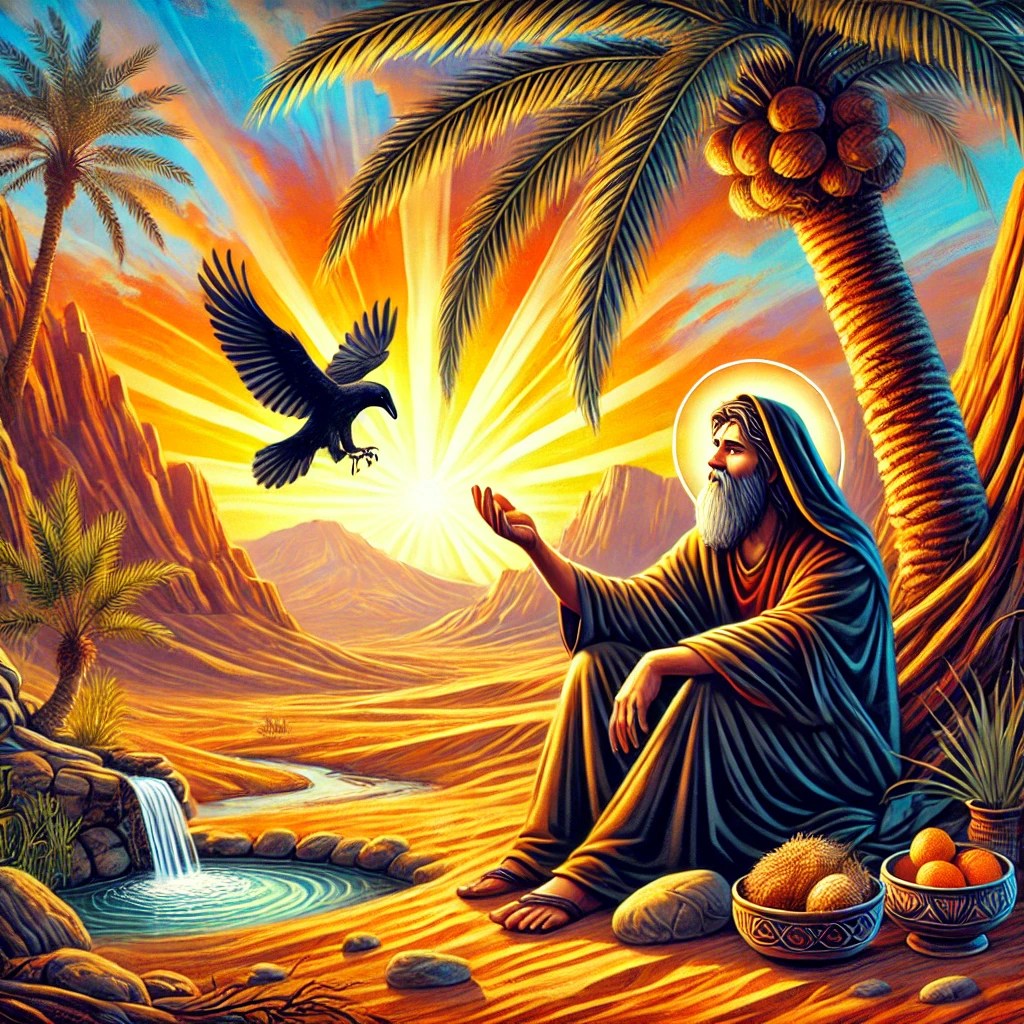
The First Christian Hermit: A Life of Solitude for God
Saint Paul the Hermit, also known as Paul of Thebes, is venerated as the first Christian hermit. His extraordinary life of solitude, prayer, and unwavering trust in God set the foundation for Christian monasticism. Living alone in the Egyptian desert for nearly a century, Paul fully embraced a life of simplicity and complete reliance on God. He is celebrated not just for his asceticism, but for his profound faith and his example of detachment from the world. His legacy continues to inspire those who seek a deeper relationship with God through solitude and contemplation, proving that holiness can flourish even in isolation.
The Early Years: Faith and Flight
Paul was born around 230 AD near Thebes, Egypt, into a wealthy Christian family. Raised with a strong faith and a rich education, he was fluent in both Greek and Egyptian and appeared destined for a life of privilege. However, his life was deeply affected by the brutal persecution of Christians under Emperor Decius (249–251 AD). After losing both his parents at the age of 15, Paul was left vulnerable, and his brother-in-law sought to betray him to seize his inheritance. Fearing both betrayal and persecution, Paul fled to the desert for safety. What began as a temporary escape soon became a calling. As he dwelled in solitude, Paul found a deeper purpose in prayer and communion with God, choosing to remain in the wilderness for the rest of his life. This decision marked the beginning of his extraordinary journey as the first Christian hermit.
In the desert, Paul discovered a cave with a nearby palm tree and a spring, which provided him with food, clothing, and water. For nearly a century, he lived in complete solitude, dedicating himself to prayer, meditation, and the worship of God. His life was marked by humility, simplicity, and unwavering trust in divine providence, becoming a beacon of holiness in the early Christian tradition.
Bread from Heaven: God’s Miraculous Provision
Paul’s life of solitude was not without challenges, but it was marked by miraculous signs of God’s care. For over 60 years, the palm tree and spring provided him with sustenance, symbolizing God’s providence for those who fully trust in Him. Then, one day, a raven began bringing Paul half a loaf of bread each day. This miraculous provision paralleled the biblical story of Elijah, who was also fed by ravens during a time of great need (1 Kings 17:6).
This daily miracle served as a testament to God’s faithfulness and His ability to meet the needs of His servants. The raven’s bread became a symbol of God’s intimate care for those who abandon themselves completely to His will. It reminds us that even in isolation, God’s presence is constant and His provision unceasing.
A Desert of Trials and Triumphs
Although Paul did not face martyrdom, his life was not without hardship. The harsh desert environment posed physical challenges—extreme heat, scarcity of food and water, and total isolation. Yet Paul embraced these trials as opportunities to grow closer to God. He found strength in prayer and resilience in his trust in divine providence.
His dedication to this life of extreme asceticism inspired others, including Saint Anthony of Egypt, who is often considered the founder of organized Christian monasticism. According to tradition, Anthony, having heard of Paul’s remarkable life, sought him out. The two saints met in the desert, sharing a profound spiritual connection that reinforced the path of solitude and prayer for countless others. Paul’s perseverance in the face of hardship became a model for the monastic life, influencing generations of hermits and monks.
A Heavenly Burial: Signs of Sanctity
Saint Paul’s death was marked by a miraculous sign of his sanctity. When Saint Anthony visited him near the end of his life, he found Paul near death. After Paul passed away, Anthony witnessed two lions approach the cave and dig a grave for the saint with their paws. This extraordinary event demonstrated Paul’s holiness and the reverence with which God’s creation honored him.
Saint Anthony buried Paul with dignity, preserving his memory and ensuring his story would inspire others. Today, the Monastery of Saint Paul the Anchorite in Egypt stands near the site of his cave, serving as a place of pilgrimage and reflection for Christians seeking to grow in faith. Many pilgrims have reported spiritual renewal and healing after visiting the monastery, further testifying to the enduring impact of Paul’s life and legacy.
Reflection
Saint Paul the Hermit’s life challenges us to reflect on the priorities in our own lives. In a world filled with distractions, his example reminds us of the importance of setting aside time for solitude and prayer. His total trust in God’s providence encourages us to rely on God more fully, especially in times of uncertainty or difficulty.
Paul’s life also speaks to the power of simplicity. By letting go of material attachments, he was able to focus entirely on his relationship with God. We can follow his example by decluttering not only our physical possessions but also the distractions in our hearts, making space for God to work within us.
Consider taking a moment each day for silent prayer or reflection. Use this time to seek God’s presence and guidance. Ask yourself: What areas of my life can I entrust more fully to God? How can I create space for silence and contemplation in my daily routine?
Saint Paul’s unwavering faith and dedication to God inspire us to live with greater humility, trust, and focus on what truly matters. His life reminds us that even in the solitude of the desert—or the solitude of our hearts—God is present, providing for us and calling us into deeper relationship with Him.
Engage with Us!
We invite you to share your thoughts and reflections in the comments below. Consider these questions to spark discussion:
- How can you incorporate moments of solitude and prayer into your daily routine to strengthen your faith?
- In what ways can detachment from material possessions lead to a more fulfilling spiritual life?
- How does Saint Paul the Hermit’s trust in divine providence inspire you to rely more fully on God?
Let us support one another in our faith journeys, striving to embody the love and mercy that Jesus taught us. Together, we can grow in compassion, resilience, and unwavering faith.
Saint Paul the Hermit, pray for us!
Follow us on Instagram and Facebook for more insights and reflections on living a faith-filled life.

 Holy Manna!
Leave a comment