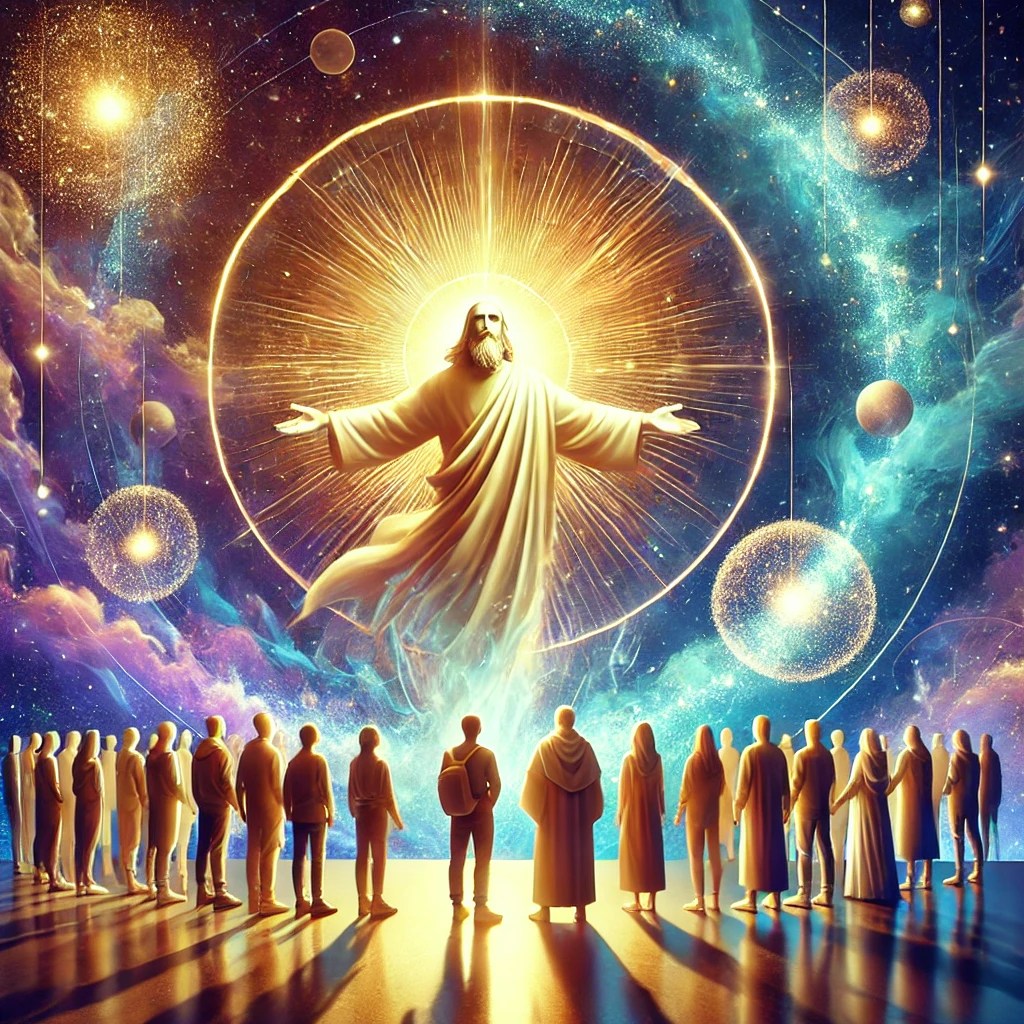
Crowned in Glory, Clothed in Authority
Have you ever paused to marvel at the mystery of God’s attention to humanity? Why would the Creator of the universe be so mindful of us, so invested in our redemption? Today’s readings invite us to reflect on the astonishing truth that Jesus, the Son of God, stepped into our human experience, humbled Himself, and demonstrated His divine authority—not through domination but through love, humility, and sacrifice.
The theme of Christ’s supreme authority and glory revealed through His humility and mission to redeem humanity runs like a golden thread through Hebrews, Psalm 8, and The Gospel of Mark. These passages work together to reveal the dignity of humanity in light of Christ’s salvific mission, His authority over all creation, and His power to restore order and freedom even in the face of evil.
In Hebrews 2, we hear that Jesus was made “a little lower than the angels” for a time, so that He might share in our suffering and bring salvation to humanity. This echoes the marvel of Psalm 8, where the psalmist ponders the great dignity God has given humankind: “You have made him little less than a god, crowned him with glory and honor.” Finally, in The Gospel of Mark, Jesus reveals His divine authority by casting out an unclean spirit, leaving the crowds in awe: “What is this? A new teaching with authority.”
Historically and culturally, the Jewish people longed for a Messiah who would restore order, peace, and dignity to creation—a hope rooted in their understanding of God’s covenantal promises. These readings reveal how Jesus fulfills and surpasses these expectations, not as a political conqueror but as the Redeemer who restores humanity’s fallen dignity and exercises divine power over sin and evil.
As we journey through today’s readings, consider: How is Christ’s authority transforming your life? Where do you need His healing, His power, and His redeeming love? Let us step into the wonder of these Scriptures and allow the Holy Spirit to deepen our faith and awe for the One who was crowned with glory and honor for our sake.
First Reading – Hebrews 2:5-12
Crowned with Glory Through Suffering
The Letter to the Hebrews is a masterful reflection on Christ’s role as the fulfillment of the Old Covenant, written to encourage Jewish Christians who were struggling to hold on to their faith amidst persecution and cultural pressure. The passage we encounter today speaks to the heart of the Gospel: Jesus, fully God and fully man, was made “lower than the angels” for a time, suffering for the sake of humanity so that we might share in His glory. By quoting Psalm 8 and Psalm 22, the author connects the dots between God’s original intention for humanity, humanity’s fall, and Christ’s redemptive mission.
Historically, Hebrews was written to a Jewish audience well-versed in Scripture and the promises of God’s covenant. For them, angels were revered as powerful messengers of God. The writer carefully explains that while angels play a significant role in God’s plan, Christ, in His humanity, surpasses them by accomplishing what no angel could: reconciling humanity to God. This reading ties beautifully into today’s theme of Christ’s supreme authority and glory revealed through humility, offering us a model of faith and trust in God’s providence.
Hebrews 2:5-12
New American Bible (Revised Edition)
5 For it was not to angels that he subjected the world to come, of which we are speaking. 6 Instead, someone has testified somewhere:
“What is man that you are mindful of him,
or the son of man that you care for him?
7 You made him for a little while lower than the angels;
you crowned him with glory and honor,
8 subjecting all things under his feet.”
In “subjecting” all things [to him], he left nothing not “subject to him.” Yet at present we do not see “all things subject to him,” 9 but we do see Jesus “crowned with glory and honor” because he suffered death, he who “for a little while” was made “lower than the angels,” that by the grace of God he might taste death for everyone.
10 For it was fitting that he, for whom and through whom all things exist, in bringing many children to glory, should make the leader to their salvation perfect through suffering. 11 He who consecrates and those who are being consecrated all have one origin. Therefore, he is not ashamed to call them “brothers,” 12 saying:
“I will proclaim your name to my brothers,
in the midst of the assembly I will praise you”;
Detailed Exegesis
Verse 5:
“For it was not to angels that he subjected the world to come, of which we are speaking.”
This verse opens with a striking clarification: God’s plan for salvation and authority is uniquely tied to Christ, not angels. The “world to come” refers to the new creation inaugurated through Jesus’ life, death, and resurrection. This statement sets up the extraordinary role of Christ as the one to whom all authority belongs—not as a distant figure but as one who became like us in all things except sin.
Verse 6:
“What is man that you are mindful of him, or the son of man that you care for him?”
The writer quotes Psalm 8, marveling at God’s immense care for humanity. The question emphasizes the mystery of God’s love: why would the Creator concern Himself with His creation, especially with fragile and sinful humanity? This verse reminds us of the dignity God has given us, made even more profound by Christ’s incarnation.
Verse 7:
“You made him for a little while lower than the angels; you crowned him with glory and honor.”
Jesus, the eternal Son of God, took on human nature, making Himself “lower than the angels” during His earthly life. This deliberate act of humility underscores His solidarity with us. Yet through His passion, death, and resurrection, He was crowned with glory, fulfilling God’s plan for humanity’s redemption.
Verse 8:
“Subjecting all things under his feet.”
This verse reflects humanity’s original vocation, found in Genesis, where Adam and Eve were entrusted with dominion over creation. While sin disrupted this order, Jesus restores it. His ultimate authority will be fully realized at the end of time, though even now He reigns as the sovereign King.
Verse 9:
“But we do see Jesus crowned with glory and honor because he suffered death, he who for a little while was made lower than the angels, that by the grace of God he might taste death for everyone.”
This verse provides the theological core of the reading. Jesus’ suffering and death were not signs of weakness but acts of supreme love and grace. By taking on death, He conquered it, opening the way for humanity to share in His glory.
Verse 10:
“For it was fitting that he, for whom and through whom all things exist, in bringing many children to glory, should make the leader to their salvation perfect through suffering.”
God’s plan was fitting, not arbitrary. Jesus, as both Creator and Redeemer, became the “perfect leader” through His suffering, which completed His mission to save humanity. His example reveals that suffering, when united with God’s will, becomes a path to salvation and glory.
Verse 11:
“He who consecrates and those who are being consecrated all have one origin. Therefore, he is not ashamed to call them ‘brothers.’”
This verse emphasizes the unity between Christ and humanity. By sharing in our human experience, Jesus bridges the gap between God and His people. Through His consecration, we are made holy, becoming part of God’s family.
Verse 12:
“I will proclaim your name to my brothers, in the midst of the assembly I will praise you.”
Quoting Psalm 22, the author highlights Christ’s role as the mediator between God and His people. This verse also foreshadows the Church’s mission to proclaim Christ to all nations, gathering the faithful in worship.
Teachings
The Catechism of the Catholic Church illuminates this passage by focusing on the Incarnation and Christ’s role as our Redeemer. CCC 456-460 explains that God became man to reconcile us to Himself, revealing His love and providing a model for our lives. Christ’s humility and obedience are emphasized in CCC 609, where it states, “Jesus freely accepted his passion and death: ‘No one takes [my life] from me, but I lay it down of my own accord.’” The unity of Christ with humanity is further explained in CCC 521, which teaches that Christ’s life is a “mystery” that we are called to imitate in our own lives.
St. Augustine reflects on humanity’s dignity, saying, “God loves each of us as if there were only one of us.” This echoes today’s message of God’s personal care for humanity, culminating in Christ’s saving work. Historically, this passage resonated deeply with the early Christians, offering hope in persecution by reminding them of Christ’s shared suffering and ultimate victory.
Reflection
How often do you allow God’s love for you to transform the way you see yourself and others? Do you embrace suffering as a path to holiness, following Christ’s example?
Today’s reading calls us to reflect on our identity as children of God, made holy through Christ’s sacrifice. It invites us to marvel at the dignity God has bestowed upon humanity and to trust that He is working through our struggles to bring about His glory.
Take time today to thank God for His mindfulness of you and His care for your life. In what ways can you allow Christ’s humility and authority to shape your relationships and your response to challenges? Offer your sufferings to God, uniting them with Christ’s, and trust that they will bear fruit in His perfect timing.
Responsorial Psalm – Psalm 8:2, 5-9
The Majesty of God and the Dignity of Humanity
Psalm 8 is a hymn of praise celebrating God’s majestic glory and His mindfulness toward humanity. Likely composed during King David’s reign, the psalm reflects a profound sense of wonder at creation and humanity’s place within it. In the cultural context of ancient Israel, the psalmist’s declaration that humanity is “crowned with glory and honor” stood out as a countercultural affirmation of human dignity in a world where humans were often seen as insignificant before the vastness of creation. Today, this psalm reminds us that Christ fulfills this vision by restoring humanity’s dignity through His incarnation and victory over sin.
This psalm fits into today’s theme by affirming that Christ, the “Son of Man,” embodies the ideal humanity described here. As we meditate on these verses, we are invited to marvel at God’s creative power and His intentional care for each of us, made complete in Jesus Christ.
Psalm 8:2, 5-9
New American Bible (Revised Edition)
2 O Lord, our Lord,
how awesome is your name through all the earth!
I will sing of your majesty above the heavens
5 What is man that you are mindful of him,
and a son of man that you care for him?
6 Yet you have made him little less than a god,
crowned him with glory and honor.
7 You have given him rule over the works of your hands,
put all things at his feet:
8 All sheep and oxen,
even the beasts of the field,
9 The birds of the air, the fish of the sea,
and whatever swims the paths of the seas.
Detailed Exegesis
Verse 2:
“O Lord, our Lord, how awesome is your name through all the earth! I will sing of your majesty above the heavens.”
This opening verse expresses awe at the greatness of God, whose majesty is visible not only in the heavens but throughout the earth. It sets the tone for the psalm as a hymn of praise, inviting us to reflect on how creation itself reveals God’s power and glory. In Catholic teaching, this verse aligns with CCC 293, which states, “The world was created for the glory of God.”
Verse 5:
“What is man that you are mindful of him, and a son of man that you care for him?”
Here the psalmist marvels at God’s concern for humanity. The phrase “son of man” underscores the frailty and smallness of humans compared to God’s majesty. Yet, despite this, God bestows dignity and value upon us. This anticipates the Incarnation, where Jesus, the “Son of Man,” bridges the gap between humanity and divinity.
Verse 6:
“Yet you have made him little less than a god, crowned him with glory and honor.”
This verse highlights humanity’s exalted place in creation. While we are creatures, God has endowed us with unique gifts, including reason, free will, and the ability to enter into relationship with Him. Christ, in His humanity, perfects this vision, becoming the ultimate example of what it means to be “crowned with glory and honor.”
Verse 7:
“You have given him rule over the works of your hands, put all things at his feet.”
This verse echoes Genesis 1:28, where God grants humanity dominion over creation. It reflects the original vocation of humanity to steward the earth responsibly. In Christ, this dominion is restored and fulfilled as He exercises authority over all creation, pointing toward the ultimate restoration of harmony in the new creation.
Verses 8-9:
“All sheep and oxen, even the beasts of the field, the birds of the air, the fish of the sea, and whatever swims the paths of the seas.”
The psalmist lists examples of creation over which humanity has been given stewardship. These verses emphasize both God’s generosity in entrusting creation to us and our responsibility to care for it. This resonates with Pope Francis’ Laudato Si’, which calls for an ecological conversion that recognizes our role as caretakers of God’s creation.
Teachings
The Catechism emphasizes humanity’s unique place in creation in CCC 356, which teaches that man is the only creature on earth “willed for its own sake” and created to share in God’s life. This aligns with Psalm 8’s assertion that humanity is “crowned with glory and honor.” CCC 373 further explains that humanity’s dominion over creation must reflect God’s wisdom and goodness.
St. John Paul II often reflected on this psalm in his Theology of the Body, noting that it reveals the profound dignity of the human person, made in God’s image and entrusted with the care of creation. Historically, Psalm 8 has been central in discussions of the Incarnation, as it foreshadows Christ’s role as the true fulfillment of humanity’s vocation.
Reflection
When was the last time you marveled at the beauty of creation or the dignity of your own life? How often do you thank God for His mindfulness toward you?
Psalm 8 reminds us of the profound truth that God values and cares for each of us deeply, despite our frailty. It challenges us to live in gratitude and to reflect His glory in how we treat others and care for creation.
Take a moment today to praise God for His creation and for the dignity He has given you. How can you honor this dignity in your relationships, work, and stewardship of the earth? Consider praying with this psalm, allowing its words to inspire awe and gratitude for the God who crowns you with glory and honor.
Holy Gospel – Mark 1:21-28
Authority That Liberates
The Gospel of Mark is a fast-paced narrative focusing on Jesus as the suffering Servant and authoritative Son of God. Today’s passage recounts the early days of Jesus’ ministry, where His authority is displayed both in His teaching and His power over unclean spirits. Set in Capernaum, a bustling fishing village and Jesus’ base of operations, this account captures the awe and amazement of the crowds as they encounter a Messiah unlike any they had imagined. His authority isn’t based on tradition or rhetoric but stems from His divine identity as the Holy One of God.
In Jewish culture, the synagogue was a central place of worship, teaching, and community life. It was customary for teachers to expound on the Law and the Prophets, often relying on established traditions and interpretations. Jesus, however, teaches with a boldness and originality that astonishes His audience, affirming His role as the fulfillment of the Scriptures. This passage aligns beautifully with today’s theme of Christ’s authority and glory, emphasizing that His dominion extends even to the spiritual realm, liberating those in bondage to sin and evil.
Mark 1:21-28
New American Bible (Revised Edition)
The Cure of a Demoniac. 21 Then they came to Capernaum, and on the sabbath he entered the synagogue and taught. 22 The people were astonished at his teaching, for he taught them as one having authority and not as the scribes. 23 In their synagogue was a man with an unclean spirit; 24 he cried out, “What have you to do with us, Jesus of Nazareth? Have you come to destroy us? I know who you are—the Holy One of God!” 25 Jesus rebuked him and said, “Quiet! Come out of him!” 26 The unclean spirit convulsed him and with a loud cry came out of him. 27 All were amazed and asked one another, “What is this? A new teaching with authority. He commands even the unclean spirits and they obey him.” 28 His fame spread everywhere throughout the whole region of Galilee.
Detailed Exegesis
Verse 21:
“Then they came to Capernaum, and on the sabbath he entered the synagogue and taught.”
Capernaum, located along the Sea of Galilee, served as a significant hub for Jesus’ ministry. Entering the synagogue on the Sabbath, Jesus takes the role of teacher. This act underscores His mission to reveal the fullness of God’s Word, fulfilling the Law and Prophets.
Verse 22:
“The people were astonished at his teaching, for he taught them as one having authority and not as the scribes.”
Jesus’ authority stands in stark contrast to that of the scribes, who often relied on quoting other teachers or traditions. His words cut through human interpretations, revealing divine truth with clarity and power. This astonishment reflects the transformative power of God’s Word when spoken directly through Christ.
Verse 23:
“In their synagogue was a man with an unclean spirit; he cried out.”
The presence of the unclean spirit in the synagogue symbolizes the pervasive reach of evil, even within sacred spaces. The man’s condition highlights humanity’s need for liberation, a liberation that only Christ can bring.
Verse 24:
“‘What have you to do with us, Jesus of Nazareth? Have you come to destroy us? I know who you are—the Holy One of God!’”
The unclean spirit immediately recognizes Jesus’ identity and authority. This acknowledgment, while true, comes from a place of fear and defiance. The title “Holy One of God” affirms Jesus’ divinity and His unique role in God’s plan of salvation.
Verse 25:
“Jesus rebuked him and said, ‘Quiet! Come out of him!’”
Jesus’ rebuke demonstrates His authority over evil. By silencing the spirit, He prevents it from spreading fear or distorting the truth. His command to “come out” underscores His power to restore the afflicted man to wholeness.
Verse 26:
“The unclean spirit convulsed him and with a loud cry came out of him.”
The violent reaction of the spirit highlights its resistance to Christ’s authority, but it cannot withstand His power. This moment symbolizes the ultimate victory of good over evil, a foretaste of Jesus’ triumph on the Cross.
Verse 27:
“All were amazed and asked one another, ‘What is this? A new teaching with authority. He commands even the unclean spirits and they obey him.’”
The crowd’s amazement reveals the impact of encountering true divine authority. Jesus’ teaching and His actions confirm that His power is not limited to words but extends to the spiritual realm, offering liberation and renewal.
Verse 28:
“His fame spread everywhere throughout the whole region of Galilee.”
This verse marks the beginning of Jesus’ public ministry gaining recognition. His authority and actions draw people to Him, setting the stage for His mission to proclaim and establish God’s kingdom.
Teachings
The Catechism teaches about Christ’s authority and mission in CCC 434, stating, “Jesus’ resurrection glorifies the name of the Savior God, for from that time on it is the name of Jesus that fully manifests the supreme power of the ‘name which is above every name.’” This passage affirms that Jesus’ authority comes from His divine nature and mission to save humanity.
CCC 2851 addresses the reality of spiritual warfare, reminding us that Christ’s victory over sin and evil is definitive, though we still contend with its effects. St. Teresa of Avila, reflecting on Christ’s authority, taught, “The devil fears a resolute soul united to God more than all the demons combined.” This underscores the importance of aligning ourselves with Christ, who grants us freedom and strength.
Reflection
Do you recognize Christ’s authority in your life? How do you respond to His call to freedom and transformation?
This Gospel passage challenges us to consider where we need Jesus’ liberating power in our own lives. Whether it’s fear, sin, or spiritual oppression, Christ’s authority is greater than anything that binds us. His teaching and actions remind us that He came to set captives free and to invite us into a life of renewed purpose and relationship with God.
Take a moment to reflect: What areas of your life need Christ’s healing and authority? Are there fears or attachments that you need to surrender to Him? Spend time in prayer today, asking Jesus to speak His word of authority over your heart, and trust in His power to bring you freedom and peace. Let this passage inspire you to live with greater confidence in Christ’s victory over all things.
Living Under Christ’s Authority and Glory
Today’s readings weave together a profound tapestry of Christ’s authority, humility, and the glory He shares with humanity. In Hebrews 2:5-12, we marvel at how Jesus, though “a little lower than the angels” in His humanity, is crowned with glory and honor through His suffering and obedience. In Psalm 8, we are reminded of the immense dignity God has given humanity, a dignity restored and perfected in Christ. Finally, in Mark 1:21-28, we witness the power of Christ’s authority as He teaches with conviction and liberates a man from an unclean spirit, revealing His dominion over both physical and spiritual realms.
These passages challenge us to reflect on Christ’s unique role in our lives. He is not only the Redeemer who suffered for our sake but also the One who continues to reign with authority and power. His mission invites us into a life of freedom, purpose, and communion with God.
How can we live in the light of Christ’s authority today? How can we embrace the dignity He has restored to us? The call is clear: to trust in His power over every area of our lives, to marvel at His love for us, and to walk in the freedom He offers.
As you go forward, take time to let these truths take root in your heart. Spend time in prayer, asking Christ to reveal His authority and love in your life. Reflect on the ways He may be calling you to deeper trust, humility, and action. Remember, the same Jesus who taught with authority and commanded unclean spirits still speaks to you today, offering liberation, guidance, and peace.
Will you let His authority guide you? Will you allow His love to crown you with glory and honor? Step into this week with confidence, knowing that Christ is with you, reigning over all, and leading you closer to the fullness of life in Him.
Engage with Us!
We would love to hear your thoughts on today’s readings! Share your reflections in the comments below and let us know how God is speaking to your heart. Consider these questions as you reflect:
- First Reading (Hebrews 2:5-12): How does Jesus’ humility and suffering inspire you to embrace challenges in your own life? What does it mean to you to be called a “brother” or “sister” of Christ?
- Responsorial Psalm (Psalm 8): When was the last time you paused to marvel at God’s creation and your place within it? How can you better live out your role as a steward of God’s creation?
- Holy Gospel (Mark 1:21-28): What areas of your life need Christ’s liberating authority? How can you grow in trust and surrender to His power?
Your insights can inspire and uplift others in our community as we journey together in faith. Let us support one another in living out the love and mercy Jesus teaches us. As we move into the week ahead, may we strive to reflect His humility, honor His authority, and share His love with everyone we encounter. Together, let us live a life of faith, hope, and charity, always rooted in the transformative power of Christ.
Follow us on Instagram and Facebook for more insights and reflections on living a faith-filled life.

 Holy Manna!
Leave a comment