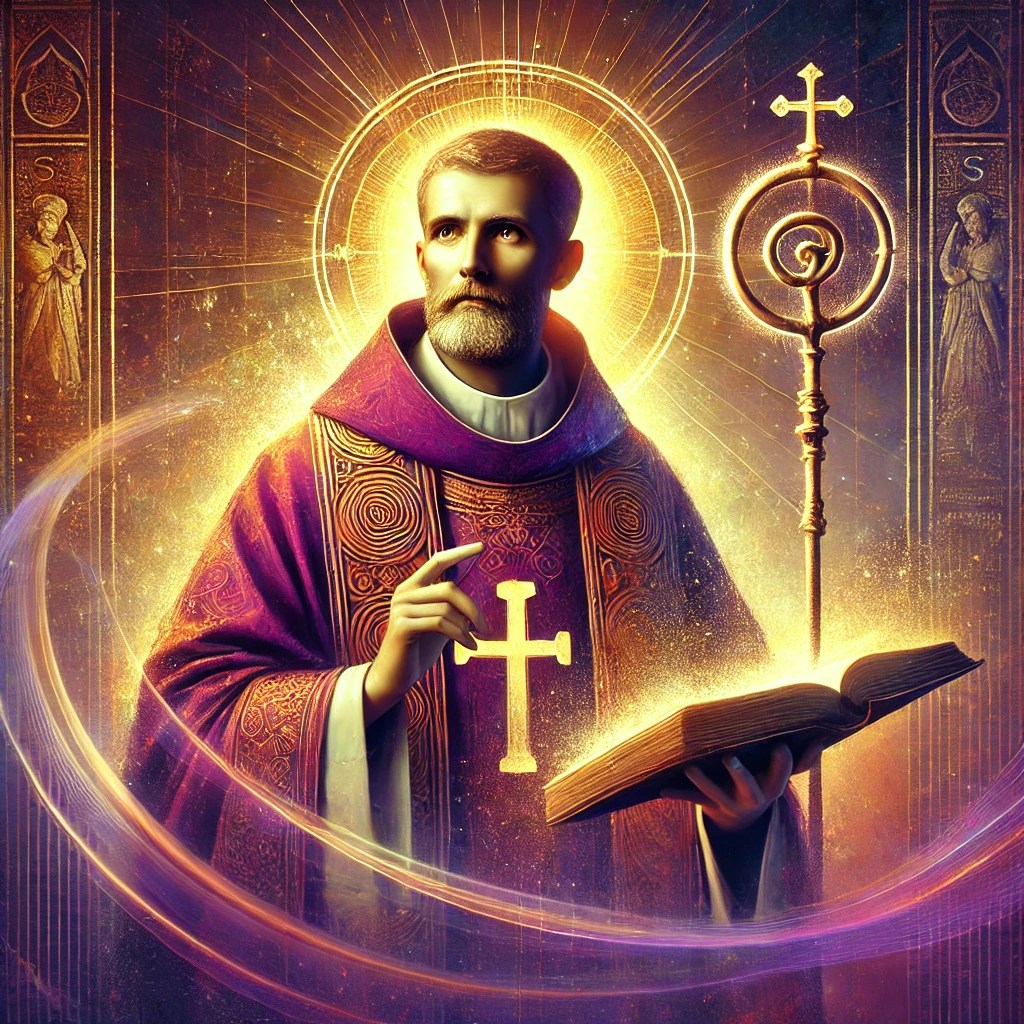
The Defender of Truth and the Light of Orthodoxy
Saint Hilary of Poitiers, whose feast day is celebrated on January 13, is a towering figure in the history of the Church, revered as one of the great defenders of the faith. Known as the “Hammer of the Arians” for his unwavering opposition to the Arian heresy, he played a pivotal role in safeguarding the Church’s teaching on the divinity of Christ. A theologian, bishop, and later declared a Doctor of the Church, Hilary’s writings, particularly on the Holy Trinity, have left an indelible mark on Christian theology. His life is a testament to the power of faith, intellect, and perseverance in the face of adversity, earning him a special place in the communion of saints.
Born to Wisdom
Saint Hilary was born around 310 AD in the Roman city of Poitiers, located in modern-day France, into a wealthy and influential pagan family. He was well-educated in classical literature, philosophy, and rhetoric, disciplines that shaped his analytical mind and later became tools in his defense of the faith. Despite his pagan upbringing, Hilary’s intellectual pursuits led him to question the pantheon of gods worshiped by his culture.
It was through his study of Scripture, particularly the story of God’s self-revelation to Moses in Exodus 3:14: “I AM WHO I AM,” and the prologue of John’s Gospel: “In the beginning was the Word, and the Word was with God, and the Word was God,” that Hilary was captivated by the truth of Christianity. His baptism marked the beginning of a profound journey of faith, not only for himself but also for his wife and daughter, Abra, who would go on to live a holy life and is venerated as a saint. In 353 AD, Hilary was chosen as Bishop of Poitiers, a role in which he would confront the Arian heresy and become a stalwart defender of the Church’s teaching on Christ’s divinity.
A Life of Faith and Wonders
While Saint Hilary is celebrated primarily for his theological brilliance, his deep faith and holiness were often accompanied by miraculous events. One of the most well-documented miracles occurred after his death but points to his enduring presence in the lives of the faithful. During the demolition of a basilica dedicated to him, a young boy was tragically crushed by a collapsing wall. Witnesses invoked Saint Hilary’s intercession, and through prayer, the child was miraculously restored to life. This extraordinary event became a sign of the saint’s heavenly advocacy and a testimony to the power of faith and prayer.
Exiled for Truth
Saint Hilary’s journey was not without immense challenges. His unwavering opposition to Arianism, a heresy that denied the full divinity of Christ, made him a target of powerful adversaries, including Emperor Constantius II, who was sympathetic to the heretical cause. In 356 AD, Hilary was exiled to Phrygia (modern-day Turkey), a period of great suffering but also profound spiritual growth.
During his exile, Hilary wrote his most famous work, De Trinitate (On the Trinity), a masterpiece that systematically defended the consubstantiality of the Father, Son, and Holy Spirit. His writings not only clarified and strengthened the Church’s teachings but also served as a rallying cry for the faithful against heretical influences. Upon his return from exile, Hilary continued to preach and write tirelessly, cementing his reputation as a fearless defender of orthodoxy.
Miracles Beyond the Grave
After his death in 367 AD, Saint Hilary’s reputation for holiness only grew. Numerous miracles were attributed to his intercession, particularly healings and divine interventions for those who prayed at his tomb in Poitiers. The faithful made pilgrimages to venerate his relics, seeking spiritual and physical healing. Although some of his relics were reportedly destroyed during the Wars of Religion in the 16th century, his legacy as a saint and Doctor of the Church endures. His life and works continue to inspire theologians, clergy, and laypeople alike to remain steadfast in the faith and to seek the truth with courage and conviction.
A Reflection on Courage and Conviction
Saint Hilary’s life offers profound lessons for Christians today. His relentless defense of the truth, even in the face of exile and opposition, reminds us of the importance of standing firm in our beliefs. In a world where truth is often compromised, Hilary’s commitment to the Gospel serves as an inspiring example of faith and integrity.
How can we, like Saint Hilary, remain steadfast in our commitment to Christ, even when it is unpopular or challenging? One practical way is to deepen our understanding of the faith through prayer, Scripture study, and engagement with the teachings of the Church. Hilary’s life also reminds us of the power of perseverance. Are there areas in our lives where we need to trust more deeply in God’s plan, even when we face difficulties?
Finally, Saint Hilary teaches us that intellect and faith are not opposed but deeply complementary. We are called to use our gifts of reason and understanding to grow closer to God and to articulate the beauty of our faith to others. Let us ask for Saint Hilary’s intercession as we strive to live lives rooted in faith, courage, and truth.
Engage with Us!
We invite you to share your thoughts and reflections on Saint Hilary’s life and legacy in the comments below. To spark meaningful discussion, consider these questions:
- How does Saint Hilary’s journey from paganism to Christianity inspire your own faith journey?
- In what ways can you defend your faith against modern challenges, drawing inspiration from Saint Hilary’s example?
- How can you deepen your understanding of the Holy Trinity in your daily spiritual practice?
Let us support one another in our faith journeys, striving to embody the love and mercy that Jesus taught us, following the example of Saint Hilary of Poitiers.
Saint Hilary of Poitiers, pray for us!
Follow us on Instagram and Facebook for more insights and reflections on living a faith-filled life.

 Holy Manna!
Leave a comment