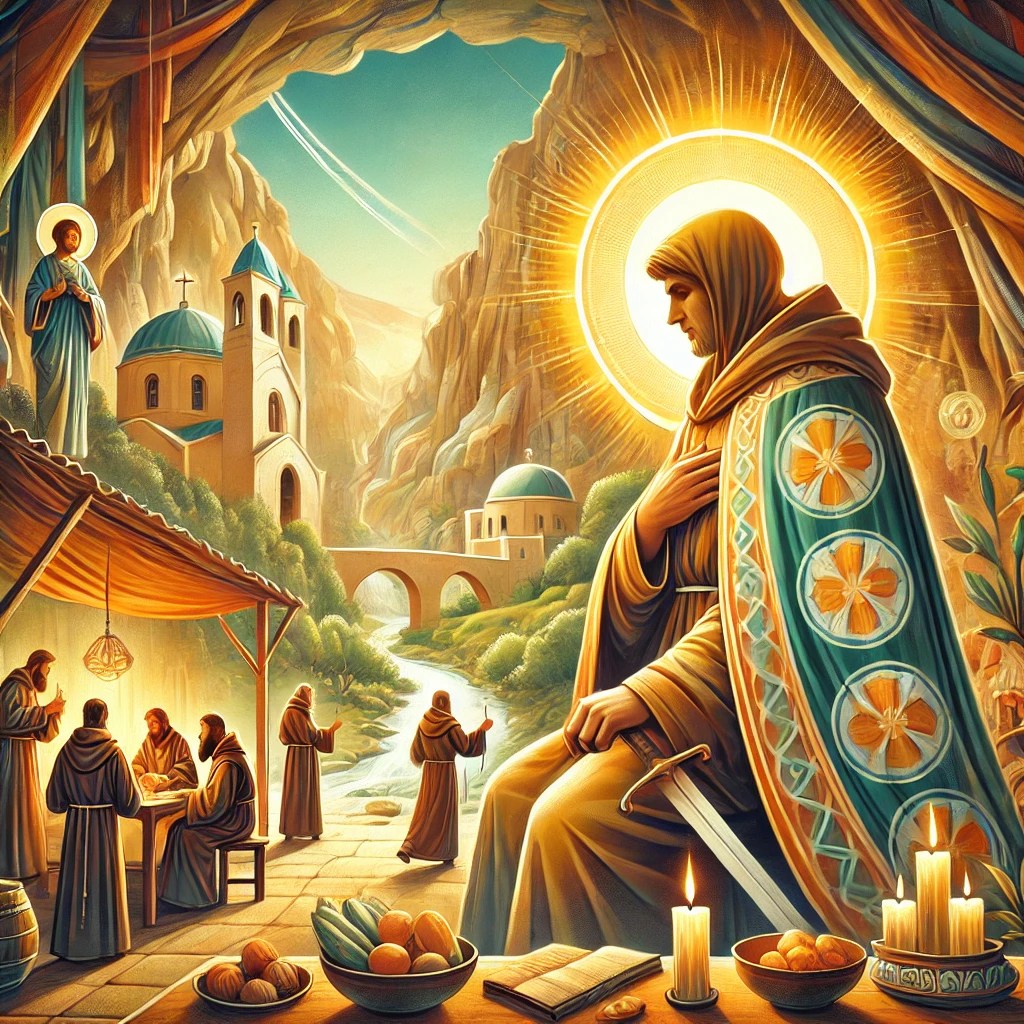
A Pioneer of Monasticism
Saint Theodosius the Cenobiarch (423–529 AD) is celebrated as one of the foremost pioneers of Christian monasticism. Known for organizing the cenobitic (communal) way of monastic living, Theodosius’ life exemplified a profound dedication to God, communal service, and unwavering faith. His monastery near Bethlehem became a beacon of hospitality, care, and spiritual growth, attracting followers from diverse backgrounds and cultures. Revered for his asceticism, leadership, and defense of orthodox Christian teaching, Theodosius left an enduring legacy that continues to inspire the faithful to this day.
Early Life and Conversion
Born in the region of Mogarissos, Cappadocia (modern-day Turkey), Theodosius was raised in a deeply devout Christian family. His parents, Proheresius and Eulogia, instilled in him a love for Scripture and a fervent faith. Inspired by the story of Abraham, Theodosius felt a divine calling to leave his homeland and dedicate himself entirely to God’s service. This longing for holiness led him to Jerusalem, a city teeming with spiritual fervor and ascetic practices.
In Jerusalem, Theodosius sought the guidance of renowned ascetics, including Saint Symeon the Stylite. Symeon, known for his life atop a pillar in prayer and fasting, blessed Theodosius and foretold his future spiritual greatness. Strengthened by these encounters, Theodosius embarked on a path of radical self-denial, determined to live a life entirely consecrated to God.
Monastic Beginnings and Ascetic Life
After receiving spiritual formation from the hermit abbot Longinus near the Tower of David, Theodosius withdrew to a cave near Bethlehem. This cave, venerated as the resting place of the Magi after their visit to the Christ Child, became the site of his prolonged solitude and prayer. Immersed in ascetic practices, Theodosius fasted extensively—abstaining from bread for thirty years—and dedicated himself to constant prayer and contemplation.
His reputation for holiness and wisdom spread, drawing disciples who desired to live under his guidance. Recognizing the need to organize this growing community, Theodosius established a monastery near Bethlehem. The Monastery of St. Theodosius soon became a model of cenobitic monasticism, where monks lived together in prayer, labor, and mutual support.
Founding of Communal Monasticism
Saint Theodosius’ monastery was revolutionary in its inclusivity and hospitality. It became a haven for the sick, elderly, and mentally impaired, embodying the Christian command to love and serve the least among us. The monastery also welcomed monks from various cultural and linguistic backgrounds, including Greeks, Armenians, and Arabs. This diversity reflected the universality of the Church and the unifying power of Christ’s love.
As his reputation grew, Theodosius was appointed the leader of all cenobitic monks in Palestine, earning the title “Cenobiarch.” His leadership and organizational skills shaped the communal monastic tradition, emphasizing prayer, charity, and self-discipline. The monastery’s rule of life inspired countless other monastic communities and remains a testament to Theodosius’ vision of communal holiness.
Defender of Orthodox Faith
During his lifetime, Theodosius faced significant challenges, including political and theological strife. He was a staunch defender of the Chalcedonian Creed, which affirmed the dual nature of Christ as both fully divine and fully human. When Emperor Anastasius supported the Monophysite heresy, Theodosius fearlessly opposed him, refusing to compromise his faith.
This defense of orthodoxy came at great personal cost. Theodosius was exiled from his monastery for a time but continued to advocate for the truth, inspiring others with his courage and resilience. His steadfastness in the face of persecution serves as a powerful example of unwavering commitment to God’s truth, even under threat of suffering.
Miracles During Life and After Death
Throughout his life, Theodosius was known for miraculous healings and divine interventions. His prayers brought comfort and healing to those in need, solidifying his reputation as a man deeply attuned to God’s will. Even after his death in 529 AD, miracles continued to be attributed to his intercession.
Pilgrims flocked to his monastery to venerate his relics, seeking healing and spiritual renewal. The Monastery of St. Theodosius became a site of pilgrimage, where the faithful encountered God’s grace through the legacy of this humble servant. His example of prayer, charity, and courage continues to inspire countless souls on their journey of faith.
Reflection
Saint Theodosius challenges us to reflect on our own lives and consider how we can embody his virtues of humility, faith, and service. In a world that often prioritizes individualism, his example reminds us of the power of community and the importance of living for others. Like Theodosius, we are called to defend the truth of our faith, care for the vulnerable, and prioritize prayer and spiritual growth.
Consider dedicating time this week to serving those in need, whether through acts of charity, prayer, or simply offering a listening ear. Reflect on your own spiritual journey and ask: How can I better align my life with God’s will? Am I open to the call to serve others, even when it requires sacrifice?
May Saint Theodosius inspire us to live with the same courage, humility, and devotion, trusting that God’s grace will sustain us in all things.
Engage with Us!
We’d love to hear how Saint Theodosius’ life speaks to your heart! Share your reflections in the comments below and join the conversation as we journey together in faith. Here are a few questions to guide your reflection:
- How can you create a spirit of community and charity in your own life, inspired by Saint Theodosius’ example?
- What challenges in your life require you to trust more deeply in God’s will, as Theodosius did?
- How can you strengthen your faith and defend the truth of the Gospel in today’s world?
Let us support one another in living lives of faith, hope, and love, striving to do everything with the compassion and mercy of our Lord Jesus Christ.
Saint Theodosius, pray for us!
Follow us on Instagram and Facebook for more insights and reflections on living a faith-filled life.

 Holy Manna!
Leave a comment