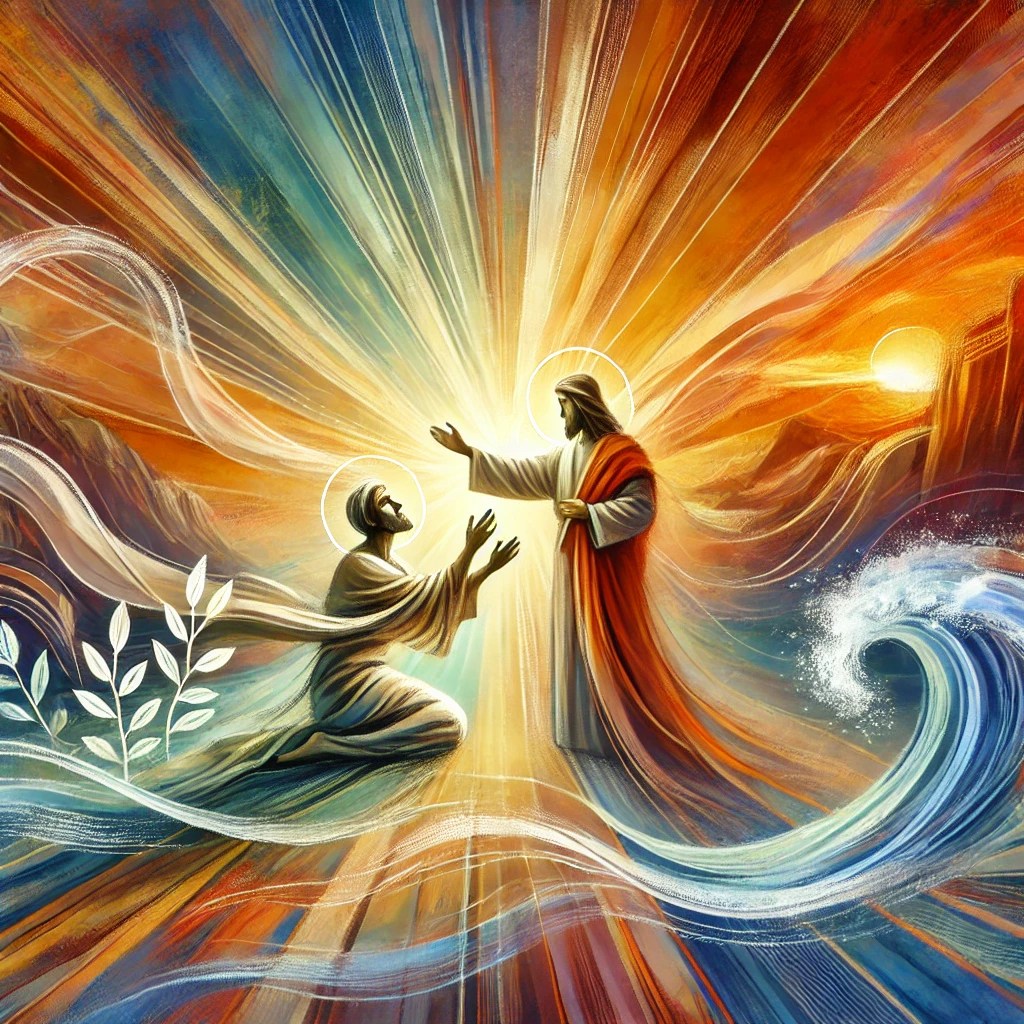
Faith That Transforms
Have you ever wondered how faith can transform not only your soul but your entire life? Today’s readings invite us to reflect on the power of belief in Jesus Christ—a faith that brings healing, restoration, and eternal life. As we journey through these passages, we see how God’s promises are fulfilled in Christ, who offers us peace, wholeness, and communion with Him.
The central theme connecting today’s readings is the transformative power of faith in Jesus Christ, who heals us spiritually and physically, bringing eternal life to those who believe. In the First Reading from 1 John 5:5-13, St. John declares that faith in Jesus as the Son of God is the victory over the world, testifying to the life-giving power of God’s Spirit. The Responsorial Psalm (Psalm 147) reminds us of God’s faithful care for His people, highlighting His blessings of peace and provision, while the Gospel from Luke 5:12-16 reveals Jesus’ compassionate healing of a leper who, in faith, sought His cleansing touch.
To fully grasp the depth of these readings, it’s essential to understand their cultural and religious context. In the time of Jesus, lepers were outcasts, both physically and spiritually, considered ritually unclean and excluded from the community. The healing of the leper in today’s Gospel is not only a physical miracle but a sign of restoration—bringing the man back into communion with God and his community. Similarly, the testimony of the Spirit, water, and blood in the First Reading points to the sacraments of Baptism and the Eucharist, through which believers are cleansed and nourished by Christ Himself.
These readings challenge us to consider the transformative power of faith in our lives. What areas of your life do you need Jesus to touch and heal today? As we reflect on these passages, let us open our hearts to the grace and peace that flow from faith in Christ, allowing Him to restore and renew us.
First Reading – 1 John 5:5-13
The Victory of Faith: Life in the Son of God
The First Letter of John is a pastoral epistle written to encourage and strengthen a Christian community faced with false teachings and division. Likely written near the end of the first century, the letter reflects the growing challenges faced by the early Church in preserving the true teaching about Jesus Christ. At the heart of this letter is the question of Jesus’ identity and the assurance of eternal life for those who believe in Him. Today’s reading proclaims a resounding truth: faith in Jesus Christ as the Son of God brings victory over the world and grants eternal life. St. John’s words serve as both a defense of the faith and a call to live confidently in the truth revealed by God.
Understanding the context is essential. St. John emphasizes the elements of “water,” “blood,” and “Spirit,” symbols deeply rooted in the life of the Church. The “water” points to Baptism, which cleanses and initiates believers into the Body of Christ, while the “blood” refers to the sacrifice of Jesus and the Eucharist, through which we are nourished and united with Him. The Holy Spirit, the “Spirit of truth” (John 14:17), testifies to Christ’s divinity and mission, guiding believers into the fullness of faith. These elements form the foundation of our Christian life and witness, drawing us into communion with God. This reading prepares us to reflect on how our faith in Jesus transforms us, not only through the sacraments but in every aspect of our daily lives.
1 John 5:5-13
New American Bible (Revised Edition)
5 Who [indeed] is the victor over the world but the one who believes that Jesus is the Son of God?
6 This is the one who came through water and blood, Jesus Christ, not by water alone, but by water and blood. The Spirit is the one that testifies, and the Spirit is truth. 7 So there are three that testify, 8 the Spirit, the water, and the blood, and the three are of one accord. 9 If we accept human testimony, the testimony of God is surely greater. Now the testimony of God is this, that he has testified on behalf of his Son. 10 Whoever believes in the Son of God has this testimony within himself. Whoever does not believe God has made him a liar by not believing the testimony God has given about his Son. 11 And this is the testimony: God gave us eternal life, and this life is in his Son. 12 Whoever possesses the Son has life; whoever does not possess the Son of God does not have life.
Prayer for Sinners. 13 I write these things to you so that you may know that you have eternal life, you who believe in the name of the Son of God.
Detailed Exegesis
Verse 5: “Who [indeed] is the victor over the world but the one who believes that Jesus is the Son of God?”
St. John begins by identifying faith as the key to overcoming the world. “The world” in Johannine literature often symbolizes the realm of sin, temptation, and rejection of God. To “conquer the world” means to live in freedom from the power of sin and worldly values. This victory is not achieved by human effort but by believing in Jesus as the Son of God. Faith unites us to Christ’s victory over sin and death, making us participants in His triumph.
Verse 6: “This is the one who came through water and blood, Jesus Christ, not by water alone, but by water and blood. The Spirit is the one that testifies, and the Spirit is truth.”
Here, St. John asserts the real and tangible mission of Jesus. The “water and blood” highlight the sacramental dimensions of Christ’s work. “Water” refers to Jesus’ baptism, marking the beginning of His public ministry, while “blood” points to His sacrificial death on the cross. These two elements are inseparable in the life of a believer. Through Baptism, we are cleansed and made children of God; through the Eucharist, we are united to Christ’s sacrifice and sustained in grace. The Holy Spirit confirms this testimony, ensuring that what we believe is not human invention but divine truth.
Verse 7-8: “So there are three that testify, the Spirit, the water, and the blood, and the three are of one accord.”
In Jewish law, the testimony of two or three witnesses was required to establish the truth (Deuteronomy 19:15). Here, St. John presents the Spirit, water, and blood as divine witnesses to Christ’s identity. These three elements work together to affirm that Jesus is the Son of God, the source of eternal life. This unity underscores the coherence of God’s plan of salvation, revealed through the sacraments and the Holy Spirit.
Verse 9: “If we accept human testimony, the testimony of God is surely greater. Now the testimony of God is this, that he has testified on behalf of his Son.”
St. John calls his audience to trust in the testimony of God, which surpasses any human evidence. Through the Scriptures, the sacraments, and the Spirit, God has revealed His Son to the world. This verse invites us to place our faith not in human reasoning alone but in the divine authority of God’s Word and actions.
Verse 10: “Whoever believes in the Son of God has this testimony within himself. Whoever does not believe God has made him a liar by not believing the testimony God has given about his Son.”
Faith internalizes God’s testimony, transforming the believer’s heart and mind. To reject this testimony is to deny the truth of God’s Word, effectively calling God a liar. This verse challenges us to examine our faith and its implications. Belief in Jesus is not merely intellectual but a lived conviction that shapes every aspect of our lives.
Verse 11-12: “And this is the testimony: God gave us eternal life, and this life is in his Son. Whoever possesses the Son has life; whoever does not possess the Son of God does not have life.”
St. John encapsulates the Gospel message: eternal life is God’s gift, made available through His Son. “Possessing the Son” means being in communion with Christ through faith, the sacraments, and obedience to His Word. Without this relationship, we remain separated from the source of life.
Verse 13: “I write these things to you so that you may know that you have eternal life, you who believe in the name of the Son of God.”
St. John offers a pastoral assurance to his readers: faith in Jesus guarantees eternal life. This confidence is not based on human merit but on God’s promise, inviting us to live with hope and joy as children of God.
Teachings
The Catechism of the Catholic Church affirms that faith in Jesus Christ is essential for salvation: “Believing in Jesus Christ and in the One who sent him for our salvation is necessary for obtaining that salvation” (CCC 161). The sacraments of Baptism and the Eucharist, referenced in this passage, are central to the Christian life. Baptism is described as the gateway to life in the Spirit, marking the beginning of the journey of faith (CCC 1213). The Eucharist is “the source and summit of the Christian life” (CCC 1324), nourishing believers and uniting them to Christ’s sacrifice. St. Augustine reflects on the unity of water, blood, and Spirit as the foundation of the Church’s sacramental life, emphasizing their role in the believer’s ongoing conversion and sanctification.
Reflection
This reading invites us to reflect on the power of faith in our lives. Do you believe in the testimony of God concerning His Son? If so, how is this faith reflected in your daily actions and decisions? Faith is not static; it transforms us, enabling us to overcome the trials and temptations of the world.
One concrete way to live this faith is by participating fully in the sacraments. Baptism begins our relationship with Christ, but it is through the Eucharist and Reconciliation that we are continually renewed and strengthened. When was the last time you approached the sacraments with a heart full of faith?
This passage also challenges us to bear witness to the testimony of God in our words and deeds. In a world that often denies or distorts the truth about Jesus, we are called to stand firm in our faith. Pray today for the grace to live as a witness to Christ’s victory, trusting that He is the source of eternal life. What areas of your life need to be touched by the water, blood, and Spirit of Jesus? May this reflection encourage us to place our hope and trust in Him, the Son of God, who has overcome the world.
Responsorial Psalm – Psalm 147:12-15, 19-20
Praise for the God Who Provides
The Book of Psalms is a collection of prayers, hymns, and songs composed over centuries, reflecting the worship, struggles, and faith of God’s people. Psalm 147 is a song of praise, celebrating God’s care and provision for His chosen people, Israel. This psalm belongs to the final five psalms in the book, often referred to as the “Hallelujah Psalms” because they begin and end with “Hallelujah,” a Hebrew word meaning “Praise the Lord.” Today’s passage emphasizes God’s blessings upon Jerusalem, His provision of peace and abundance, and His gift of His Word and commandments.
The psalm fits beautifully into today’s theme by highlighting God’s active role in the life of His people. Just as the First Reading spoke of the Spirit, water, and blood testifying to Jesus as the source of life, the psalm reminds us of the tangible ways God provides for and sustains His people. It invites us to glorify Him for His faithfulness and generosity, encouraging us to trust in His promises and provisions.
Psalm 147:12-15, 19-20
New American Bible (Revised Edition)
12 Glorify the Lord, Jerusalem;
Zion, offer praise to your God,
13 For he has strengthened the bars of your gates,
blessed your children within you.
14 He brings peace to your borders,
and satisfies you with finest wheat.
15 He sends his command to earth;
his word runs swiftly!
19 He proclaims his word to Jacob,
his statutes and laws to Israel.
20 He has not done this for any other nation;
of such laws they know nothing.
Hallelujah!
Detailed Exegesis
Verse 12: “Glorify the Lord, Jerusalem; Zion, offer praise to your God.”
The psalmist calls Jerusalem and Zion—terms often used to refer to God’s chosen people collectively—to glorify and praise God. The use of “Jerusalem” and “Zion” evokes the centrality of God’s covenant with Israel, whose heart was the temple in Jerusalem. This verse invites all of God’s people to reflect on His greatness and faithfulness, uniting them in a communal song of praise.
Verse 13: “For he has strengthened the bars of your gates, blessed your children within you.”
This verse points to God’s protection and provision for His people. Strengthening the gates symbolizes security and safety, while blessing the children reflects God’s care for the family and future generations. In the context of Israel, this verse would resonate with the covenant promises that God would establish His people in peace and prosperity if they remained faithful to Him.
Verse 14: “He brings peace to your borders, and satisfies you with finest wheat.”
The peace and abundance described here are evidence of God’s providential care. For the Israelites, peace (shalom) encompassed not just the absence of war but a state of wholeness and harmony in their relationship with God, others, and creation. The “finest wheat” reflects God’s generosity in meeting their material and physical needs, reminding them of His promise to sustain them in the land of plenty.
Verse 15: “He sends his command to earth; his word runs swiftly!”
This verse shifts focus to the power of God’s Word, which accomplishes His will without delay. The psalmist marvels at how God’s word, whether spoken in creation, the law, or His ongoing guidance of His people, acts as a direct force in the world. This reflects a deep trust in God’s authority and the reliability of His promises.
Verse 19: “He proclaims his word to Jacob, his statutes and laws to Israel.”
The psalmist underscores the privilege of Israel in receiving God’s Word and His law. This verse reflects the covenant relationship between God and His people, where He reveals His will to them uniquely. It also highlights the centrality of the Torah, which guides Israel in how to live in communion with God.
Verse 20: “He has not done this for any other nation; of such laws they know nothing. Hallelujah!”
This final verse emphasizes the exclusivity of God’s covenant with Israel at that time. By giving them His laws, God set them apart as His chosen people. The psalm concludes with “Hallelujah,” inviting the community to join in praising God for His unparalleled love and blessings.
Teachings
The Catechism of the Catholic Church teaches that God’s Word is a living reality, active in the life of the Church and its members: “The Church has always venerated the Scriptures as she venerates the Lord’s Body” (CCC 103). This reverence for the Word of God ties directly to today’s psalm, which exalts God’s Word as swift and powerful, a source of guidance and blessing. Additionally, the Catechism explains that peace, as described in this psalm, is a sign of the Messianic Kingdom: “The kingdom of God… is righteousness and peace and joy in the Holy Spirit” (CCC 2819). The psalm’s focus on peace, abundance, and God’s law resonates with the fulfillment of these promises in Christ, who unites all nations in the new covenant.
Saint Jerome reminds us of the centrality of God’s Word in our lives: “Ignorance of the Scriptures is ignorance of Christ.” This teaching echoes the psalmist’s call to glorify God for the gift of His Word, urging us to study, meditate on, and live according to His law.
Reflection
This psalm challenges us to ask: How often do I pause to praise God for His blessings and provisions? In the busyness of daily life, we may take for granted the ways God protects, provides, and speaks to us. Just as Jerusalem was called to glorify God for its peace and abundance, we are invited to recognize His hand at work in our own lives, from the food we eat to the relationships we treasure.
One practical way to live out this psalm is by cultivating a habit of gratitude. When was the last time you thanked God for His Word, His sacraments, or the peace in your life? Make time this week to reflect on the blessings you’ve received and offer a prayer of praise.
The psalm also reminds us of the transformative power of God’s Word. Do you spend time reading Scripture, allowing it to shape your thoughts and actions? Consider dedicating a few minutes each day to meditate on a passage from the Bible, asking the Holy Spirit to guide you in understanding and applying it.
Finally, this psalm invites us to trust in God’s providence, even in difficult times. Are you willing to trust that God will provide for your needs and bring peace to your heart? Reflect on any areas of your life where you may be struggling to surrender control, and ask God to strengthen your faith in His care. May this psalm inspire us to glorify the Lord with our lives, trusting in His faithfulness and rejoicing in His blessings.
Holy Gospel – Luke 5:12-16
Lord, If You Wish, You Can Make Me Clean
The Gospel of Luke is often referred to as the Gospel of mercy, emphasizing Jesus’ compassion and concern for the marginalized, the outcasts, and the sinners. Today’s passage, the healing of a leper, is a profound example of this mercy. Leprosy in the time of Jesus was not only a debilitating disease but also a social and spiritual stigma. Lepers were considered unclean under Jewish law (Leviticus 13:45-46) and were required to live isolated from the community, unable to participate in worship or daily social life. For a leper, healing meant more than physical restoration—it meant being reintegrated into the community and being spiritually restored before God.
This episode fits into today’s theme by showing the transformative power of faith in Jesus. The leper’s faith is evident in his plea: “Lord, if you wish, you can make me clean.” Jesus responds not only with healing but with a personal touch, crossing social and religious boundaries to restore the man’s dignity. This Gospel challenges us to consider how we approach Jesus with our own wounds and whether we trust in His desire to make us whole.
Luke 5:12-16
New American Bible (Revised Edition)
12 Now there was a man full of leprosy in one of the towns where he was; and when he saw Jesus, he fell prostrate, pleaded with him, and said, “Lord, if you wish, you can make me clean.” 13 Jesus stretched out his hand, touched him, and said, “I do will it. Be made clean.” And the leprosy left him immediately. 14 Then he ordered him not to tell anyone, but “Go, show yourself to the priest and offer for your cleansing what Moses prescribed; that will be proof for them.” 15 The report about him spread all the more, and great crowds assembled to listen to him and to be cured of their ailments, 16 but he would withdraw to deserted places to pray.
Detailed Exegesis
Verse 12: “Now there was a man full of leprosy in one of the towns where he was; and when he saw Jesus, he fell prostrate, pleaded with him, and said, ‘Lord, if you wish, you can make me clean.’”
This verse sets the stage with a dramatic encounter between the leper and Jesus. The man, described as “full of leprosy,” is likely in the advanced stages of the disease, making his approach to Jesus all the more desperate and courageous. By falling prostrate, the leper shows humility and reverence, addressing Jesus as “Lord.” His statement, “if you wish,” reflects both faith in Jesus’ power and trust in His will. The leper does not demand healing but submits himself entirely to Jesus’ authority.
Verse 13: “Jesus stretched out his hand, touched him, and said, ‘I do will it. Be made clean.’ And the leprosy left him immediately.”
Jesus’ response is profoundly personal. By stretching out His hand and touching the leper, Jesus defies cultural and religious norms that regarded lepers as untouchable. This touch is not merely physical but symbolic of Jesus’ willingness to enter into the man’s suffering and restore him fully. His words, “I do will it,” reveal the heart of God’s mercy and His desire to heal those who come to Him in faith. The immediacy of the healing demonstrates Jesus’ divine power and authority over sickness and sin.
Verse 14: “Then he ordered him not to tell anyone, but ‘Go, show yourself to the priest and offer for your cleansing what Moses prescribed; that will be proof for them.’”
Jesus’ instruction reflects the requirements of Jewish law (Leviticus 14:1-32), which mandated that a cleansed leper present himself to the priest and offer sacrifices as a testimony of his healing. By sending the man to the priest, Jesus upholds the law while also providing a public witness to God’s power. His command not to tell anyone may have been intended to prevent sensationalism or interference with His mission, as Jesus often sought to avoid unnecessary attention to His miracles.
Verse 15: “The report about him spread all the more, and great crowds assembled to listen to him and to be cured of their ailments.”
Despite Jesus’ instructions, news of the healing spreads, drawing large crowds to Him. This reflects both the power of His actions and the hunger of the people for healing and hope. The crowds come not only to be healed but to listen to His teaching, showing that His words and works are inseparably connected.
Verse 16: “But he would withdraw to deserted places to pray.”
This verse highlights the importance of prayer in Jesus’ ministry. Amid the demands of His mission, Jesus retreats to deserted places to commune with the Father, drawing strength and guidance. This serves as a powerful example for believers, reminding us that ministry and service must be rooted in prayer and dependence on God.
Teachings
The healing of the leper demonstrates the sacramental nature of Jesus’ ministry. The Catechism of the Catholic Church teaches that Jesus’ healing miracles are signs of the coming Kingdom of God: “Christ’s compassion toward the sick and his many healings… were a resplendent sign that ‘God has visited his people’” (CCC 1503). This passage also prefigures the Sacrament of Reconciliation, where Jesus, through the Church, restores us to spiritual wholeness. The Catechism explains, “By Christ’s will, the Church possesses the power to forgive the sins of the baptized” (CCC 986), offering us the same cleansing and restoration the leper received.
Saint Francis of Assisi, known for his love for lepers, provides a living example of this Gospel’s message. Initially repulsed by lepers, Francis experienced a conversion that led him to embrace them with compassion, seeing Christ in their suffering. His life reminds us that true discipleship involves reaching out to those society often rejects, bringing the love of Christ to all.
Reflection
This Gospel invites us to reflect on our own wounds—physical, emotional, or spiritual—and how we bring them before Jesus. Do you trust in Jesus’ power and desire to heal you? The leper’s faith and humility provide a model for how we should approach Christ, surrendering our struggles to Him and believing in His will to make us whole.
We are also challenged to consider how we respond to the “lepers” in our own lives—those who are marginalized, isolated, or suffering. Do you reach out to those in need, even when it is uncomfortable or inconvenient? Just as Jesus touched the leper, we are called to bring His healing presence to others, offering compassion and solidarity to those who feel excluded.
Finally, this passage reminds us of the necessity of prayer in our daily lives. Amid the busyness of our schedules, do you take time to withdraw and pray, seeking communion with God? Following Jesus’ example, we should prioritize moments of solitude and prayer, allowing God to guide and sustain us in our mission.
As you reflect on this Gospel, consider these questions: What areas of your life need Jesus’ healing touch? How can you extend His love and compassion to others today? Are you making space for prayer in your life to grow closer to Him? May this passage inspire us to approach Jesus with faith, extend His mercy to others, and root ourselves in prayer, trusting in His power to transform our lives.
Faith That Restores, Heals, and Gives Life
Today’s readings weave together a powerful message of transformation through faith in Jesus Christ. From the First Reading in 1 John, we are reminded that faith is the victory that overcomes the world, granting us eternal life through Jesus, the Son of God. The Responsorial Psalm calls us to glorify God for His providence, peace, and the gift of His Word, which strengthens and sustains His people. Finally, in the Holy Gospel of Luke, we see faith in action as a leper humbly approaches Jesus, trusting in His power to heal and restore. Jesus responds with mercy, showing that His desire is not only to heal but to bring wholeness and communion.
The common thread running through these passages is the life-changing power of belief. Faith is not just an intellectual exercise but a dynamic force that brings peace, restoration, and eternal hope. The leper’s story in the Gospel exemplifies this: his faith led him to Jesus, and his humility allowed him to receive healing. Similarly, we are invited to approach Christ with trust and surrender, knowing that He wills our healing and desires to restore us to the fullness of life.
As we conclude, let us reflect on how these readings apply to our own lives. Do you truly believe in the life-giving power of Jesus? Are there areas in your life where you need His healing touch? How can you glorify God for His blessings today?
God calls us not only to trust in Him but also to extend His love and mercy to others. Just as Jesus reached out to the leper, we are called to reach out to those who are suffering or feel excluded, bringing His peace and compassion to our families, communities, and workplaces. Faith is not meant to remain hidden—it is meant to bear fruit in love and action.
Today, take a step to deepen your relationship with God. Spend time in prayer, participate in the sacraments, and meditate on His Word. Allow the Spirit, the water, and the blood to testify in your heart that Jesus is the Son of God, the source of eternal life. Let your faith inspire you to live with hope, love, and gratitude, trusting in the God who heals, restores, and sustains.
Where is God inviting you to greater faith today? How will you respond? May today’s readings inspire you to approach Jesus with faith and humility, glorify Him for His blessings, and share His love with the world. Let us go forth, confident in the victory of Christ, who has overcome the world and given us eternal life!
Engage with Us!
We would love to hear your thoughts on today’s readings! Share your reflections in the comments below and join the conversation about how God is working in your life. Reflecting on Scripture together strengthens our faith and reminds us of the hope we have in Christ.
Here are some questions to guide your reflection:
- First Reading (1 John 5:5-13): What does it mean for you personally to “possess the Son” and have eternal life? How does your faith help you overcome the challenges of the world?
- Responsorial Psalm (Psalm 147:12-15, 19-20): How has God provided for you recently in ways that fill you with gratitude? How can you glorify Him today for His blessings?
- Holy Gospel (Luke 5:12-16): What wounds in your life do you need Jesus to heal? How can you imitate Jesus’ compassion by reaching out to someone who feels isolated or excluded?
As you go about your day, remember that faith in Jesus transforms every aspect of our lives. Allow His love and mercy to guide your words and actions, so that everything you do reflects His goodness. Together, let us live a life of faith, trusting in His power to heal, restore, and bring us into deeper communion with Him. Go forth in hope and share His love with the world!
Follow us on Instagram and Facebook for more insights and reflections on living a faith-filled life.

 Holy Manna!
Leave a comment