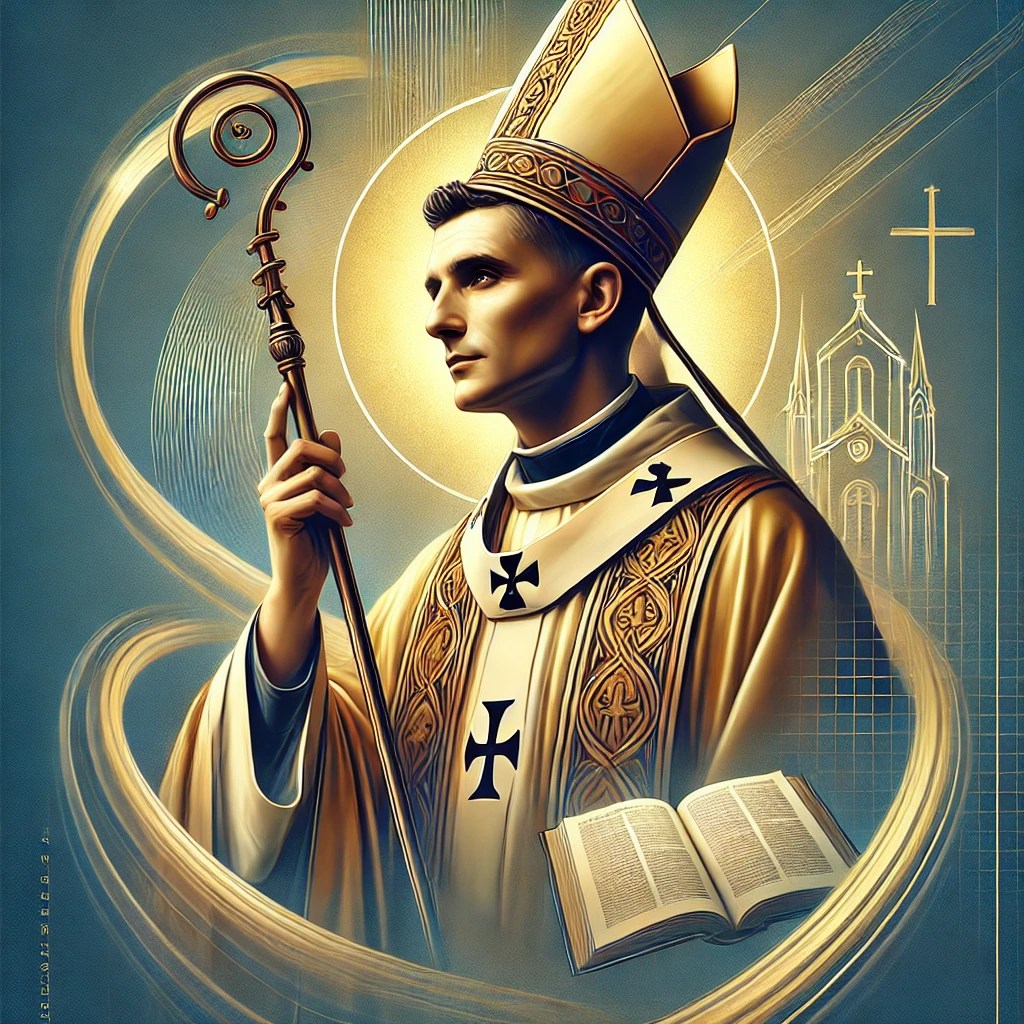
A Beacon of Faith and Education
Saint John Neumann, the first male American saint, stands as a beacon of humility, service, and relentless devotion to God. Known for his pioneering efforts in Catholic education and his deep pastoral care for immigrant communities, he left a legacy that transformed the Catholic Church in America. As the fourth Bishop of Philadelphia, he established the first diocesan school system in the United States, dramatically increasing access to faith-based education. Through his tireless work and profound faith, Saint John Neumann demonstrated what it means to live a life wholly dedicated to God and the service of others.
A Journey Across Continents
Born on March 28, 1811, in the small town of Prachatice in Bohemia (modern-day Czech Republic), John Nepomucene Neumann was raised in a devout Catholic family. His parents, Philip and Agnes Neumann, nurtured a love of faith and learning in their children. From an early age, John exhibited a strong desire to serve God.
As a young man, he entered the seminary at Budweis, where he excelled in his studies and developed a deep spiritual life. His longing to serve as a missionary led him to study English in preparation for work abroad. After learning that the Diocese of New York was in dire need of priests, Neumann courageously left his homeland and traveled to America, arriving in 1836. Just weeks after his arrival, he was ordained a priest, beginning his mission to serve the spiritual and educational needs of immigrants in the New World.
Miracles of Compassion
Father John Neumann’s ministry was marked by extraordinary acts of compassion and service. Assigned to the Niagara Falls region, he was responsible for an immense territory with few priests. He traveled tirelessly, often on foot, to bring the sacraments to remote communities.
In 1840, he joined the Redemptorist Order, becoming the first member to profess vows in the United States. This commitment enabled him to expand his ministry to Maryland, Virginia, and Ohio, serving diverse immigrant populations. His ability to speak multiple languages allowed him to connect deeply with people from various cultures, earning their trust and love. His life itself became a miracle of perseverance, as he selflessly gave of himself for the good of others.
Building the Church
When John Neumann was appointed Bishop of Philadelphia in 1852, he inherited a diocese fraught with challenges, including anti-Catholic sentiment and limited resources. Despite these obstacles, he focused on creating a robust Catholic education system. By the time of his death, he had increased the number of Catholic schools in the diocese from two to over 100, laying the groundwork for the modern Catholic school system in the United States.
Neumann also established parishes, asylums, and other institutions to support the spiritual and physical needs of his flock. His pastoral care extended to everyone, especially immigrants, whom he served with boundless compassion. His administrative skill, humility, and deep reliance on God’s providence enabled him to achieve what many thought impossible.
The Crosses of the Saint
Despite his many achievements, Saint John Neumann faced significant challenges. He contended with anti-Catholic hostility, often fueled by the anti-immigrant sentiment of the time. Additionally, his tireless work took a toll on his health, leaving him physically exhausted.
Yet, Neumann bore these crosses with grace, offering his hardships to God as acts of love. His deep prayer life sustained him, and his humility allowed him to remain focused on serving others rather than seeking personal recognition. His steadfast faith serves as a powerful example of resilience in the face of adversity.
A Legacy of Holiness
Saint John Neumann’s holiness did not end with his earthly life. After his sudden death on January 5, 1860, numerous miracles were attributed to his intercession, particularly healings of the sick. His body, found to be remarkably well-preserved years after his death, became a source of veneration and devotion.
Today, the National Shrine of Saint John Neumann in Philadelphia attracts pilgrims from around the world, seeking his intercession and drawing inspiration from his life. He was beatified in 1963 and canonized by Pope Paul VI on June 19, 1977. His sainthood affirms his extraordinary impact on the Church and his ongoing role as a model of faith and service.
Reflection
Saint John Neumann’s life is a testament to the power of humility, perseverance, and unwavering faith. His example challenges us to serve others selflessly and to trust in God’s providence, even in the face of adversity.
We can learn from his commitment to education by prioritizing the spiritual and intellectual formation of those around us. His service to immigrants reminds us of the importance of welcoming and advocating for those in need. Above all, his humility and tireless work invite us to approach our own lives with a spirit of love and service.
By following Saint John Neumann’s example, we can contribute to building a more compassionate and faith-filled world. Let us strive to embody his virtues in our daily lives, bringing the light of Christ to all we meet.
Engage with Us!
We invite you to share your thoughts and reflections in the comments below. Consider these questions:
- How can you contribute to the education and faith formation of those around you?
- In what ways can you support immigrant communities in your area?
- What aspects of Saint John Neumann’s humility and dedication resonate with you, and how can you apply them in your life?
Let’s support each other in our faith journeys, striving to embody the love and mercy that Jesus taught us.
Saint John Neumann, pray for us!
Follow us on Instagram and Facebook for more insights and reflections on living a faith-filled life.

 Holy Manna!
Leave a comment