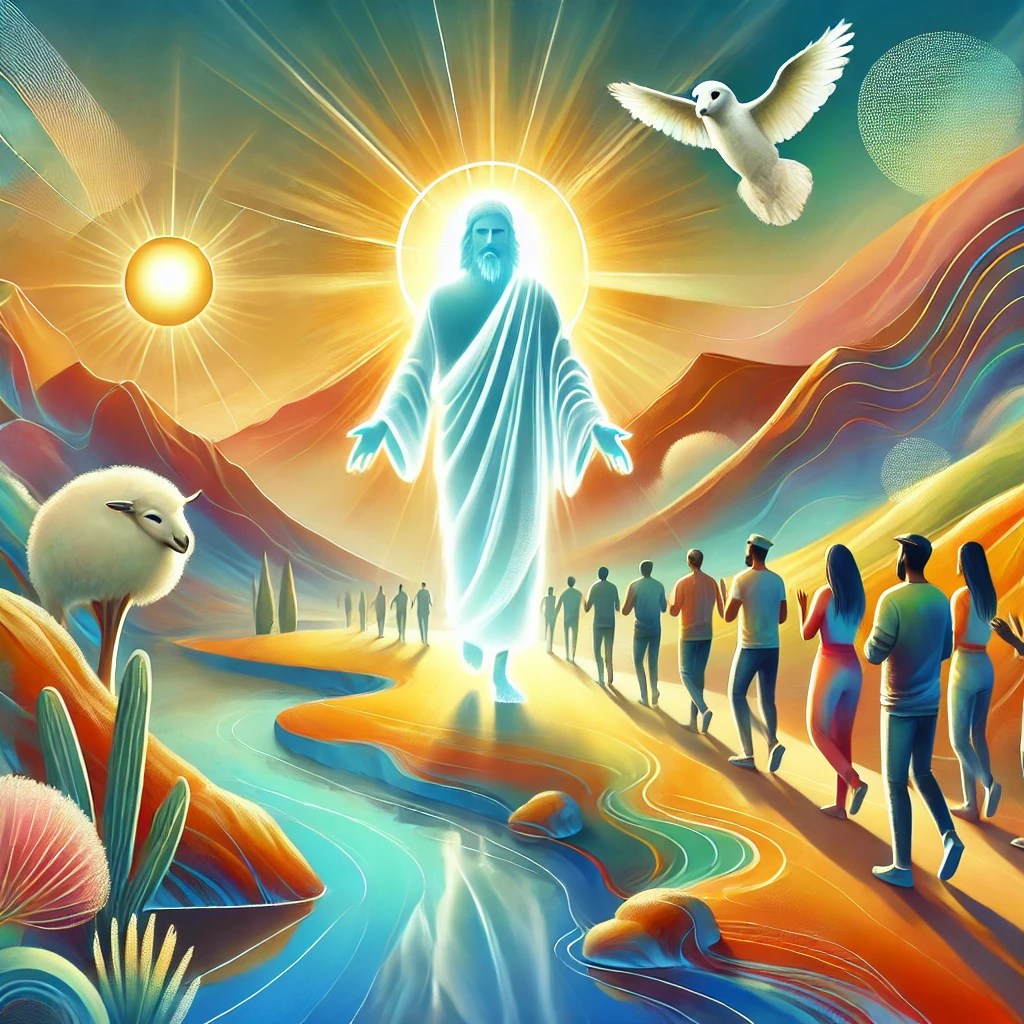
Recognizing the Messiah in Our Lives
What does it mean to truly recognize and respond to God’s call in our lives? Today’s readings invite us to reflect on this question as they weave a tapestry of divine calling, righteous living, and joyful witness. Each passage challenges us to embrace our identity as children of God, to act in righteousness, and to lead others to Christ with the same enthusiasm as the first disciples.
In the First Letter of John, we are reminded of the stark difference between those who live in God’s righteousness and those who remain in sin. The message is clear: to be a child of God is to bear His seed, living in a way that reflects His presence within us. The call to holiness is not merely a suggestion—it is the hallmark of belonging to God.
The psalmist echoes this joy in Psalm 98, celebrating God’s justice and fairness as reasons for the entire world to rejoice. This poetic hymn highlights the universal invitation to recognize God’s marvelous deeds and respond with praise.
Finally, in The Gospel of John, we encounter the transformative power of recognizing Jesus as the Lamb of God. John the Baptist’s proclamation inspires two disciples to follow Jesus, leading to a life-changing encounter. Their discovery of the Messiah sets them on a path of witness and discipleship, a journey every believer is invited to take.
The historical and religious context deepens this message. For early Christians, distinguishing themselves from the surrounding culture often required courage, as living righteously meant rejecting societal norms that opposed God’s will. Similarly, the psalmist’s call to let creation rejoice reminds us of Israel’s hope in God’s ultimate justice—a hope fulfilled in Jesus Christ, the Messiah proclaimed in the Gospel.
As we reflect on these readings, ask yourself: Am I living as a child of God, in righteousness and love? How do I recognize Jesus in my daily life, and how can I share that recognition with others?
Now, let us dive deeper into these passages, exploring how they call us to a renewed commitment to righteousness and a bold witness to the Lamb of God.
First Reading – 1 John 3:7-10
Children of God: Living in Righteousness
The First Letter of John, written during the latter part of the first century, addresses a Christian community struggling with false teachings and moral confusion. The letter reflects the Apostle John’s pastoral care, urging believers to remain faithful to Christ and live in righteousness as children of God. Rooted in the Johannine tradition, this passage highlights a clear distinction between those who live in the light of God and those who belong to the darkness of sin.
This reading is significant for its direct language and uncompromising call to holiness. It emphasizes that true children of God act in righteousness and love their brothers and sisters. These words remind us that our identity as God’s children is not just a title but a mission—one that ties into today’s overarching theme of recognizing and responding to God’s call.
1 John 3:7-10
New American Bible (Revised Edition)
7 Children, let no one deceive you. The person who acts in righteousness is righteous, just as he is righteous. 8 Whoever sins belongs to the devil, because the devil has sinned from the beginning. Indeed, the Son of God was revealed to destroy the works of the devil. 9 No one who is begotten by God commits sin, because God’s seed remains in him; he cannot sin because he is begotten by God. 10 In this way, the children of God and the children of the devil are made plain; no one who fails to act in righteousness belongs to God, nor anyone who does not love his brother.
Detailed Exegesis
Verse 7: “Children, let no one deceive you. The person who acts in righteousness is righteous, just as he is righteous.”
John begins with an affectionate term, “Children,” emphasizing his paternal care for the community. He warns against deception, likely referring to heretical teachings that separated belief from moral living. John affirms that righteousness is not merely a concept but a lived reality. To be righteous, one must emulate Christ, the epitome of righteousness.
Verse 8: “Whoever sins belongs to the devil, because the devil has sinned from the beginning. Indeed, the Son of God was revealed to destroy the works of the devil.”
Here, John contrasts the works of the devil with the mission of Christ. Sin, John explains, aligns one with the devil, the origin of rebellion against God. Yet, Christ’s incarnation and sacrifice have decisively defeated the devil’s power, offering believers a path to freedom from sin. This verse underscores the cosmic battle between good and evil, highlighting Jesus as the ultimate victor.
Verse 9: “No one who is begotten by God commits sin, because God’s seed remains in him; he cannot sin because he is begotten by God.”
John speaks of those “begotten by God,” referring to those who have been transformed through baptism and the Holy Spirit. While this does not mean sinless perfection, it reflects a new orientation of the heart away from habitual sin. God’s “seed” can be understood as divine grace or the indwelling of the Holy Spirit, which enables believers to live in holiness.
Verse 10: “In this way, the children of God and the children of the devil are made plain; no one who fails to act in righteousness belongs to God, nor anyone who does not love his brother.”
John concludes by drawing a stark line between God’s children and the devil’s followers. Righteousness and love are inseparable markers of a true child of God. This verse ties the themes of the reading together, emphasizing the necessity of both moral action and fraternal charity.
Teachings
The Catechism of the Catholic Church (CCC) echoes this reading’s call to righteousness. Paragraph 1996 explains, “Our justification comes from the grace of God. Grace is favor, the free and undeserved help that God gives us to respond to his call to become children of God.” Similarly, paragraph 2013 reminds us that “All Christians in any state or walk of life are called to the fullness of Christian life and to the perfection of charity.”
Saint Augustine, reflecting on sin and grace, teaches, “Sin is to the soul what disease is to the body.” Just as we seek healing for our bodies, we must seek righteousness through repentance and God’s grace to heal our souls. Historically, this passage was central in combating Gnostic heresies, which denied the necessity of moral living for salvation.
Reflection
This reading challenges us to examine our lives honestly: Am I living as a child of God, reflecting His righteousness in my thoughts, words, and actions? John’s words compel us to confront habitual sins and embrace God’s grace to transform our hearts.
Steps we can take include:
- Regular examination of conscience to identify areas where we fall short.
- Frequent reception of the Sacrament of Reconciliation to cleanse us from sin.
- Acts of love and service to our brothers and sisters, reflecting God’s love.
Ask yourself: How can I let God’s seed flourish in my life today? In what ways am I called to destroy the works of the devil in my own heart and in the world around me?
As children of God, we are called to live boldly and righteously, knowing that Christ has already conquered sin and death. Let us respond to this call with faith, love, and unwavering commitment.
Responsorial Psalm – Psalm 98:1, 7-9
Creation Rejoices in the Justice of God
Psalm 98 is a jubilant hymn celebrating God’s marvelous deeds and His just governance of the earth. Rooted in Israel’s covenantal relationship with God, the psalm reflects a profound trust in His righteousness and power. Written during a time when Israel longed for divine justice amidst worldly oppression, this psalm calls all creation—humans, rivers, seas, and mountains—to join in praising the Lord.
This reading fits beautifully into today’s theme of recognizing and responding to God’s work in our lives. It reminds us that God’s justice, fairness, and ultimate victory over sin are reasons for immense joy and celebration. As God’s children, we are called to participate in this cosmic rejoicing, living in righteousness and testifying to His marvelous deeds.
Psalm 98:1, 7-9
New American Bible (Revised Edition)
The Coming of God
1 A psalm.
Sing a new song to the Lord,
for he has done marvelous deeds.
His right hand and holy arm
have won the victory.
7 Let the sea and what fills it resound,
the world and those who dwell there.
8 Let the rivers clap their hands,
the mountains shout with them for joy,
9 Before the Lord who comes,
who comes to govern the earth,
To govern the world with justice
and the peoples with fairness.
Detailed Exegesis
Verse 1: “Sing a new song to the Lord, for he has done marvelous deeds. His right hand and holy arm have won the victory.”
The psalmist invites God’s people to “sing a new song,” a phrase often used to signify a fresh outpouring of God’s grace and a response to His wondrous works. “Marvelous deeds” refer to acts of deliverance and salvation, reminding us of God’s intervention in human history. The imagery of God’s “right hand” and “holy arm” symbolizes His power and faithfulness in achieving victory over His enemies and bringing justice.
Verse 7: “Let the sea and what fills it resound, the world and those who dwell there.”
This verse extends the call to praise beyond humanity to the entire created world. The sea, a symbol of chaos in ancient Near Eastern cultures, is now portrayed as a participant in God’s harmony. All of creation is invited to reflect the glory of its Creator, underscoring the universal nature of God’s justice.
Verse 8: “Let the rivers clap their hands, the mountains shout with them for joy.”
The poetic personification of rivers clapping and mountains shouting illustrates the overwhelming joy of creation at God’s presence. This imagery recalls the hope for a restored creation, as prophesied in Isaiah 55:12: “The mountains and hills shall break out in song before you, and all the trees of the field shall clap their hands.”
Verse 9: “Before the Lord who comes, who comes to govern the earth, to govern the world with justice and the peoples with fairness.”
This verse looks forward to God’s ultimate judgment. Unlike human rulers, God governs with perfect justice and fairness, bringing hope to the oppressed and peace to the downtrodden. For Christians, this verse points to the second coming of Christ, the fulfillment of God’s promise to restore all things.
Teachings
The Catechism of the Catholic Church speaks of creation’s participation in God’s glory. Paragraph 1147 states, “The cosmos, created in and by the eternal Word, the ‘image of the invisible God,’ is destined for the glory of God.” Psalm 98 exemplifies this cosmic praise, where even nature acknowledges the Lord’s reign.
Saint Thomas Aquinas teaches that creation reflects God’s justice and order. He writes in the Summa Theologica: “Every creature participates in some way in the eternal law, which is the order of divine providence.” Historically, this psalm has been used during major liturgical celebrations, emphasizing God’s victory over evil and His establishment of justice on earth.
Reflection
Psalm 98 invites us to join in the universal chorus of praise to God. It challenges us to reflect on how we celebrate God’s marvelous deeds in our own lives. Do we allow the beauty of creation to remind us of His justice and fairness? Do we actively live in a way that proclaims His goodness to others?
Steps to take in daily life:
- Begin each day with gratitude for God’s marvelous deeds, both big and small.
- Spend time in nature to reflect on how creation praises God and let it inspire your own worship.
- Advocate for justice in your community, remembering that God’s justice calls us to fairness and equity.
Ask yourself: How can I let my life sing a “new song” to the Lord? In what ways am I called to reflect His justice and fairness in my relationships and actions?
Let us rejoice alongside creation, for God has done marvelous deeds and governs with justice that brings peace to all who seek Him.
Holy Gospel – John 1:35-42
Behold the Lamb of God: The Call to Discipleship
Today’s Gospel introduces us to the moment when Jesus’ first disciples recognize and respond to Him as the Messiah. The Gospel of John is rich in theological depth, portraying Jesus as the Lamb of God, the one who takes away the sins of the world. This title, proclaimed by John the Baptist, draws upon Old Testament imagery of the Passover lamb and points forward to Jesus’ sacrificial death.
The historical and religious context is pivotal here. John the Baptist’s ministry was one of preparation, calling people to repentance in anticipation of the Messiah. When Jesus arrives, John shifts the focus from himself to Christ, exemplifying true humility and devotion. This moment reflects the transformative power of encountering Jesus and the beginning of a journey that changes the disciples’ lives forever.
This Gospel ties seamlessly into today’s theme, highlighting the importance of recognizing Jesus and responding to His call with faith and action.
John 1:35-42
New American Bible (Revised Edition)
35 The next day John was there again with two of his disciples, 36 and as he watched Jesus walk by, he said, “Behold, the Lamb of God.” 37 The two disciples heard what he said and followed Jesus. 38 Jesus turned and saw them following him and said to them, “What are you looking for?” They said to him, “Rabbi” (which translated means Teacher), “where are you staying?” 39 He said to them, “Come, and you will see.” So they went and saw where he was staying, and they stayed with him that day. It was about four in the afternoon. 40 Andrew, the brother of Simon Peter, was one of the two who heard John and followed Jesus. 41 He first found his own brother Simon and told him, “We have found the Messiah” (which is translated Anointed). 42 Then he brought him to Jesus. Jesus looked at him and said, “You are Simon the son of John; you will be called Cephas” (which is translated Peter).
Detailed Exegesis
Verse 35-36: “The next day John was there again with two of his disciples, and as he watched Jesus walk by, he said, ‘Behold, the Lamb of God.’”
John the Baptist identifies Jesus as the Lamb of God, a title that carries deep significance. The lamb evokes the image of the Passover sacrifice (Exodus 12), where the blood of a lamb saved the Israelites. It also alludes to the Suffering Servant in Isaiah 53:7, who is “led like a lamb to the slaughter.” John’s proclamation declares Jesus as the fulfillment of these Old Testament prophecies.
Verse 37-38: “The two disciples heard what he said and followed Jesus. Jesus turned and saw them following him and said to them, ‘What are you looking for?’ They said to him, ‘Rabbi’ (which translated means Teacher), ‘where are you staying?’”
The disciples’ decision to follow Jesus is immediate, reflecting their openness to John’s testimony. Jesus’ question, “What are you looking for?” invites deep reflection. It goes beyond physical following, asking them to consider their spiritual desires. Their response, “Where are you staying?” reveals a yearning to remain with Him and learn from Him.
Verse 39: “He said to them, ‘Come, and you will see.’ So they went and saw where he was staying, and they stayed with him that day. It was about four in the afternoon.”
Jesus’ invitation, “Come, and you will see,” reflects both a physical and spiritual journey. The disciples’ willingness to spend time with Jesus shows the beginning of their transformation. The detail about the time of day suggests the moment was etched in their memory, underscoring its significance.
Verse 40-41: “Andrew, the brother of Simon Peter, was one of the two who heard John and followed Jesus. He first found his own brother Simon and told him, ‘We have found the Messiah’ (which is translated Anointed).”
Andrew’s immediate response is to share the good news with his brother, demonstrating that encountering Christ naturally leads to evangelization. The title “Messiah” confirms their belief that Jesus is the fulfillment of God’s promise to Israel.
Verse 42: “Then he brought him to Jesus. Jesus looked at him and said, ‘You are Simon the son of John; you will be called Cephas’ (which is translated Peter).”
Jesus’ renaming of Simon as Cephas (Peter) signifies his new identity and mission. In renaming him, Jesus establishes Peter’s future role as the rock upon which the Church will be built (Matthew 16:18). This moment foreshadows Peter’s leadership and the importance of personal transformation in discipleship.
Teachings
The Catechism of the Catholic Church teaches that encountering Jesus is transformative. Paragraph 459 explains, “The Word became flesh to be our model of holiness.” Jesus’ call to the disciples exemplifies this transformation, as He invites them into a life of communion with Him.
Saint John Chrysostom, commenting on this Gospel, emphasizes the disciples’ zeal in following Christ: “See how they leave everything and follow Him without delay. This is the effect of His voice; it draws everything to Him.”
This Gospel also reflects the mission of evangelization described in Evangelii Gaudium by Pope Francis: “Every Christian is a missionary to the extent that he or she has encountered the love of God in Christ Jesus.” Andrew’s act of bringing Simon to Jesus exemplifies this missionary spirit.
Reflection
This Gospel challenges us to reflect on our response to Jesus’ call. What are you looking for in your spiritual journey? Like the first disciples, we are invited to spend time with Jesus, learning from Him and allowing His presence to transform our lives.
Steps to take in daily life:
- Spend intentional time in prayer, asking Jesus to reveal Himself more fully to you.
- Share your faith with someone, just as Andrew shared the news with Simon.
- Reflect on your identity in Christ and how He is calling you to grow in your mission.
Ask yourself: When Jesus asks, “What are you looking for?” how would I answer? In what ways is He inviting me to “Come, and see” today?
Let us, like the first disciples, recognize Jesus as the Lamb of God and respond with open hearts, ready to follow Him wherever He leads.
Come and See: Living as Children of God
Today’s readings paint a vivid picture of what it means to recognize, respond to, and live out God’s call in our lives. From the First Letter of John, we learn that being a child of God requires righteousness and love—tangible signs of God’s seed within us. Psalm 98 reminds us that God’s justice is a cause for universal joy, calling all creation to celebrate His marvelous deeds. Finally, in the Gospel of John, we witness the transformative power of encountering Jesus, the Lamb of God, and the ripple effect of bringing others to Him.
The thread connecting these passages is clear: God invites us into a relationship that transforms our identity, shapes our actions, and overflows into joyful witness. As children of God, we are called to reject sin, embrace righteousness, and live in ways that reflect His justice and love. Like the disciples in the Gospel, we are invited to “come and see,” to spend time with Jesus and let Him guide us into deeper faith and mission.
How can you respond to God’s call today? Consider taking the next step in your spiritual journey:
- Spend time in prayer or Scripture, asking Jesus to reveal Himself more deeply to you.
- Commit to an act of love or service that reflects God’s justice and fairness.
- Share your faith story with someone, inviting them to “come and see” who Jesus is in your life.
Remember, the journey of faith is not just about recognizing God—it’s about responding with your whole heart and leading others to Him. As you go about your day, let the words of today’s psalm resonate in your heart: “Sing a new song to the Lord, for He has done marvelous deeds!”
May these readings inspire you to live boldly as a child of God, bearing witness to His righteousness, justice, and love in every corner of your life. The invitation is before you: Come and see. Will you follow?
Engage with Us!
We’d love to hear how today’s readings speak to your heart. Share your thoughts, reflections, or questions in the comments below! Let’s grow together in faith as we explore God’s Word and its impact on our daily lives. To guide your reflections, here are some questions for each reading:
Reflection Questions:
- First Reading (1 John 3:7-10):
What does it mean to you to live as a child of God? Are there areas in your life where God’s seed is calling you to greater righteousness? - Responsorial Psalm (Psalm 98:1, 7-9):
How do you see God’s marvelous deeds in your own life? What are some ways you can “sing a new song” to the Lord in your daily actions? - Holy Gospel (John 1:35-42):
When Jesus asks, “What are you looking for?” how would you answer? Who in your life might you invite to “come and see” the love of Christ?
As you reflect on these questions, remember that living a life of faith is a daily journey. Do everything with the love and mercy Jesus taught us, knowing that His grace empowers us to walk in righteousness. Let’s encourage and support one another as we follow Him more closely. May God bless you and guide you as you seek to live as His beloved child!
Follow us on Instagram and Facebook for more insights and reflections on living a faith-filled life.

 Holy Manna!
Leave a comment