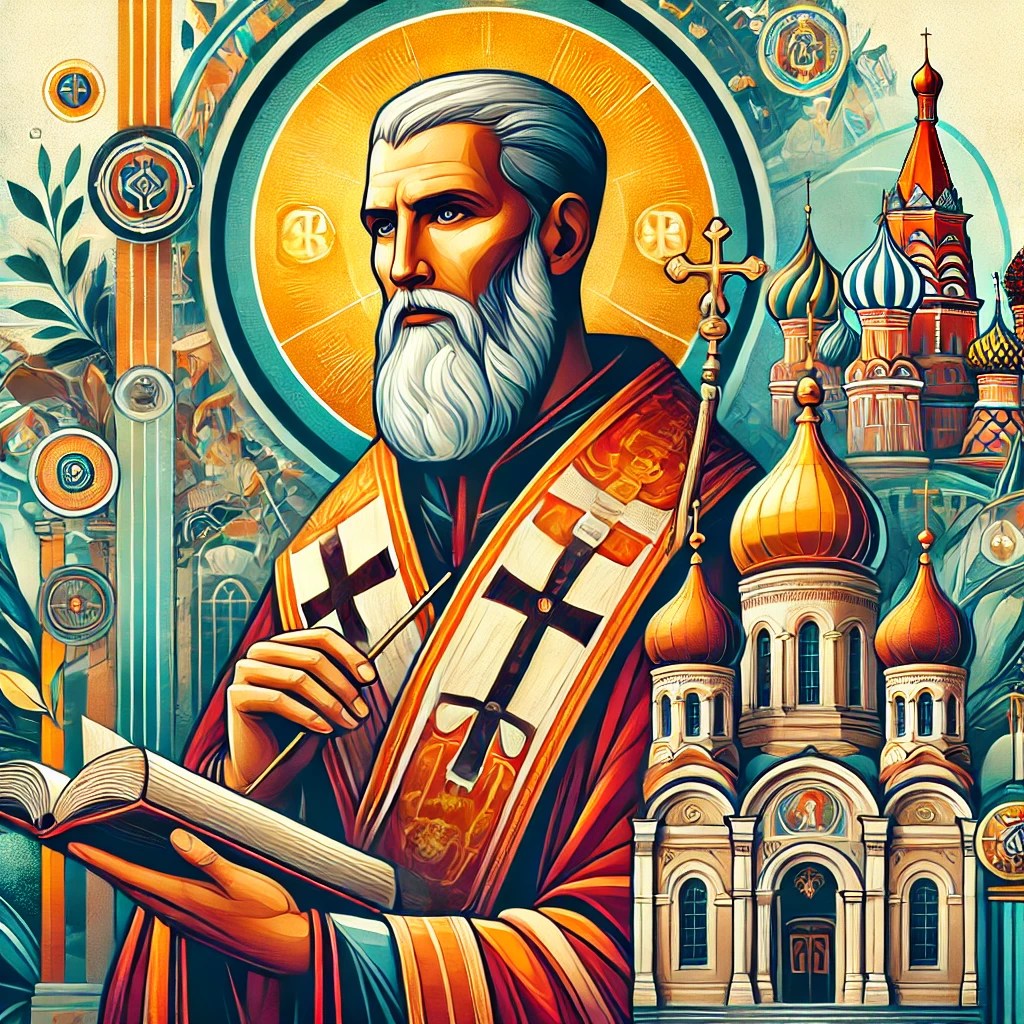
A Pillar of Faith and Compassion
Saint Basil the Great, one of the most influential figures in early Christianity, is celebrated for his theological wisdom, defense of orthodox doctrine, and commitment to serving the poor. Born in the fourth century, he was a driving force against Arianism, a heresy denying Christ’s divinity, and his contributions to monasticism continue to guide religious communities today. Known as one of the Cappadocian Fathers alongside Saints Gregory of Nyssa and Gregory of Nazianzus, Basil’s legacy extends through his writings, the monastic rule bearing his name, and his enduring example of compassionate service. His feast day, January 2, honors a life wholly devoted to God and neighbor.
A Foundation in Faith and Learning
Saint Basil was born around 330 AD in Caesarea Mazaca, in Cappadocia (modern-day Turkey), into a family deeply rooted in Christian faith. His parents, Saint Basil the Elder and Saint Emmelia, raised their ten children in a household rich in spiritual and intellectual formation. Several of Basil’s siblings also achieved sainthood, including Saint Gregory of Nyssa and Saint Macrina the Younger.
Basil’s early education took him to some of the greatest centers of learning in the ancient world: Caesarea, Constantinople, and Athens. In Athens, he formed a lasting bond with Gregory of Nazianzus, a friendship that would shape the course of Christian theology. Initially pursuing a career in rhetoric and law, Basil’s life took a decisive turn when he experienced a profound spiritual awakening. Influenced by his sister Macrina’s ascetic example and inspired by the ascetic communities he encountered in Egypt and Syria, Basil chose to renounce worldly ambitions. Baptized as a Christian, he dedicated himself fully to God, retreating to Pontus to establish a monastic community. There, he laid the foundation for his influential monastic rules, emphasizing prayer, communal living, and care for the poor.
A Monument of Mercy
While Saint Basil’s life is more renowned for its intellectual and spiritual contributions than for dramatic miracles, his compassionate works often bordered on the miraculous. The Basiliad, a vast complex he founded, stood as a testament to his ingenuity and commitment to the Gospel’s call to serve the needy. This “city of mercy” included a poorhouse, hospice, and hospital and provided care for the sick, shelter for the homeless, and support for the marginalized.
Basil’s ability to rally resources and inspire others to serve is itself a reflection of divine grace. Through his leadership, countless lives were transformed, and the Basiliad became a model for Christian charity and social justice. His compassionate actions demonstrated his unwavering belief that service to the poor is service to Christ Himself.
A Defender of the Faith
Though Saint Basil did not face martyrdom, his life was not without significant trials. As a staunch defender of Nicene orthodoxy, Basil opposed Arianism, which denied Christ’s divinity, at a time when the heresy enjoyed imperial support under Emperor Valens. Basil’s unwavering stance brought him into conflict with powerful figures, but his eloquence and courage enabled him to preserve the truth of the faith.
One of the most memorable episodes of his life occurred when the emperor attempted to intimidate Basil into supporting Arianism. Basil’s fearless response, recorded in Church history, left Valens astonished: “You can take my possessions, but you cannot take my faith.” This boldness in the face of pressure not only safeguarded orthodox Christianity but also inspired countless others to stand firm in their convictions.
Basil also faced personal hardships, including poor health, but he never wavered in his mission. His writings, sermons, and pastoral care reflect a life lived in total surrender to God’s will, even in the face of adversity.
A Legacy of Grace
After his death on January 1, 379 AD, Saint Basil’s intercession became a source of healing and inspiration for countless faithful. Pilgrimages to his tomb in Caesarea drew believers seeking physical and spiritual healing, and many miraculous events were attributed to his prayers. His relics were venerated across the Christian world, and his influence extended to both the Eastern and Western Churches.
Churches dedicated to Saint Basil became sites of pilgrimage, where the faithful sought his intercession in times of need. His writings, particularly his works on the Holy Spirit and monasticism, continued to guide theologians, monks, and laypeople alike. Even today, his teachings inspire believers to deepen their faith and live lives marked by charity and humility.
Living the Lessons of Saint Basil
Saint Basil’s life offers timeless lessons for all who seek to grow in faith. His example challenges us to stand firm in our beliefs, even in the face of opposition, and to commit ourselves to the service of others. Reflecting on his life, we are invited to consider how we can integrate these virtues into our daily routines.
How can we defend our faith with courage and integrity, as Saint Basil did? This might mean taking time to study the foundations of our beliefs, engaging in respectful dialogue with others, or simply living as witnesses to Christ’s truth in our actions.
What opportunities do we have to serve those in need, embodying the charity that defined Saint Basil’s ministry? Whether through volunteering, donating resources, or offering a listening ear to someone in pain, each act of kindness reflects God’s love.
Finally, how can we cultivate a deeper relationship with God, inspired by Saint Basil’s monastic rule? Daily prayer, Scripture reading, and participation in the sacraments are practical ways to grow in holiness and align our hearts with God’s will.
Saint Basil’s life reminds us that faith is not passive—it is lived out in boldness, compassion, and unwavering devotion. His legacy calls us to strive for the same, trusting in God’s grace to guide and sustain us.
Engage with Us!
We’d love to hear your thoughts on Saint Basil the Great! Share your reflections in the comments and join the discussion:
- How can you stand firm in your faith like Saint Basil did in the face of opposition?
- What acts of service can you commit to this week to reflect Saint Basil’s compassion for the poor and needy?
- Which spiritual disciplines can you incorporate into your routine to deepen your relationship with God?
Let’s inspire and support one another to live lives rooted in faith, marked by love, and guided by the example of the saints. Together, we can strive to reflect the mercy and compassion that Jesus taught us, making His light shine brightly in the world!
Saint Basil the Great, pray for us!
Follow us on Instagram and Facebook for more insights and reflections on living a faith-filled life.

 Holy Manna!
Leave a comment