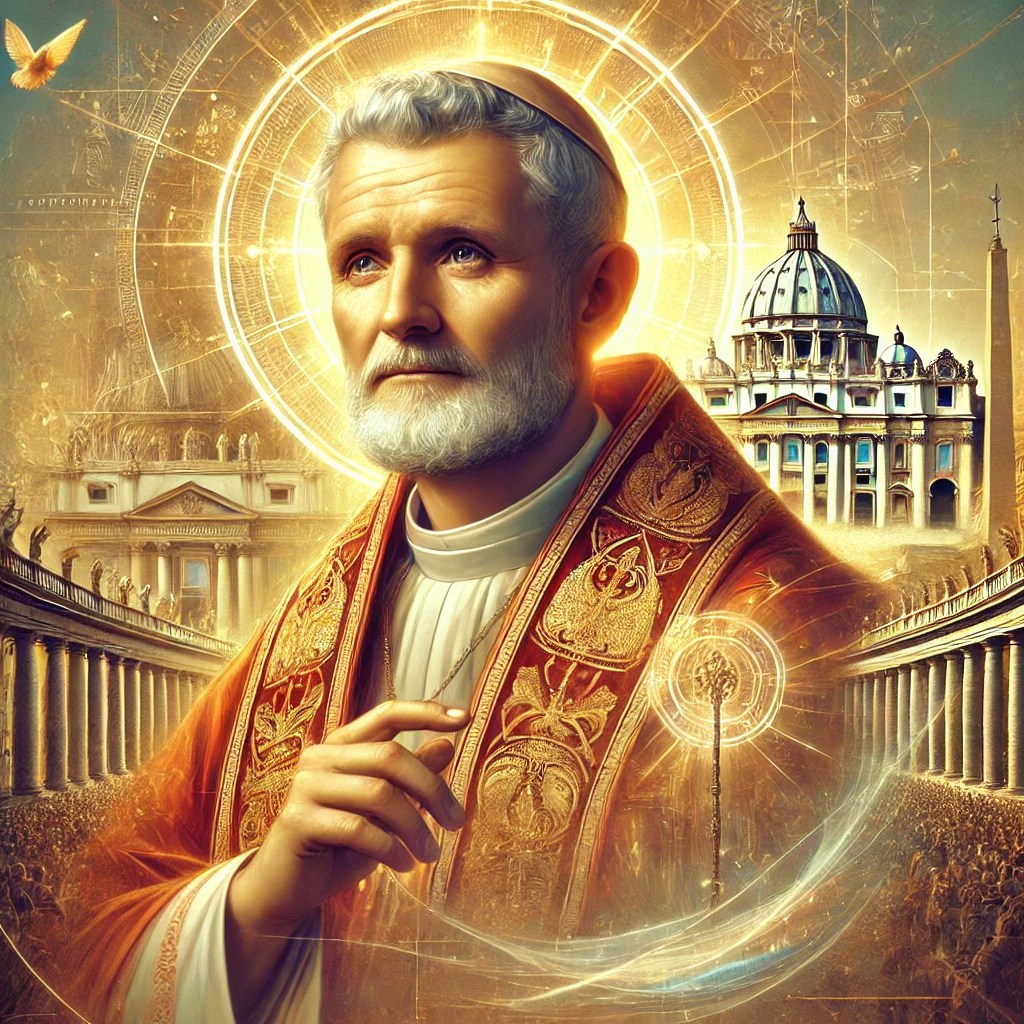
Shepherding the Church into a New Era
Early Life and Rise to the Papacy
Born in Rome in the late 3rd century, Sylvester grew up during a turbulent era for Christians, when the Church faced severe persecution under Roman emperors like Diocletian. Despite these challenges, he dedicated his life to God, becoming a priest under Pope Marcellinus. Little is known about his family background, but his devotion to the faith was evident from an early age. He was known for his courage and steadfastness, qualities that would define his later leadership.
When Emperor Constantine triumphed over Maxentius at the Battle of the Milvian Bridge in 312 AD, it marked a turning point for Christianity, culminating in the Edict of Milan in 313 AD, which granted religious tolerance throughout the Roman Empire. Sylvester’s election as Bishop of Rome in 314 AD placed him at the helm of the Church just as it emerged from the shadows of persecution into an era of imperial favor. His papacy became a cornerstone for the Church’s establishment as a visible and respected institution.
Miracles and Legends
While historical records of miracles during Saint Sylvester’s lifetime are sparse, numerous legends have grown around his life, emphasizing his spiritual authority and divine favor. One of the most famous legends recounts how Sylvester slayed a dragon that had been terrorizing the people of Rome. This act is often interpreted symbolically, representing his triumph over paganism and heresy.
Another well-known story tells of Emperor Constantine contracting leprosy and seeking healing. According to the legend, Constantine was directed to Pope Sylvester, who baptized him and miraculously cured him of his disease. This event, though apocryphal, highlights the deep respect Sylvester commanded as a spiritual leader and his perceived role as a conduit of God’s healing power. These stories, while not historically verified, illustrate the profound impact Saint Sylvester had on the Christian imagination and underscore the reverence with which he was regarded.
Challenges and Triumphs
Saint Sylvester’s papacy was marked by significant challenges as the Church transitioned from a persecuted minority to a favored institution within the Roman Empire. This newfound prominence brought both opportunities and difficulties, including the need to maintain the Church’s spiritual integrity amidst its increasing association with political power.
Sylvester played a key role in addressing theological controversies of his time. He convened the Council of Arles in 314 AD to address the Donatist schism, a divisive conflict over the validity of sacraments administered by clergy who had renounced their faith during persecution. He also sent representatives to the First Council of Nicaea in 325 AD, which dealt with the Arian heresy. This council affirmed the consubstantiality of the Son with the Father and produced the Nicene Creed, a foundational statement of Christian belief. Sylvester’s leadership during these events helped solidify the Church’s doctrinal foundations and ensured its unity in the face of divisive challenges.
Legacy and Veneration
Saint Sylvester’s influence extended beyond his lifetime, leaving a legacy that continues to inspire the faithful. He was instrumental in the construction of significant basilicas, including the Basilica of Saint John Lateran and the original Saint Peter’s Basilica, which became centers of Christian worship and authority.
After his death on December 31, 335 AD, Sylvester was buried near the Catacombs of Saint Priscilla. His relics were later transferred to the Church of San Silvestro in Capite in Rome, where they continue to be venerated. This church, built over the ruins of a pagan temple, serves as a symbol of Christianity’s triumph over idolatry. Pilgrimages to these sites remain a testament to the enduring respect for Saint Sylvester and his contributions to the Church’s growth and strength.
Reflection
Saint Sylvester’s life offers profound lessons for today’s Christians, particularly in times of change and challenge. His ability to navigate the complexities of a Church emerging from persecution into prominence reminds us of the importance of steadfast faith, humility, and discernment. In our own lives, we face moments where the pressures of the world threaten to compromise our values or challenge our beliefs. Saint Sylvester’s example encourages us to remain rooted in Christ, trusting in the guidance of the Holy Spirit as we navigate these moments.
As we reflect on his life, we are called to emulate his courage and compassion by standing firm in our faith and guiding others toward truth. Practical ways to do this include dedicating time to prayer and Scripture, seeking unity within our communities, and serving as witnesses to Christ’s love through our actions. By living with the same resilience and devotion that defined Saint Sylvester’s life, we can be instruments of God’s grace and light in a world longing for hope and truth.
Engage with Us!
We would love to hear your thoughts and reflections on Saint Sylvester’s remarkable life and legacy. Join the conversation by sharing your insights in the comments below!
Consider these reflection questions as you pray and ponder:
- How does Saint Sylvester’s leadership during times of change inspire you in your faith journey?
- In what ways can you stand firm in your beliefs and guide others toward truth, even when faced with challenges?
- How does the Church’s transition from persecution to prominence during Saint Sylvester’s papacy resonate with the challenges Christians face today?
Let us support and encourage one another in our journeys of faith, striving always to live with the love, mercy, and courage that Jesus exemplified in all He did. Together, may we grow as disciples and shine His light into the world!
Saint Sylvester, pray for us!
Follow us on Instagram and Facebook for more insights and reflections on living a faith-filled life.

 Holy Manna!
Leave a comment