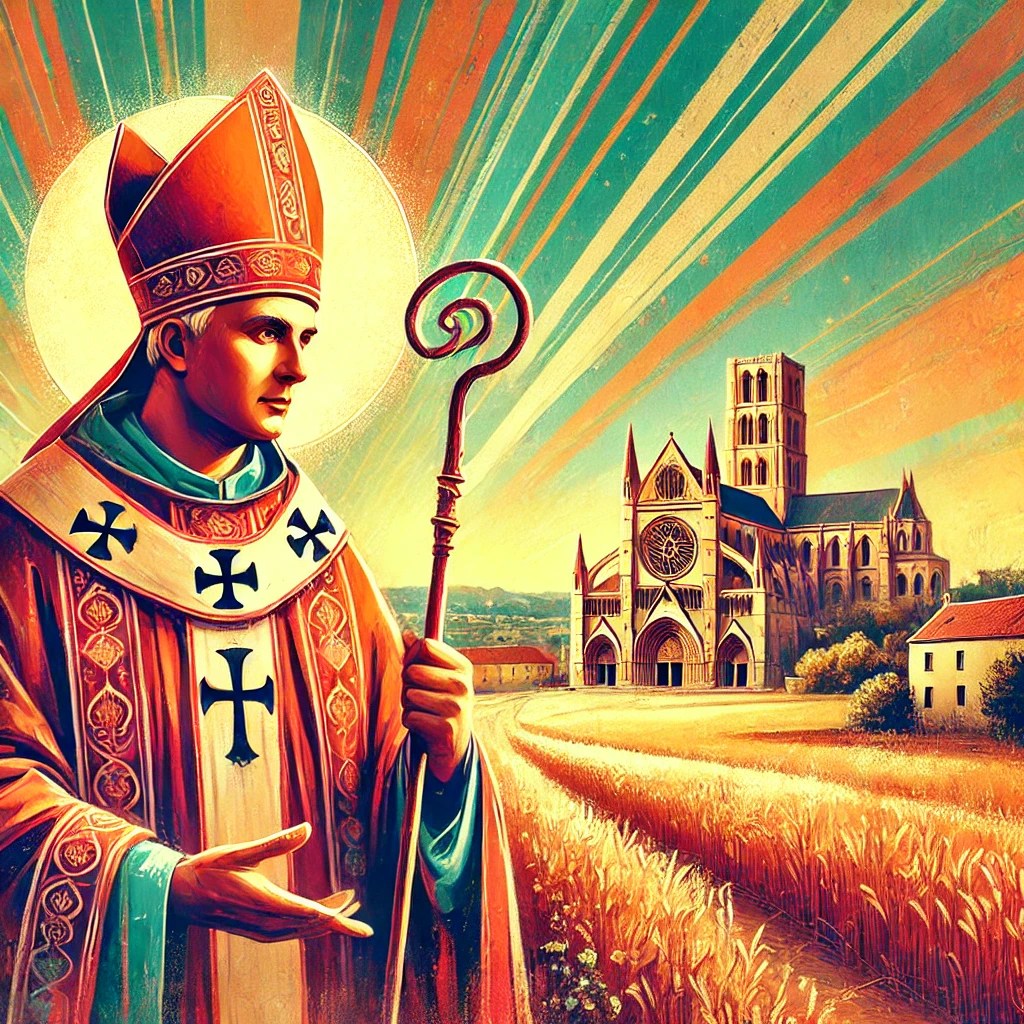
A Shepherd of Faith and Scholarship
Saint Ado of Vienne is a shining example of faith, scholarship, and pastoral dedication in the 9th-century Church. As Archbishop of Vienne, he confronted moral and political challenges with unwavering commitment to the truth of the Gospel. Renowned for his courage in defending the sanctity of marriage, his reforms to the clergy and laity, and his literary contributions, Ado left an indelible mark on the history of the Church. His work on the Roman Martyrology and hagiographies of saints continues to inspire devotion and provide valuable resources for understanding Church traditions. Today, Saint Ado serves as a model of integrity, resilience, and service, offering timeless lessons for Catholics in every generation.
From Noble Roots to Monastic Devotion
Saint Ado was born around 800 AD in the diocese of Sens, located in modern-day France. He came from a noble family, which provided him with an excellent education and a privileged upbringing. Ado’s early years were marked by a love for learning and a natural inclination toward intellectual pursuits. His formal education took place at the Benedictine Abbey of Ferrières, where he studied under Abbot Lupus Servatus, a highly respected scholar of his time. It was here that Ado’s passion for theology, literature, and Church history flourished.
Despite his noble origins, Ado felt called to embrace the simplicity and devotion of monastic life. Joining the Benedictine order, he committed himself to prayer, study, and service to God. This choice reflected his deep conviction that true greatness lies not in earthly status but in humility and obedience to God’s will. During a pilgrimage to Rome, Ado’s vocation deepened as he encountered the universal mission of the Church and experienced the richness of its traditions. These formative experiences prepared him for the significant role he would later undertake as a reformer, pastor, and scholar.
A Reforming Bishop
After returning from Rome, Ado began his pastoral ministry at the Church of Saint-Romain near Vienne. His dedication to the spiritual and moral welfare of the faithful soon garnered the attention of Archbishop Remigius of Lyon, who recognized Ado’s exceptional qualities. In 860, Ado was appointed Archbishop of Vienne, a position he embraced with humility and a firm resolve to serve God and the Church.
As archbishop, Ado implemented much-needed reforms to address clerical laxity and ensure the spiritual growth of the laity. He emphasized the importance of proper catechesis, recognizing that the faithful must be well-formed in Christian doctrine to live out their faith authentically. Ado also held his clergy to high standards, encouraging them to lead lives of holiness and dedication as examples to their congregations.
Ado’s leadership extended beyond administrative reforms; he was deeply invested in the spiritual renewal of the Church. He inspired his priests and parishioners through his own example of austerity, humility, and prayer. His episcopacy became a beacon of hope during a time when the Church faced significant challenges from both within and outside its walls.
Defender of Marital Sanctity
One of the most significant events of Saint Ado’s life was his defense of the sanctity of marriage during a time of moral and political controversy. King Lothair II of Lorraine sought to divorce his lawful wife, Theutberga, in order to marry his mistress, Waldrada. This scandalous attempt to manipulate Church law threatened the moral integrity of marriage and undermined the Church’s authority.
Ado emerged as a key figure in opposing the king’s actions. He reported the situation to Pope Nicholas I, ensuring that the matter received attention at the highest levels of the Church. Despite immense pressure from powerful political forces, Ado remained steadfast in his commitment to the truth. His efforts contributed to the annulment of the synod that had wrongfully approved Lothair’s divorce. This courageous stand not only preserved the sanctity of marriage but also reinforced the Church’s authority in moral and doctrinal matters.
Ado’s role in this controversy exemplifies his unwavering dedication to justice and his willingness to confront power when necessary. His actions remind us that faithfulness to God’s teachings often requires courage and the readiness to endure opposition for the sake of truth.
The Scholar Archbishop
In addition to his pastoral and reformative work, Saint Ado was a prolific writer whose contributions have enriched the Church’s intellectual and spiritual heritage. His revised edition of the Roman Martyrology, completed in 858, was a monumental achievement. This work provided a more accurate and comprehensive record of the saints, drawing on historical documents and oral traditions. It became an essential resource for liturgical celebrations and the veneration of saints, fostering deeper devotion among the faithful.
Ado also wrote a chronicle that traced the history of the world from creation to his own time, offering a unique perspective on the unfolding of salvation history. His hagiographical works, including the lives of saints such as St. Desiderius and St. Theuderius, further demonstrate his scholarly rigor and spiritual insight. These writings continue to inspire and educate, reminding us of the power of storytelling in transmitting the faith and preserving the Church’s legacy.
Lessons from the Life of Saint Ado
Saint Ado’s life offers profound lessons for Catholics today. His unwavering commitment to truth, even in the face of powerful opposition, challenges us to remain steadfast in our convictions. In a world where moral relativism often prevails, Ado’s example calls us to be courageous witnesses to the Gospel, standing firm in the truth of Christ.
His dedication to reform and renewal within the Church reminds us of the importance of contributing to the spiritual and moral growth of our communities. Whether through acts of service, prayer, or education, we are all called to be instruments of renewal in our families, parishes, and workplaces.
Finally, Ado’s scholarly pursuits highlight the value of integrating faith and reason. By dedicating his intellectual talents to the service of God, Ado demonstrates how knowledge can deepen our faith and strengthen our witness to the truth.
Practical ways to emulate Saint Ado include:
- Speaking and acting with integrity, even when it is difficult or unpopular.
- Committing to personal and spiritual growth through prayer, study, and reflection.
- Supporting efforts to reform and renew our communities with compassion and dedication.
Engage with Us!
We invite you to share your thoughts and reflections in the comments below.
- What lessons from Saint Ado’s life resonate with you the most?
- How can his courage and dedication to truth inspire your actions today?
- In what ways can you contribute to the renewal and betterment of your community or parish?
Together, let us draw inspiration from Saint Ado’s example and support one another on our faith journeys. Through his intercession, may we grow in holiness and work to build a world rooted in love, truth, and the teachings of Christ.
Saint Ado, pray for us!
Follow us on Instagram and Facebook for more insights and reflections on living a faith-filled life.

 Holy Manna!
Leave a comment