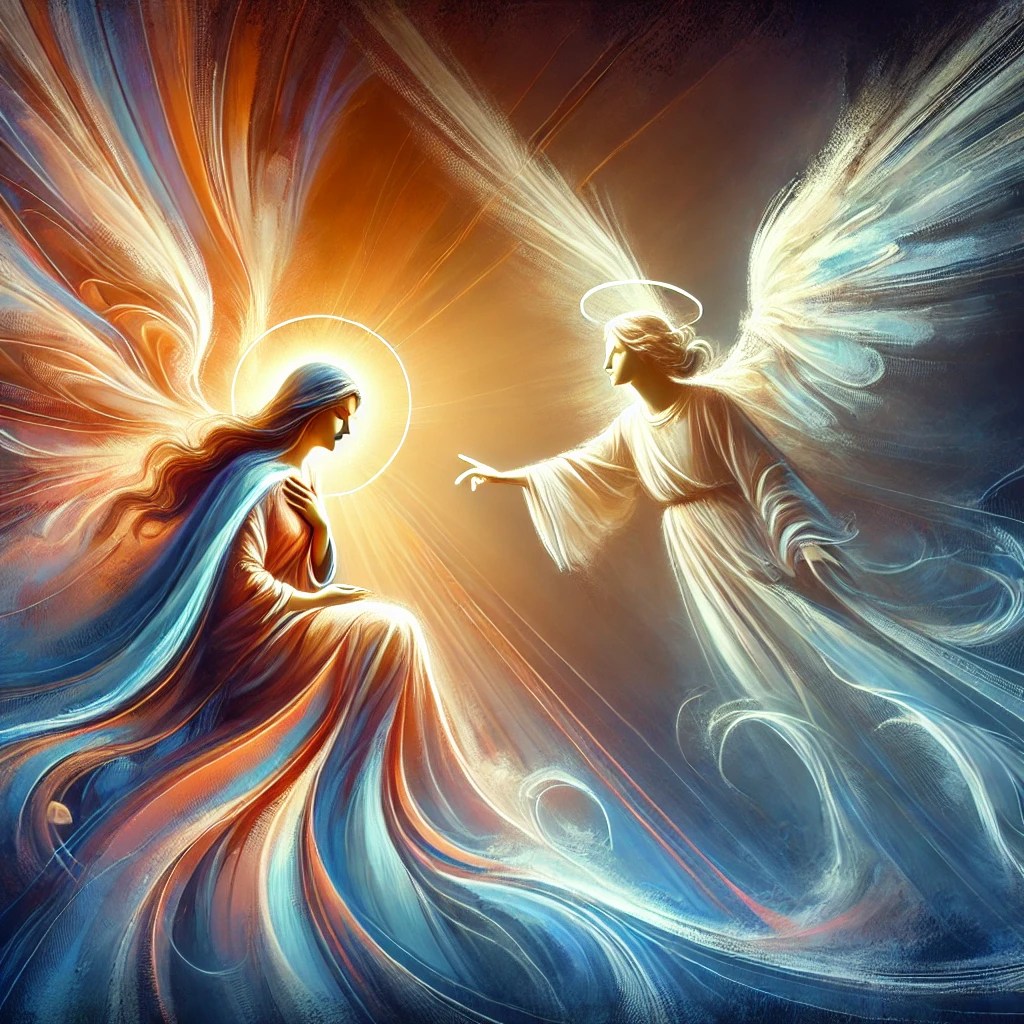
Redemption Through Obedience and Grace
What if every act of obedience to God carried the potential to undo humanity’s greatest mistakes? Today’s readings invite us into the heart of salvation history—a story that stretches from the Garden of Eden to a humble home in Nazareth. It is a tale of humanity’s fall and God’s unrelenting plan to restore us through grace, culminating in the “yes” of a young woman whose faith reshaped the world.
The theme weaving these passages together is God’s plan of salvation: a journey from sin to redemption, from the disobedience of Adam and Eve to the perfect obedience of Mary, the new Eve. The Book of Genesis introduces us to the consequences of humanity’s first sin but also hints at hope in the promise of a Savior. The Psalm echoes this hope, praising God’s steadfast love and His victory over sin and death. In his letter to the Ephesians, St. Paul draws our gaze to God’s eternal plan to adopt us as His children in Christ, a plan fulfilled through the humble “yes” of the Virgin Mary in The Gospel of Luke.
Understanding the context deepens our reflection. In Genesis, the “offspring of the woman” points to Christ, who would triumph over evil. The Church has long viewed Mary’s obedience at the Annunciation as a reversal of Eve’s disobedience, making her the “new Eve” (as early Church Fathers like St. Irenaeus affirmed). The Annunciation in Luke not only fulfills this promise but also reveals the profound role of human cooperation in God’s divine plan.
As we reflect on these readings, let us ask: How does my obedience to God contribute to His plan for salvation? Do I trust, like Mary, that “nothing is impossible with God”?
First Reading – Genesis 3:9-15, 20
The Fall and the Promise of Redemption
The Book of Genesis is the foundation of Scripture, revealing not only the origins of creation but also humanity’s relationship with God. Today’s passage takes us into one of the most pivotal moments in salvation history: the Fall of Man. It’s a story of disobedience, consequences, and God’s first act of mercy—His promise of redemption. Theologically, this reading introduces us to the reality of original sin and the protoevangelium, the first announcement of the Gospel. Set in the garden of Eden, this moment marks humanity’s transition from grace to a state of sinfulness but also signals the beginning of God’s salvation plan.
This text aligns with today’s theme by contrasting the disobedience of Adam and Eve with the faith and obedience of Mary in the Gospel. As the “mother of all living,” Eve’s actions have consequences for all humanity, but God’s promise of an offspring to crush the serpent’s head points to the ultimate victory of Christ through Mary’s cooperation in God’s plan.
Genesis 3:9-15, 20
New Revised Standard Version Catholic Edition
9 But the Lord God called to the man, and said to him, “Where are you?” 10 He said, “I heard the sound of you in the garden, and I was afraid, because I was naked; and I hid myself.” 11 He said, “Who told you that you were naked? Have you eaten from the tree of which I commanded you not to eat?” 12 The man said, “The woman whom you gave to be with me, she gave me fruit from the tree, and I ate.” 13 Then the Lord God said to the woman, “What is this that you have done?” The woman said, “The serpent tricked me, and I ate.” 14 The Lord God said to the serpent,
“Because you have done this,
cursed are you among all animals
and among all wild creatures;
upon your belly you shall go,
and dust you shall eat
all the days of your life.
15 I will put enmity between you and the woman,
and between your offspring and hers;
he will strike your head,
and you will strike his heel.”
20 The man named his wife Eve, because she was the mother of all living.
Detailed Exegesis
Verse 9: “But the Lord God called to the man, and said to him, ‘Where are you?’”
This question, though rhetorical, reveals God’s desire for a relationship with humanity. Despite Adam’s disobedience, God seeks him out, demonstrating His mercy and longing for reconciliation. It is a foreshadowing of how Christ would seek out the lost sheep in His ministry.
Verse 10: “I heard the sound of you in the garden, and I was afraid, because I was naked; and I hid myself.”
Adam’s fear and shame highlight the effects of sin: separation from God and an awareness of vulnerability. This verse reminds us that sin disrupts the harmony between God and humanity, leading to feelings of guilt and a desire to hide from God’s presence.
Verse 11: “Who told you that you were naked? Have you eaten from the tree of which I commanded you not to eat?”
God’s question invites Adam to accountability, showing us that confession and acknowledgment of wrongdoing are essential steps in reconciliation with God.
Verse 12: “The man said, ‘The woman whom you gave to be with me, she gave me fruit from the tree, and I ate.’”
Adam’s response demonstrates the human tendency to deflect responsibility. Instead of taking ownership, he blames Eve—and indirectly, God Himself. This verse reminds us of the importance of humility and personal accountability in our spiritual lives.
Verse 13: “Then the Lord God said to the woman, ‘What is this that you have done?’ The woman said, ‘The serpent tricked me, and I ate.’”
Eve’s response mirrors Adam’s deflection but adds another layer: deception. Sin often comes disguised, appealing to our desires. Here, the serpent represents Satan, whose lies continue to lead us astray.
Verse 14: “Because you have done this, cursed are you among all animals and among all wild creatures; upon your belly you shall go, and dust you shall eat all the days of your life.”
God’s curse on the serpent is symbolic, emphasizing Satan’s ultimate humiliation and defeat. This verse sets the stage for God’s promise of redemption.
Verse 15: “I will put enmity between you and the woman, and between your offspring and hers; he will strike your head, and you will strike his heel.”
This is the protoevangelium, the first announcement of the Gospel. The “woman” is traditionally understood as Mary, and her offspring, Jesus Christ, will ultimately defeat Satan. The imagery of striking the head indicates a decisive victory, while the heel strike shows the suffering Christ would endure on the cross.
Verse 20: “The man named his wife Eve, because she was the mother of all living.”
Eve’s name, meaning “life” or “living,” underscores her role in humanity’s origin. Though she participated in the Fall, her name reminds us of God’s mercy and His promise of new life through Christ.
Teachings
The Catechism of the Catholic Church (CCC) teaches that the Fall introduced original sin, affecting all humanity (CCC 390-392). However, God’s promise of a Savior, fulfilled in Christ, reveals His mercy and justice. The Church Fathers, such as St. Irenaeus, saw Mary as the new Eve, whose obedience reverses the disobedience of the first woman (CCC 411). Through the Incarnation, Jesus takes on the role of the new Adam (Romans 5:14-21), restoring humanity’s relationship with God.
St. John Paul II further reflected on Genesis 3:15, calling it the “first Gospel,” which finds its fulfillment in the Annunciation and Mary’s role as the Mother of God. This connection between Eve and Mary highlights the importance of trust and cooperation in God’s plan.
Reflection
This reading challenges us to reflect on the nature of sin and our need for God’s mercy. How often do we deflect blame or hide from God, instead of turning to Him in humility and repentance? Like Adam and Eve, we may struggle with accountability, but God continually seeks us, calling, “Where are you?”
To live out this reading, consider practicing daily examination of conscience. Acknowledge your areas of disobedience, and seek God’s mercy through the Sacrament of Reconciliation. Finally, reflect on Mary’s obedience in today’s Gospel, asking for her intercession to trust God’s plan in your life.
Do you believe God’s promise of redemption is alive in your daily struggles? How can you cooperate with His grace today?
Responsorial Psalm – Psalm 98:1-4
Sing a New Song: God’s Victory Revealed
The Book of Psalms is often referred to as the prayer book of the Bible. Psalm 98 is a hymn of praise that celebrates God’s victory, His faithfulness to His covenant, and the joy it brings to all the earth. Historically, this psalm reflects Israel’s gratitude for God’s saving acts, particularly in delivering His people and fulfilling His promises. This reading fits into today’s theme by pointing to the ultimate victory of Christ, the fulfillment of God’s promise in Genesis, and the reason for the universal joy and praise mentioned in the Gospel.
This psalm invites us to reflect on the works of the Lord in our lives and in salvation history. Its call for all the earth to join in praise foreshadows the universal mission of Christ and the inclusion of all nations in God’s plan of salvation.
Reflection Questions:
Psalm 98:1-4
New Revised Standard Version Catholic Edition
Praise the Judge of the World
A Psalm
1 O sing to the Lord a new song,
for he has done marvelous things.
His right hand and his holy arm
have gotten him victory.
2 The Lord has made known his victory;
he has revealed his vindication in the sight of the nations.
3 He has remembered his steadfast love and faithfulness
to the house of Israel.
All the ends of the earth have seen
the victory of our God.
4 Make a joyful noise to the Lord, all the earth;
break forth into joyous song and sing praises.
Detailed Exegesis
Verse 1: “O sing to the Lord a new song, for he has done marvelous things. His right hand and his holy arm have gotten him victory.”
The “new song” is a recurring theme in Scripture, symbolizing a fresh revelation of God’s power and mercy. The mention of His “right hand” and “holy arm” emphasizes God’s strength and divine intervention. This verse invites us to contemplate the “marvelous things” God has done, particularly in the victory of Christ over sin and death.
Verse 2: “The Lord has made known his victory; he has revealed his vindication in the sight of the nations.”
This verse highlights the universal nature of God’s plan. His “victory” is not hidden but made evident to all nations, symbolizing the spread of the Gospel and the fulfillment of the promise in Genesis 3:15. God’s “vindication” reflects His justice and faithfulness in overcoming evil.
Verse 3: “He has remembered his steadfast love and faithfulness to the house of Israel. All the ends of the earth have seen the victory of our God.”
The psalmist underscores God’s covenant love (“steadfast love”) and fidelity to His promises. The inclusion of “all the ends of the earth” points to the universality of salvation, which is extended to all through Christ.
Verse 4: “Make a joyful noise to the Lord, all the earth; break forth into joyous song and sing praises.”
This verse is a call to worship, emphasizing the communal and universal nature of praise. The “joyful noise” symbolizes an uninhibited and heartfelt response to God’s goodness, inviting all creation to participate in His glory.
Teachings
The Catechism of the Catholic Church (CCC) teaches that praise is an essential aspect of prayer (CCC 2639). It acknowledges the greatness of God, His mighty works, and His faithfulness to His promises. Psalm 98 reflects this spirit of praise and reminds us of God’s covenant with Israel, which reaches its climax in Christ (CCC 436).
St. Augustine saw the “new song” as a symbol of the new covenant in Christ, urging believers to live in the joy of salvation. Similarly, St. Athanasius viewed the psalms as a means to unify all of creation in praising God, showing how Psalm 98 foreshadows the cosmic impact of Christ’s victory.
Reflection
Psalm 98 reminds us to praise God for the victories in our lives, both big and small. Do I take time to thank God for His faithfulness and love? When was the last time I truly praised Him with joy and gratitude?
Incorporating this psalm into your daily life could mean setting aside moments of intentional praise—perhaps through song, prayer, or journaling about the “marvelous things” God has done for you. Reflect on the victories He has accomplished in your personal journey and in salvation history.
How can you invite others to join in praising God for His goodness? In what ways can your joy in the Lord inspire others to see His glory?
Second Reading – Ephesians 1:3-6, 11-12
Chosen in Christ: A Divine Inheritance
The Letter to the Ephesians is a profound reflection on the mystery of Christ and the unity of the Church. Today’s passage celebrates the blessings that flow from our union with Christ, emphasizing God’s eternal plan of salvation and His desire for us to live as His adopted children. Written by St. Paul while in prison, this letter offers both a theological foundation and a call to praise for God’s grace and love.
This reading ties seamlessly into today’s theme by emphasizing God’s purpose to save humanity and restore us to holiness. Just as God’s promise in Genesis points to Christ’s victory, this passage reveals the fulfillment of that promise: our adoption as God’s children and our inheritance of eternal life in Christ.
Ephesians 1:3-6, 11-12
New Revised Standard Version Catholic Edition
Spiritual Blessings in Christ
3 Blessed be the God and Father of our Lord Jesus Christ, who has blessed us in Christ with every spiritual blessing in the heavenly places, 4 just as he chose us in Christ before the foundation of the world to be holy and blameless before him in love. 5 He destined us for adoption as his children through Jesus Christ, according to the good pleasure of his will, 6 to the praise of his glorious grace that he freely bestowed on us in the Beloved.
11 In Christ we have also obtained an inheritance, having been destined according to the purpose of him who accomplishes all things according to his counsel and will, 12 so that we, who were the first to set our hope on Christ, might live for the praise of his glory.
Detailed Exegesis
Verse 3: “Blessed be the God and Father of our Lord Jesus Christ, who has blessed us in Christ with every spiritual blessing in the heavenly places.”
St. Paul begins with a hymn of praise, recognizing God as the source of all blessings. These “spiritual blessings” include the graces of salvation, sanctification, and eternal life, which come to us through our union with Christ. The phrase “in the heavenly places” reminds us that our ultimate destiny is with God in heaven.
Verse 4: “Just as he chose us in Christ before the foundation of the world to be holy and blameless before him in love.”
Here, Paul reveals the timeless nature of God’s plan. Before creation, God chose us to share in His divine life, calling us to holiness and love. This verse underscores the personal nature of God’s love and His desire for us to live in communion with Him.
Verse 5: “He destined us for adoption as his children through Jesus Christ, according to the good pleasure of his will.”
Adoption is a central theme in this passage, highlighting our new identity as children of God. Through Christ, we are no longer slaves to sin but heirs of God’s kingdom. This adoption is not earned but freely given, reflecting God’s generosity and love.
Verse 6: “To the praise of his glorious grace that he freely bestowed on us in the Beloved.”
Paul reminds us that all of God’s blessings are meant to lead us to praise. The “Beloved” refers to Christ, through whom God’s grace is fully revealed. This verse challenges us to respond to God’s gifts with gratitude and worship.
Verse 11: “In Christ we have also obtained an inheritance, having been destined according to the purpose of him who accomplishes all things according to his counsel and will.”
Our inheritance is eternal life, which we receive through Christ. This verse highlights God’s sovereignty and His ability to fulfill His promises. Our lives, therefore, are part of His divine plan.
Verse 12: “So that we, who were the first to set our hope on Christ, might live for the praise of his glory.”
Paul shifts the focus to the response of the believer: living a life of praise. This verse reminds us that our ultimate purpose is to glorify God, reflecting His goodness in our thoughts, words, and actions.
Teachings
The Catechism of the Catholic Church (CCC) emphasizes that our adoption as children of God is a work of grace, rooted in Christ’s sacrifice and the gift of the Holy Spirit (CCC 1996-1997). God’s eternal plan for our salvation reflects His love and desire for communion with us (CCC 760).
St. Augustine wrote extensively about God’s predestination, emphasizing that it is not arbitrary but rooted in His foreknowledge and love. Similarly, St. Thomas Aquinas highlighted that our adoption through Christ is the greatest act of God’s mercy, making us co-heirs with Christ (Romans 8:17).
The Church Fathers saw this passage as a reminder of the dignity of the Christian life. As adopted children of God, we are called to holiness and to reflect His glory in the world.
Reflection
This reading invites us to consider our identity as children of God. Do I truly believe that I am chosen and loved by God? How do I live out my calling to be holy and blameless in love?
To live out this message, reflect on the blessings you have received through Christ and take time to praise God for His grace. Consider incorporating this hymn of praise into your daily prayers, thanking God for your adoption and inheritance in Christ.
How can you share the joy of being a child of God with others? What steps can you take to live more fully for the praise of His glory?
Holy Gospel – Luke 1:26-38
Mary’s Yes: The Gateway to Salvation
The Gospel of Luke provides a unique and detailed account of the Annunciation, where the angel Gabriel announces to Mary that she will conceive and bear the Son of God. Historically, this moment marks the beginning of the fulfillment of God’s promise to humanity, first made in the protoevangelium of Genesis. Set in Nazareth, a humble town in Galilee, the narrative reflects God’s preference for the lowly and the unexpected.
This passage highlights Mary’s pivotal role in salvation history as the new Eve. Her response of faith and obedience contrasts sharply with the disobedience of the first Eve, emphasizing how trust in God can open the way for His transformative plan. Today’s theme of salvation through obedience comes to its fullest expression in this Gospel, where Mary’s fiat (“let it be done”) becomes the doorway through which the Savior enters the world.
Luke 1:26-38
New Revised Standard Version Catholic Edition
The Birth of Jesus Foretold
26 In the sixth month the angel Gabriel was sent by God to a town in Galilee called Nazareth, 27 to a virgin engaged to a man whose name was Joseph, of the house of David. The virgin’s name was Mary. 28 And he came to her and said, “Greetings, favored one! The Lord is with you.” 29 But she was much perplexed by his words and pondered what sort of greeting this might be. 30 The angel said to her, “Do not be afraid, Mary, for you have found favor with God. 31 And now, you will conceive in your womb and bear a son, and you will name him Jesus. 32 He will be great, and will be called the Son of the Most High, and the Lord God will give to him the throne of his ancestor David. 33 He will reign over the house of Jacob forever, and of his kingdom there will be no end.” 34 Mary said to the angel, “How can this be, since I am a virgin?” 35 The angel said to her, “The Holy Spirit will come upon you, and the power of the Most High will overshadow you; therefore the child to be born will be holy; he will be called Son of God. 36 And now, your relative Elizabeth in her old age has also conceived a son; and this is the sixth month for her who was said to be barren. 37 For nothing will be impossible with God.” 38 Then Mary said, “Here am I, the servant of the Lord; let it be with me according to your word.” Then the angel departed from her.
Detailed Exegesis
Verse 26: “In the sixth month the angel Gabriel was sent by God to a town in Galilee called Nazareth.”
The “sixth month” refers to Elizabeth’s pregnancy with John the Baptist, connecting Mary’s story to the wider context of salvation history. Nazareth, an insignificant town, underscores God’s pattern of choosing the humble for great missions.
Verse 27: “To a virgin engaged to a man whose name was Joseph, of the house of David. The virgin’s name was Mary.”
Mary’s virginity fulfills the prophecy of Isaiah 7:14: “The virgin shall conceive and bear a son.” Her betrothal to Joseph situates Jesus within the Davidic lineage, fulfilling Messianic prophecies.
Verse 28: “And he came to her and said, ‘Greetings, favored one! The Lord is with you.’”
Gabriel’s greeting, “favored one,” indicates Mary’s unique role in God’s plan. The phrase “The Lord is with you” reassures her of divine support for the extraordinary mission she is about to undertake.
Verse 29: “But she was much perplexed by his words and pondered what sort of greeting this might be.”
Mary’s reaction reflects her humility and discernment. Her pondering shows that faith involves not blind acceptance but a thoughtful engagement with God’s word.
Verse 30: “The angel said to her, ‘Do not be afraid, Mary, for you have found favor with God.’”
Gabriel addresses Mary’s fear with reassurance, reflecting God’s consistent encouragement to those He calls. This verse reminds us that grace equips us to overcome fear and respond to God’s invitations.
Verse 31: “And now, you will conceive in your womb and bear a son, and you will name him Jesus.”
The name “Jesus” means “God saves,” encapsulating His mission. This verse echoes the promise of Genesis 3:15, where the offspring of the woman will bring victory over sin.
Verse 32: “He will be great, and will be called the Son of the Most High, and the Lord God will give to him the throne of his ancestor David.”
Gabriel reveals Jesus’ divine and royal identity, linking Him to the covenant with David (2 Samuel 7:16). He is both the eternal King and the Son of God.
Verse 33: “He will reign over the house of Jacob forever, and of his kingdom there will be no end.”
This promise recalls Daniel 7:14, affirming the eternal and universal reign of the Messiah. It emphasizes the enduring nature of Christ’s kingdom.
Verse 34: “Mary said to the angel, ‘How can this be, since I am a virgin?’”
Mary’s question is not one of doubt but of genuine curiosity, showing her willingness to understand how God’s plan will unfold.
Verse 35: “The angel said to her, ‘The Holy Spirit will come upon you, and the power of the Most High will overshadow you; therefore the child to be born will be holy; he will be called Son of God.’”
Gabriel explains that Mary’s conception will be miraculous, a direct act of God through the Holy Spirit. The term “overshadow” evokes the presence of God in the tabernacle (Exodus 40:35), linking Mary to the dwelling place of God.
Verse 36: “And now, your relative Elizabeth in her old age has also conceived a son; and this is the sixth month for her who was said to be barren.”
Elizabeth’s miraculous pregnancy serves as a sign for Mary, demonstrating that God’s power transcends natural limitations.
Verse 37: “For nothing will be impossible with God.”
This affirmation encapsulates the core message of the Gospel: God’s power and faithfulness can overcome all obstacles, including sin and death.
Verse 38: “Then Mary said, ‘Here am I, the servant of the Lord; let it be with me according to your word.’ Then the angel departed from her.”
Mary’s fiat reflects complete trust and surrender to God’s will. Her response marks the moment of the Incarnation, when God becomes man in her womb.
Teachings
The Catechism of the Catholic Church (CCC) emphasizes Mary’s role as the new Eve, whose obedience undoes the disobedience of the first Eve (CCC 411). Her fiat is a model of faith and cooperation with God’s grace (CCC 494).
The Church also teaches that Mary’s virginity is a sign of her total dedication to God and a reflection of her unique role in salvation history (CCC 496). St. Bernard of Clairvaux praised her fiat as the turning point of human history, where heaven awaited her response to bring forth the Savior.
Reflection
Mary’s response challenges us to consider how we respond to God’s will in our own lives. Do I trust that God’s plans for me are good, even when they are unexpected or difficult? How can I imitate Mary’s faith and surrender in my daily life?
To live out this Gospel, pray for the grace to say “yes” to God in the small and large decisions of your life. Reflect on the areas where fear or doubt may be holding you back, and ask for Mary’s intercession to trust in God’s promises.
What is God asking of you today? Will you respond with the same openness and faith as Mary did?
From Promise to Fulfillment: Trusting God’s Plan
Today’s readings form a powerful narrative of God’s unwavering plan for our salvation, from humanity’s first fall to the ultimate victory found in Christ through Mary’s obedience. In the First Reading, we witness the consequences of sin but also God’s first promise of redemption—the protoevangelium, where the “offspring of the woman” will crush the serpent’s head. The Responsorial Psalm invites us to sing a new song of praise for God’s marvelous deeds and His faithfulness to His promises. St. Paul, in the Second Reading, reminds us that we are chosen in Christ to live as God’s adopted children, destined for holiness and eternal life. Finally, the Holy Gospel reveals the moment when God’s promise begins to unfold in history, as Mary’s fiat opens the door for the Incarnation and the fulfillment of all His promises.
These readings remind us of the power of obedience and trust in God. Mary’s “yes” to God is the model for all of us, showing that surrender to His will can transform not only our lives but the world. Just as she trusted that “nothing will be impossible with God,” we are called to believe in His power and love, even in the face of uncertainty.
As you go forward, reflect on how you can live out today’s message in your own life. What areas of your life need a deeper trust in God’s plan? How can you imitate Mary’s openness to His will?
Take a moment today to pray with gratitude for God’s eternal plan of salvation and for the courage to say “yes” to Him in all aspects of your life. Let the victory of Christ, foreshadowed in Genesis, celebrated in the Psalms, and fulfilled in Mary’s fiat, inspire you to live with faith, joy, and hope.
Will you embrace God’s plan for your life today? What step will you take to deepen your relationship with Him? Let us, like Mary, become vessels of His love and grace in the world.
Engage with Us!
We’d love to hear how today’s readings resonate with you! Share your thoughts, prayers, or questions in the comments below. Let’s grow together in faith as we reflect on God’s Word and its meaning in our lives.
- First Reading (Genesis 3:9-15, 20): How does God’s promise of redemption in Genesis give you hope in your own struggles with sin? What does God’s question, “Where are you?” mean to you personally?
- Responsorial Psalm (Psalm 98:1-4): What “marvelous things” has God done in your life? How can you make a “joyful noise” to the Lord this week?
- Second Reading (Ephesians 1:3-6, 11-12): Do you see yourself as chosen and loved by God? How does this knowledge inspire you to live a life of praise and holiness?
- Holy Gospel (Luke 1:26-38): What areas of your life require a greater “yes” to God’s will? How can Mary’s faith and trust guide your response to challenges or uncertainties?
Let’s go forth this week with hearts full of gratitude and faith, striving to live with the love and mercy that Jesus taught us. May we, like Mary, say “yes” to God each day, trusting that He is with us and that His plans for us are good. Together, let’s be witnesses to His grace and light in the world!
Follow us on Instagram and Facebook for more insights and reflections on living a faith-filled life.

 Holy Manna!
Leave a comment