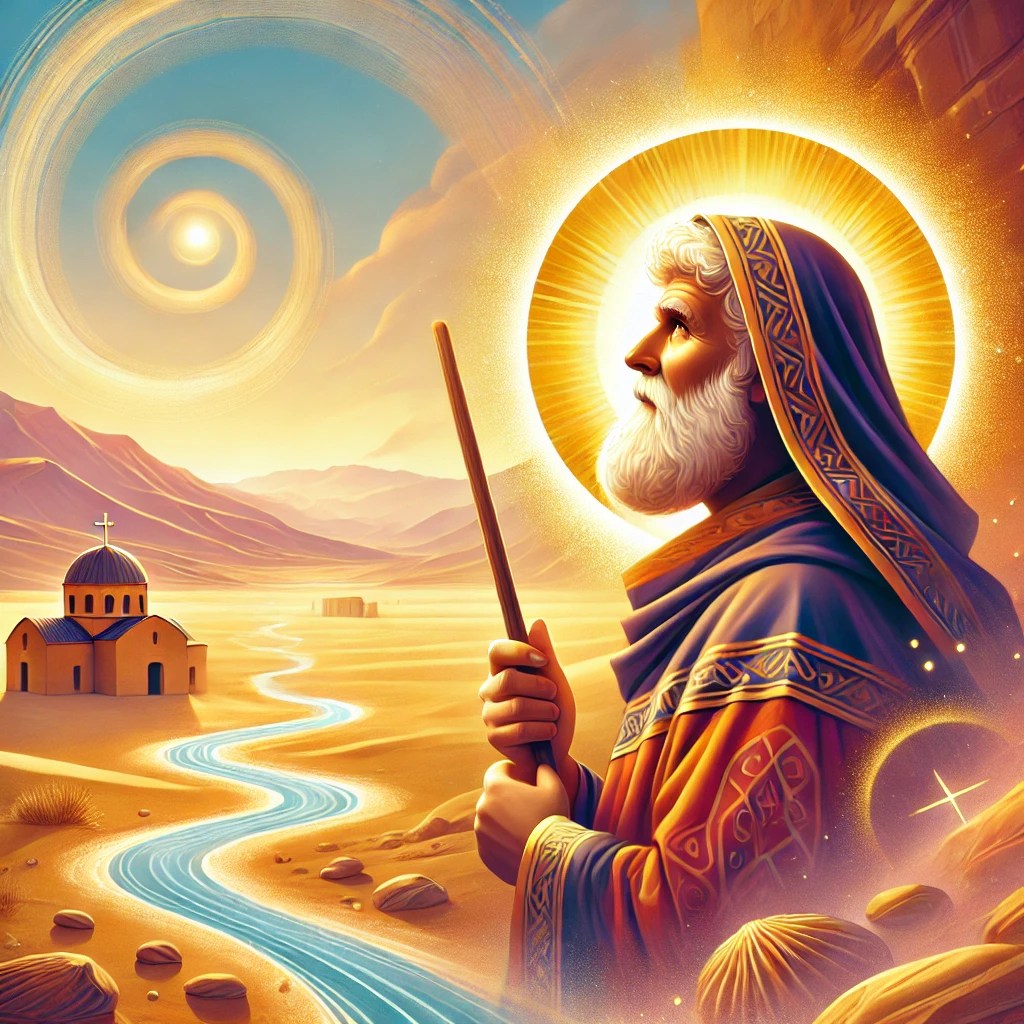
A Beacon of Solitude and Faith
The Solitary Shepherd of Holiness
Saint Sabas, also known as Sabbas the Sanctified, is celebrated as one of the most influential figures in Eastern Christian monasticism. His feast day, observed on December 5th, honors his role in shaping contemplative life and defending orthodoxy in a time of great theological turmoil. Born in 439 in Cappadocia (modern-day Turkey), Sabas dedicated his life to solitude, prayer, and the establishment of monastic communities. Among his most enduring legacies is the Great Lavra of Mar Saba, a monastic settlement near Jerusalem that continues to thrive as a spiritual refuge. Revered for his miracles, humility, and defense of the faith, Saint Sabas is an enduring symbol of fidelity to God’s call.
The Seed of Faith
Saint Sabas was born to devout Christian parents, John and Sophia, in the town of Moutalaske near Caesarea. His early years were marked by familial separation when his parents traveled to Alexandria, leaving young Sabas in the care of his uncle. At just eight years old, Sabas entered a local monastery, signaling the beginning of his lifelong journey toward holiness. Here, he discovered a love for Scripture and a profound connection to prayer.
Despite his family’s attempts to draw him back into secular life, including plans for his marriage, Sabas felt a deep spiritual longing for something greater. At seventeen, he left behind all worldly ambitions and entered monastic life fully, receiving his tonsure and dedicating himself to rigorous ascetic practices. Sabas’s youth serves as a testament to the power of listening to God’s call, even when it defies expectations.
Heaven on Earth
Saint Sabas’s life was a testament to God’s providence, as numerous miracles bore witness to his deep communion with the Divine. When he founded the Great Lavra in the harsh, arid wilderness of the Judean Desert, his prayers brought forth a spring of water to sustain the monks who lived there. This miracle not only met their physical needs but also symbolized the spiritual refreshment Sabas offered to those who followed his example.
During a devastating drought, Sabas’s prayers brought the blessing of rain, saving countless lives. Beyond these natural miracles, he healed the sick and brought peace to the possessed through his intercession. These acts of divine mercy showcased his unwavering faith and love for God’s people, drawing many to the monastic life.
A Cross to Bear
The journey of Saint Sabas was not without challenges. As he became a respected monastic leader, some monks resisted his authority, questioning his qualifications and desiring a priest as their abbot. In response, Sabas chose not to engage in conflict but withdrew to establish a new monastic community, the New Lavra near Thekoa. This act of humility and detachment demonstrated his trust in God’s plan and his commitment to peace.
Saint Sabas also stood firm during theological disputes, particularly against Monophysitism and Origenism, heresies that threatened the unity of the Church. His steadfast defense of orthodoxy, even in the face of opposition, proved his dedication to the truth of Christ’s teachings. In his perseverance through trials, Sabas exemplified the Christian virtues of humility, patience, and courage.
Heaven’s Touch
Even after his death on December 5, 532, the miracles of Saint Sabas continued. Pilgrims visiting his tomb experienced physical healings, spiritual renewal, and freedom from demonic oppression. His relics became a source of veneration, inspiring devotion among Christians of both the East and West.
In the 12th century, during the Crusades, Saint Sabas’s relics were transported to Italy. However, in an extraordinary act of ecumenical goodwill, Pope Paul VI returned them to the Mar Saba Monastery in 1965. This gesture symbolized the enduring unity of the Christian Church and the saint’s role as a bridge between traditions. The Great Lavra remains a site of pilgrimage, where countless faithful draw strength from the legacy of Saint Sabas.
Lessons from a Desert Saint
The life of Saint Sabas challenges us to seek solitude with God in our own busy lives. His unwavering dedication to prayer, even in the most desolate places, reminds us that spiritual renewal often requires stepping away from worldly distractions. Like Sabas, we can embrace moments of stillness to deepen our relationship with the Divine.
Sabas also inspires us to stand firm in our faith, especially when faced with opposition. His life teaches us to advocate for truth with humility and compassion, trusting in God’s guidance. Finally, his miracles remind us of the power of intercessory prayer and the importance of serving others with love and trust in God’s providence.
Practical Steps Inspired by Saint Sabas:
- Create a sacred space at home for quiet prayer and reflection.
- Practice humility by letting go of conflicts and seeking peace in your relationships.
- Stand firm in your beliefs while respecting those with differing perspectives.
- Dedicate time to help others, inspired by Sabas’s miracles of compassion.
Engage with Us!
What lessons from Saint Sabas resonate most deeply with you? How can his example inspire your own faith journey? Share your thoughts in the comments section below, and let’s support one another in living out the virtues he so beautifully exemplified.
Reflection Questions:
- How can you make space for solitude and prayer in your daily life?
- What challenges in your life require patience and trust in God’s plan?
- How can you serve others with the same love and compassion as Saint Sabas?
Let us strive, like Saint Sabas, to live every moment in devotion to Christ and His Church. May his example inspire us to embrace solitude, faith, and service with joyful hearts.
Saint Sabas, pray for us!
Follow us on Instagram and Facebook for more insights and reflections on living a faith-filled life.

 Holy Manna!
Leave a comment